Planetary Gearbox Manufacturer Evaluation: 7 Key Checks Before Requesting a Quote
Author
Date Published
Reading Time
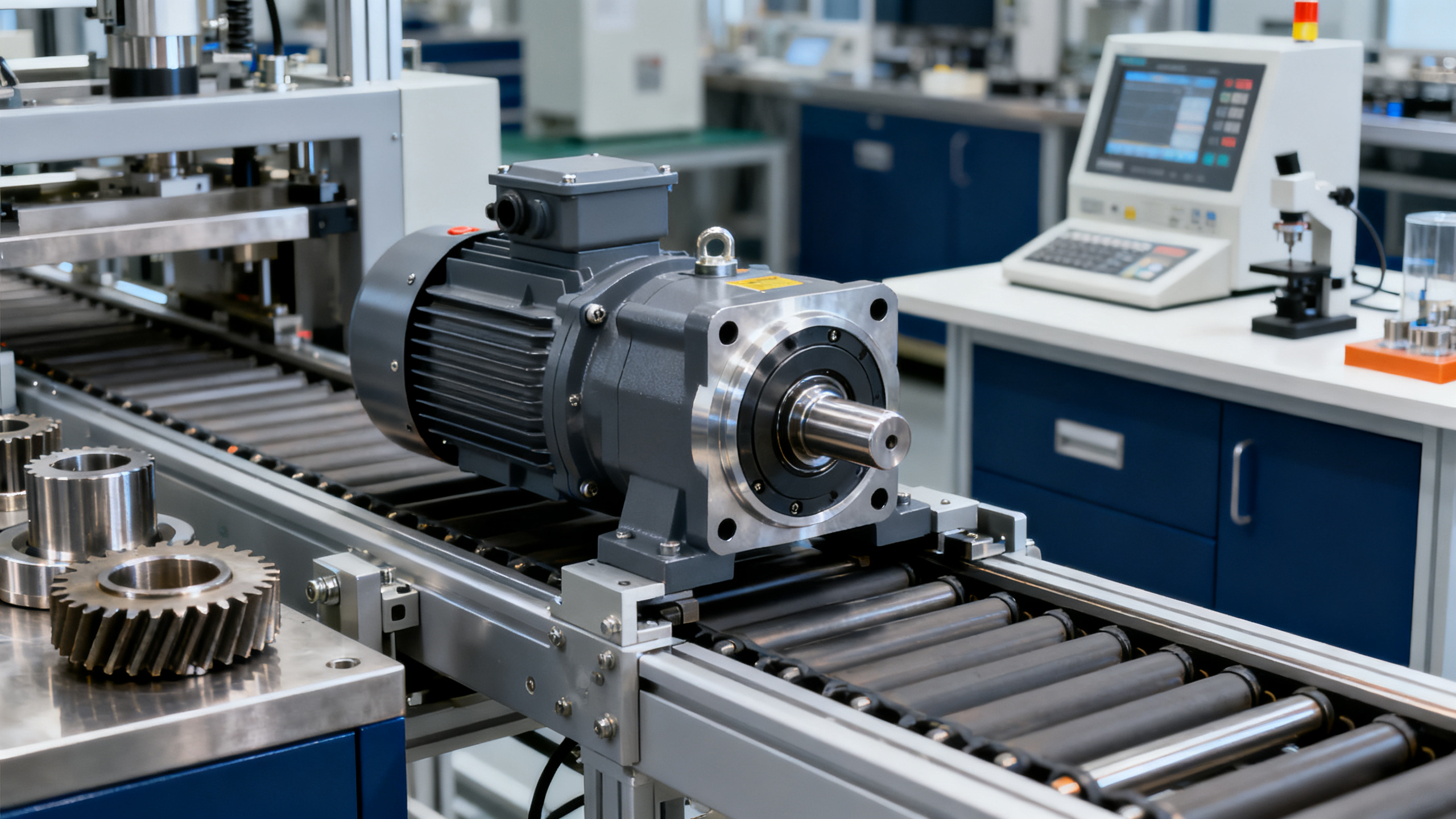
Why does choosing a planetary gearbox manufacturer deserve more scrutiny?
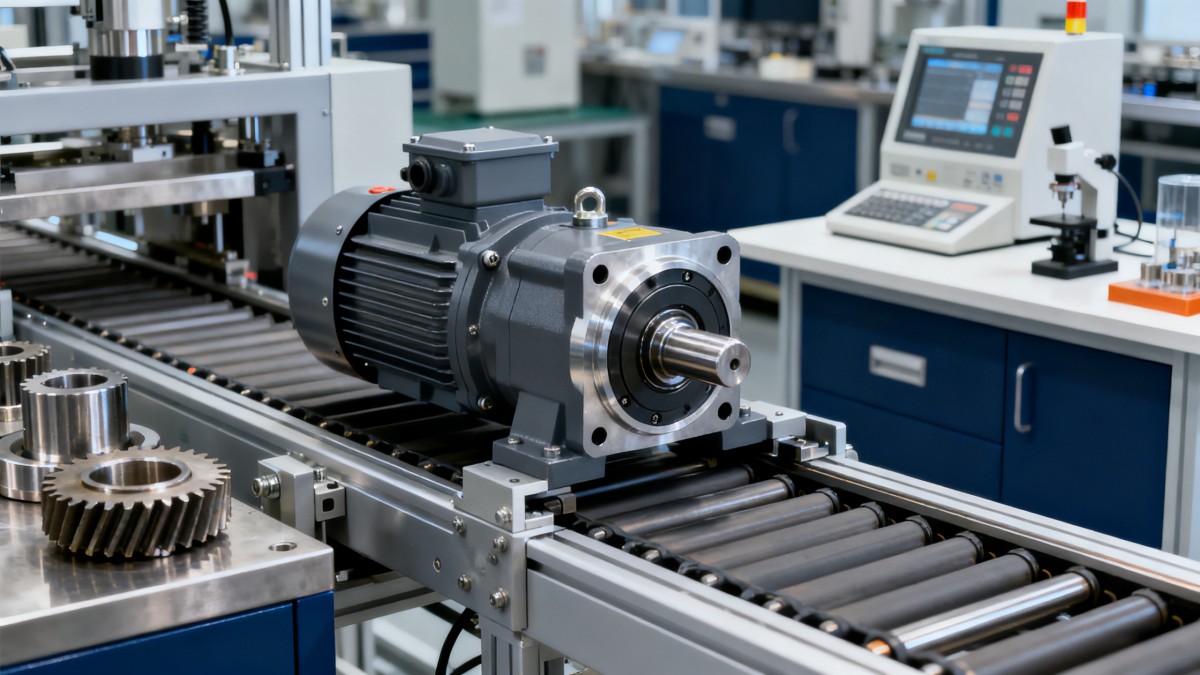
A planetary gearbox often sits deep inside critical motion systems, yet its impact is easy to underestimate.
When failure happens, the problem is rarely limited to one gearbox. Downtime spreads into motors, controls, output shafts, and maintenance schedules.
That is why evaluating a planetary gearbox manufacturer should begin before the first quote request is sent.
Price still matters, of course. But in industrial environments, a lower unit price can hide higher lifecycle cost, longer commissioning delays, or poor load matching.
A reliable planetary gearbox manufacturer should show strength in design validation, process control, traceability, and application understanding.
This is especially relevant in conveyors, mixers, automated handling lines, packaging systems, renewable energy support equipment, and heavy-duty process machinery.
Across the industrial coverage areas followed by Global Industrial Core, the pattern is consistent.
Foundational mechanical components are judged not only by output torque, but also by compliance, repeatability, environmental fit, and long-term serviceability.
What should be confirmed before comparing any quotation?
Many sourcing issues start with an incomplete inquiry package rather than a weak supplier.
If requirements are vague, even a capable planetary gearbox manufacturer may quote the wrong configuration.
A better approach is to lock down the operating context first.
- Required torque, peak torque, and duty cycle
- Input speed, output speed, and target ratio
- Radial and axial load on the output side
- Mounting orientation and space limits
- Ambient temperature, washdown, dust, or corrosive exposure
- Required backlash, noise limit, and positioning accuracy
These basics shape the entire quote. They also reveal whether the planetary gearbox manufacturer asks disciplined follow-up questions.
In practice, the best suppliers rarely rush to submit a number.
They first test assumptions, challenge missing data, and explain where oversizing or undersizing may create risk.
That behavior is often an early sign of technical maturity.
Which seven checks reveal whether a planetary gearbox manufacturer is truly qualified?
The most useful review is not a long checklist. It is a short set of checks that expose real capability.
1. Does the design match the application, not just the catalog?
A strong planetary gearbox manufacturer should discuss shock loads, start-stop frequency, inertia ratio, and thermal behavior.
Catalog torque alone is not enough for demanding duty.
2. Are materials and heat treatment clearly defined?
Ask about gear material grade, carburizing or nitriding method, hardness range, and case depth consistency.
This directly affects wear life and tooth strength.
3. Is manufacturing precision documented?
Gear grinding, bearing fits, concentricity, backlash control, and assembly tolerance all influence noise and efficiency.
A credible supplier can explain how these are measured.
4. What testing is done before shipment?
Look for no-load running tests, leakage checks, vibration review, temperature evaluation, and final inspection records.
For critical infrastructure, traceable test data matters more than verbal assurance.
5. Can compliance and documentation support global use?
Industrial projects often require ISO-based quality systems, CE-related documentation, RoHS declarations, or material traceability packages.
A dependable planetary gearbox manufacturer should handle document control cleanly.
6. How stable is delivery capability?
Lead time is not only a sales promise. It depends on machining capacity, component sourcing, inspection flow, and packaging discipline.
Ask what causes delay most often, and how the supplier manages it.
7. Is after-sales support practical?
The right planetary gearbox manufacturer should offer installation guidance, lubrication advice, troubleshooting response, and replacement part continuity.
This becomes crucial when uptime is non-negotiable.
How can one compare suppliers without getting lost in sales language?
A simple comparison table helps separate marketing claims from usable evidence.
This kind of side-by-side review makes a planetary gearbox manufacturer easier to judge on evidence instead of tone.
It also supports cleaner internal approval when several suppliers appear similar at first glance.
Where do buyers most often misjudge planetary gearbox suppliers?
One common mistake is treating all planetary gearboxes as interchangeable once ratio and torque look close.
In reality, bearing arrangement, sealing quality, lubrication strategy, and backlash class can change field performance significantly.
Another mistake is overvaluing sample appearance. A clean housing finish does not prove gear geometry control.
More useful evidence comes from inspection records, failure analysis capability, and consistency across repeat orders.
There is also a cost trap. A low initial price from a planetary gearbox manufacturer can become expensive when replacement intervals shorten.
That added cost may appear through downtime, spare stock, technician hours, and output loss.
More careful evaluations usually include total operating impact, not just purchase value.
This approach aligns with the broader industrial logic emphasized by Global Industrial Core, where resilience and compliance sit beside procurement economics.
What should a quote request include to get a better response?
A well-built RFQ often improves supplier quality before any negotiation begins.
It gives each planetary gearbox manufacturer the same technical base, making comparison more accurate.
- Application description and operating hours
- Motor data and load profile
- Required ratio, output torque, and service factor target
- Dimensional constraints and interface drawings
- Environmental conditions and sealing expectations
- Requested certificates, inspection reports, and packaging terms
- Target lead time, quantity, and spare parts expectations
It helps to ask each supplier one more question: what assumptions were used in the quotation?
That single line often reveals how carefully the planetary gearbox manufacturer reviewed the request.
If assumptions stay hidden, quote comparison becomes misleading very quickly.
What is the smartest next step before making a shortlist?
The smartest next step is to convert technical needs into a small evaluation matrix before asking for final pricing.
That matrix should score each planetary gearbox manufacturer on application fit, documented quality, compliance readiness, delivery realism, and service support.
A short technical meeting can then test whether the supplier truly understands the working conditions behind the specification.
This is usually where strong suppliers stand out. They refine the scope, flag hidden risks, and explain trade-offs clearly.
By contrast, weak suppliers tend to repeat catalog language and avoid precise responsibility.
When the gearbox will support demanding industrial assets, that difference matters more than a small price gap.
A disciplined review now reduces rework later, improves technical alignment, and supports more durable operating results.
In practical terms, the best decision is rarely the fastest quote. It is the clearest match between requirement, evidence, and long-term reliability.
Technical Specifications
- How to Select Electronic Hotel Key Card Locks for Guest Rooms and Staff AreasAuthor :Safety Compliance Lead
- How to Select Lab Instruments for Reliable Chemical Analysis WorkflowsAuthor :Precision Metrology Expert
- How to Size a UPS for Server Rooms: Load, Runtime, and Redundancy FactorsAuthor :Grid Infrastructure Analyst
Expert Insights

Chief Security Architect
Dr. Thorne specializes in the intersection of structural engineering and digital resilience. He has advised three G7 governments on industrial infrastructure security.
Related Analysis
- Sep 17, 2026How to Select Electronic Hotel Key Card Locks for Guest Rooms and Staff AreasAuthor :Safety Compliance Lead
- Sep 16, 2026How to Select Lab Instruments for Reliable Chemical Analysis WorkflowsAuthor :Precision Metrology Expert
- Sep 15, 2026How to Size a UPS for Server Rooms: Load, Runtime, and Redundancy FactorsAuthor :Grid Infrastructure Analyst
Core Sector // 01
Security & Safety
- Does Power Transmission Maintenance Differ in Desert and Arctic Sites?Author :Heavy Industry Strategist

- Can Industrial Engineering Solutions Reduce Petrochemical Downtime?Author :Heavy Industry Strategist

- What Drives Industrial Roller Chains Price: Material, Pitch, Load, and Supplier FactorsAuthor :Heavy Industry Strategist

- How to Choose a Three Phase Soft Starter for Pumps, Fans, and ConveyorsAuthor :Heavy Industry Strategist

- How to Evaluate a Conveyor Roller Belts Manufacturer for Load, Speed, and Service LifeAuthor :Heavy Industry Strategist

- Power Transmission Systems Pricing: 7 Cost Drivers Buyers Should CompareAuthor :Heavy Industry Strategist

- India Expands BIS ISI Rule for Imported Belts and ChainsAuthor :Heavy Industry Strategist

- Zero Backlash Jaw Coupling Selection Guide: Torque, Misalignment, and Servo PerformanceAuthor :Heavy Industry Strategist