How to Evaluate a Conveyor Roller Belts Manufacturer for Load, Speed, and Service Life
Author
Date Published
Reading Time

Why does the manufacturer matter as much as the belt specification?
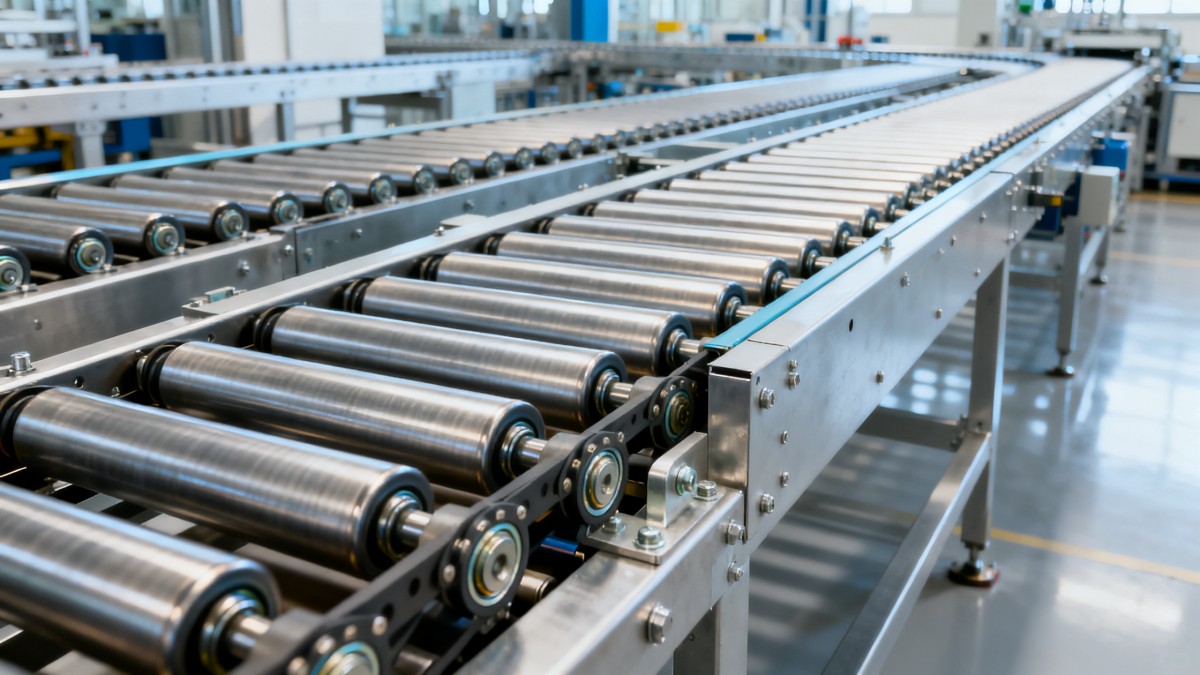
A conveyor system rarely fails because of one headline number alone. Trouble usually starts where load, speed, material quality, and fabrication accuracy stop matching each other.
That is why selecting a conveyor roller belts manufacturer deserves more than a price comparison. The supplier affects uptime, maintenance intervals, spare part planning, and even site safety.
In heavy industry, small deviations create large operational costs. A belt that tracks poorly at high speed, or rollers that deform under shock loading, can interrupt an entire handling line.
A stronger evaluation method looks at the whole operating envelope. Load profile, belt speed, pulley diameter, ambient dust, temperature, and maintenance practice all need to be checked together.
This is also where Global Industrial Core often frames sourcing decisions. Industrial buying should be evidence-led, with attention to standards, durability data, and real operating conditions instead of brochure claims.
When buyers ask about load capacity, what should they really verify?
Load capacity is not just about the maximum weight printed in a catalog. A reliable conveyor roller belts manufacturer should explain static load, dynamic load, impact load, and starting torque conditions separately.
In practical terms, bulk materials, pallets, cartons, and irregular metal parts do not stress a belt in the same way. Point loading and uneven feed often damage systems faster than average load figures suggest.
The more useful question is this: under what duty cycle was the product rated? Continuous operation over three shifts demands very different construction from intermittent warehouse movement.
- Ask for belt tensile strength, carcass construction, cover thickness, and allowable elongation.
- Check roller tube diameter, shaft size, bearing series, and shell runout tolerance.
- Confirm whether ratings include shock loading, incline transfer, or material drop height.
- Review safety margin assumptions instead of accepting a single nominal capacity.
If a supplier cannot connect load ratings to test methods, drawings, and field references, that is a warning sign. Good manufacturers can show how capacity numbers were established.
How do operating speed and service life change the selection?
Higher speed increases more than throughput. It also magnifies tracking error, heat buildup, bearing stress, vibration, and splice fatigue. A conveyor roller belts manufacturer should discuss these tradeoffs early.
Some belts handle heavy loads well at moderate speed but lose stability when speed rises. Others perform cleanly at speed, yet wear quickly in abrasive environments. That balance matters.
Service life should also be defined carefully. Does the supplier mean time to visible wear, time to functional loss, or time to planned replacement? Those are not the same thing.
A realistic comparison becomes easier when the supplier provides expected life under a stated operating scenario. For example, quarry handling, packaging lines, and food-adjacent conveying each create different wear patterns.
This kind of table is more useful than broad promises. It forces the conversation toward measurable evidence and away from generic “long-life” marketing language.
What quality signals separate a dependable conveyor roller belts manufacturer from a risky one?
The strongest quality signal is traceability. A dependable conveyor roller belts manufacturer can connect raw materials, batch records, test results, and inspection reports to the delivered product.
Certifications matter, but only when they are relevant and current. CE, ISO, UL-related electrical scope, or application-specific compliance should support the actual installation requirements, not just decorate a quotation.
Another useful indicator is engineering depth. Suppliers with real design capability usually ask better questions about pulley lagging, take-up force, belt cleaning, and environmental exposure.
More importantly, they are willing to say when a requested configuration is unsuitable. That kind of restraint often signals stronger technical discipline.
- Factory audit records or third-party inspection summaries.
- Material certificates for rollers, shafts, bearings, and belt compounds.
- Dimensional control methods, including runout and concentricity checks.
- Application history in mining, logistics, aggregates, or processing lines.
- Clear warranty terms tied to operating conditions, not vague exclusions.
In GIC-style sourcing reviews, documented performance usually carries more weight than brand visibility alone. Well-kept technical files often tell more than polished sales material.
Where do sourcing teams most often make the wrong comparison?
The most common mistake is comparing unit price without normalizing the specification. Two quotes may look similar while using different bearing grades, shell thicknesses, cover compounds, or service assumptions.
Another weak comparison is lead time without checking production control. Fast shipment means little if the conveyor roller belts manufacturer relies on unstable subcontracting or inconsistent incoming materials.
It is also easy to underestimate replacement logistics. For critical lines, after-sales response, spare roller availability, and field support can be worth more than a small upfront saving.
A cleaner decision framework is to compare total operating cost over the planned maintenance window. That includes installation risk, energy draw, downtime exposure, and mean time between replacements.
How can you verify service, support, and real-world reliability before placing an order?
This is where many decisions become clearer. A capable conveyor roller belts manufacturer should support the project before, during, and after delivery, not only at quotation stage.
Ask how technical queries are handled. Are drawings reviewed by engineers? Can the supplier comment on belt tracking, bearing sealing, roller spacing, or installation tolerances?
Field references help, but they should be relevant. A high-speed parcel line is not a direct reference for abrasive bulk conveying. Similar duty is more valuable than famous customer names.
It also helps to test responsiveness. Send a structured technical questionnaire and see whether answers arrive complete, consistent, and backed by documents.
- Issue a specification sheet with load, speed, temperature, dust level, and duty cycle.
- Request data sheets, test reports, certificates, and reference cases.
- Score each supplier on technical fit, traceability, lead time, and support depth.
- Clarify spare parts policy, claim response time, and replacement availability.
- For larger projects, consider inspection, pilot validation, or sample review.
That process reduces uncertainty and creates a documented basis for comparison. It also aligns with the more disciplined sourcing approach often promoted across critical industrial infrastructure.
What is the most practical next step before shortlisting a supplier?
Start by defining the operating reality, not just the desired product. Required load, surge conditions, running speed, environment, maintenance window, and compliance needs should be written down clearly.
Then compare each conveyor roller belts manufacturer against the same checklist. That keeps the decision anchored to evidence and helps expose weak assumptions early.
The best supplier is usually not the one with the broadest claim set. It is the one whose ratings, materials, quality controls, and support structure match the real conveyor duty.
For complex installations, build the shortlist around documented performance, relevant standards, and lifecycle cost. That approach makes load, speed, and service life part of one decision, not three separate guesses.
Technical Specifications
- Air Handling Unit Supplier Checklist: Performance Data, Lead Times, and SupportAuthor :Environmental Engineering Director
- Buying Fiberglass Water Tanks Wholesale: Compare Quotes and Delivery CostsAuthor :Environmental Engineering Director
- Choosing an XLPE Power Cable Supplier: Test Reports, Traceability, and Lead TimesAuthor :Grid Infrastructure Analyst
Expert Insights

Chief Security Architect
Dr. Thorne specializes in the intersection of structural engineering and digital resilience. He has advised three G7 governments on industrial infrastructure security.
Related Analysis
- Oct 19, 2026Air Handling Unit Supplier Checklist: Performance Data, Lead Times, and SupportAuthor :Environmental Engineering Director
- Oct 18, 2026Buying Fiberglass Water Tanks Wholesale: Compare Quotes and Delivery CostsAuthor :Environmental Engineering Director
- Oct 17, 2026Choosing an XLPE Power Cable Supplier: Test Reports, Traceability, and Lead TimesAuthor :Grid Infrastructure Analyst
Core Sector // 01
Security & Safety
- Does Power Transmission Maintenance Differ in Desert and Arctic Sites?Author :Heavy Industry Strategist

- Can Industrial Engineering Solutions Reduce Petrochemical Downtime?Author :Heavy Industry Strategist

- What Drives Industrial Roller Chains Price: Material, Pitch, Load, and Supplier FactorsAuthor :Heavy Industry Strategist

- How to Choose a Three Phase Soft Starter for Pumps, Fans, and ConveyorsAuthor :Heavy Industry Strategist

- How to Evaluate a Conveyor Roller Belts Manufacturer for Load, Speed, and Service LifeAuthor :Heavy Industry Strategist

- Power Transmission Systems Pricing: 7 Cost Drivers Buyers Should CompareAuthor :Heavy Industry Strategist

- India Expands BIS ISI Rule for Imported Belts and ChainsAuthor :Heavy Industry Strategist

- Zero Backlash Jaw Coupling Selection Guide: Torque, Misalignment, and Servo PerformanceAuthor :Heavy Industry Strategist