How to Choose Stainless Steel Sprockets for Corrosive and Washdown Environments
Author
Date Published
Reading Time
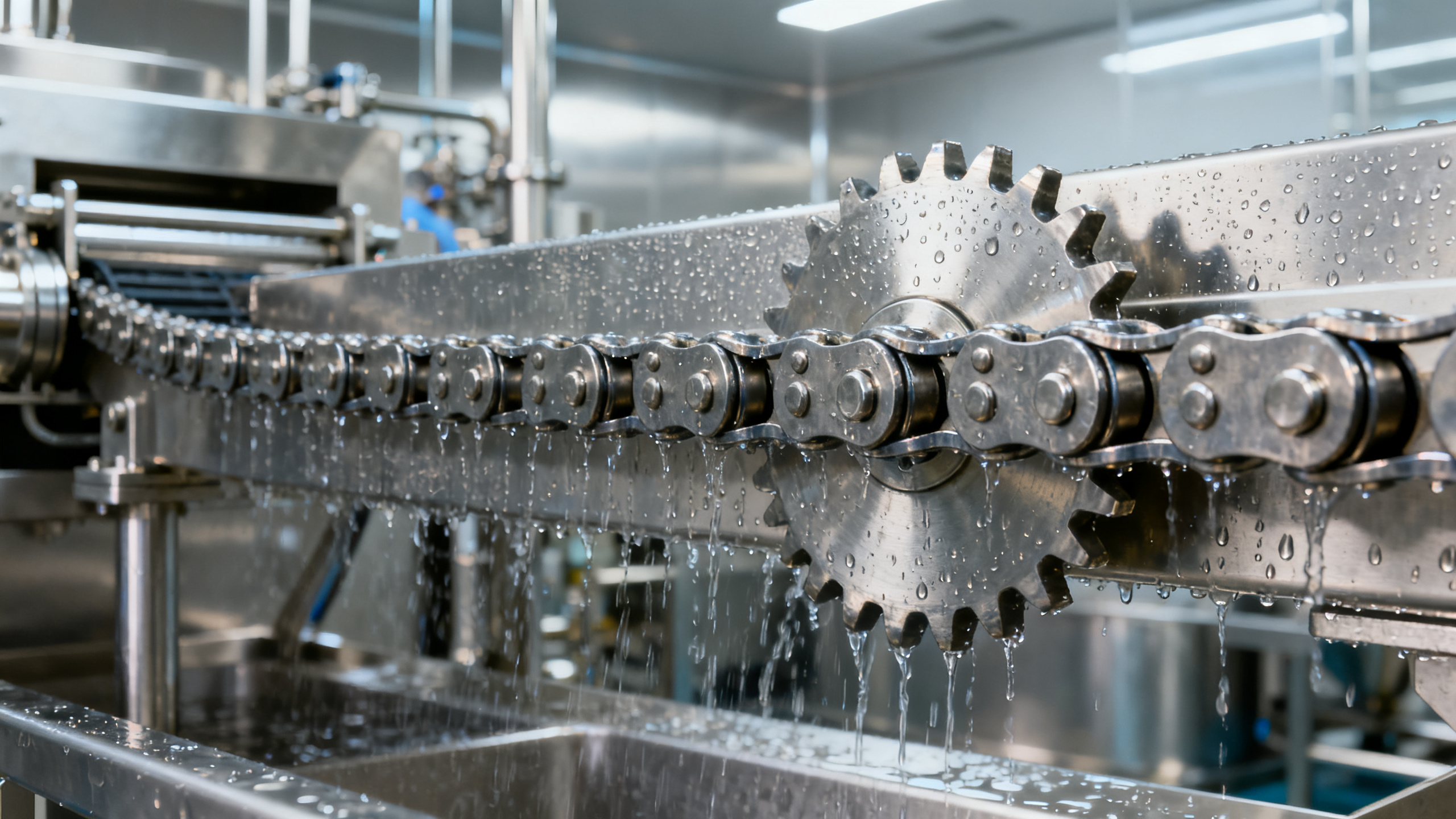
How to Choose Stainless Steel Sprockets for Corrosive and Washdown Environments
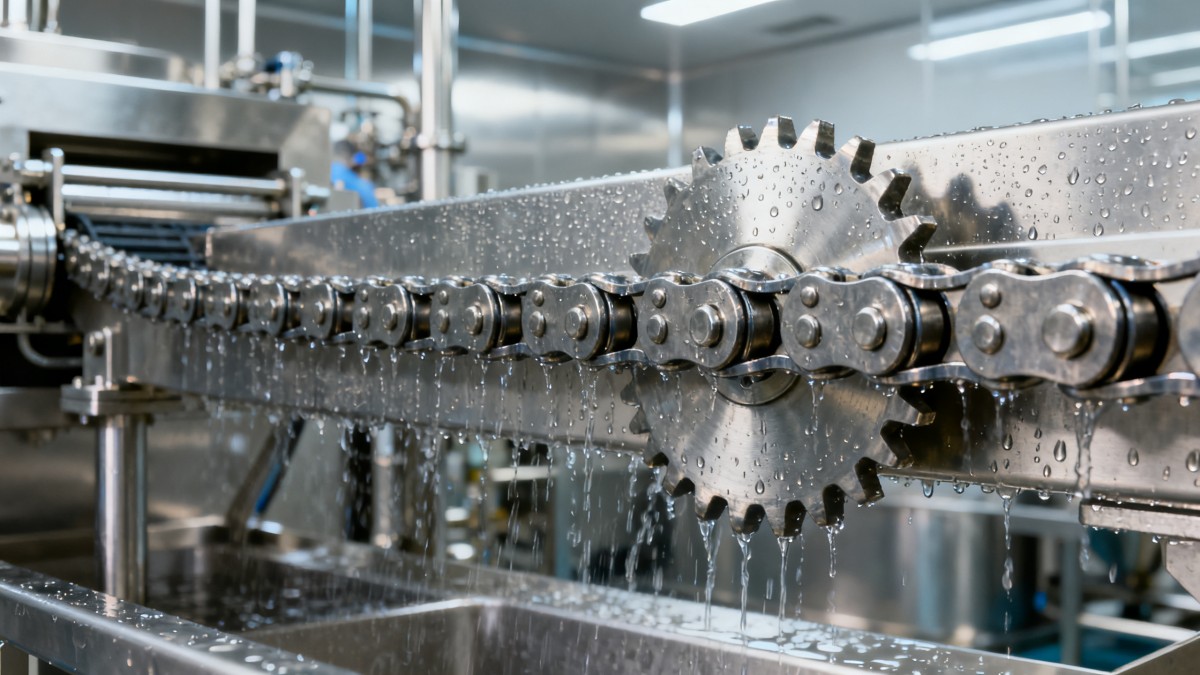
In corrosive and washdown environments, stainless steel sprockets are not a simple material upgrade. They are a reliability decision.
The right choice supports hygiene, uptime, and predictable maintenance. The wrong choice usually shows up as premature wear, chain mismatch, or corrosion around hidden stress points.
That is why selection should start with operating conditions, not catalog price. In practice, the environment often determines the best sprocket grade faster than the load chart does.
This guide breaks down how to evaluate stainless steel sprockets for chemical exposure, frequent washdown, food contact risk, and long service life.
Start with the Real Corrosion Profile
Not all corrosive environments attack metal in the same way. Water alone is very different from chlorides, acids, alkalis, or sanitizing chemicals.
A useful first step is to map four factors: chemical type, concentration, temperature, and exposure frequency. This usually reveals whether standard 304 stainless is enough or whether 316 is the safer choice.
For example, food and beverage lines often use aggressive cleaning agents and chlorinated washdown routines. In those cases, stainless steel sprockets made from 316 or 316L usually outperform 304.
Marine, wastewater, and coastal applications also push corrosion risk higher. Salt exposure changes the selection logic quickly.
- Use 304 for mild moisture and general corrosion resistance.
- Use 316 or 316L for chlorides, saline air, and stronger washdown chemicals.
- Review crevice corrosion risk around hubs, keyways, and chain contact zones.
- Check whether the cleaning cycle includes hot water or steam.
This is where many sourcing errors begin. Buyers compare only base alloy, while the actual failure starts in geometry, finish, or trapped residue.
Choose the Right Stainless Grade, Not Just “Stainless”
The word stainless sounds reassuring, but it does not guarantee equal performance. Grade selection directly affects cost, corrosion resistance, machinability, and service life.
For most industrial washdown systems, 304 and 316 are the main options. Both are common, but they behave differently under chemical stress.
If downtime is expensive, over-specifying slightly can be smarter than replacing parts repeatedly. That tradeoff often favors 316 stainless steel sprockets in harsh cleaning environments.
Match the Sprocket to Chain, Load, and Speed
Corrosion resistance matters, but mechanical fit still decides whether the system runs smoothly. A stainless sprocket that survives chemicals but misaligns with the chain is still the wrong choice.
Confirm chain standard first. Check pitch, roller diameter, width, strand count, and required tooth profile. ANSI and ISO chain dimensions must match exactly.
Then evaluate torque, startup shock, operating speed, and duty cycle. Stainless steel sprockets can handle demanding work, but they are not immune to overload or poor chain engagement.
- Verify chain compatibility before reviewing material upgrades.
- Check tooth count for speed ratio and wrap angle.
- Review hub design and bore tolerance for shaft fit.
- Confirm load conditions, including intermittent shock loading.
- Ask for allowable operating limits from the manufacturer.
This also affects wear life. Too few teeth can increase polygonal action and vibration. That can shorten the life of both the chain and the stainless steel sprockets.
Pay Attention to Surface Finish and Hygienic Design
In washdown environments, finish quality is not cosmetic. It affects cleanability, contamination control, and corrosion behavior over time.
A smoother surface reduces residue buildup and makes cleaning more predictable. It also lowers the chance of localized attack where moisture stays trapped.
For hygienic systems, ask whether the stainless steel sprockets are machined, polished, passivated, or electropolished. Each option changes both performance and cost.
- Passivation improves the protective oxide layer.
- Electropolishing can improve cleanability and corrosion resistance.
- Rounded transitions help reduce contamination traps.
- Open, drainable designs support faster drying after washdown.
A more polished finish is often worth it in food, beverage, pharmaceutical, and high-sanitation packaging lines. Cleaning time and inspection risk usually justify the added expense.
Check Compliance, Traceability, and Supplier Capability
Selection decisions rarely end with dimensions. In regulated or high-risk facilities, documentation matters almost as much as the part.
Ask for material certificates, dimensional inspection records, and details on finishing processes. If the application is sensitive, request lot traceability and corrosion testing data.
Depending on the site, relevant standards may include ISO requirements, food safety rules, or internal plant hygiene specifications. These are often overlooked during urgent replacement purchases.
Supplier capability also matters. A qualified source should understand chain transmission, metallurgy, tolerance control, and the cleaning chemistry used at the site.
- Request certificates for stainless grade and heat lot.
- Confirm compliance with required CE, UL, or ISO-related documentation where applicable.
- Review machining tolerances for bore, keyway, and tooth profile.
- Ask about lead times for custom stainless steel sprockets.
From a sourcing perspective, this reduces risk before installation. From an operational perspective, it prevents surprises during audits and maintenance reviews.
Compare Total Cost, Not Unit Price
The cheapest sprocket is rarely the lowest-cost option in a harsh environment. Real cost includes replacement frequency, sanitation downtime, chain wear, labor, and line interruption.
This is especially true when corrosion starts slowly. A low-grade component may look acceptable at delivery, then fail early once the washdown cycle becomes routine.
A practical evaluation model compares upfront price against expected life, maintenance intervals, and contamination risk. In many cases, higher-grade stainless steel sprockets win clearly over time.
A Simple Selection Checklist for Stainless Steel Sprockets
When several options look similar, a short checklist helps narrow the decision without losing technical rigor.
- Define chemical exposure, washdown frequency, and operating temperature.
- Select 304, 316, or 316L based on actual corrosion risk.
- Match chain standard, pitch, strand, and tooth profile precisely.
- Confirm torque, speed, shock load, and expected service cycle.
- Review finish quality, passivation, and hygienic geometry.
- Verify certificates, tolerances, and supplier traceability.
- Compare lifecycle cost rather than purchase price alone.
That sequence keeps the evaluation grounded in performance, not assumptions. It also makes vendor comparisons much easier.
Final Decision Guidance
Choosing stainless steel sprockets for corrosive and washdown environments means balancing metallurgy, mechanics, hygiene, and procurement risk in one decision.
If the environment includes chlorides, aggressive cleaners, or strict sanitation rules, material grade and finish deserve extra weight. If loads are high, chain fit and tooth geometry become equally critical.
The most reliable choice is usually the one that fits the full operating context, not the one that looks adequate on a basic specification sheet.
A disciplined review of environment, load, finish, compliance, and lifecycle cost will lead to stainless steel sprockets that stay clean, run longer, and reduce avoidable downtime.
Technical Specifications
- How to Select Electronic Hotel Key Card Locks for Guest Rooms and Staff AreasAuthor :Safety Compliance Lead
- How to Select Lab Instruments for Reliable Chemical Analysis WorkflowsAuthor :Precision Metrology Expert
- How to Size a UPS for Server Rooms: Load, Runtime, and Redundancy FactorsAuthor :Grid Infrastructure Analyst
Expert Insights

Chief Security Architect
Dr. Thorne specializes in the intersection of structural engineering and digital resilience. He has advised three G7 governments on industrial infrastructure security.
Related Analysis
- Sep 17, 2026How to Select Electronic Hotel Key Card Locks for Guest Rooms and Staff AreasAuthor :Safety Compliance Lead
- Sep 16, 2026How to Select Lab Instruments for Reliable Chemical Analysis WorkflowsAuthor :Precision Metrology Expert
- Sep 15, 2026How to Size a UPS for Server Rooms: Load, Runtime, and Redundancy FactorsAuthor :Grid Infrastructure Analyst
Core Sector // 01
Security & Safety
- Does Power Transmission Maintenance Differ in Desert and Arctic Sites?Author :Heavy Industry Strategist

- Can Industrial Engineering Solutions Reduce Petrochemical Downtime?Author :Heavy Industry Strategist

- What Drives Industrial Roller Chains Price: Material, Pitch, Load, and Supplier FactorsAuthor :Heavy Industry Strategist

- How to Choose a Three Phase Soft Starter for Pumps, Fans, and ConveyorsAuthor :Heavy Industry Strategist

- How to Evaluate a Conveyor Roller Belts Manufacturer for Load, Speed, and Service LifeAuthor :Heavy Industry Strategist

- Power Transmission Systems Pricing: 7 Cost Drivers Buyers Should CompareAuthor :Heavy Industry Strategist

- India Expands BIS ISI Rule for Imported Belts and ChainsAuthor :Heavy Industry Strategist

- Zero Backlash Jaw Coupling Selection Guide: Torque, Misalignment, and Servo PerformanceAuthor :Heavy Industry Strategist