Power Transmission Systems Pricing: 7 Cost Drivers Buyers Should Compare
Author
Date Published
Reading Time
Why does power transmission systems pricing vary so much between similar-looking quotes?
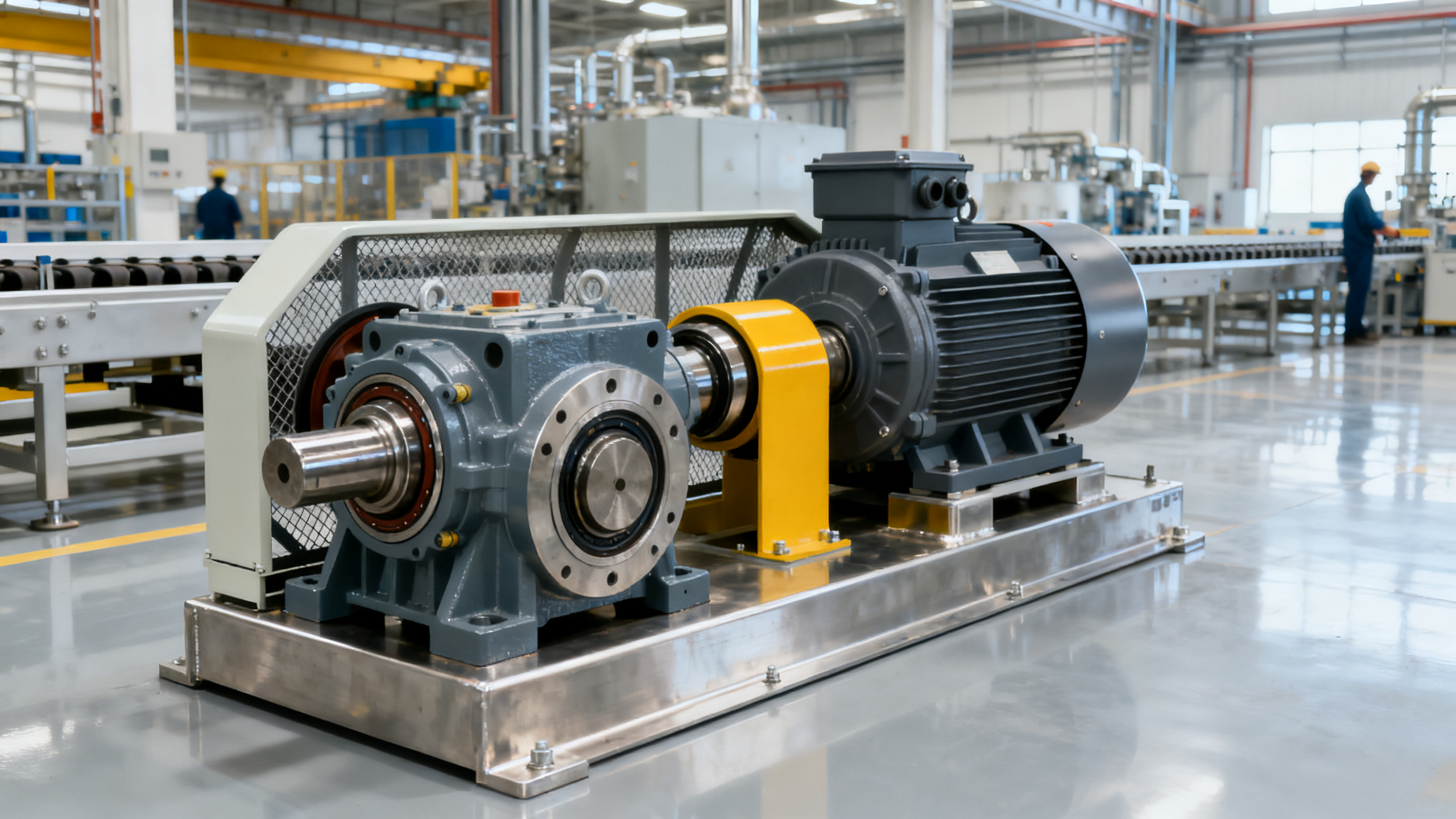
Power transmission systems pricing usually looks simple at first glance. A motor rating, a gearbox size, and a line item price can seem enough. In practice, they are not.
The larger cost picture is shaped by seven drivers. They include duty cycle, torque profile, materials, efficiency targets, compliance requirements, integration scope, and lifecycle support.
That is why two assemblies with similar power can carry very different total costs. One may be designed for intermittent use. The other may be expected to run continuously in heat, dust, washdown, or corrosive air.
In industrial sourcing, price alone is rarely the deciding number. The real comparison is whether a system can deliver stable output, pass inspections, reduce downtime, and avoid early replacement.
This matters across conveyors, material handling, pumps, fans, crushers, mixers, and process lines. In each case, the wrong assumption about cost drivers can distort budgeting and supplier evaluation.
Editorial frameworks used by Global Industrial Core often treat these systems as infrastructure components, not commodity parts. That lens is useful because failure cost usually exceeds purchase price.
Which seven cost drivers should be compared before asking for final pricing?
A practical way to read power transmission systems pricing is to break it into the drivers that change design complexity. More often than not, these seven variables explain most quote differences.
- Load profile and starting torque. High shock loads, frequent starts, or reversing duty raise component sizing and protection requirements.
- Operating cycle and service factor. Continuous operation usually needs stronger bearings, better lubrication, and tighter thermal control.
- Transmission type. Belt, chain, gear, direct drive, and variable speed designs carry different efficiency, maintenance, and alignment costs.
- Material and enclosure selection. Stainless housings, sealed shafts, and corrosion-resistant finishes add cost but may be necessary.
- Compliance and certification. CE, UL, ISO-linked documentation, testing records, and traceability affect both lead time and price.
- Integration and customization. Mounting interfaces, couplings, sensors, guards, and controls can change the commercial picture quickly.
- Service life and aftermarket support. Spare part availability, warranty structure, and field service response influence total ownership cost.
When power transmission systems pricing is reviewed through these drivers, comparisons become more defensible. It also becomes easier to explain why the lowest quote may not be the lowest-risk option.
A quick comparison table helps expose hidden cost differences
Before ranking suppliers, it helps to normalize what each quote actually includes. The table below is a useful screening tool.
Is transmission type really a major pricing factor, or just a technical detail?
It is a major factor. The choice between belt, chain, gearbox, fluid coupling, or direct drive changes not only equipment cost, but also maintenance patterns and energy performance.
Belt systems often start with a lower purchase price. They can also simplify replacement. However, tensioning, slip, and efficiency losses may raise lifetime cost in continuous-duty applications.
Chain drives can handle rugged loads, but they introduce lubrication needs and wear points. In dirty environments, that may be acceptable. In hygienic or low-maintenance settings, it may not.
Gear-driven systems tend to cost more upfront. They often deliver tighter torque transfer and better control. That makes them common in precision conveying, heavy handling, and process-critical lines.
Direct drive or integrated variable speed arrangements usually sit at the higher end of power transmission systems pricing. Yet they can reduce alignment work, spare inventory, and energy loss over time.
A useful question is not which type is cheapest. It is which type matches the application without forcing extra service, extra downtime, or repeated redesign later.
How do environment and compliance requirements change the quote?
This is where many budgets drift. Environmental exposure and compliance obligations are often treated as side notes. In reality, they directly shape power transmission systems pricing.
A standard enclosure may work indoors at stable temperature. It becomes a risk in coastal air, chemical plants, mining dust, food washdown zones, or outdoor utility infrastructure.
Costs rise when the design needs higher ingress protection, improved seals, food-grade or specialty lubricants, anti-corrosion coatings, or stainless contact surfaces. These additions are rarely cosmetic.
Compliance adds another layer. If a project needs CE or UL alignment, suppliers may need extra testing, labeling, technical files, or traceable material records. Those tasks consume engineering time.
In high-consequence sectors, documentation quality matters almost as much as hardware quality. GIC-style evaluation standards emphasize this because an incomplete compliance package can delay commissioning.
That delay has a cost. So when reviewing quotes, it is worth separating hardware price from approval readiness. They are related, but not identical.
Where do buyers misread low pricing most often?
The most common mistake is comparing unit price without checking the operating assumptions behind it. A lower quote may be based on milder duty, fewer accessories, or reduced documentation.
Another frequent issue is ignoring integration scope. Couplings, guards, mounting plates, sensors, alignment support, and commissioning assistance may sit outside the headline number.
Lead time can also distort judgment. Some systems look attractively priced because they exclude nonstandard machining, compliance review, or factory acceptance steps until later revisions.
Then there is spare parts logic. A low entry price with proprietary replacements can create expensive dependency during maintenance cycles. That is especially relevant for remote sites.
A simple screening checklist helps reduce these errors:
- Confirm service factor and actual operating hours.
- Ask whether the quote includes couplings, guards, sensors, and mounting hardware.
- Check what certification documents are included at the quoted price.
- Review spare part lead times and interchangeability.
- Separate warranty terms for components, assembly, and field support.
These checks make power transmission systems pricing more transparent. They also limit expensive surprises after purchase approval.
Should lifecycle cost outweigh initial power transmission systems pricing?
In many industrial settings, yes. Initial price still matters, especially in multi-line projects. But lifecycle cost often provides the more reliable basis for final selection.
A system with better efficiency may consume less power over several years. A stronger sealing package may prevent contamination and emergency shutdowns. A better-supported brand may reduce outage duration.
Those effects are not theoretical. They influence maintenance labor, stockholding, energy use, and process continuity. In heavy industry, these variables can exceed purchase cost surprisingly fast.
That does not mean the highest quote is the best one. It means the quote should be tested against runtime economics, reliability history, and documentation readiness.
A balanced decision often uses three filters:
- Can the system meet actual duty without oversizing?
- Will compliance and installation proceed without hidden work?
- Is the support model strong enough for the site risk level?
When those answers are clear, power transmission systems pricing becomes easier to justify internally and easier to defend over the operating life of the asset.
What is the smartest next step before requesting final quotations?
Start by tightening the specification around the seven cost drivers. Most quote confusion begins with incomplete duty data or vague environmental language.
It helps to issue one comparison sheet covering load behavior, runtime, ambient conditions, required standards, dimensional constraints, and preferred service expectations. That keeps suppliers pricing the same problem.
Then compare not only total price, but also inclusions, exceptions, lead time assumptions, and documentation scope. A structured review usually reveals where real value sits.
Power transmission systems pricing is most useful when treated as a risk-and-performance equation, not just a commercial line item. That approach aligns well with the evidence-based sourcing logic used in critical industrial infrastructure.
The practical path is straightforward: clarify the duty, normalize the quote structure, test lifecycle implications, and flag compliance gaps early. That is how cost comparison becomes a better engineering decision.
Technical Specifications
- Air Handling Unit Supplier Checklist: Performance Data, Lead Times, and SupportAuthor :Environmental Engineering Director
- Buying Fiberglass Water Tanks Wholesale: Compare Quotes and Delivery CostsAuthor :Environmental Engineering Director
- Choosing an XLPE Power Cable Supplier: Test Reports, Traceability, and Lead TimesAuthor :Grid Infrastructure Analyst
Expert Insights

Chief Security Architect
Dr. Thorne specializes in the intersection of structural engineering and digital resilience. He has advised three G7 governments on industrial infrastructure security.
Related Analysis
- Oct 19, 2026Air Handling Unit Supplier Checklist: Performance Data, Lead Times, and SupportAuthor :Environmental Engineering Director
- Oct 18, 2026Buying Fiberglass Water Tanks Wholesale: Compare Quotes and Delivery CostsAuthor :Environmental Engineering Director
- Oct 17, 2026Choosing an XLPE Power Cable Supplier: Test Reports, Traceability, and Lead TimesAuthor :Grid Infrastructure Analyst
Core Sector // 01
Security & Safety
- Does Power Transmission Maintenance Differ in Desert and Arctic Sites?Author :Heavy Industry Strategist

- Can Industrial Engineering Solutions Reduce Petrochemical Downtime?Author :Heavy Industry Strategist

- What Drives Industrial Roller Chains Price: Material, Pitch, Load, and Supplier FactorsAuthor :Heavy Industry Strategist

- How to Choose a Three Phase Soft Starter for Pumps, Fans, and ConveyorsAuthor :Heavy Industry Strategist

- How to Evaluate a Conveyor Roller Belts Manufacturer for Load, Speed, and Service LifeAuthor :Heavy Industry Strategist

- Power Transmission Systems Pricing: 7 Cost Drivers Buyers Should CompareAuthor :Heavy Industry Strategist

- India Expands BIS ISI Rule for Imported Belts and ChainsAuthor :Heavy Industry Strategist

- Zero Backlash Jaw Coupling Selection Guide: Torque, Misalignment, and Servo PerformanceAuthor :Heavy Industry Strategist