Mechanical Components for Heavy Machinery: Key Types, Loads, and Replacement Criteria
Author
Date Published
Reading Time
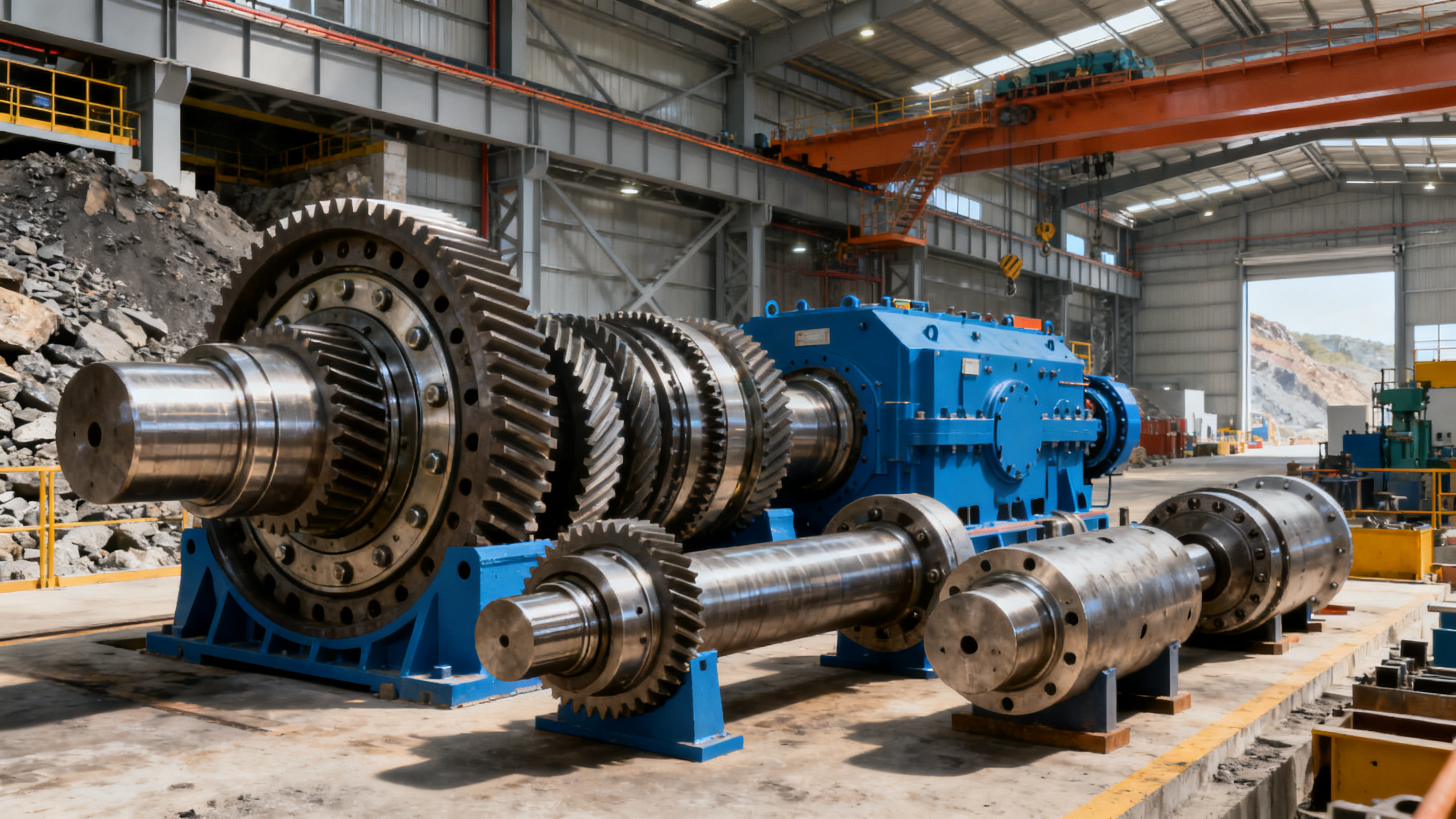
Mechanical components for heavy machinery sit at the center of uptime, safety, and operating cost. When loads stay high for long periods, even a small failure in a bearing, gear, shaft, seal, or coupling can spread quickly through the machine. In heavy industry, that risk matters far beyond one asset, because delayed production, safety exposure, and repair complexity often rise together. A practical understanding of component types, load behavior, and replacement criteria helps turn maintenance from reaction into control.
Why these components deserve closer attention
Heavy machinery works in mines, ports, mills, plants, and infrastructure projects where conditions are rarely gentle. Shock, vibration, contamination, heat, moisture, and misalignment often exist at the same time.
That is why mechanical components for heavy machinery are never just replacement parts. They are load paths, motion controls, and failure points that shape how the whole system behaves under stress.
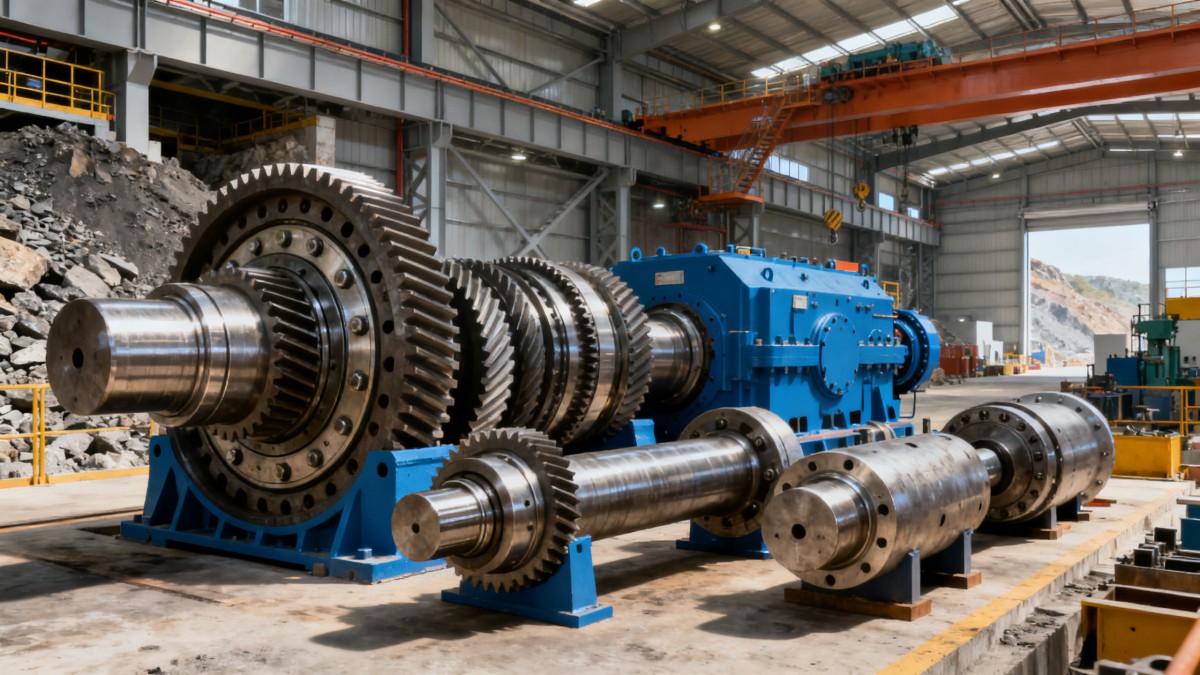
From a broader industrial perspective, this is also a sourcing and reliability issue. Global Industrial Core (GIC) emphasizes that foundational systems must meet strict safety, compliance, and performance expectations, especially where infrastructure failure is unacceptable.
In practice, that means replacement decisions should not rely on price alone. Load ratings, material quality, dimensional accuracy, lubrication conditions, and certification records all matter.
The main mechanical components and what they do
Most mechanical components for heavy machinery fall into a few critical groups. Each one manages force, motion, or protection in a different way.
Power transmission parts
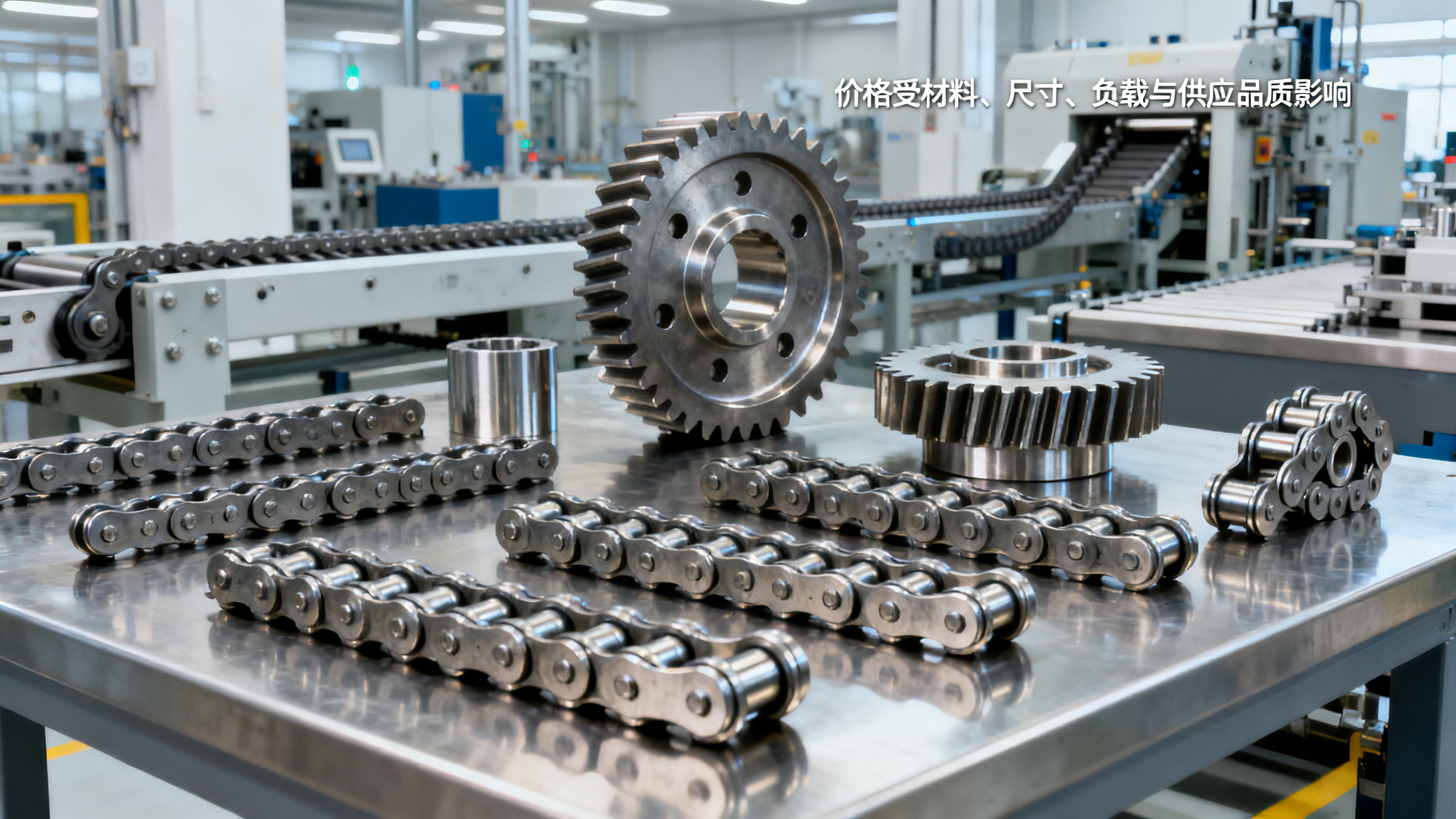
Gears, shafts, couplings, chains, sprockets, and belts transfer torque from one section to another. Their condition affects speed stability, efficiency, and shock absorption.
When these parts wear unevenly, the machine may still run, but alignment errors and vibration usually start to increase before a major stop occurs.
Load support and motion control parts
Bearings, bushings, rollers, and slides support rotating or moving assemblies. They reduce friction while keeping loads within controlled paths.
These parts often show damage from lubrication breakdown, particle contamination, overloading, or installation errors rather than from age alone.
Retention and fastening parts
Bolts, pins, keys, locknuts, retaining rings, and structural fasteners keep assemblies fixed in position. Small parts in this category often cause large failures.
Loss of preload, thread damage, or repeated impact loading can turn a stable assembly into a loose and unsafe one.
Sealing and protection parts
Seals, gaskets, wipers, covers, and liners protect internal surfaces from dust, slurry, water, and chemicals. They also keep lubricants where they belong.
In dirty environments, seal failure often starts a chain reaction. Contamination enters, lubrication degrades, friction rises, and bearing or shaft damage follows.
Understanding the loads that drive wear
Not all loads damage components in the same way. Replacement timing becomes clearer when load type is matched to the part’s operating role.
Usually, heavy equipment sees combined loading. A gearbox may handle torque, vibration, misalignment, and contamination at once. That is why single-cause thinking often leads to poor replacement decisions.
More useful questions are simple. Has the load changed recently? Has duty cycle increased? Has lubrication quality dropped? Did one failed part overload nearby components?
Where failure tends to start in real operations
In field conditions, mechanical components for heavy machinery rarely fail without signals. The challenge is that early signals can look minor during normal production pressure.
Bearing roughness may first appear as a slight temperature rise. Gear wear may begin with fine metallic debris in lubricant. Coupling damage may show up as irregular vibration after a shutdown restart.
Fasteners deserve special attention. Repeated loosening is often treated as a hardware issue, but it may point to deeper misalignment, uneven loading, or a poor assembly sequence.
In abrasive environments, seals and liners often provide the earliest indication of system stress. Once they lose integrity, wear rates elsewhere tend to accelerate quickly.
Practical replacement criteria that make sense
Replacement should be based on condition, risk, and fit for service. Calendar-based replacement alone can work for some parts, but it often misses actual operating reality.
Replace immediately when safety or structural integrity is affected
- Visible cracks, broken teeth, severe deformation, or damaged locking features
- Rapid lubricant leakage that threatens bearing or gearbox survival
- Heat, noise, or vibration levels rising beyond normal trend limits
Plan replacement when wear passes functional limits
- Clearance exceeds tolerance and affects alignment or motion accuracy
- Surface pitting, scoring, or fretting expands over repeated inspections
- Seal performance declines enough to allow contamination ingress
Review the full assembly before changing one part
A new part installed beside worn mating surfaces may fail early. For example, replacing a bearing without checking shaft finish, housing roundness, and lubrication flow can repeat the same failure.
That is one reason GIC’s industrial perspective matters. Reliable decisions depend on traceable specifications, material verification, and a clear understanding of how one component interacts with the full system.
What to check before selecting replacement parts
Equivalent dimensions do not always mean equivalent performance. Mechanical components for heavy machinery must be matched to load profile, duty cycle, and environment.
- Confirm actual load direction, magnitude, and shock frequency
- Check material grade, hardness, coating, and heat treatment records
- Review sealing needs for dust, slurry, water, or chemical exposure
- Match lubricant type to temperature, speed, and contamination risk
- Verify compliance needs where CE, UL, ISO, or site rules apply
This is especially relevant in multi-site operations. A component that works in a dry quarry may underperform in a coastal bulk terminal with salt exposure and washdown routines.
A sensible next step for better decisions
The best approach is to build a simple replacement framework around critical assets. List the most failure-sensitive components, record their normal condition signals, and define clear intervention thresholds.
Then compare replacement options using more than purchase cost. Service life, certification, traceability, operating environment, and compatibility with mating parts should all be part of the review.
For any site reviewing mechanical components for heavy machinery, the most useful progress often starts with better inspection records and sharper load awareness. That creates a stronger basis for maintenance planning, safer operation, and more resilient equipment performance over time.
Technical Specifications
- How to Select an Access Control Management System for Multi-Site FacilitiesAuthor :Safety Compliance Lead
- Portable Gas Monitor Calibration: How Often Is It Needed for Safe Confined-Space Work?Author :Precision Metrology Expert
- Wholesale Borosilicate Lab Glassware: How Buyers Verify Quality, Specs, and Supply ReliabilityAuthor :Precision Metrology Expert
Expert Insights

Chief Security Architect
Dr. Thorne specializes in the intersection of structural engineering and digital resilience. He has advised three G7 governments on industrial infrastructure security.
Related Analysis
- Sep 20, 2026How to Select an Access Control Management System for Multi-Site FacilitiesAuthor :Safety Compliance Lead
- Sep 19, 2026Portable Gas Monitor Calibration: How Often Is It Needed for Safe Confined-Space Work?Author :Precision Metrology Expert
- Sep 18, 2026Wholesale Borosilicate Lab Glassware: How Buyers Verify Quality, Specs, and Supply ReliabilityAuthor :Precision Metrology Expert
Core Sector // 01
Security & Safety
- Does Power Transmission Maintenance Differ in Desert and Arctic Sites?Author :Heavy Industry Strategist

- Can Industrial Engineering Solutions Reduce Petrochemical Downtime?Author :Heavy Industry Strategist

- What Drives Industrial Roller Chains Price: Material, Pitch, Load, and Supplier FactorsAuthor :Heavy Industry Strategist

- How to Choose a Three Phase Soft Starter for Pumps, Fans, and ConveyorsAuthor :Heavy Industry Strategist

- How to Evaluate a Conveyor Roller Belts Manufacturer for Load, Speed, and Service LifeAuthor :Heavy Industry Strategist

- Power Transmission Systems Pricing: 7 Cost Drivers Buyers Should CompareAuthor :Heavy Industry Strategist

- India Expands BIS ISI Rule for Imported Belts and ChainsAuthor :Heavy Industry Strategist

- Zero Backlash Jaw Coupling Selection Guide: Torque, Misalignment, and Servo PerformanceAuthor :Heavy Industry Strategist