How to Compare a Ball Screws Manufacturer for Precision, Lead Time, and Support
Author
Date Published
Reading Time
How to Compare a Ball Screws Manufacturer for Precision, Lead Time, and Support
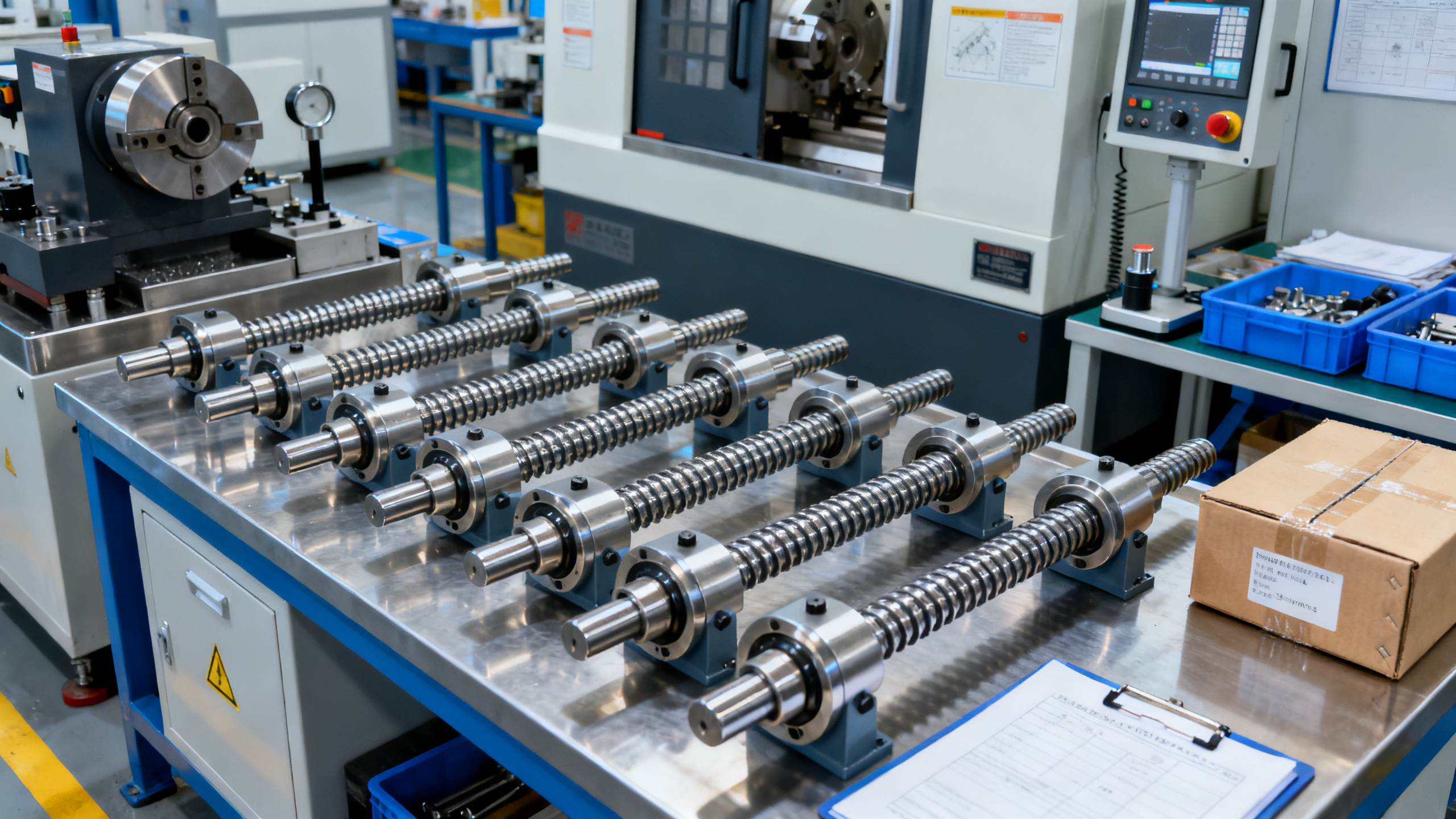
Choosing the right ball screws manufacturer is not just about unit price. It shapes positioning accuracy, delivery reliability, and machine life across demanding industrial systems.
A weak supplier can create hidden costs fast. Scrap rises, assembly slows, and field failures damage schedules that are already tight.
A strong comparison process looks wider. It checks precision capability, manufacturing consistency, lead time control, engineering support, and proof of quality.
This guide explains how to compare a ball screws manufacturer in a practical way. The goal is simple: lower sourcing risk while improving long-term machine performance.
Start with application fit, not catalog claims
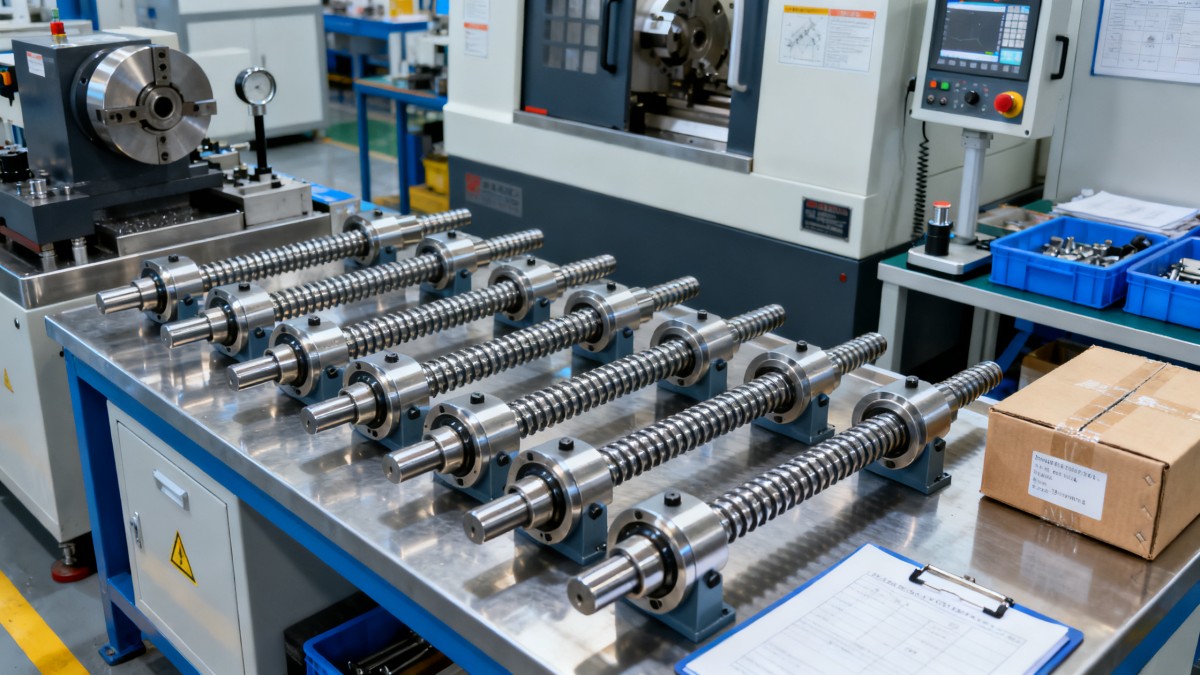
Before comparing any ball screws manufacturer, define the real operating conditions. Catalog numbers alone rarely show whether a supplier fits your machine design.
Focus on the load profile first. Dynamic load, static load, duty cycle, travel speed, and stroke frequency all affect the right ball screw selection.
Then review the environment. Dust, coolant, vibration, heat, corrosion, and washdown exposure can quickly separate an average supplier from a capable one.
This matters because one ball screws manufacturer may be strong in standard automation lines, while another performs better in harsh heavy-industry applications.
- Required accuracy grade and backlash target
- Expected life under actual working load
- Mounting interface and space limits
- Lubrication method and maintenance interval
- Noise, speed, and thermal stability requirements
When these points are clear, supplier comparisons become more objective. It also becomes easier to spot a ball screws manufacturer that is overselling generic capability.
Compare precision with evidence, not promises
Precision is often the first screening factor. Still, many buyers compare only nominal accuracy grades and miss the wider manufacturing picture.
A reliable ball screws manufacturer should explain how precision is achieved and verified. That includes machining control, grinding capability, inspection methods, and batch traceability.
Ask for measurable data. Lead accuracy, backlash range, runout, preload consistency, and repeatability matter more than polished marketing language.
In real purchasing decisions, the better signal is process stability. One excellent sample means little if the next ten units vary too much.
Questions that reveal real precision capability
- Which standards define accuracy grades and test methods?
- Is the screw rolled or ground for this application?
- What inspection equipment is used for lead and geometry checks?
- How is preload controlled across production lots?
- Can the supplier provide inspection records by serial number?
A strong ball screws manufacturer should answer these directly. Vague replies usually suggest limited control over process capability or documentation discipline.
If the application involves CNC systems, semiconductor tools, packaging lines, or high-speed transfer equipment, this level of scrutiny becomes even more important.
Evaluate lead time the same way you evaluate quality
Lead time is not only a logistics issue. It reflects production planning, raw material security, machining capacity, and how mature the supplier’s operations really are.
A ball screws manufacturer may quote an attractive standard lead time. The real question is whether that lead time holds during demand spikes or custom orders.
Look beyond the first order. Procurement performance improves when you understand normal production cycles, expedite options, safety stock policies, and shipment reliability.
Useful lead time checkpoints
- Ask for standard lead time versus custom lead time.
- Request on-time delivery data for recent quarters.
- Check whether critical materials are dual-sourced.
- Confirm surge capacity during urgent project ramps.
- Review packaging, export readiness, and Incoterm flexibility.
This is where a disciplined ball screws manufacturer stands out. Reliable lead time control reduces downtime risk and protects larger EPC or plant expansion schedules.
From a total-cost view, stable delivery often saves more money than a lower unit price. Delayed mechanical components can stall entire assemblies.
Check engineering support before problems appear
Support quality is often underestimated during sourcing. Yet engineering support becomes critical when dimensions change, loads shift, or field issues need fast root-cause analysis.
A capable ball screws manufacturer should do more than send drawings. It should help validate sizing, preload choice, lubrication strategy, and installation method.
This also affects startup speed. Clear technical communication shortens approval cycles and helps internal teams avoid repeated design revisions.
Support signals worth comparing
- Application review before quotation
- Fast response to tolerance and fit questions
- Installation guidance and maintenance recommendations
- Failure analysis support for returned parts
- Documentation for global compliance needs
In practice, a responsive ball screws manufacturer reduces hidden internal workload. That support can be decisive when teams manage multi-site procurement or compressed launch plans.
Review quality systems, traceability, and risk controls
Quality assurance should be reviewed as a live system, not a certificate checklist. ISO status matters, but daily execution matters more.
A dependable ball screws manufacturer should show clear controls from incoming material to final inspection. That includes nonconformance handling and corrective action discipline.
Traceability is especially important for critical infrastructure, power equipment, process automation, and heavy machinery used in regulated environments.
These checks help buyers compare each ball screws manufacturer on operational maturity, not just commercial attractiveness.
Use a weighted comparison instead of a price-only decision
Once technical and supply data are gathered, convert them into a simple scoring model. This creates internal alignment and improves supplier selection quality.
A practical model gives each ball screws manufacturer a score across precision, lead time, support, quality systems, and commercial terms.
Weights should reflect business risk. For mission-critical machinery, precision and reliability usually deserve more weight than small unit-price gaps.
Example evaluation categories
- Precision capability and documented results
- Lead time stability and capacity flexibility
- Engineering support and response quality
- Quality system depth and traceability
- Total landed cost and warranty terms
This approach also helps during supplier review meetings. Instead of debating opinions, teams compare evidence from each ball screws manufacturer side by side.
Final checks before awarding the order
Before final approval, request a sample, pilot batch, or first-article inspection if the project allows it. Real parts often reveal issues hidden in quotations.
Also confirm after-sales conditions. A serious ball screws manufacturer should define warranty scope, replacement response, and technical escalation paths clearly.
More importantly, check whether the supplier can grow with future demand. The best sourcing decision supports both current projects and future platform expansion.
In the end, the right ball screws manufacturer is the one that delivers repeatable precision, dependable lead times, and useful engineering support under real operating pressure.
If you compare suppliers through that lens, you will make a stronger, lower-risk decision and build a more resilient industrial supply chain.
Technical Specifications
- How to Select an Access Control Management System for Multi-Site FacilitiesAuthor :Safety Compliance Lead
- Portable Gas Monitor Calibration: How Often Is It Needed for Safe Confined-Space Work?Author :Precision Metrology Expert
- Wholesale Borosilicate Lab Glassware: How Buyers Verify Quality, Specs, and Supply ReliabilityAuthor :Precision Metrology Expert
Expert Insights

Chief Security Architect
Dr. Thorne specializes in the intersection of structural engineering and digital resilience. He has advised three G7 governments on industrial infrastructure security.
Related Analysis
- Sep 20, 2026How to Select an Access Control Management System for Multi-Site FacilitiesAuthor :Safety Compliance Lead
- Sep 19, 2026Portable Gas Monitor Calibration: How Often Is It Needed for Safe Confined-Space Work?Author :Precision Metrology Expert
- Sep 18, 2026Wholesale Borosilicate Lab Glassware: How Buyers Verify Quality, Specs, and Supply ReliabilityAuthor :Precision Metrology Expert
Core Sector // 01
Security & Safety
- Does Power Transmission Maintenance Differ in Desert and Arctic Sites?Author :Heavy Industry Strategist

- Can Industrial Engineering Solutions Reduce Petrochemical Downtime?Author :Heavy Industry Strategist

- What Drives Industrial Roller Chains Price: Material, Pitch, Load, and Supplier FactorsAuthor :Heavy Industry Strategist

- How to Choose a Three Phase Soft Starter for Pumps, Fans, and ConveyorsAuthor :Heavy Industry Strategist

- How to Evaluate a Conveyor Roller Belts Manufacturer for Load, Speed, and Service LifeAuthor :Heavy Industry Strategist

- Power Transmission Systems Pricing: 7 Cost Drivers Buyers Should CompareAuthor :Heavy Industry Strategist

- India Expands BIS ISI Rule for Imported Belts and ChainsAuthor :Heavy Industry Strategist

- Zero Backlash Jaw Coupling Selection Guide: Torque, Misalignment, and Servo PerformanceAuthor :Heavy Industry Strategist