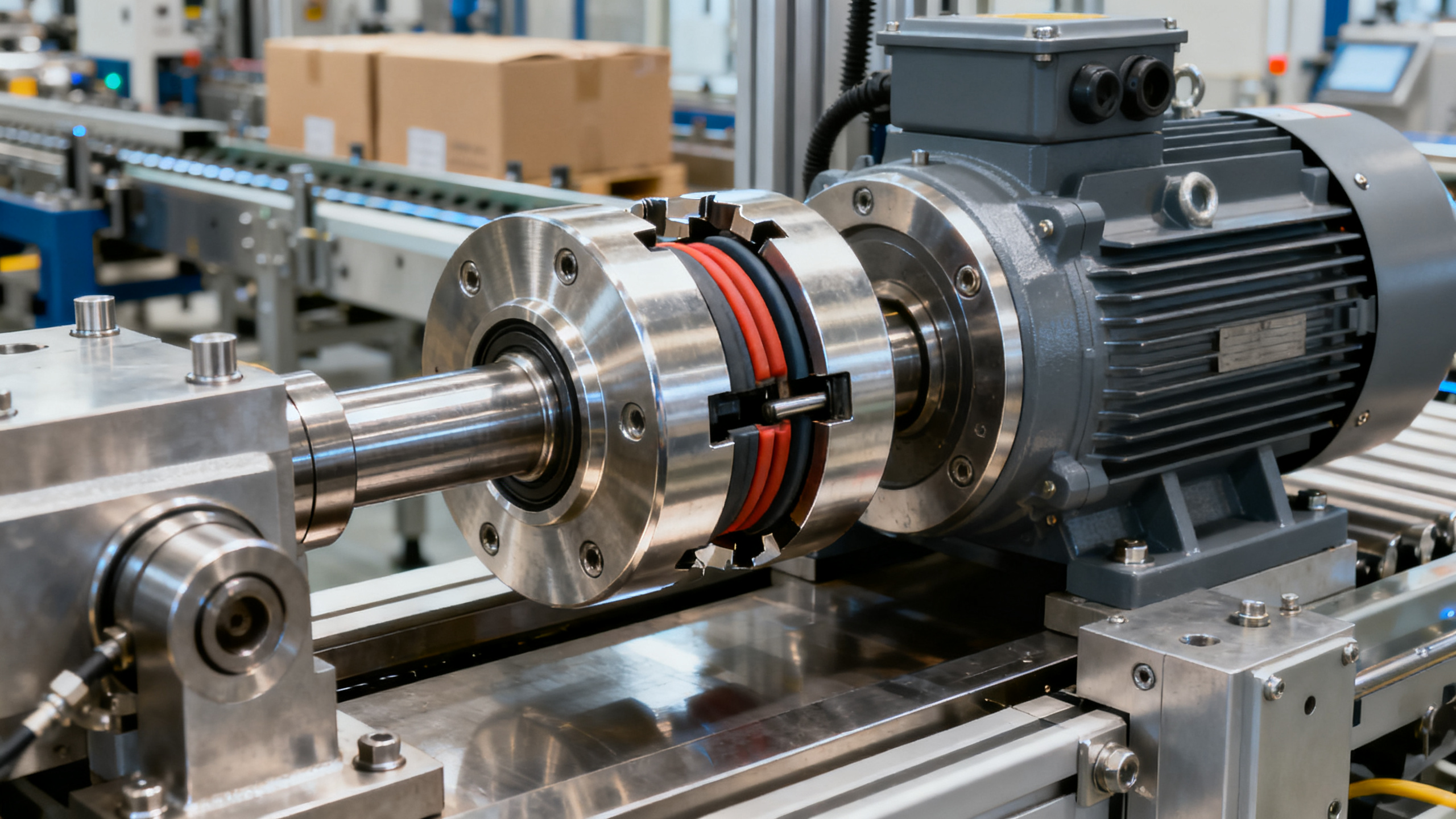
Axial Flux Motor Output Reshapes Supply Requirements
Author
Date Published
Reading Time

On June 5, 2026, a production base in Lanxi, Zhejiang officially started mass production of what was described as the world’s first mass-produced axial flux motor, bringing a concrete execution signal rather than a purely technical announcement. From an industry perspective, the development matters because it points to changing specification expectations, delivery assumptions, and sourcing requirements for industrial humanoid robot joint actuators, precision servo drive systems, high-reliability industrial power modules, and related component categories such as Bearings & Seals, Power Transmission, and Industrial Optics.

What Has Been Confirmed at This Stage
The confirmed information is limited but commercially meaningful. The Lanxi, Zhejiang base entered formal production on June 5, 2026, for an axial flux motor identified in the provided information as the world’s first mass-produced product of its kind, with annual capacity of 300,000 units. The motor is described as offering high power density, high torque density, and material savings of more than 22% in copper and iron. The stated application effect is improved performance and faster domestic substitution progress in industrial humanoid robot joint actuators, precision servo drive systems, and high-reliability industrial power modules. The same information also states that overseas customers’ selection standards and delivery expectations for supporting parts including Bearings & Seals, Power Transmission, and Industrial Optics will be directly affected.
Why the Supply Chain Now Faces a Different Rule Set
Technical selection may move before formal policy text does
Analysis shows that the most immediate change is not necessarily a published regulation, but a shift in practical specification alignment. Buyers and integrators working on robot joints, servo systems, and industrial power modules may begin revising technical bid documents, approved vendor lists, and qualification criteria to reflect higher power density and torque density expectations. For suppliers, this means closer scrutiny of performance declarations, dimensional compatibility, material documentation, and consistency of delivery records.
Supporting component suppliers face a documentation burden
Observably, suppliers of Bearings & Seals, Power Transmission parts, and Industrial Optics may be affected because upstream motor architecture changes often alter matching requirements in adjacent assemblies. The practical impact may appear in technical datasheets, test reports, traceability files, sample validation, and customer-side specification reviews. What deserves closer attention is whether overseas customers start asking for updated product validation packages or revised lead-time commitments before placing repeat or replacement orders.
Export and channel participants may see new review points
For exporters, distributors, and supply-chain service providers, the issue is less about a new tariff or named trade rule in the provided information and more about changing transaction conditions. Analysis shows that once customer expectations on performance, substitution readiness, or delivery timing shift, contract language, product descriptions, inspection checkpoints, and after-sales responsibility boundaries may also tighten. Companies involved in cross-border delivery should therefore watch for changes in order specifications, acceptance standards, and pre-shipment document requests.
Testing and certification work could become more front-loaded
From an industry perspective, certification-related companies and testing service providers may face earlier involvement in projects linked to industrial robotics and high-reliability power modules. The provided information does not confirm any new certification regime, but it does indicate a product transition that may cause buyers to request more evidence on reliability, system matching, and production consistency. That makes compliance review a practical commercial step even before any formal rule change is publicly identified.
What Companies Should Track Now
Review specification and tender language closely
Companies supplying directly into robotics, servo, and industrial power module chains should monitor whether customer specifications begin to reference higher density, torque, or material-efficiency expectations. It is more appropriate to understand this as an early warning for technical bid alignment and qualification updates, not as proof that all procurement standards have already changed.
Prepare product files for deeper customer checks
Suppliers should be ready to organize technical documents, inspection records, test materials, and traceability files that support product matching and delivery consistency. Analysis shows that even without a named new regulation, documentation quality can become a practical gatekeeper when customers reassess component choices around a newly mass-produced core motor technology.
Reassess delivery planning and supplier capacity assumptions
Because the provided information links the launch to annual output and to expected effects on overseas customers’ delivery expectations, procurement teams and sourcing managers should pay attention to changes in forecast cycles, safety stock decisions, and alternate supplier qualification. The key issue is not to assume immediate disruption, but to recognize that lead-time expectations may be reviewed across connected component categories.
Watch for after-sales and quality accountability changes
For exporters and after-sales service providers, a prudent focus is whether customer-side acceptance conditions, replacement responsibilities, or fault-tracing requirements become more detailed. Observably, when component selection standards move, service obligations and evidence requirements often become more explicit in contracts and delivery files, even if no separate public rule text is announced at the same time.
How This Signal Should Be Read
Analysis shows that this development is best read as a market execution signal with compliance implications, rather than as a stand-alone policy event. The confirmed facts point to a tangible production milestone and to likely changes in how downstream and overseas buyers judge component suitability, delivery timing, and substitution readiness. What deserves closer attention is whether this technical-commercial shift is later reflected in tender documents, certification practices, customer qualification standards, and order execution language.
What the Market Can Conclude for Now
A balanced reading is that the start of mass production creates a real reference point for procurement, qualification, and supply-chain coordination in robotics and high-end industrial power applications. It would be premature to treat it as a fully settled regulatory change, but it is reasonable to view it as an implemented industrial signal that may influence compliance review, sourcing decisions, and delivery expectations in connected component segments. Continued monitoring is therefore more appropriate than making fixed assumptions about immediate market-wide standardization.
Basis of This Article and What Still Needs Verification
This article is generated from the user-provided news title, event date, and event summary. Source types commonly relevant to developments of this kind may include official announcements, regulatory releases, customs or trade authority information, industry association updates, standards organization documents, and reporting by authoritative media. No specific official source link was provided in the input, so further verification remains necessary. Observably, the next points to watch are any detailed policy wording, certification interpretation, tender document changes, market feedback, and actual enterprise execution in procurement, delivery, and after-sales processes.
Technical Specifications
- How to Select an Emissions Monitoring System Analyzer for Compliance ReportingAuthor :Precision Metrology Expert
- How to Select an Access Control Management System for Multi-Site FacilitiesAuthor :Safety Compliance Lead
- Portable Gas Monitor Calibration: How Often Is It Needed for Safe Confined-Space Work?Author :Precision Metrology Expert
Expert Insights

Chief Security Architect
Dr. Thorne specializes in the intersection of structural engineering and digital resilience. He has advised three G7 governments on industrial infrastructure security.
Related Analysis
- Sep 21, 2026How to Select an Emissions Monitoring System Analyzer for Compliance ReportingAuthor :Precision Metrology Expert
- Sep 20, 2026How to Select an Access Control Management System for Multi-Site FacilitiesAuthor :Safety Compliance Lead
- Sep 19, 2026Portable Gas Monitor Calibration: How Often Is It Needed for Safe Confined-Space Work?Author :Precision Metrology Expert
Core Sector // 01
Security & Safety
- Does Power Transmission Maintenance Differ in Desert and Arctic Sites?Author :Heavy Industry Strategist

- Can Industrial Engineering Solutions Reduce Petrochemical Downtime?Author :Heavy Industry Strategist

- What Drives Industrial Roller Chains Price: Material, Pitch, Load, and Supplier FactorsAuthor :Heavy Industry Strategist

- How to Choose a Three Phase Soft Starter for Pumps, Fans, and ConveyorsAuthor :Heavy Industry Strategist

- How to Evaluate a Conveyor Roller Belts Manufacturer for Load, Speed, and Service LifeAuthor :Heavy Industry Strategist

- Power Transmission Systems Pricing: 7 Cost Drivers Buyers Should CompareAuthor :Heavy Industry Strategist

- India Expands BIS ISI Rule for Imported Belts and ChainsAuthor :Heavy Industry Strategist

- Zero Backlash Jaw Coupling Selection Guide: Torque, Misalignment, and Servo PerformanceAuthor :Heavy Industry Strategist