US Adjusts Section 232 Tariffs on Steel, Aluminum, Copper
Author
Date Published
Reading Time
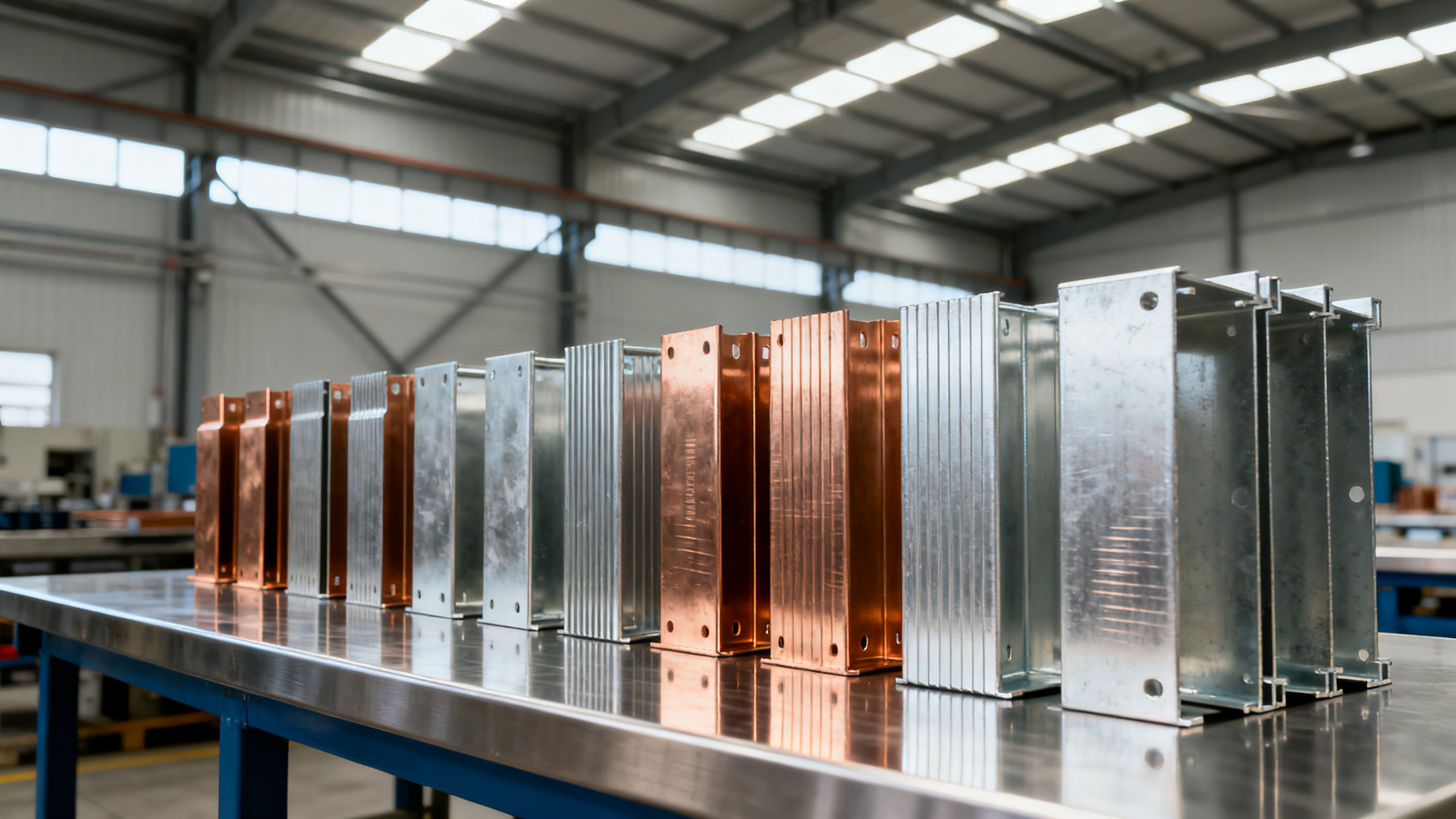
Effective April 6, 2026, the United States revised its Section 232 tariffs on steel, aluminum, and copper products—specifically reducing the tariff rate from 50% to 10% for certain industrial items—including copper busbars, aluminum busway, and specialty steel components—provided they are manufactured using domestically smelted raw materials. This update directly affects metal fabricators, cross-border supply chain operators, and certification-holding manufacturers serving North American infrastructure and energy markets.
Event Overview
On April 6, 2026, the U.S. implemented an adjustment to Section 232 tariffs on steel, aluminum, and copper. For industrial copper busbars, aluminum busway, and specialty steel components produced using U.S.-smelted raw materials, the applicable tariff rate was lowered from 50% to 10%. The policy aims to incentivize nearshore manufacturing. It also opens a compliance pathway for Chinese metal processing firms holding ASME or UL certification: importing high-precision semi-finished profiles into Mexico or Canada for final assembly, finishing, and labeling prior to U.S. entry.
Industries Affected by This Adjustment
Direct Trading Enterprises: Companies exporting finished copper, aluminum, or steel products directly from China to the U.S. face unchanged 50% tariffs unless their supply chain meets the domestic smelting requirement—or shifts final value-add steps outside the U.S. border. The change increases cost pressure on purely export-oriented models without regional assembly capacity.
Raw Material Procurement Firms: Entities sourcing primary metals (e.g., copper cathodes, aluminum ingots) must now verify origin and smelting location—not just country of export—to determine tariff eligibility. U.S.-smelted content verification becomes a material compliance checkpoint, not merely a documentation formality.
Processing & Fabrication Manufacturers: Producers with ASME/UL certification in China may restructure operations to support final-stage fabrication in Mexico or Canada. This enables them to meet the ‘final assembly + labeling’ condition for tariff reduction—without relocating core precision extrusion or rolling capabilities.
Supply Chain Service Providers: Logistics, customs brokerage, and certification support firms handling North American metal imports will see increased demand for traceability documentation, smelter-origin verification, and cross-border assembly coordination—particularly between China, Mexico, and Canada.
What Relevant Enterprises or Practitioners Should Focus On and How to Respond
Monitor official implementation guidance and classification rulings
The U.S. Department of Commerce and U.S. Customs and Border Protection have not yet published detailed Harmonized System (HS) code-level eligibility criteria or verification protocols for ‘U.S.-smelted’ content. Enterprises should track forthcoming Federal Register notices and binding rulings affecting specific product categories such as busbar subtypes or structural steel grades.
Assess eligibility of current product lines against the new 10% tariff conditions
Manufacturers should audit whether existing copper busbar, aluminum busway, or specialty steel offerings use U.S.-smelted inputs—and if not, whether nearshoring final fabrication to Mexico or Canada is operationally and commercially viable. Priority should be given to high-volume, high-tariff-impact SKUs where the 40-percentage-point differential delivers measurable margin improvement.
Distinguish between policy intent and operational feasibility
While the regulation permits tariff reduction via third-country final assembly, actual customs acceptance depends on demonstrable ‘substantial transformation’—a legal standard requiring more than minor finishing or labeling. Enterprises should consult qualified trade counsel before assuming eligibility based solely on geographic relocation of final steps.
Prepare documentation systems for smelting origin and assembly workflow tracing
Eligibility requires verifiable evidence—not just supplier declarations—of U.S. smelting origin (e.g., mill test reports, smelter invoices, batch traceability records) and final assembly location (e.g., Mexican/Canadian factory certificates, production logs, labeling records). Firms should begin aligning internal documentation workflows ahead of shipment planning.
Editorial Perspective / Industry Observation
Observably, this adjustment is less a broad tariff rollback and more a targeted recalibration to reinforce domestic upstream metallurgical capacity while enabling calibrated participation from certified foreign fabricators through nearshoring-aligned structures. Analysis shows the 10% rate applies only under strict, verifiable conditions—not as a general concession. From an industry perspective, it signals growing regulatory emphasis on input provenance and process geography—not just end-product origin. Current implementation remains narrow in scope; wider applicability would require further rulemaking or case-by-case rulings. Therefore, the policy is best understood as an early-stage operational signal—not an immediate, scalable tariff relief mechanism.
Conclusion
This tariff adjustment does not represent a systemic easing of U.S. Section 232 measures. Instead, it introduces a conditional, compliance-intensive pathway for select metal products—centered on verified U.S. smelting inputs or certified nearshore final assembly. For affected enterprises, the most pragmatic interpretation is that this is a niche optimization opportunity—not a market-wide shift. Strategic response requires granular product-level assessment, rigorous documentation readiness, and cautious alignment with evolving customs enforcement standards.
Source Disclosure
Main source: U.S. Department of Commerce announcement dated April 6, 2026.
Note: Specific HS code coverage, verification procedures, and enforcement thresholds remain subject to ongoing clarification by U.S. Customs and Border Protection and the International Trade Administration. These elements require continued observation.
Technical Specifications
- How to Select Electronic Hotel Key Card Locks for Guest Rooms and Staff AreasAuthor :Safety Compliance Lead
- How to Select Lab Instruments for Reliable Chemical Analysis WorkflowsAuthor :Precision Metrology Expert
- How to Size a UPS for Server Rooms: Load, Runtime, and Redundancy FactorsAuthor :Grid Infrastructure Analyst
Expert Insights

Chief Security Architect
Dr. Thorne specializes in the intersection of structural engineering and digital resilience. He has advised three G7 governments on industrial infrastructure security.
Related Analysis
- Sep 17, 2026How to Select Electronic Hotel Key Card Locks for Guest Rooms and Staff AreasAuthor :Safety Compliance Lead
- Sep 16, 2026How to Select Lab Instruments for Reliable Chemical Analysis WorkflowsAuthor :Precision Metrology Expert
- Sep 15, 2026How to Size a UPS for Server Rooms: Load, Runtime, and Redundancy FactorsAuthor :Grid Infrastructure Analyst
Core Sector // 01
Security & Safety
- Stainless Steel Welded Tube Applications: Matching Tube Supply to Fabrication NeedsAuthor :Heavy Industry Strategist

- What Maintenance Do Furnace Components Need After 18 Months?Author :Heavy Industry Strategist

- How to Assess Metal Materials for Thermal Cycling in Power BoilersAuthor :Heavy Industry Strategist

- How to Evaluate Aluminum Extrusion Suppliers for Tight-Tolerance Components?Author :Heavy Industry Strategist

- How to Evaluate a Weld Neck Flange Manufacturer for High-Pressure Pipe ProjectsAuthor :Heavy Industry Strategist

- EU REACH Ban Hits Cr(VI)-Coated Steel ImportsAuthor :Heavy Industry Strategist
-Coated Steel Imports")
- How to Evaluate a Heat Sink Aluminum Profile Supplier for Custom Thermal ProjectsAuthor :Heavy Industry Strategist

- Industrial Metal Fabrication Components Price: What Drives Cost and How to Compare QuotesAuthor :Heavy Industry Strategist