How to shortlist a Components & Metals manufacturer fast
Author
Date Published
Reading Time
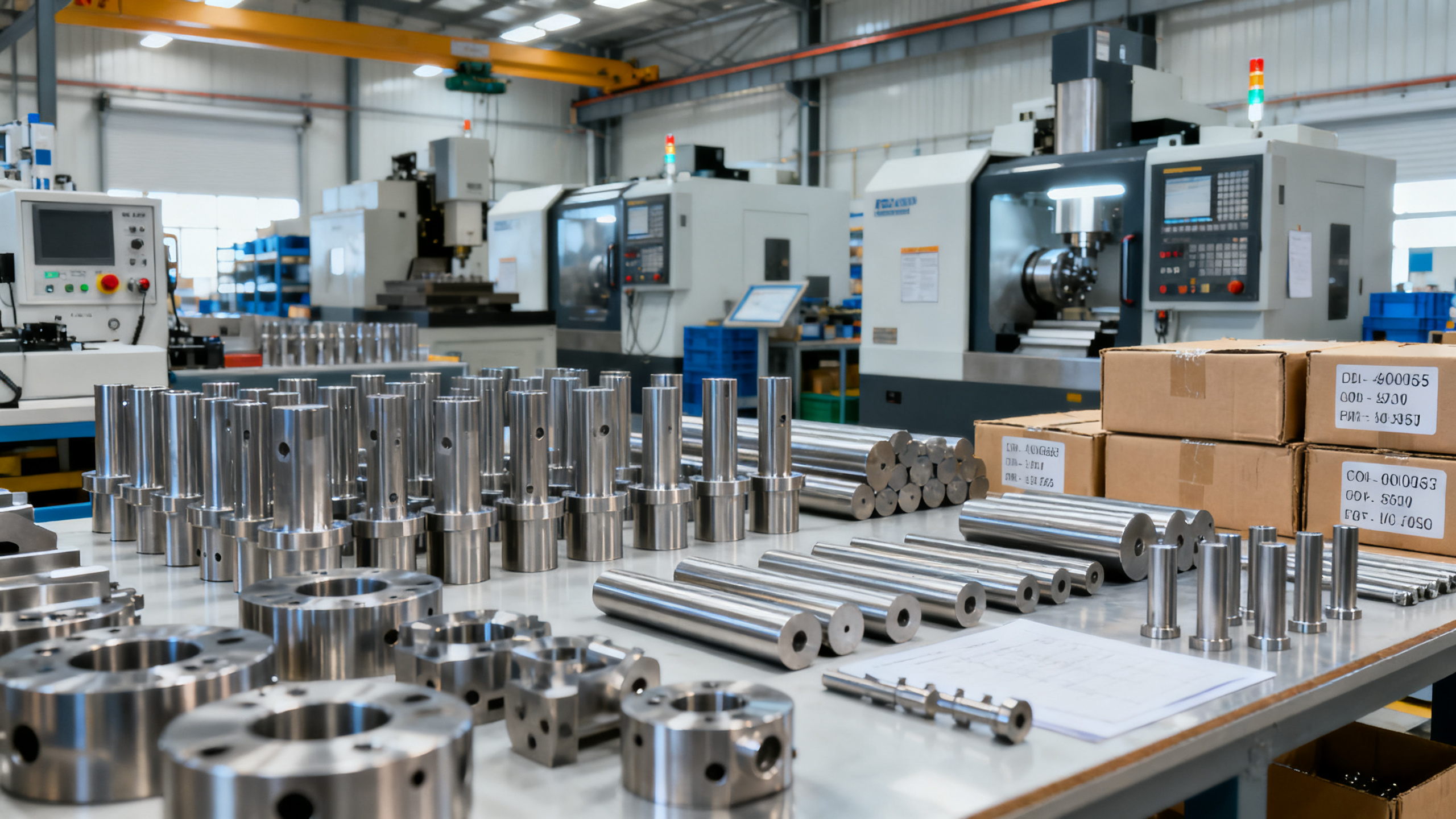
Need to shortlist a Components & Metals manufacturer fast without risking quality, compliance, or supply stability? For distributors, agents, and channel partners, the right supplier decision can directly affect margins, delivery performance, and customer trust. This guide outlines a practical way to compare manufacturers quickly using core criteria such as certifications, production capability, material consistency, and export reliability.
Why speed matters when evaluating a Components & Metals manufacturer
In industrial distribution, delayed supplier qualification often creates hidden costs. You may miss tenders, lose replacement-part business, or accept weak terms from a supplier that looked convenient but was never properly checked.
A fast shortlist does not mean a careless one. It means using a structured filter that removes unfit manufacturers early, then focusing time on the few candidates that can support long-term channel growth.
For a distributor or agent, the ideal Components & Metals manufacturer should offer more than production. It should also support documentation, repeatability, communication, and predictable export execution across changing project demands.
- Shorter qualification cycles help channel partners respond faster to EPC, MRO, and OEM demand.
- Better shortlisting reduces claims tied to dimensional variance, coating issues, or inconsistent metallurgy.
- A disciplined review protects your reputation when customers need traceability, certificates, and stable lead times.
How to build a fast shortlist: the five filters that matter most
When screening a Components & Metals manufacturer, most channel partners do not need a full audit at the first step. They need a fast decision model that sorts candidates into reject, review, or priority status.
1. Certification and compliance readiness
Ask what the manufacturer can prove today, not what it promises later. Depending on the product category, common requirements may include ISO-based quality systems, material test records, RoHS or REACH declarations where relevant, and export packing compliance.
2. Production capability matched to your channel
Some factories are strong in mass production but weak in mixed-SKU fulfillment. Others handle custom machining well but struggle with repeat volume. You need capability that matches your order profile, not just a large facility.
3. Material consistency and traceability
A reliable Components & Metals manufacturer should explain how it controls incoming raw material, heat numbers, batch separation, hardness checks, dimensional inspection, and nonconformance handling. Traceability is especially important for critical applications.
4. Export and documentation performance
Good production is not enough if shipment files are incomplete. Check whether the supplier can consistently provide packing lists, invoices, inspection records, certificates, labels, and carton or pallet markings aligned with destination market expectations.
5. Commercial responsiveness
Speed of quotation, engineering feedback, sample coordination, and issue resolution often predicts future account performance. A factory that replies slowly during qualification may become a larger problem after orders begin.
The table below helps distributors compare a Components & Metals manufacturer quickly without relying on vague impressions.
This framework is useful because it lets you reject poor-fit suppliers early. That protects time for technical review, sample validation, and account negotiation with the strongest candidates.
What documents should a Components & Metals manufacturer provide early?
If you need to shortlist fast, ask each manufacturer for a standard evidence pack. Serious suppliers usually have this ready or can provide it with minor adjustments.
- Company and factory profile with core production processes and product categories.
- Sample inspection reports showing dimensional, mechanical, or chemical verification where applicable.
- Material certificates or mill test report examples for metals and critical components.
- Photos or records of packaging methods for export shipments.
- Reference list of target industries served, such as construction equipment, power, water treatment, safety systems, or industrial maintenance.
This approach aligns well with GIC’s sourcing logic. In heavy-industry supply chains, the ability to verify process discipline and documentation quality is often more important than a low opening quote.
Distributors that serve infrastructure, utilities, industrial plants, and EPC-linked projects should also ask whether the supplier has experience with strict end-user approval flows. That can reduce delays later in the sales cycle.
How to compare shortlisted suppliers without wasting time
Once you have three to five candidates, move from basic filtering to weighted comparison. This is where many channel partners make mistakes by focusing too heavily on unit price.
A low-cost Components & Metals manufacturer can become expensive if it causes partial shipments, urgent rework, certificate gaps, or customer complaints. A balanced comparison model reduces that risk.
Use the following selection matrix to score each Components & Metals manufacturer against the factors that most affect distributor performance.
The weights can be adjusted by market. For urgent MRO supply, lead time may deserve more weight. For safety-related or regulated applications, compliance and traceability should move higher.
Which technical and operational signals reveal a reliable manufacturer?
A strong Components & Metals manufacturer usually shows process clarity. It can explain how raw materials are received, checked, processed, inspected, packed, and released for shipment.
Look for process control, not only product photos
Catalog images and polished presentations have limited value. More useful signs include inspection checkpoints, calibration routines, revision control for drawings, and written procedures for nonconforming parts.
Check whether tolerance claims are realistic
If a supplier claims very tight tolerances across many part families but provides no inspection method or sample record, review carefully. Real capability should be supported by actual measurements and repeatable processes.
Confirm material handling discipline
For metal-based products, segregation of grades, heat traceability, surface protection, and storage conditions matter. Poor handling can create corrosion, mixing errors, or downstream performance issues even before shipment.
- Request one recent sample package of inspection and material documentation.
- Ask how rejected lots are identified, isolated, and corrected.
- Verify who owns technical communication: sales only, or sales plus engineering and quality staff.
Common mistakes distributors make when shortlisting a Components & Metals manufacturer
Fast sourcing becomes risky when the review is too narrow. Many channel partners focus on price and sample appearance but miss operational issues that later damage service performance.
- Choosing a supplier based only on the first low quote, without checking whether tooling, packaging, or reinspection costs will appear later.
- Assuming that a good sample guarantees stable mass production, even though process controls may still be weak.
- Ignoring export readiness and then facing customs, labeling, or document issues on the first container.
- Failing to align supplier capability with channel strategy, especially when your business needs small repeat orders and flexible replenishment.
These mistakes are avoidable when you review supplier fit in the context of the end market. GIC’s industrial sourcing perspective is useful here because foundational sectors often punish inconsistency more than they reward aggressive pricing.
FAQ: practical questions before you approve a Components & Metals manufacturer
How many suppliers should I shortlist first?
For most distribution projects, three to five suppliers is enough. Fewer may limit negotiation leverage. More can slow decisions and create unnecessary admin work unless you manage very different product families.
What is the fastest way to compare a Components & Metals manufacturer?
Use a standard checklist covering compliance, production fit, quality records, export documents, and response speed. Ask all candidates for the same evidence pack so comparisons are direct and objective.
Should I prioritize local stock support or factory-direct pricing?
That depends on your channel model. If your customers need fast replenishment, local or regional stock support may protect revenue better than a small unit-price saving. If demand is project-based and forecastable, factory-direct sourcing may be more efficient.
What lead time questions matter most?
Ask for normal production lead time, peak-season variation, raw material dependency, sample timing, and shipment release timing after final inspection. Also ask what causes delay most often and how the factory handles it.
When should I request a sample or pilot order?
Do it after the initial documentation review but before full account approval. A pilot order is especially helpful when the product has tight tolerances, coating requirements, custom labeling, or end-user documentation expectations.
Why work with GIC when selecting a Components & Metals manufacturer
Global Industrial Core supports industrial sourcing decisions where quality failure, documentation gaps, or unstable execution can have serious commercial consequences. That is highly relevant for distributors, agents, and channel partners serving demanding industrial buyers.
Because GIC focuses on foundational industrial systems, the evaluation lens goes beyond a generic supplier list. The emphasis is on compliance logic, material reliability, process clarity, and suitability for real operating environments across heavy industry and infrastructure-related markets.
- Clarify which supplier capabilities matter most for your product category and target market.
- Compare manufacturers using practical procurement criteria instead of promotional claims.
- Reduce the risk of approving a supplier that cannot support documentation-heavy or quality-sensitive accounts.
If you are shortlisting a Components & Metals manufacturer now, you can consult GIC for parameter confirmation, product selection logic, expected lead-time considerations, packaging and export document checks, certification-related questions, sample evaluation priorities, and quotation comparison support. This makes the review process faster, clearer, and easier to defend internally when final approval is needed.
Technical Specifications
- How to Select Electronic Hotel Key Card Locks for Guest Rooms and Staff AreasAuthor :Safety Compliance Lead
- How to Select Lab Instruments for Reliable Chemical Analysis WorkflowsAuthor :Precision Metrology Expert
- How to Size a UPS for Server Rooms: Load, Runtime, and Redundancy FactorsAuthor :Grid Infrastructure Analyst
Expert Insights

Chief Security Architect
Dr. Thorne specializes in the intersection of structural engineering and digital resilience. He has advised three G7 governments on industrial infrastructure security.
Related Analysis
- Sep 17, 2026How to Select Electronic Hotel Key Card Locks for Guest Rooms and Staff AreasAuthor :Safety Compliance Lead
- Sep 16, 2026How to Select Lab Instruments for Reliable Chemical Analysis WorkflowsAuthor :Precision Metrology Expert
- Sep 15, 2026How to Size a UPS for Server Rooms: Load, Runtime, and Redundancy FactorsAuthor :Grid Infrastructure Analyst
Core Sector // 01
Security & Safety
- Stainless Steel Welded Tube Applications: Matching Tube Supply to Fabrication NeedsAuthor :Heavy Industry Strategist

- What Maintenance Do Furnace Components Need After 18 Months?Author :Heavy Industry Strategist

- How to Assess Metal Materials for Thermal Cycling in Power BoilersAuthor :Heavy Industry Strategist

- How to Evaluate Aluminum Extrusion Suppliers for Tight-Tolerance Components?Author :Heavy Industry Strategist

- How to Evaluate a Weld Neck Flange Manufacturer for High-Pressure Pipe ProjectsAuthor :Heavy Industry Strategist

- EU REACH Ban Hits Cr(VI)-Coated Steel ImportsAuthor :Heavy Industry Strategist
-Coated Steel Imports")
- How to Evaluate a Heat Sink Aluminum Profile Supplier for Custom Thermal ProjectsAuthor :Heavy Industry Strategist

- Industrial Metal Fabrication Components Price: What Drives Cost and How to Compare QuotesAuthor :Heavy Industry Strategist