How to judge a flange manufacturer before ordering
Author
Date Published
Reading Time
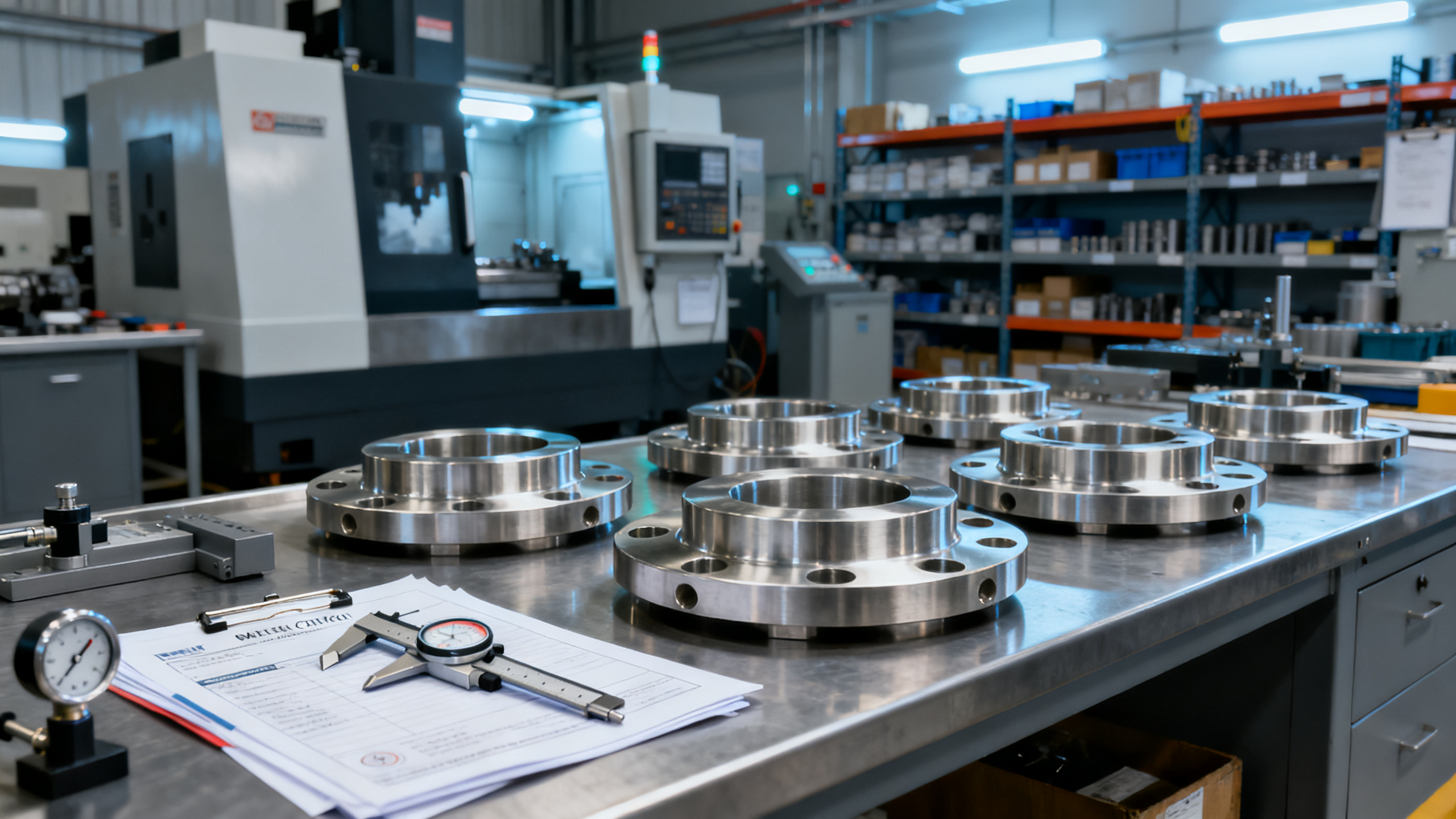
Selecting the right flange manufacturer is a high-stakes decision affecting pipeline integrity, compliance, timelines, and long-term operating risk.
Beyond price, organizations must verify traceability, machining accuracy, certification validity, production capacity, and quality control discipline before ordering.
How to Judge a Flange Manufacturer Before Ordering
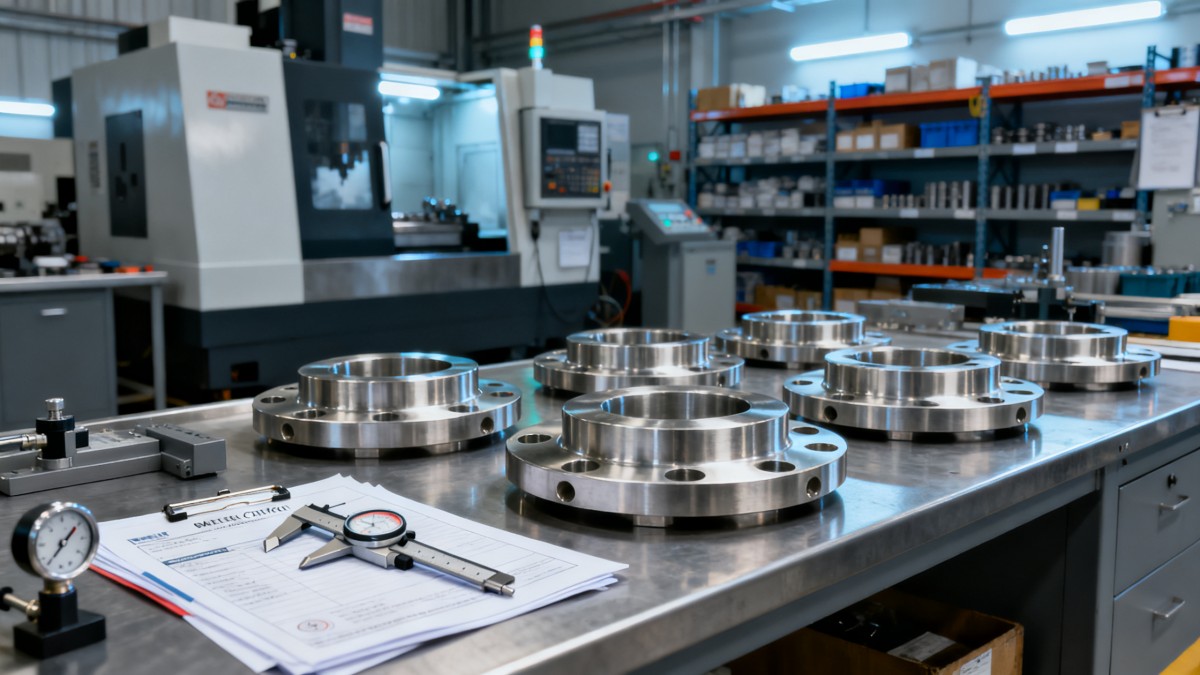
The global flange market is shifting from transactional purchasing toward evidence-based supplier qualification.
A dependable flange manufacturer now needs more than catalog availability and competitive pricing.
Industrial projects require documented proof that every flange can withstand pressure, temperature, corrosion, vibration, and regulatory scrutiny.
This shift is especially visible in energy, chemical processing, shipbuilding, water treatment, and heavy equipment systems.
In these environments, one defective flange may trigger leakage, shutdowns, rework, safety incidents, or failed inspections.
Trend Signals Changing Flange Manufacturer Evaluation
Several market signals are raising expectations for every flange manufacturer serving international industrial projects.
First, project specifications are becoming more detailed and less tolerant of substitution.
Second, inspection agencies increasingly request original test records, heat numbers, and process documentation.
Third, supply disruptions have exposed weak factories that cannot maintain consistent material sourcing.
Fourth, digital procurement platforms make supplier history more visible, including delivery failures and quality disputes.
These signals mean a flange manufacturer must be judged as a risk-control partner, not only as a parts supplier.
Why the Evaluation Standard Is Rising
Material Traceability Is the First Warning Line
A qualified flange manufacturer should provide clear traceability from raw material to finished product.
Traceability normally includes heat number, material grade, chemical composition, mechanical properties, and mill test certificates.
When records are incomplete, the true performance of the flange becomes uncertain.
This is critical for carbon steel, stainless steel, alloy steel, duplex steel, and low-temperature service materials.
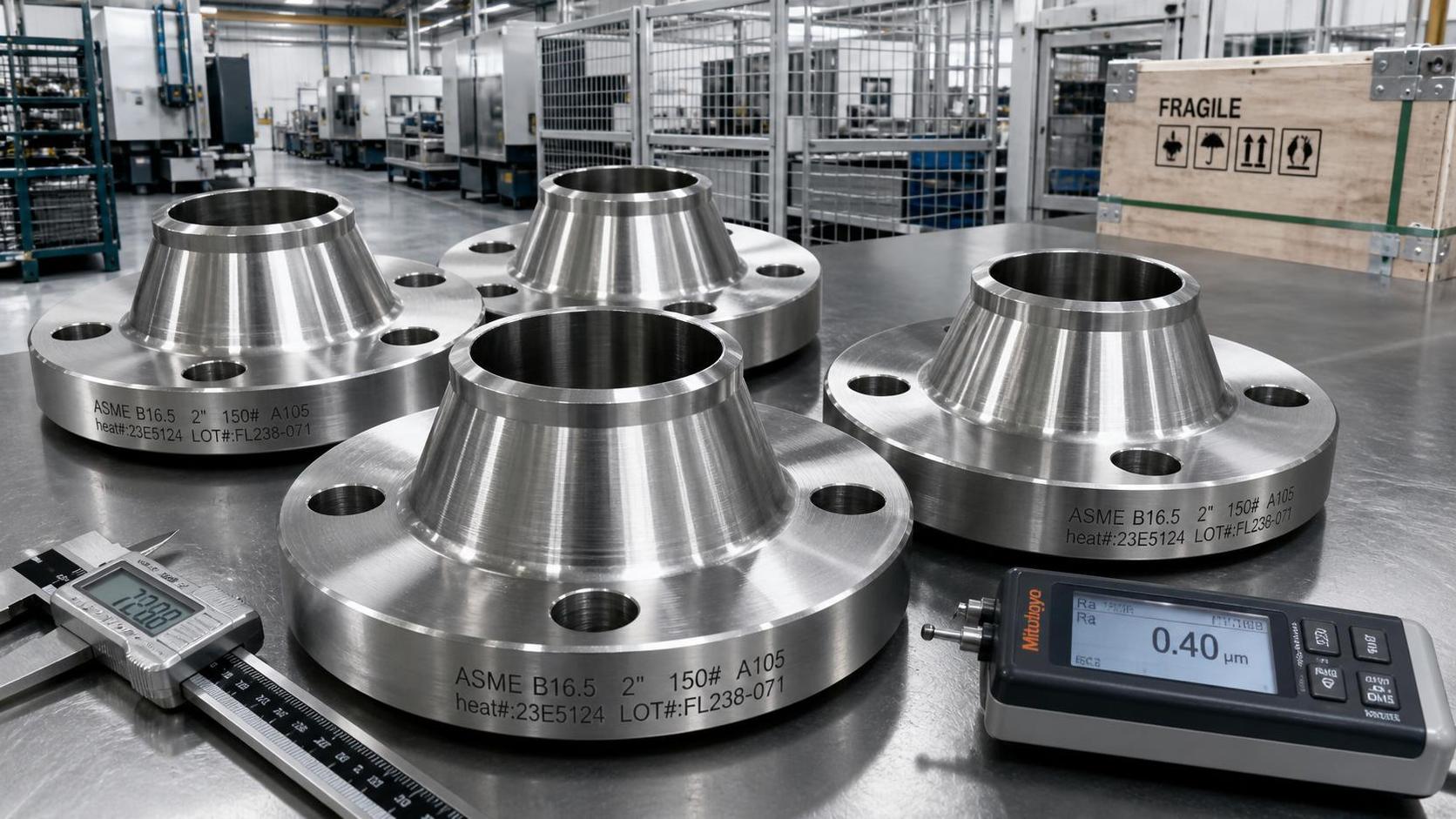
A reliable flange manufacturer should match certificates with stamped markings and internal production records.
Document inconsistencies should be treated as a serious risk signal before any order is confirmed.
Checks That Reveal Material Discipline
- Compare material certificates with flange markings.
- Check whether heat numbers remain visible after machining.
- Request chemical and mechanical test summaries.
- Confirm applicable ASTM, ASME, EN, JIS, or DIN standards.
- Ask how nonconforming materials are isolated.
Machining Accuracy Shows the Real Capability
A flange manufacturer may own large equipment, but capability depends on process control and measurement discipline.
Critical dimensions include bore, bolt hole diameter, bolt circle, flange thickness, facing finish, and raised face height.
Small deviations can affect gasket compression, bolt alignment, sealing performance, and field installation speed.
For high-pressure or high-temperature systems, machining tolerance becomes a direct safety factor.
A serious flange manufacturer should maintain calibrated measuring tools and documented inspection procedures.
Ask for sample inspection reports showing actual measurements, not only statements of compliance.
Surface Finish Requires Special Attention
The sealing face is often where weak process control becomes visible.
A flange manufacturer should control roughness, tool marks, serration pattern, and surface damage before packing.
Face finish requirements should align with gasket type and service conditions.
Certification Validity Must Be Verified, Not Assumed
Many suppliers display certificates, but not every certificate proves current manufacturing competence.
A flange manufacturer should provide valid ISO 9001 certification and relevant product compliance documents when required.
For regulated projects, additional documents may include PED, CE, ASME-related records, or third-party inspection approvals.
The certificate scope matters as much as the certificate name.
A trading company certificate cannot replace factory production certification if the project requires manufacturing control.
A trustworthy flange manufacturer should welcome certificate verification through issuing bodies or recognized inspection agencies.
Questions That Expose Weak Documentation
- Does the certificate cover the actual production site?
- Is the material grade included in the approved scope?
- Are test reports linked to batch numbers?
- Can inspection records be supplied before shipment?
- Are documents issued in an acceptable project language?
Production Capacity Affects More Than Lead Time
Capacity evaluation is not only about monthly output figures.
A flange manufacturer should show how orders move through forging, heat treatment, machining, inspection, marking, and packing.
Bottlenecks often appear during heat treatment, CNC machining, or final inspection.
If capacity is overstated, shipment delays become likely when large projects overlap.
A dependable flange manufacturer should provide realistic delivery schedules based on material availability and production loading.
Promises that ignore grade, size, pressure class, and testing requirements should be questioned.
Capacity Signals Worth Reviewing
Quality Control Culture Separates Strong Suppliers
Quality control is not a final step performed after production.
A mature flange manufacturer builds inspection into raw material intake, forming, heat treatment, machining, and shipment release.
Incoming material inspection prevents wrong grades from entering production.
In-process checks prevent repeated dimensional errors across an entire batch.
Final inspection confirms marking, dimensions, surface condition, documentation, and packing suitability.
A flange manufacturer with strong quality culture can explain corrective actions from previous nonconformities.
This openness often indicates a system capable of learning and preventing recurrence.
Quality Records to Request
- Dimensional inspection report.
- Material test certificate.
- Heat treatment chart when applicable.
- Positive material identification report if required.
- Non-destructive testing report for specified services.
Commercial Signals Can Reveal Hidden Risk
Technical checks matter, but commercial behavior also indicates supplier reliability.
A responsible flange manufacturer responds clearly to specification questions and avoids vague substitutions.
Quotations should list material grade, standard, pressure class, facing type, testing scope, and delivery basis.
If a quotation hides key assumptions, later disputes become more likely.
Extremely low prices may indicate inferior raw materials, skipped testing, weak packing, or unrealistic production commitments.
A stable flange manufacturer should explain price differences using material, machining, inspection, and logistics factors.
Red Flags Before Ordering
- Certificates are shared only as screenshots.
- Product markings do not match documents.
- Lead time is identical for all grades and sizes.
- Testing requirements are treated as optional afterthoughts.
- Packing details are missing for export shipments.
Impact on Project Stages and Operating Risk
Choosing the wrong flange manufacturer creates consequences across design, procurement, installation, commissioning, and maintenance.
During engineering review, missing certificates delay approval and force specification clarification.
During installation, poor dimensions create bolt alignment problems and gasket sealing risks.
During operation, unsuitable material may accelerate corrosion, fatigue, leakage, or cracking.
These failures rarely remain isolated because flanges connect critical piping, valves, pumps, and pressure equipment.
A strong flange manufacturer reduces uncertainty before components reach the site.
A Practical Scoring Method Before Confirmation
A structured scorecard helps compare each flange manufacturer objectively.
The goal is not to select the cheapest offer, but the supplier with controlled delivery risk.
Next Steps for Lower-Risk Ordering
Before placing an order, request a document package from the shortlisted flange manufacturer.
Include drawings, standards, material requirements, inspection expectations, marking rules, packing terms, and delivery milestones.
For critical service, arrange sample approval or third-party inspection before full production release.
For repeat orders, track defect rates, document accuracy, communication speed, and delivery performance.
A flange manufacturer that performs consistently across these areas deserves stronger consideration than one offering only a lower price.
The safest ordering decision combines technical evidence, commercial clarity, and documented accountability.
Global Industrial Core encourages industrial organizations to evaluate flange manufacturer options through verifiable records, not assumptions.
When the evidence is complete, the final order becomes a controlled engineering decision instead of a supply-chain gamble.
Technical Specifications
- How to Select Electronic Hotel Key Card Locks for Guest Rooms and Staff AreasAuthor :Safety Compliance Lead
- How to Select Lab Instruments for Reliable Chemical Analysis WorkflowsAuthor :Precision Metrology Expert
- How to Size a UPS for Server Rooms: Load, Runtime, and Redundancy FactorsAuthor :Grid Infrastructure Analyst
Expert Insights

Chief Security Architect
Dr. Thorne specializes in the intersection of structural engineering and digital resilience. He has advised three G7 governments on industrial infrastructure security.
Related Analysis
- Sep 17, 2026How to Select Electronic Hotel Key Card Locks for Guest Rooms and Staff AreasAuthor :Safety Compliance Lead
- Sep 16, 2026How to Select Lab Instruments for Reliable Chemical Analysis WorkflowsAuthor :Precision Metrology Expert
- Sep 15, 2026How to Size a UPS for Server Rooms: Load, Runtime, and Redundancy FactorsAuthor :Grid Infrastructure Analyst
Core Sector // 01
Security & Safety
- Stainless Steel Welded Tube Applications: Matching Tube Supply to Fabrication NeedsAuthor :Heavy Industry Strategist

- What Maintenance Do Furnace Components Need After 18 Months?Author :Heavy Industry Strategist

- How to Assess Metal Materials for Thermal Cycling in Power BoilersAuthor :Heavy Industry Strategist

- How to Evaluate Aluminum Extrusion Suppliers for Tight-Tolerance Components?Author :Heavy Industry Strategist

- How to Evaluate a Weld Neck Flange Manufacturer for High-Pressure Pipe ProjectsAuthor :Heavy Industry Strategist

- EU REACH Ban Hits Cr(VI)-Coated Steel ImportsAuthor :Heavy Industry Strategist
-Coated Steel Imports")
- How to Evaluate a Heat Sink Aluminum Profile Supplier for Custom Thermal ProjectsAuthor :Heavy Industry Strategist

- Industrial Metal Fabrication Components Price: What Drives Cost and How to Compare QuotesAuthor :Heavy Industry Strategist