How to judge a Components & Metals manufacturer fairly
Author
Date Published
Reading Time
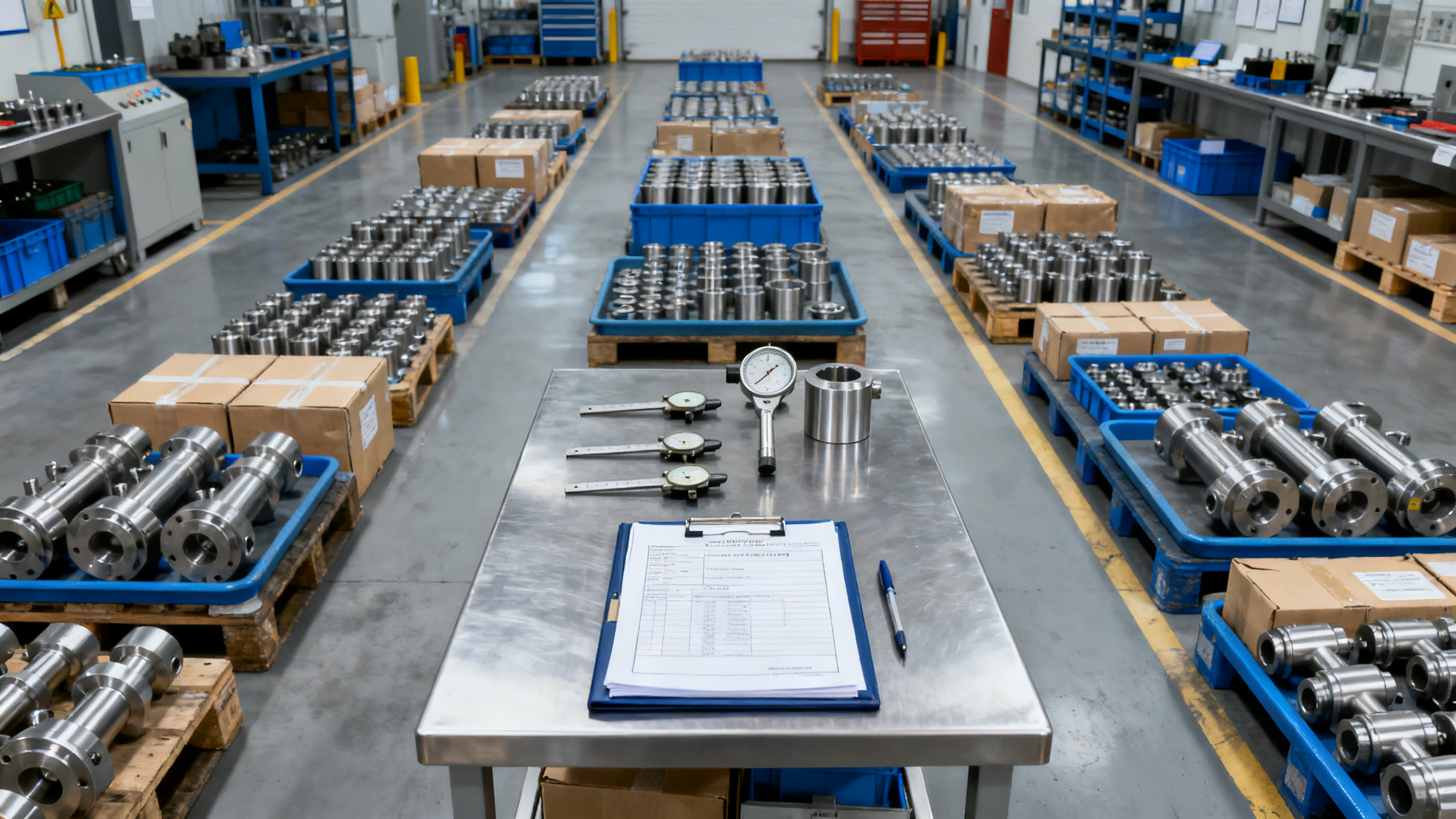
Choosing a Components & Metals manufacturer is more than comparing prices or lead times—it requires a balanced review of quality systems, compliance records, production capability, and long-term supply reliability. For distributors, agents, and channel partners, a fair evaluation helps reduce risk, protect reputation, and secure stronger market opportunities. This guide explains how to assess manufacturers objectively and make smarter sourcing decisions.
For distributors and agents, the fairest way to judge a Components & Metals manufacturer is to measure total supply value, not just quoted price. A low-cost supplier can still become expensive if quality drift, documentation gaps, or unstable delivery create claims, delays, and customer distrust.
A strong evaluation should answer practical questions quickly. Can this manufacturer meet consistent specifications? Will it support compliance needs in your market? Can it scale with your accounts? And if a problem appears, will it solve issues transparently and fast?
That means fairness is not about being lenient or overly strict. It is about using the same clear standards across suppliers, weighting the factors that affect channel performance most, and separating sales promises from verifiable evidence.
Start with the factors that matter most to distributors and channel partners
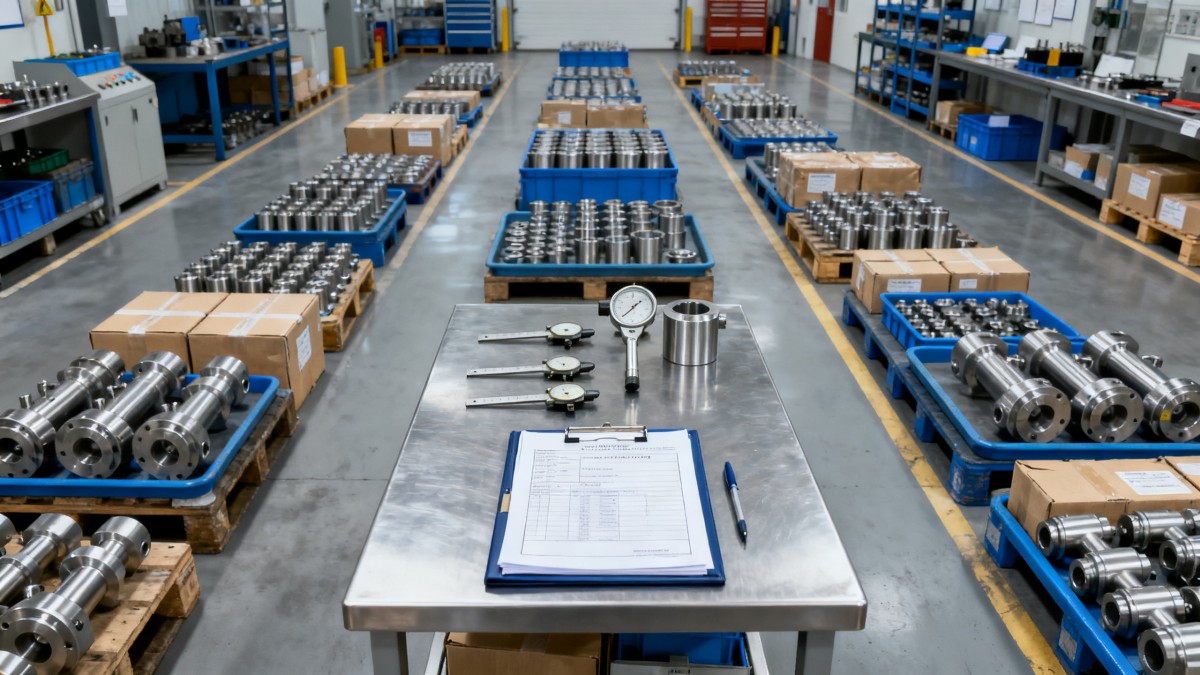
If you resell industrial parts or metal products, your risk is different from that of an end user. You are not only buying material; you are also buying service reliability, documentation support, and a supplier’s ability to protect your reputation in front of customers.
Most channel partners care about five things first: stable quality, dependable delivery, transparent communication, workable margins, and market support. These directly affect repeat orders, warranty exposure, and the confidence your customers place in your brand.
That is why a fair assessment of a Components & Metals manufacturer should begin with a weighted scorecard. Instead of judging based on one good sample or one attractive quote, compare suppliers using the same practical criteria over time.
For example, quality consistency and on-time delivery usually deserve more weight than a small unit-price advantage. In many industrial categories, one failed batch can erase the profit from several successful orders.
Do not judge only by price—judge total commercial risk
Price is visible, but risk is often hidden. A manufacturer offering the lowest quote may still create higher total cost through scrap, rework, freight expediting, compliance failures, delayed launches, or customer complaints.
Fair judgment means looking at total landed and operational cost. Include tooling charges, packaging standards, minimum order quantities, payment terms, inventory flexibility, and the cost of managing quality incidents when comparing suppliers.
For distributors, another hidden cost is internal workload. If your team must constantly chase certificates, inspect every shipment, or explain inconsistencies to customers, the supplier is consuming margin even if the invoice price looks attractive.
Ask a simple question: does this manufacturer make your business easier to grow, or harder to control? The best supplier is often the one that lowers friction across sales, logistics, technical support, and after-sales handling.
Verify quality systems, not just product samples
A clean sample proves very little by itself. A capable Components & Metals manufacturer should show that it can reproduce the same result batch after batch, operator after operator, and shipment after shipment.
Start with the quality management system. ISO 9001 is common, but certification alone should not end the review. Ask how the factory handles incoming material inspection, process control, final inspection, traceability, and corrective action management.
For metal components, consistency often depends on upstream controls. Review how the manufacturer manages raw material sourcing, heat treatment records, hardness verification, dimensional inspection, coating thickness, corrosion resistance, and lot traceability.
Look for evidence, not broad claims. Inspection reports, calibration logs, PPAP-style documentation, nonconformance procedures, and sample control plans tell you more than marketing brochures. Strong manufacturers can explain their process in operational detail.
Also check how they deal with defects. A fair manufacturer does not deny issues automatically. It identifies root cause, documents containment action, and prevents recurrence. This matters more than pretending that problems never happen.
Check compliance readiness for the markets you serve
Distributors and agents often carry the burden of market access. If a supplier lacks proper documentation, you may face customs delays, failed audits, or lost sales opportunities. That makes compliance readiness a major evaluation factor.
The required standards depend on the product and region, but common areas include ISO systems, CE-related documentation, RoHS, REACH, UL-related support, material test certificates, and country-specific declarations where applicable.
A fair review should test whether the manufacturer understands the difference between having a certificate and supporting a compliant transaction. Can it provide technical files, declarations, test data, and updated records when needed?
Ask how often compliance documents are renewed, who controls revisions, and how quickly the team can respond to distributor requests. In cross-border trade, responsiveness on paperwork can be almost as important as the physical product itself.
If the manufacturer serves regulated sectors such as energy, infrastructure, machinery, or safety-related installations, dig deeper into sector-specific documentation. Reliable suppliers know that compliance is part of the product, not an optional extra.
Assess production capability and process fit for your product mix
Not every technically sound factory is the right commercial fit. A manufacturer may produce excellent parts but still be unsuitable if its process setup, batch economics, or production planning model does not align with your demand pattern.
Review core capability first. What materials can it handle well? Which forming, machining, casting, stamping, welding, finishing, or metallurgical processes are truly in-house? Which steps are outsourced, and how are those partners controlled?
Then look at capacity realism. Ask about lead time under normal load, peak-season load, and emergency orders. A fair supplier should explain bottlenecks honestly, including tooling constraints, furnace capacity, machining availability, or plating throughput.
For channel partners, flexibility matters. Can the manufacturer support mixed orders, private labeling, packaging changes, low-volume specials, or safety stock programs? These are often decisive for distribution success, even when they are absent from standard quotations.
It is also useful to examine engineering support. If drawings need optimization, tolerances require clarification, or alternative materials must be proposed, a capable manufacturer should help reduce commercial and technical risk rather than simply take orders.
Measure delivery performance and supply continuity
Many supplier reviews focus heavily on product quality but underestimate delivery risk. Yet for distributors, late shipments can damage customer relationships quickly, especially when industrial maintenance or project schedules are involved.
Ask for actual performance data: on-time delivery rate, average lead-time deviation, order fill rate, and backorder frequency. If possible, request data for at least six to twelve months instead of relying on anecdotal assurances.
Also examine supply continuity planning. Does the manufacturer have dual sourcing for critical raw materials? What happens if a machine fails, a sub-supplier is interrupted, or export controls change? Mature suppliers plan for disruption before it happens.
Inventory policy is another key point. Some manufacturers can support safety stock, rolling forecasts, bonded stock, or scheduled release programs. These tools can make a good supplier much more valuable to distributors serving volatile demand.
Fair judgment also includes logistics discipline. Packaging quality, labeling accuracy, pallet standards, shipping document accuracy, and claim response speed all influence whether delivered goods are truly saleable on arrival.
Evaluate communication quality and commercial transparency
A Components & Metals manufacturer may look strong on paper but still fail in channel business if communication is slow, vague, or inconsistent. Distributors need fast answers because they stand between the factory and the end customer.
During evaluation, notice how the manufacturer handles ordinary requests. Does it answer technical questions clearly? Does it confirm revisions in writing? Does it disclose limitations early? Good communication usually reflects strong internal control.
Transparency matters especially in pricing and change management. Ask whether the supplier gives advance notice of material surcharges, specification changes, process substitutions, or delivery risks. Surprises are expensive in distribution networks.
It is also wise to review the escalation path. When a quality complaint or urgent shipment issue appears, who owns the case? A sales contact alone is not enough. The best manufacturers provide access to quality, engineering, and planning personnel when needed.
Channel support can also be a differentiator. Some suppliers provide product training, co-branded documentation, sales sheets, market protection policies, and faster quotation support for agents. These services can improve your ability to win and retain accounts.
Use audits, samples, and trial orders in the right sequence
Fair judgment works best as a staged process. Start with document screening, then move to technical review, sample validation, audit or video assessment, and finally a controlled trial order before awarding larger business.
Document screening should cover certifications, company profile, equipment list, material control, inspection methods, and reference markets. This removes weak candidates before your team spends too much time on deeper evaluation.
Sample validation should test more than dimensions. Review finish quality, fit, packaging, marking, repeatability, and whether the sample matches the declared manufacturing route. A polished sample that cannot be scaled consistently is a warning sign.
If an on-site audit is possible, focus on process flow, housekeeping, traceability, calibration status, segregation of nonconforming product, operator discipline, and how production records are kept. These indicators often reveal future reliability better than presentation slides.
Then place a trial order with realistic conditions. Include standard documents, packaging needs, agreed lead time, and communication checkpoints. A manufacturer should be judged not only on whether it can make the part, but whether it can execute the whole order correctly.
Build a practical supplier scorecard for objective comparison
To judge manufacturers fairly, use a scorecard that reduces bias. This is especially useful when comparing incumbent suppliers with new entrants or when different internal teams value different things.
A simple structure may include quality system, product conformity, compliance readiness, delivery performance, capacity fit, communication, commercial terms, and strategic support. Assign a weighted score to each area based on your business model.
For example, a project-focused distributor may give higher weight to documentation and deadline control. A high-volume industrial reseller may place more emphasis on repeatability, forecast flexibility, and claim rate. The point is to reflect real business impact.
Use both quantitative and qualitative inputs. Data such as on-time delivery and defect rate should sit beside observed factors such as response quality, problem ownership, and engineering collaboration. Together, they produce a fairer picture.
Most importantly, update the scorecard regularly. Supplier judgment should not be a one-time approval exercise. Performance changes, ownership changes, market pressure, and raw material conditions can all affect reliability over time.
Common mistakes that lead to unfair supplier judgment
One common mistake is overvaluing first impressions. A polished website, fluent sales team, or low quote can create confidence too early. Industrial sourcing decisions need operational proof, not only persuasive presentation.
Another mistake is treating every supplier criterion as equally important. In reality, one failed compliance issue may be more damaging than a moderate freight increase. Weighting matters if you want decisions that match actual business exposure.
Some buyers also judge suppliers based only on problems. That can be unfair in the opposite direction. Even strong manufacturers occasionally face disruptions. What matters is how they communicate, contain damage, and restore stable performance.
Finally, avoid using standards that are too rigid for the product category. A precision-machined safety component and a general industrial bracket should not always be judged with identical intensity. Fairness includes context.
Conclusion: fair judgment creates stronger channel partnerships
The best way to judge a Components & Metals manufacturer fairly is to evaluate evidence across quality, compliance, production capability, delivery reliability, communication, and total commercial fit. Price matters, but it should never stand alone.
For distributors, agents, and channel partners, the right manufacturer is not simply the one that can produce parts. It is the one that helps you protect margin, reduce claims, support customer trust, and grow with fewer operational surprises.
A structured scorecard, documented review process, and trial-order approach will help you compare suppliers objectively. That creates better sourcing decisions today and more resilient business relationships over the long term.
When you judge manufacturers fairly, you do more than reduce procurement risk. You build a supply base that strengthens your market reputation, supports customer retention, and gives your business a more dependable foundation for expansion.
Technical Specifications
- How to Select Electronic Hotel Key Card Locks for Guest Rooms and Staff AreasAuthor :Safety Compliance Lead
- How to Select Lab Instruments for Reliable Chemical Analysis WorkflowsAuthor :Precision Metrology Expert
- How to Size a UPS for Server Rooms: Load, Runtime, and Redundancy FactorsAuthor :Grid Infrastructure Analyst
Expert Insights

Chief Security Architect
Dr. Thorne specializes in the intersection of structural engineering and digital resilience. He has advised three G7 governments on industrial infrastructure security.
Related Analysis
- Sep 17, 2026How to Select Electronic Hotel Key Card Locks for Guest Rooms and Staff AreasAuthor :Safety Compliance Lead
- Sep 16, 2026How to Select Lab Instruments for Reliable Chemical Analysis WorkflowsAuthor :Precision Metrology Expert
- Sep 15, 2026How to Size a UPS for Server Rooms: Load, Runtime, and Redundancy FactorsAuthor :Grid Infrastructure Analyst
Core Sector // 01
Security & Safety
- Stainless Steel Welded Tube Applications: Matching Tube Supply to Fabrication NeedsAuthor :Heavy Industry Strategist

- What Maintenance Do Furnace Components Need After 18 Months?Author :Heavy Industry Strategist

- How to Assess Metal Materials for Thermal Cycling in Power BoilersAuthor :Heavy Industry Strategist

- How to Evaluate Aluminum Extrusion Suppliers for Tight-Tolerance Components?Author :Heavy Industry Strategist

- How to Evaluate a Weld Neck Flange Manufacturer for High-Pressure Pipe ProjectsAuthor :Heavy Industry Strategist

- EU REACH Ban Hits Cr(VI)-Coated Steel ImportsAuthor :Heavy Industry Strategist
-Coated Steel Imports")
- How to Evaluate a Heat Sink Aluminum Profile Supplier for Custom Thermal ProjectsAuthor :Heavy Industry Strategist

- Industrial Metal Fabrication Components Price: What Drives Cost and How to Compare QuotesAuthor :Heavy Industry Strategist