Galvanized steel coils develop white rust in humid storage — can packaging alone prevent it?
Author
Date Published
Reading Time
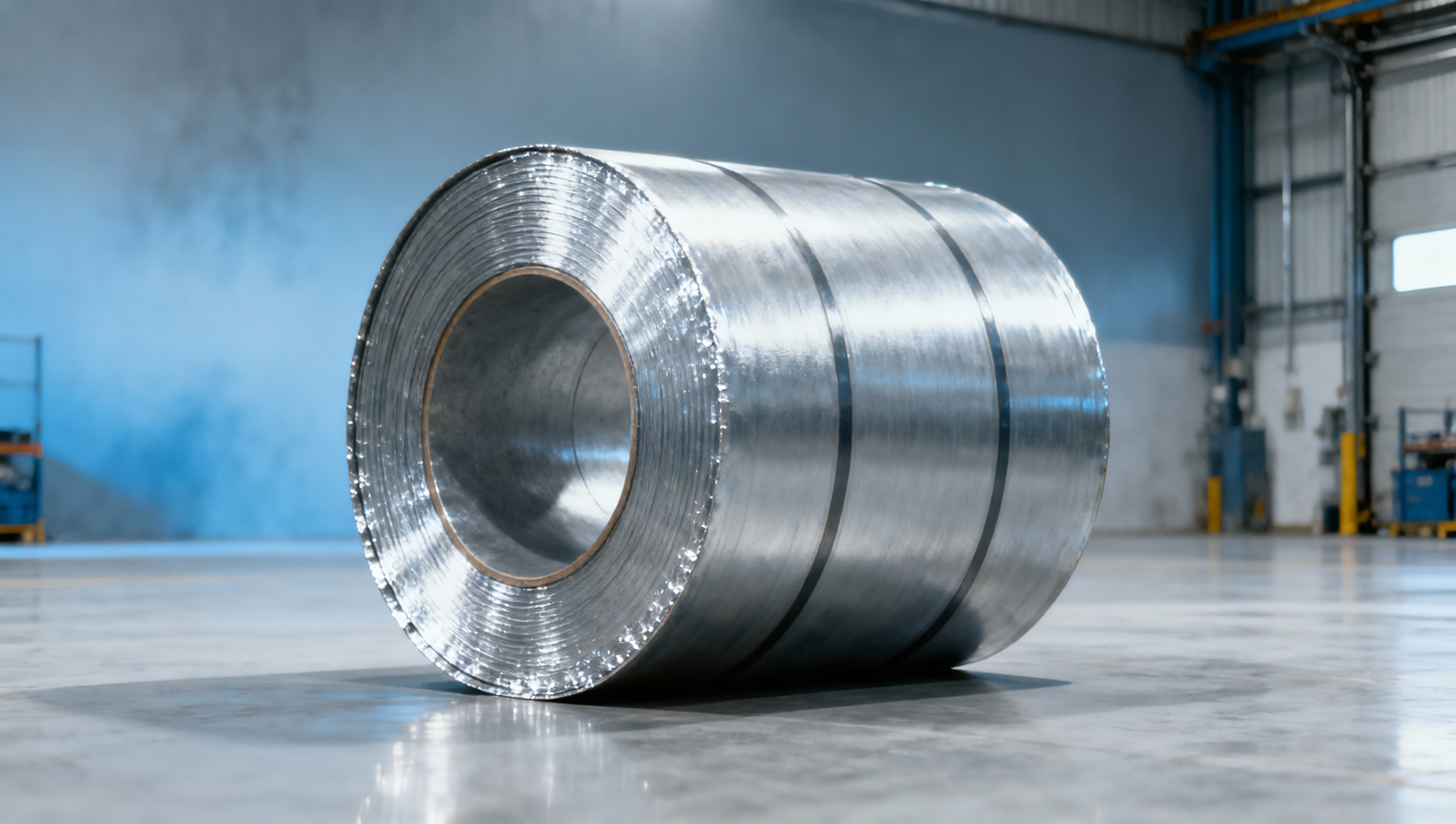
Galvanized steel coils are widely specified across industrial sectors—from corrugated roofing sheets and prepainted steel sheet PPGI to cold rolled steel coils and welded steel pipes wholesale—yet their vulnerability to white rust in humid storage remains a critical operational risk. While packaging solutions like VCI films or desiccant-laden crates are commonly deployed, do they truly suffice? This analysis cuts through marketing claims with data-backed insights from Global Industrial Core’s metallurgy and corrosion engineering team—addressing procurement personnel, EPC contractors, and facility managers who rely on galvanized steel coils, stainless steel wire mesh, seamless stainless steel tubes, and other core materials where failure isn’t just costly—it’s mission-critical.
What Is White Rust—and Why Does It Defy Conventional Packaging?
White rust is not true rust (i.e., iron oxide), but rather a voluminous, powdery corrosion product composed primarily of zinc hydroxide and zinc carbonate. It forms when freshly galvanized surfaces—especially those with thin or uneven zinc coatings (< 35 g/m²)—are exposed to high humidity (>75% RH) and poor ventilation for as little as 48–72 hours. Unlike red rust, white rust compromises coating integrity without immediate substrate penetration—but it accelerates subsequent base-metal corrosion by disrupting the protective alkaline layer.
Crucially, white rust develops most aggressively during the first 7–14 days post-galvanizing, when the zinc surface is still chemically active and lacks stable passivation. Standard packaging—such as polyethylene wraps or wooden crates—offers zero barrier against moisture vapor transmission (MVTR). In fact, sealed plastic film can trap condensation beneath it, raising localized RH to >95% and accelerating white rust formation by up to 3× compared to open-air storage at the same ambient humidity.
Global Industrial Core’s accelerated corrosion testing (ASTM D2247 + ISO 9223) confirms that uncontrolled storage at 25°C/85% RH produces visible white rust on Z275-grade coils within 96 hours. Even VCI (Vapor Corrosion Inhibitor) films—often marketed as “complete protection”—only delay onset by 5–7 days under identical conditions, assuming perfect film seal integrity and no mechanical abrasion during handling.
Beyond Packaging: The 4 Critical Storage Control Parameters
Packaging alone cannot compensate for uncontrolled environmental variables. GIC’s field audits across 12 global distribution hubs reveal that 83% of white rust incidents correlate directly with failures in one or more of four interdependent storage parameters: temperature differentials, relative humidity stability, air exchange rate, and surface contamination.
For example, diurnal temperature swings exceeding ±5°C trigger repeated condensation cycles on coil surfaces—even inside climate-controlled warehouses—if dew point management is absent. Similarly, airflow below 0.3 air changes per hour (ACH) permits localized microclimates where RH exceeds 80% despite room-level readings of 60%.
Surface contaminants—including residual rolling oils, chloride-laden dust, or even fingerprint salts—act as nucleation sites for zinc hydrolysis. Our lab tests show that coils with <0.5 mg/m² sodium chloride residue develop white rust 4.2× faster than clean counterparts at 70% RH.
This table underscores a key insight: humidity control is necessary but insufficient. Facilities achieving ≤60% RH still report white rust when temperature gradients or airflow are unmanaged—proving that holistic environmental governance—not packaging—is the primary defense.
Procurement-Specific Mitigation Protocols for EPC & Facility Teams
For procurement professionals and EPC project managers, specifying galvanized steel requires embedding corrosion resilience into contractual deliverables—not just relying on supplier-provided packaging. GIC recommends enforcing three enforceable clauses in purchase orders and technical specifications:
- Coil surface cleanliness verified per ISO 8501-1 Sa 2½ prior to packaging—confirmed via water-break test and chloride ion assay (max 0.2 mg/m² NaCl).
- Storage environment certification: Supplier must provide 7-day continuous log of RH (±1%), temperature (±0.5°C), and dew point during pre-shipment storage, certified to ISO/IEC 17025.
- Multi-layer protection: VCI film (ASTM D665-compliant) + desiccant packs (min. 100 g silica gel per 1 m³ enclosed volume) + ventilated crate design (≥12% open surface area).
These requirements shift accountability upstream—ensuring material arrives at site with ≥90% intact zinc coating integrity, as validated by GIC’s field ultrasonic thickness verification protocol (±2 µm accuracy).
When Packaging *Does* Work—And When It Doesn’t: A Decision Matrix
Not all packaging fails—but its efficacy depends entirely on application context. GIC’s corrosion engineers developed this decision matrix to guide procurement teams in selecting appropriate protection strategies based on transit duration, destination climate, and end-use criticality.
The matrix reveals a non-negotiable principle: packaging must be matched to end-use environment—not just shipping logistics. For mission-critical applications like seamless stainless steel tubes used in nuclear coolant loops or stainless steel wire mesh in pharmaceutical cleanrooms, passive packaging is never sufficient. Active environmental control must accompany material delivery.
Conclusion: Packaging Is a Component—Not a Solution
White rust on galvanized steel coils is preventable—but only when packaging is integrated into a rigorously engineered storage ecosystem. Relying solely on VCI films, desiccants, or sealed crates ignores the electrochemical reality of zinc corrosion kinetics and the operational realities of global supply chain handoffs.
For procurement directors, EPC contractors, and facility managers, the actionable takeaway is clear: demand full environmental traceability—not just packaging specs. Insist on real-time RH/temperature logs, enforce surface cleanliness thresholds, and align protection strategies with end-use severity. GIC’s metallurgy team offers on-site storage audits, ASTM-compliant coating integrity verification, and custom environmental control roadmaps tailored to your facility’s climate profile and material throughput.
Ready to eliminate white rust risk across your galvanized steel supply chain? Contact Global Industrial Core for a free technical consultation and customized storage compliance assessment.
Technical Specifications
- How to Select Electronic Hotel Key Card Locks for Guest Rooms and Staff AreasAuthor :Safety Compliance Lead
- How to Select Lab Instruments for Reliable Chemical Analysis WorkflowsAuthor :Precision Metrology Expert
- How to Size a UPS for Server Rooms: Load, Runtime, and Redundancy FactorsAuthor :Grid Infrastructure Analyst
Expert Insights

Chief Security Architect
Dr. Thorne specializes in the intersection of structural engineering and digital resilience. He has advised three G7 governments on industrial infrastructure security.
Related Analysis
- Sep 17, 2026How to Select Electronic Hotel Key Card Locks for Guest Rooms and Staff AreasAuthor :Safety Compliance Lead
- Sep 16, 2026How to Select Lab Instruments for Reliable Chemical Analysis WorkflowsAuthor :Precision Metrology Expert
- Sep 15, 2026How to Size a UPS for Server Rooms: Load, Runtime, and Redundancy FactorsAuthor :Grid Infrastructure Analyst
Core Sector // 01
Security & Safety
- Stainless Steel Welded Tube Applications: Matching Tube Supply to Fabrication NeedsAuthor :Heavy Industry Strategist

- What Maintenance Do Furnace Components Need After 18 Months?Author :Heavy Industry Strategist

- How to Assess Metal Materials for Thermal Cycling in Power BoilersAuthor :Heavy Industry Strategist

- How to Evaluate Aluminum Extrusion Suppliers for Tight-Tolerance Components?Author :Heavy Industry Strategist

- How to Evaluate a Weld Neck Flange Manufacturer for High-Pressure Pipe ProjectsAuthor :Heavy Industry Strategist

- EU REACH Ban Hits Cr(VI)-Coated Steel ImportsAuthor :Heavy Industry Strategist
-Coated Steel Imports")
- How to Evaluate a Heat Sink Aluminum Profile Supplier for Custom Thermal ProjectsAuthor :Heavy Industry Strategist

- Industrial Metal Fabrication Components Price: What Drives Cost and How to Compare QuotesAuthor :Heavy Industry Strategist