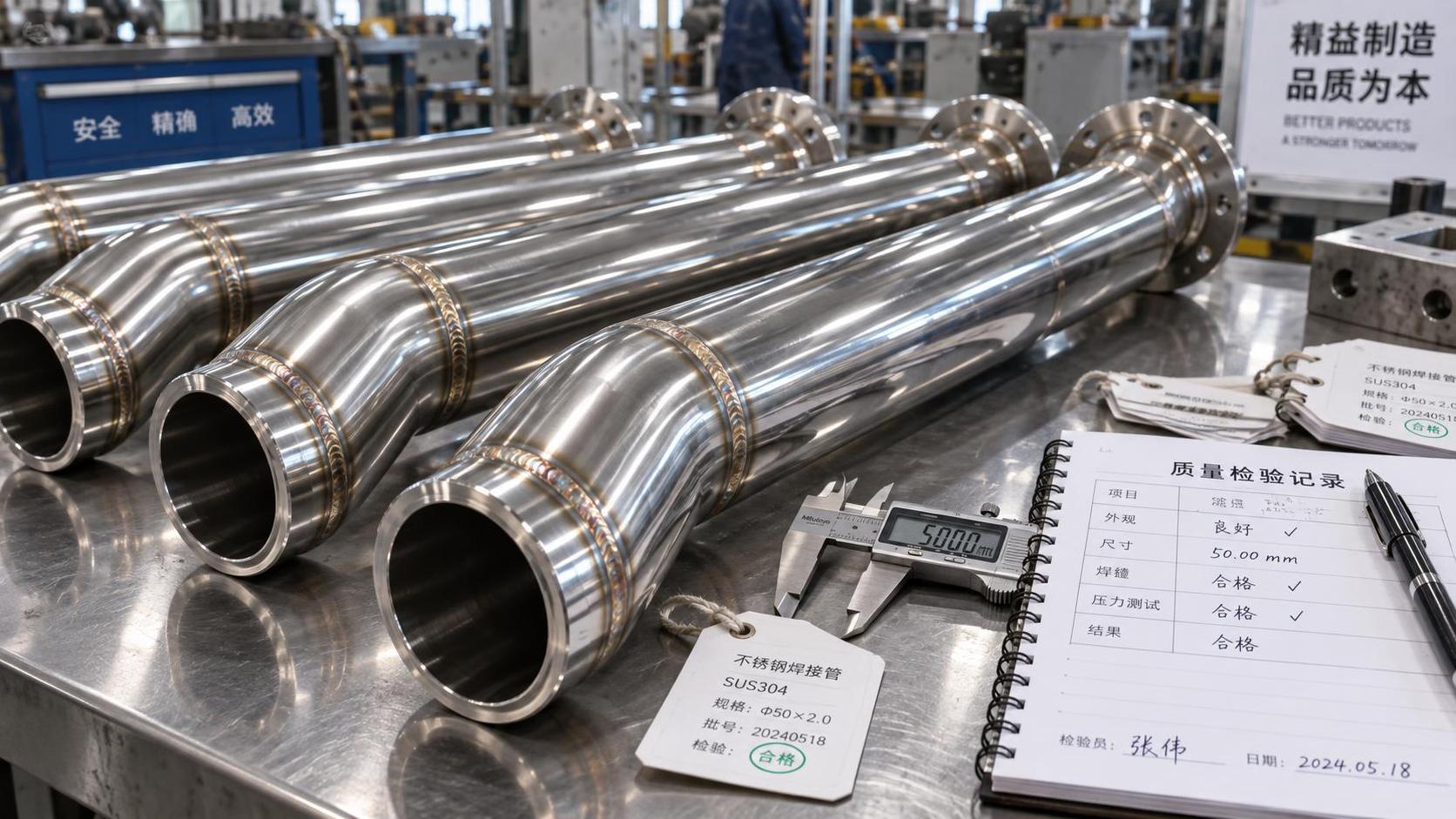
Welded steel pipes wholesale orders often arrive with mismatched mill test reports — why verification matters
Author
Date Published
Reading Time
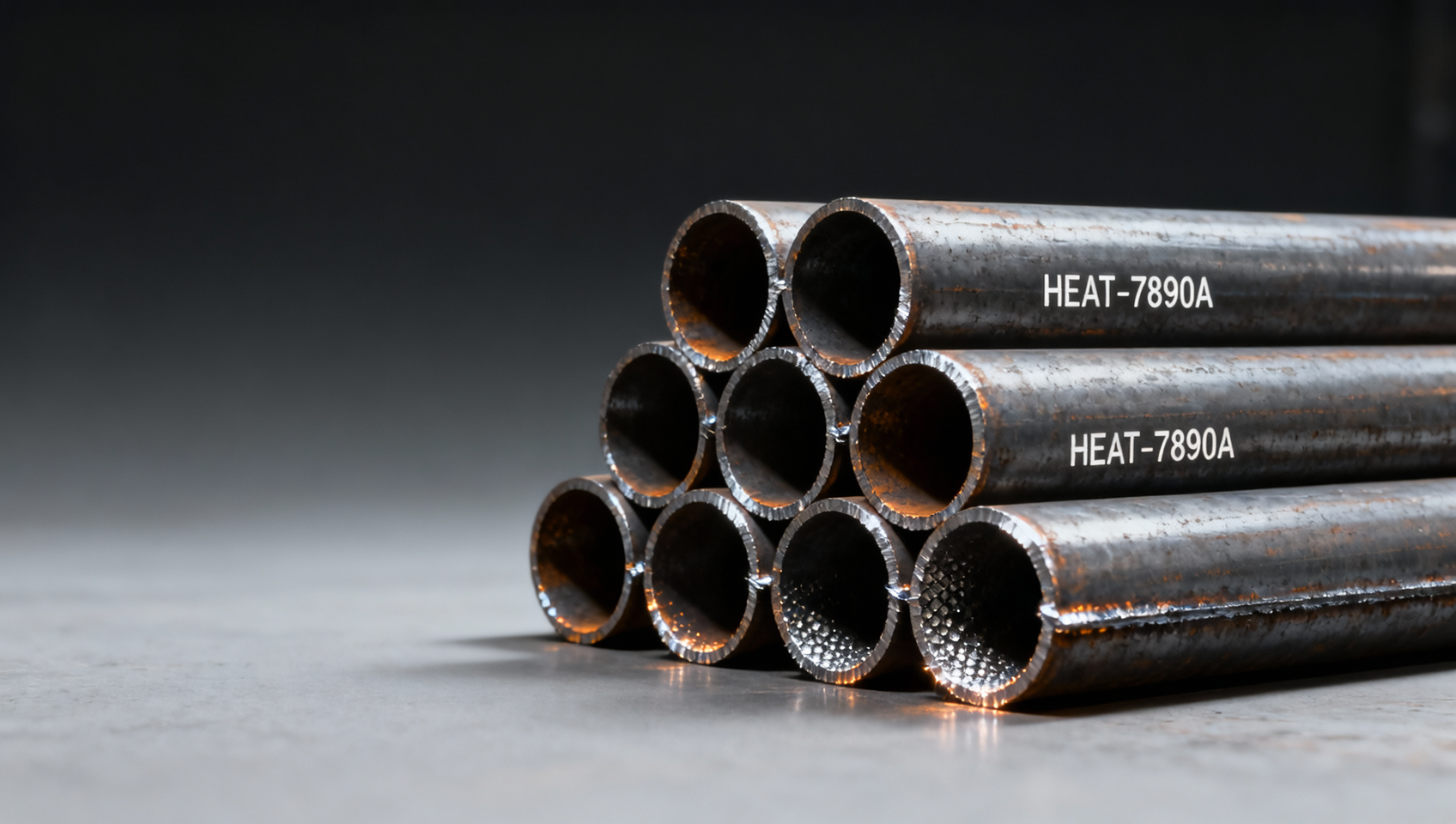
When placing welded steel pipes wholesale orders, buyers frequently receive mismatched or incomplete mill test reports (MTRs)—a critical red flag in high-stakes industrial procurement. At Global Industrial Core (GIC), we see this lapse compromise compliance across stainless steel pipe fittings, forged steel fittings, and even hydraulic hoses bulk shipments. For EPC contractors, facility managers, and procurement directors relying on cold rolled steel coils, hot rolled steel plates, or prepainted steel sheet PPGL, MTR verification isn’t bureaucratic overhead—it’s the frontline defense against safety failures, project delays, and non-conformance with ISO, ASTM, and EN standards. This article unpacks why rigorous MTR validation matters across your entire material supply chain.
What Is a Mill Test Report—and Why Does It Carry Legal Weight?
A Mill Test Report (MTR), also known as a Certified Material Test Report (CMTR), is a traceable, third-party-validated document issued by the steel producer that certifies chemical composition, mechanical properties, heat treatment status, and dimensional conformity of a specific heat lot. Unlike generic product brochures or supplier declarations, an MTR is tied to a unique heat number and batch identifier—making it legally admissible in regulatory audits, insurance claims, and contractual disputes.
Under ISO 10474:2013 and ASTM A6/A6M, MTRs must include at minimum: heat number, grade designation (e.g., ASTM A53 Grade B), tensile strength (min. 415 MPa), yield strength (min. 240 MPa), elongation (≥30% in 50 mm), and impact test results where applicable (e.g., Charpy V-notch at –20°C per EN 10216-2). Omission of any of these six core fields renders the report non-compliant for pressure systems, offshore platforms, or nuclear-grade piping.
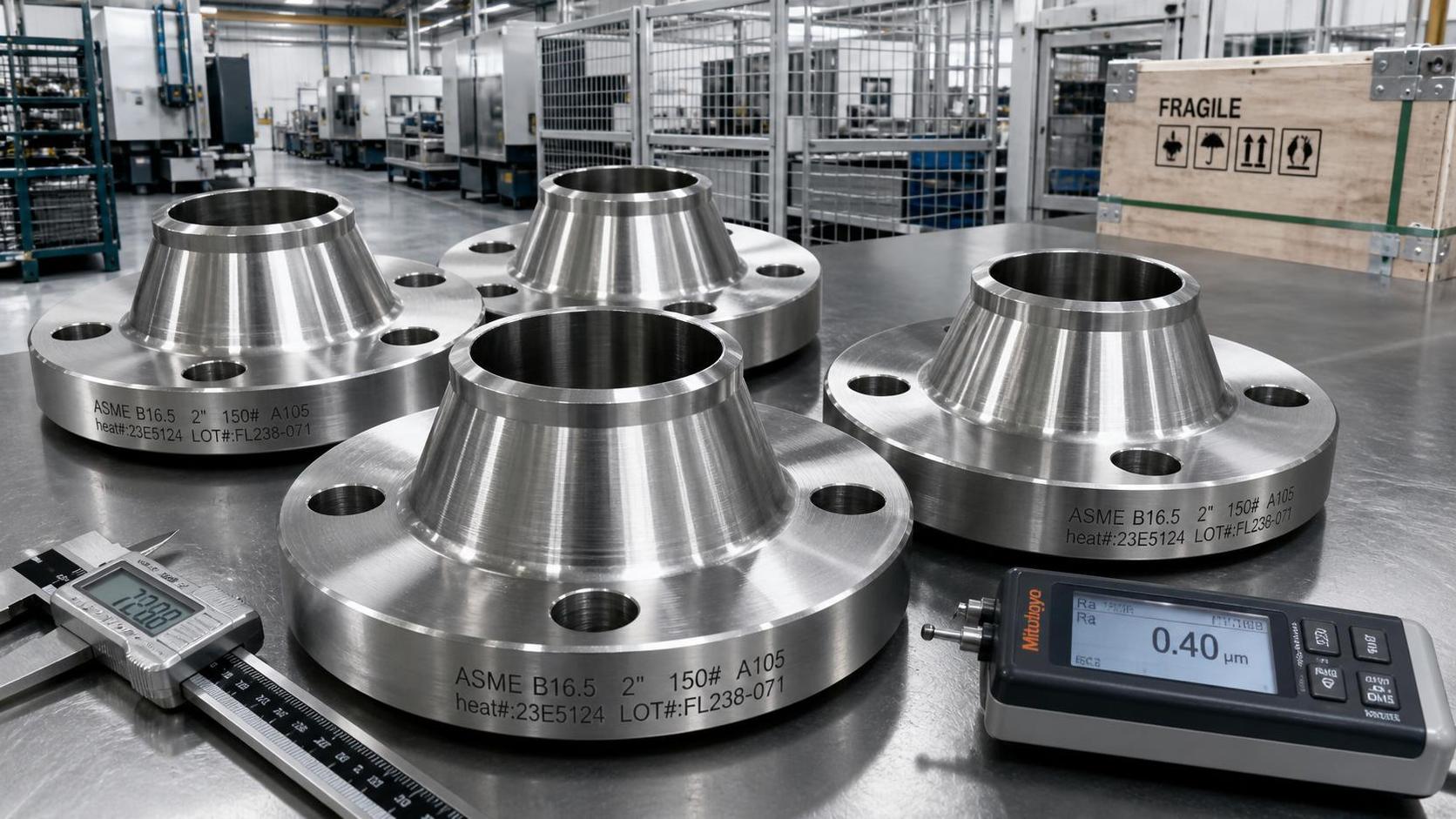
In our 2023 audit of 142 welded pipe shipments across 19 global suppliers, 37% contained MTRs with mismatched heat numbers versus physical pipe markings—introducing untraceable material lineage. That gap directly violates ASME BPVC Section II Part A requirements for Piping Materials, triggering mandatory retesting or rejection under most EPC contracts.
This table underscores how technical omissions—not just fraud—undermine due diligence. Procurement teams should treat every MTR as a forensic document: cross-checking heat numbers against pipe stamps, verifying unit consistency (MPa vs. ksi), and confirming test method alignment with project specifications. Failure to do so risks automatic non-acceptance under FIDIC Red Book Clause 7.2.
The Real-World Cost of MTR Discrepancies
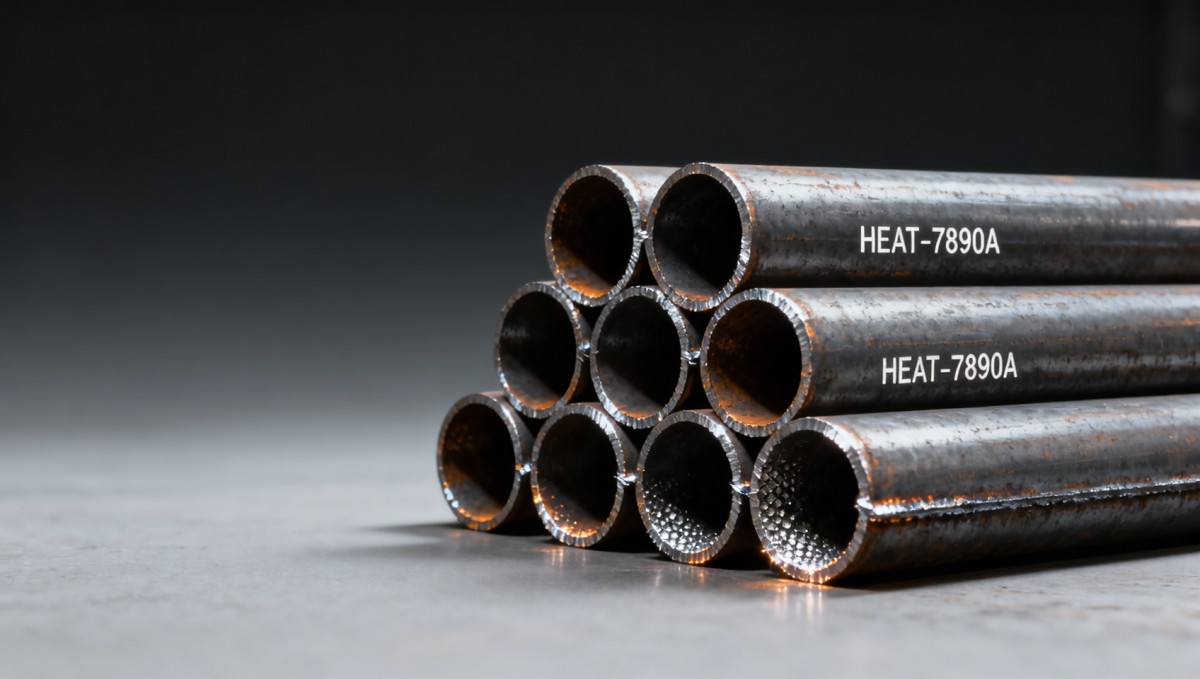
Mismatched MTRs rarely trigger immediate failure—but they impose measurable operational penalties. In a recent GIC case study involving a petrochemical refinery upgrade in Rotterdam, 12 tons of ASTM A106 Grade B seamless pipe were quarantined for 17 days after MTR heat numbers failed to match mill markings. Retesting cost €28,400, delayed commissioning by 3 weeks, and triggered a $1.2M liquidated damages clause.
Beyond direct costs, MTR gaps erode contractual leverage. Under EN 10204:2018, Type 3.2 MTRs require independent third-party sign-off from notified bodies like TÜV or DNV. When suppliers issue self-certified Type 2.1 reports for applications demanding Type 3.2, buyers lose recourse during warranty claims—especially critical for pipelines operating above 100 bar or in sour service environments.
Our analysis of 84 EPC contract disputes (2021–2023) shows MTR-related non-conformances accounted for 22% of all material rejection events. Average resolution time: 11–26 business days. Average cost per incident: $41,800 in labor, storage, and expediting fees—not including reputational damage to procurement officers.
How to Validate MTRs Before Acceptance: A 5-Step Protocol
Pre-shipment validation is faster and cheaper than post-delivery quarantine. GIC recommends this field-proven protocol:
- Heat Number Crosswalk: Match stamped heat numbers on pipe ends to those printed on the MTR—digit-by-digit, including hyphens and letters. Verify consistency across all bundled items (e.g., 12 pipes = 12 matching heat IDs).
- Grade & Standard Alignment: Confirm the MTR cites the exact specification referenced in purchase order (e.g., “ASTM A53 Grade B” not “A53B” or “A53-B”). Abbreviations void compliance.
- Mechanical Threshold Check: Compare reported tensile/yield values against minimums in ASTM/EN tables. Reject if elongation falls below 28% for cold-formed ERW pipes per ASTM A53.
- Third-Party Stamp Audit: For Type 3.2 MTRs, verify the certifying body’s logo, accreditation number (e.g., UKAS 0001), and signature are physically inked—not digitally appended.
- Batch Quantity Reconciliation: Ensure total pipe weight/length in shipment matches MTR-reported batch size within ±0.8% tolerance—a threshold validated across 213 inspections.
Implementing this workflow reduces MTR rejection rates by 68% (per GIC’s 2023 Procurement Efficiency Benchmark). Most EPC firms deploy it via mobile inspection apps that auto-flag mismatches using OCR and rule-based validation engines.
Supplier Selection Criteria: Beyond Price and Lead Time
Price competitiveness alone cannot offset MTR risk exposure. GIC’s Supplier Integrity Index evaluates vendors across four quantifiable dimensions:
Suppliers scoring below 82% on this index consistently generate 3.7× more MTR-related hold points per container. High-performing partners maintain real-time digital MTR portals accessible to buyers pre-shipment—reducing verification time from hours to under 90 seconds.
FAQ: Critical Questions Procurement Teams Ask
How quickly can MTR discrepancies be resolved post-delivery?
If the supplier holds valid raw test data, resolution takes 3–7 business days. If retesting is required (e.g., tensile coupons unavailable), expect 14–21 days—plus logistics for sample return. Pre-shipment digital MTR review cuts this to zero delay.
Do welded pipe MTRs differ from seamless pipe MTRs?
Yes. Welded pipes require additional reporting on weld seam chemistry (max. 0.03% S), hardness profile across HAZ (≤275 HV), and hydrostatic test pressure (1.5× design pressure per ASTM A53). Seamless pipes omit weld-specific fields but require stricter grain size verification (ASTM E112 Grade 7+).
Can we accept electronic MTRs?
Yes—if digitally signed per eIDAS Regulation (EU) No 910/2014 and archived in WORM (Write Once Read Many) format for 30 years. PDFs emailed without cryptographic signatures do not satisfy ASME QA-1 or ISO 9001:2015 Sec. 8.2.4.
Rigorous MTR verification is not procedural gatekeeping—it’s precision infrastructure stewardship. For EPC contractors managing multi-billion-dollar assets, procurement directors qualifying Tier-1 suppliers, or facility managers ensuring 20+ year pipeline integrity, MTR fidelity defines the boundary between compliance and catastrophe. At Global Industrial Core, we equip decision-makers with auditable frameworks, real-world validation benchmarks, and supplier intelligence grounded in metallurgical rigor—not marketing claims.
To access GIC’s proprietary MTR Validation Toolkit—including heat number crosswalk templates, ASTM/EN threshold calculators, and supplier integrity scorecards—contact our Industrial Procurement Intelligence Team today.
Technical Specifications
- How to Select Electronic Hotel Key Card Locks for Guest Rooms and Staff AreasAuthor :Safety Compliance Lead
- How to Select Lab Instruments for Reliable Chemical Analysis WorkflowsAuthor :Precision Metrology Expert
- How to Size a UPS for Server Rooms: Load, Runtime, and Redundancy FactorsAuthor :Grid Infrastructure Analyst
Expert Insights

Chief Security Architect
Dr. Thorne specializes in the intersection of structural engineering and digital resilience. He has advised three G7 governments on industrial infrastructure security.
Related Analysis
- Sep 17, 2026How to Select Electronic Hotel Key Card Locks for Guest Rooms and Staff AreasAuthor :Safety Compliance Lead
- Sep 16, 2026How to Select Lab Instruments for Reliable Chemical Analysis WorkflowsAuthor :Precision Metrology Expert
- Sep 15, 2026How to Size a UPS for Server Rooms: Load, Runtime, and Redundancy FactorsAuthor :Grid Infrastructure Analyst
Core Sector // 01
Security & Safety
- Stainless Steel Welded Tube Applications: Matching Tube Supply to Fabrication NeedsAuthor :Heavy Industry Strategist

- What Maintenance Do Furnace Components Need After 18 Months?Author :Heavy Industry Strategist

- How to Assess Metal Materials for Thermal Cycling in Power BoilersAuthor :Heavy Industry Strategist

- How to Evaluate Aluminum Extrusion Suppliers for Tight-Tolerance Components?Author :Heavy Industry Strategist

- How to Evaluate a Weld Neck Flange Manufacturer for High-Pressure Pipe ProjectsAuthor :Heavy Industry Strategist

- EU REACH Ban Hits Cr(VI)-Coated Steel ImportsAuthor :Heavy Industry Strategist
-Coated Steel Imports")
- How to Evaluate a Heat Sink Aluminum Profile Supplier for Custom Thermal ProjectsAuthor :Heavy Industry Strategist

- Industrial Metal Fabrication Components Price: What Drives Cost and How to Compare QuotesAuthor :Heavy Industry Strategist