How to Select Flange Gaskets for Pressure, Temperature, and Media Compatibility
Author
Date Published
Reading Time
Start with the Joint, Not the Gasket Catalog
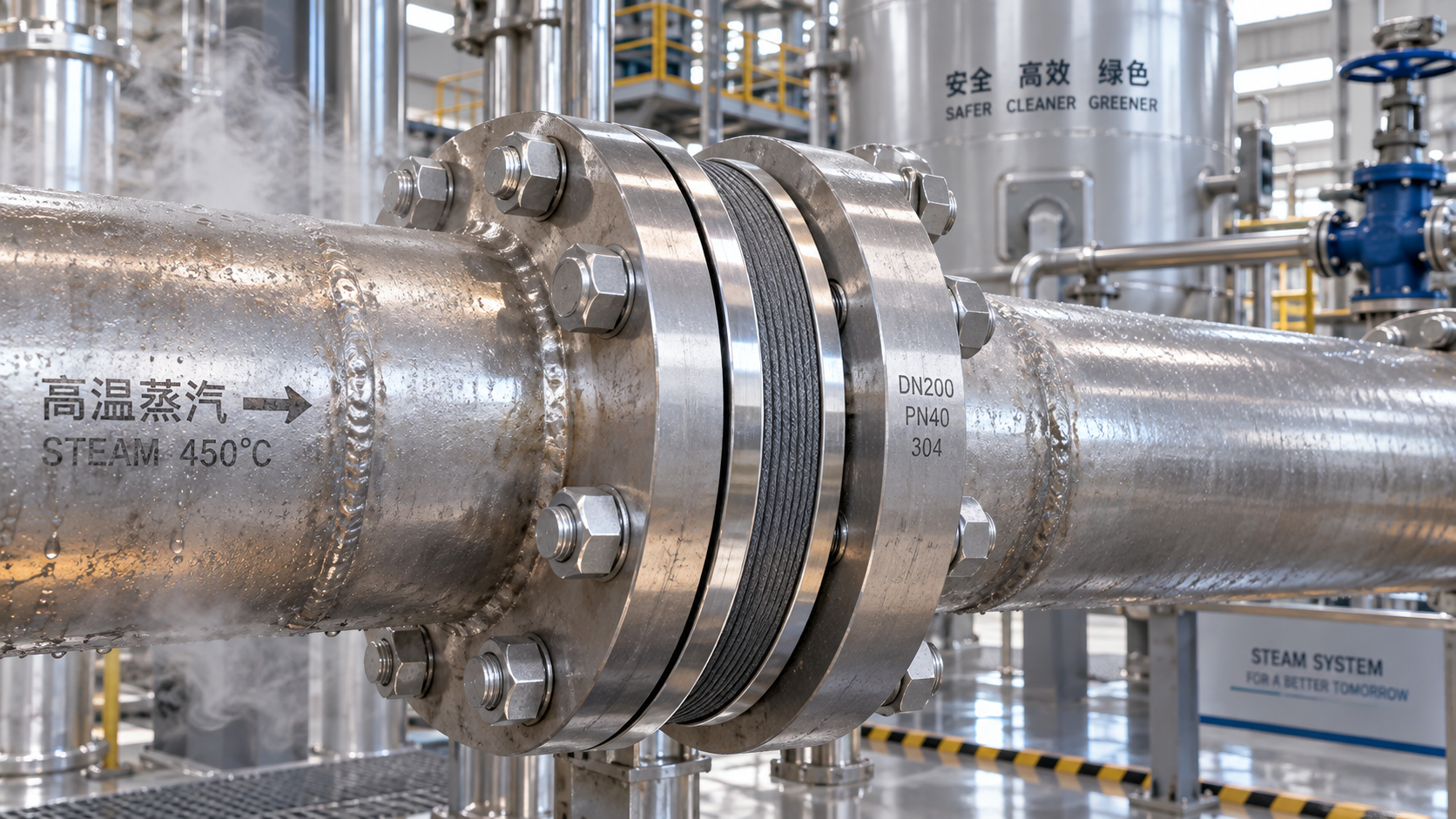
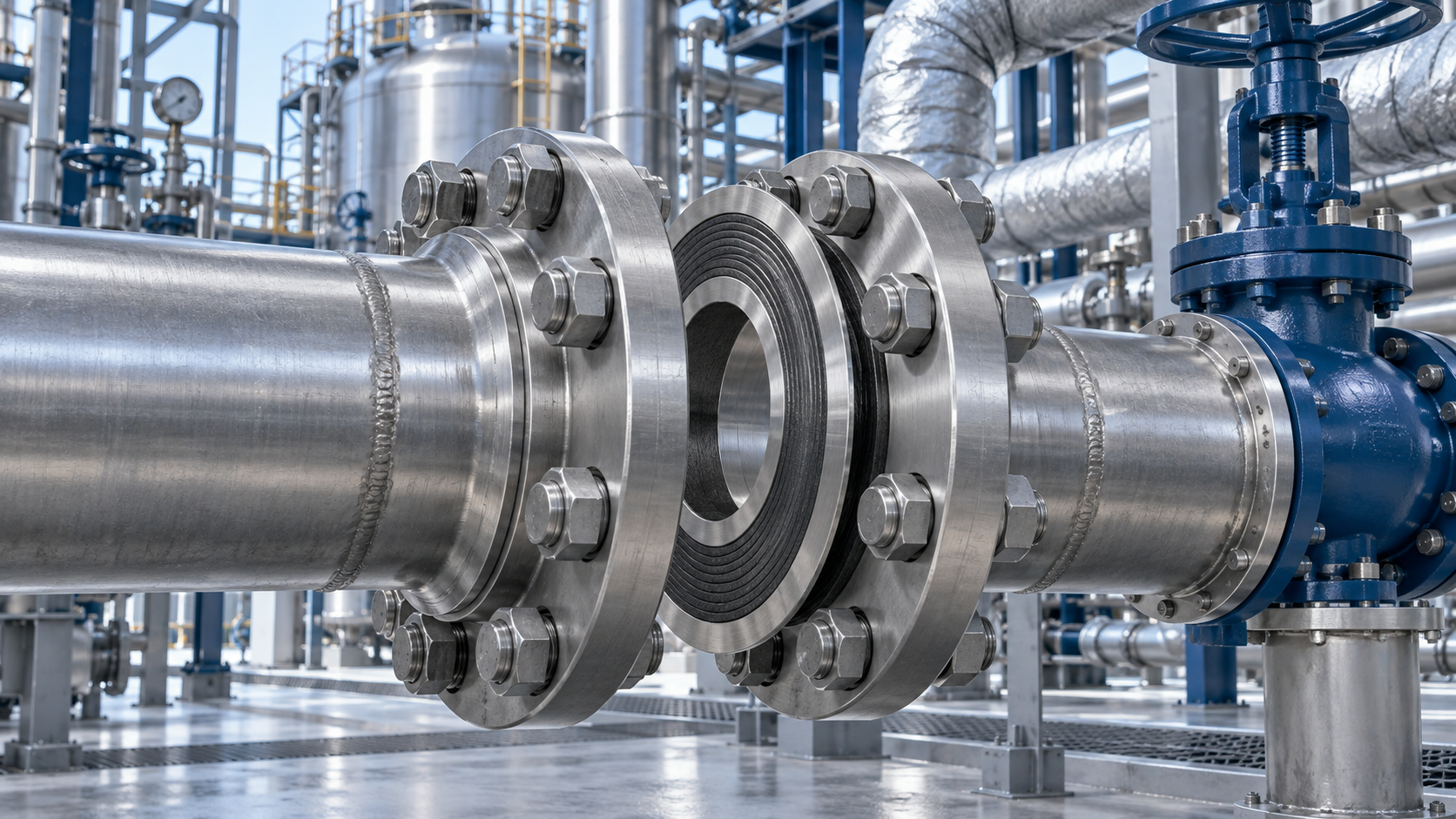
A flange gasket cannot be selected reliably by pressure rating, temperature rating, or chemical resistance alone. Those values describe part of the service, but leakage performance depends on the assembled joint: flange geometry and condition, bolt load, gasket stress response, thermal movement, and the behavior of the process medium over time.
For technical evaluators, the most useful starting point is to define the duty as a set of interacting conditions. A material that is chemically compatible may still relax under elevated temperature. A gasket that tolerates high pressure may be unsuitable for a light-duty flange with limited available bolt load. A soft sheet gasket may seal a damaged flange face well, yet extrude or creep in a severe pressure-and-temperature cycle.
The practical question is therefore not “Which material has the highest rating?” It is: can this gasket design maintain adequate sealing stress in this specific flange joint throughout normal operation, startup, shutdown, upset conditions, and maintenance intervals?
That distinction matters most where a leak has consequences beyond lost product: hazardous media, emissions control, high-temperature utilities, corrosive process lines, vacuum service, and equipment that cannot be isolated easily for repair.
Build the Service Envelope Before Comparing Materials
The first specification should describe the actual service envelope rather than a single nominal operating point. Pressure, temperature, and media compatibility are the three essential inputs, but each needs more detail than a process datasheet headline may provide.
For pressure, assess normal operating pressure, design pressure, pressure spikes, pressure cycling, and whether the system sees vacuum. A gasket exposed to frequent cycling must recover sufficiently as flange loading changes. Internal pressure can also promote blowout or extrusion when the gasket is insufficiently confined, especially on raised-face joints with wider or softer gasket materials.
Temperature needs the same treatment. The highest steady-state temperature is important, but temperature gradients and thermal cycles often determine joint behavior. During startup, the flange, bolts, and gasket may heat at different rates. Their differing rates of thermal expansion can reduce gasket compression temporarily or place excessive stress on it. A material that performs acceptably at a stable temperature can lose sealing margin after repeated heat-up and cool-down cycles.
Media compatibility should account for the complete chemical environment: concentration, contaminants, moisture content, cleaning chemicals, solids, phase changes, and whether the stream is oxidizing or reducing. “Compatible with acid” or “suitable for hydrocarbons” is too broad for a release decision. A gasket exposed to a hot, concentrated chemical mixture is not facing the same duty as one handling a dilute stream at ambient temperature. Permeation, swelling, embrittlement, and chemical attack can each alter the seal long before a gasket looks visibly degraded.
Also identify whether the media is flammable, toxic, environmentally regulated, oxygen-rich, high-purity, or prone to polymerization or deposit formation. These conditions may impose cleanliness requirements, tighter leakage expectations, or limits on gasket constituents. A technically sealable combination can still be unacceptable where contamination or fugitive emissions are material concerns.
Pressure and Temperature Must Be Evaluated Together
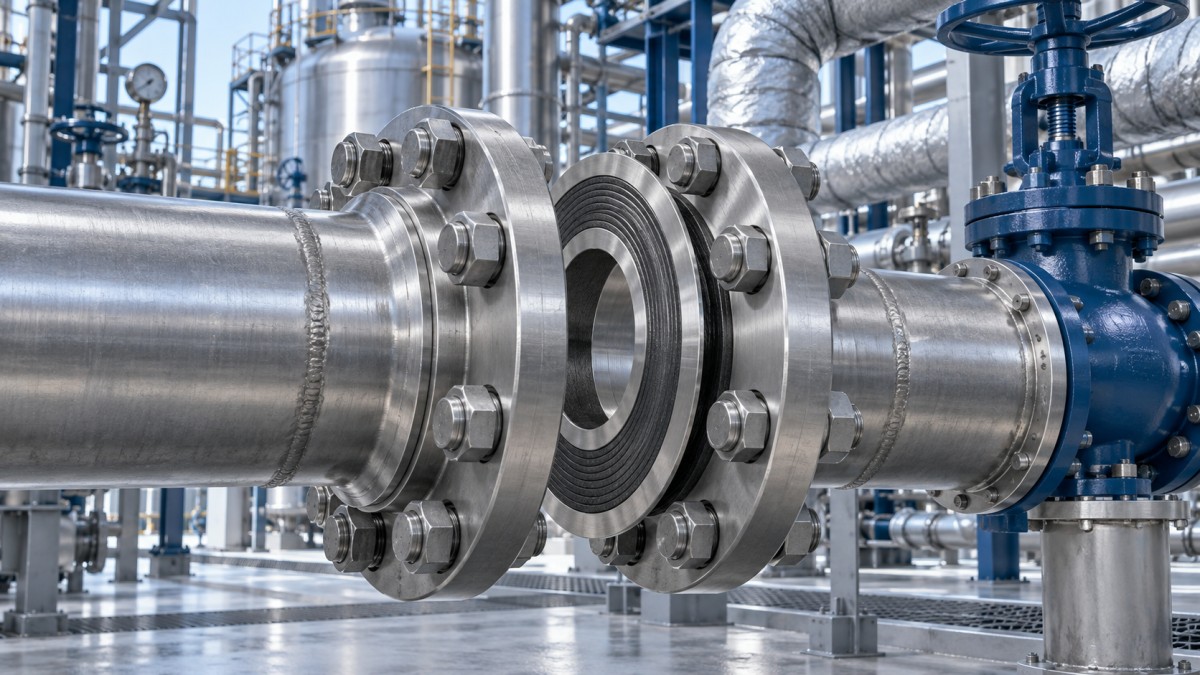
Pressure and temperature are often reviewed in separate columns, but their combination is what drives many failures. Higher pressure increases the force trying to separate the flanges and push the gasket outward. Higher temperature can soften certain materials, accelerate creep relaxation, oxidize graphite-containing products in some environments, or change the mechanical properties of elastomers and polymer-based sheets.
This is why a published maximum temperature should not be treated as a universal operating approval. It may reflect a short-duration limit, a benign medium, a specific gasket construction, or a service condition that assumes adequate bolt loading. At elevated temperature, the useful question is whether the gasket retains enough compressive stress after relaxation to remain above the minimum sealing stress required for the media and surface condition.
Metallic and semi-metallic designs are often considered for demanding pressure-temperature service because their construction can resist extrusion and maintain structural integrity. Spiral-wound gaskets, corrugated metal gaskets, and metal-jacketed designs can be appropriate in established flange configurations, particularly where high bolt loads are available. Their suitability still depends on facing type, flange rigidity, and installation control. A gasket with a metal winding or core is not automatically more forgiving than a compressed sheet gasket; it may require a more controlled joint to seal consistently.
Flexible graphite is widely used as a filler or facing material in high-temperature service because it can conform well and tolerate conditions that exceed many elastomeric binders. Yet it should be evaluated against the atmosphere, media, potential oxidation exposure, flange design, and the full temperature profile. Similarly, polytetrafluoroethylene-based materials offer broad chemical resistance, but conventional PTFE can exhibit cold flow under sustained load. Filled or modified PTFE formulations may improve creep resistance, but the formulation must remain compatible with the process media and purity requirements.
Elastomeric gaskets can provide excellent conformability and sealing at lower temperatures and pressures, especially where flanges are less rigid or surfaces are imperfect. Their limitations are governed by fluid compatibility, temperature aging, compression set, and the possibility of rapid deterioration during excursions. A gasket material that is acceptable in water service may be unsuitable after even limited exposure to hot hydrocarbons, solvents, steam, or an oxidizing chemical.
Match the Gasket to the Available Bolt Load
Many gasket selection errors arise because the evaluator focuses on the media but does not verify the load the joint can apply and sustain. Every gasket needs sufficient seating stress during assembly to fill surface irregularities and establish a seal. It also needs residual stress in service after bolt relaxation, gasket creep, thermal movement, and pressure effects.
A soft gasket generally needs less initial load and can accommodate rougher or more worn flange faces. That makes it useful in some maintenance situations, but softness can become a liability in high-pressure duty, hot service, or joints subject to repeated cycling. A harder, more robust construction may resist these effects better but demand higher bolt preload and more even loading around the circumference.
Before selecting a gasket style, establish:
- Flange standard, pressure class or design basis, nominal size, and facing configuration.
- Flange material, thickness, stiffness, and whether flange rotation under bolt load is likely.
- Stud or bolt size, grade, condition, lubrication practice, and achievable tightening method.
- Gasket outside and inside diameters, thickness, and the contact area available for sealing.
- Whether the joint has a controlled compression stop, such as a ring-type joint groove or a spiral-wound inner ring arrangement.
- Flange-face condition, including corrosion, pitting, warpage, damage, and surface finish.
These factors determine whether the joint can generate the intended gasket stress without yielding bolts, distorting flanges, crushing the gasket, or leaving low-load sectors around the circumference. Torque alone is not a direct measure of bolt tension; friction at threads and nut-bearing surfaces can create large variation in the load delivered by the same torque value. For high-consequence joints, the assembly method should be treated as part of the sealing system rather than a field detail left until after material selection.
Flange Face Condition Changes the Material Decision
A gasket cannot correct every flange defect. It can accommodate limited surface irregularity, but deep radial scoring, corrosion pitting, distorted faces, and out-of-parallel flanges can exceed the ability of any practical gasket to seal. Selecting a thicker or softer gasket to compensate may create new problems, including greater creep, reduced pressure resistance, and less predictable compression.
The intended gasket style must match the flange facing. Raised-face flanges, flat-face flanges, ring-type joint grooves, tongue-and-groove arrangements, and male-and-female faces load gaskets differently and offer different degrees of confinement. A gasket designed for one geometry should not be treated as interchangeable with another simply because nominal pipe size and material appear similar.
Surface finish is equally relevant. A surface that is too smooth can make it difficult for some gasket materials to grip and retain sealing stress, while an excessively rough surface can create leak paths that a harder gasket cannot fill. The appropriate finish depends on gasket type and manufacturer guidance. Where the flange condition is unknown, inspection should precede gasket procurement, especially for reused equipment or joints opened after corrosion service.
Material Compatibility Is More Than a Chemical Resistance Chart
Chemical compatibility charts are useful screening tools, but they cannot replace evaluation of the actual process conditions. The same base material may perform differently depending on filler content, binder system, density, reinforcement, and exposure duration. A chart may also address immersion resistance but not sealing performance under compressive stress and thermal cycling.
When reviewing candidate gaskets for flanges, ask whether the material could change dimensionally or mechanically in the medium. Swelling can reduce bolt load and alter gasket geometry. Dissolution or binder attack can weaken sheet materials. Permeation can create emissions even when the gasket appears intact. Chemical deposits can interfere with the sealing surface after thermal cycling. For elastomers, compression set after heat exposure may be more relevant than initial chemical resistance.
Some services require attention to the risk created by the gasket itself. Examples include oxygen systems, where material cleanliness and ignition-related considerations matter; high-purity process lines, where extractables may be unacceptable; and food, pharmaceutical, or water applications, where material declarations may be required. In these cases, a broadly compatible industrial gasket may not meet the service-specific acceptance criteria.
Choose a Construction, Then Verify Its Limits
A useful way to narrow the options is to consider gasket constructions in terms of the joint conditions they handle well, rather than treating them as a simple hierarchy from basic to premium.
- Compressed fiber sheet and rubber-bound sheet gaskets can suit moderate-duty services where conformability and practical installation are priorities. They require careful review for temperature, fluid resistance, and long-term relaxation.
- Elastomer gaskets are commonly selected where flexibility and low seating load are needed. Media compatibility, temperature exposure, and compression set should drive the decision.
- PTFE and modified PTFE gaskets are often considered for aggressive chemical duties. Their creep behavior, flange load, thickness, and resistance to extrusion need close attention.
- Flexible graphite sheet or graphite-filled semi-metallic gaskets can support elevated-temperature applications, subject to the actual atmosphere, media, oxidation risk, and joint design.
- Spiral-wound and other semi-metallic gaskets are commonly used in more demanding flange services where the flange system and bolting can supply controlled load. Filler selection remains central to media and temperature compatibility.
- Metallic ring and metal-jacketed designs may be appropriate for severe pressure, temperature, or process requirements, but they are typically less tolerant of incorrect flange geometry, damaged contact surfaces, and poor installation control.
The choice should be documented as a complete specification: gasket type, material or filler, dimensions, thickness, relevant facing, and any required inner or outer ring arrangement. A purchase description that simply says “graphite gasket” or “PTFE gasket” leaves too much room for technically different products to be substituted.
Do Not Let Installation Undo the Selection
A correct gasket can fail immediately when installed with uneven bolt loading, contaminated faces, incorrect orientation, reused damaged hardware, or a tightening sequence that leaves the joint distorted. These failures are often misclassified as material incompatibility because the leak appears shortly after commissioning.
Installation controls should be proportional to service consequence. At a minimum, verify flange cleanliness, face condition, gasket identification, bolt and nut condition, and alignment before tightening. Use the tightening procedure specified for the joint and gasket system, including staged passes and a controlled pattern. Avoid applying compounds, sealants, or anti-stick treatments to the gasket unless the gasket supplier and service specification permit them; added materials can change friction, chemical compatibility, and gasket seating behavior.
Gasket reuse should generally be avoided unless a documented design and maintenance procedure specifically permits it. Compression marks, chemical exposure, handling damage, and relaxation can leave a used gasket unable to reproduce its original sealing behavior. Reusing a gasket to save a small consumable cost is difficult to justify on a joint where isolation, cleanup, production loss, or safety response would be expensive.
A Practical Review Before Release
Before approving a flange gasket, technical evaluators should be able to answer four questions clearly: Is the material compatible with the full process medium and credible upset conditions? Can the gasket construction withstand the combined pressure-temperature duty over the expected maintenance interval? Can the flange and bolting system apply and retain the required compressive load? Has the selected design been matched to the actual flange face and installation method?
If any answer rests on an assumption rather than verified joint information, the selection is incomplete. The right gasket is rarely the one with the broadest headline rating. It is the one whose material behavior, geometry, and required loading are aligned with the real flange joint and the consequence of losing containment.
Technical Specifications
- How to Select a Twin Shaft Shredder for Bulky Waste, Scrap Metal, and PlasticsAuthor :Environmental Engineering Director
- Selecting EPC Procurement Support Tools to Reduce Vendor and Delivery DelaysAuthor :Safety Compliance Lead
- How to Evaluate a Precision Measurement Equipment Manufacturer for Critical TolerancesAuthor :Precision Metrology Expert
Expert Insights

Chief Security Architect
Dr. Thorne specializes in the intersection of structural engineering and digital resilience. He has advised three G7 governments on industrial infrastructure security.
Related Analysis
- Sep 28, 2026How to Select a Twin Shaft Shredder for Bulky Waste, Scrap Metal, and PlasticsAuthor :Environmental Engineering Director
- Sep 27, 2026Selecting EPC Procurement Support Tools to Reduce Vendor and Delivery DelaysAuthor :Safety Compliance Lead
- Sep 26, 2026How to Evaluate a Precision Measurement Equipment Manufacturer for Critical TolerancesAuthor :Precision Metrology Expert
Core Sector // 01
Security & Safety
- How to Select Flange Gaskets for Pressure, Temperature, and Media CompatibilityAuthor :Heavy Industry Strategist

- Selecting High-Temperature Gaskets for Steam, Flanges, and Thermal CyclingAuthor :Heavy Industry Strategist

- Selecting Low-Friction Pneumatic Seals for High-Cycle, Low-Pressure CylindersAuthor :Heavy Industry Strategist

- Selecting Spherical Roller Bearings for Mining: Load, Contamination, and Service LifeAuthor :Heavy Industry Strategist

- Do Deep Groove Ball Bearings Need Special Seals in Coastal Humidity?Author :Heavy Industry Strategist

- How to Select Anti Vibration Rubber Shock Absorbers for Machinery and EquipmentAuthor :Heavy Industry Strategist

- When to Specify Induction Hardened Slewing Ring Bearings for Heavy-Duty EquipmentAuthor :Heavy Industry Strategist

- How to Evaluate Weather Resistant EPDM Extrusion for Outdoor Sealing ApplicationsAuthor :Heavy Industry Strategist