Do Deep Groove Ball Bearings Need Special Seals in Coastal Humidity?
Author
Date Published
Reading Time
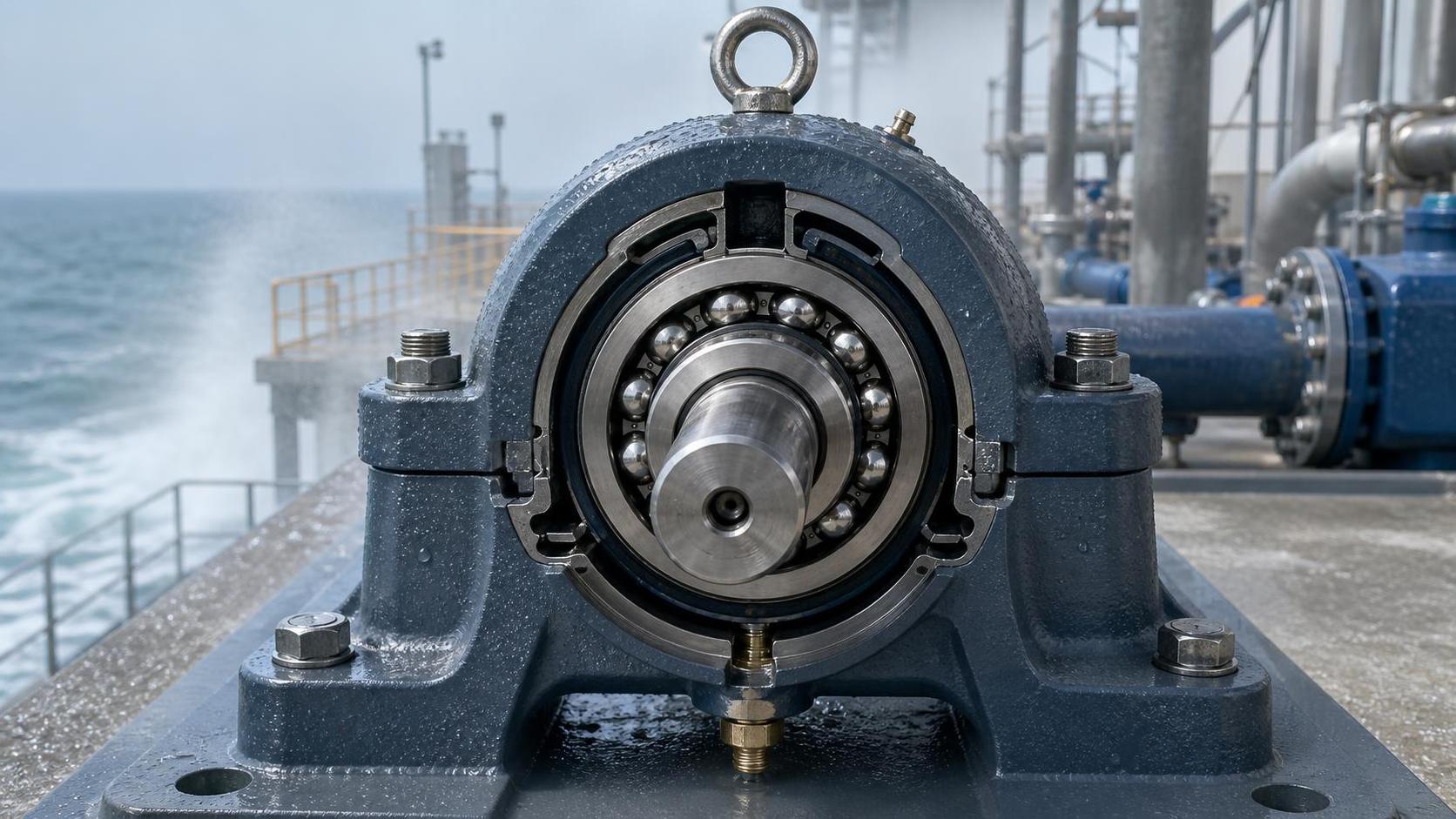
Do deep groove ball bearings require special seals for coastal high-humidity projects? In many cases, yes—but “special” does not automatically mean selecting the most heavily sealed bearing in the catalogue. The correct choice depends on how much salt, water, temperature cycling, washdown exposure, and maintenance access the application will face.
For a conveyor at an inland warehouse, a standard sealed bearing may provide years of acceptable service. Put that same bearing in a container terminal, a seawater-adjacent pumping station, a coastal wastewater facility, or an exposed outdoor HVAC installation, and the operating environment changes the calculation. Salt-laden air can enter tiny gaps, condense during cool nights, and initiate corrosion long before a visible failure appears. Once contamination reaches the raceways or lubricant, noise, rough running, elevated torque, and premature fatigue may follow.
For EPC contractors, plant reliability teams, and procurement leaders, the question is not simply whether a bearing has seals. It is whether the complete bearing arrangement—seal type, grease, housing, shaft interface, material selection, mounting practice, and inspection plan—matches the real coastal exposure.
Short answer: standard seals may be adequate indoors, but exposed coastal service often calls for a higher level of protection
Deep groove ball bearings are commonly supplied in open, shielded, or sealed versions. Open bearings rely on the surrounding housing and lubrication system for protection. Metal shields provide limited protection against larger particles and lubricant retention, but they are not designed to stop moisture or salt aerosol. Contact seals offer a much stronger barrier, making them the usual baseline for humid and contaminated service.
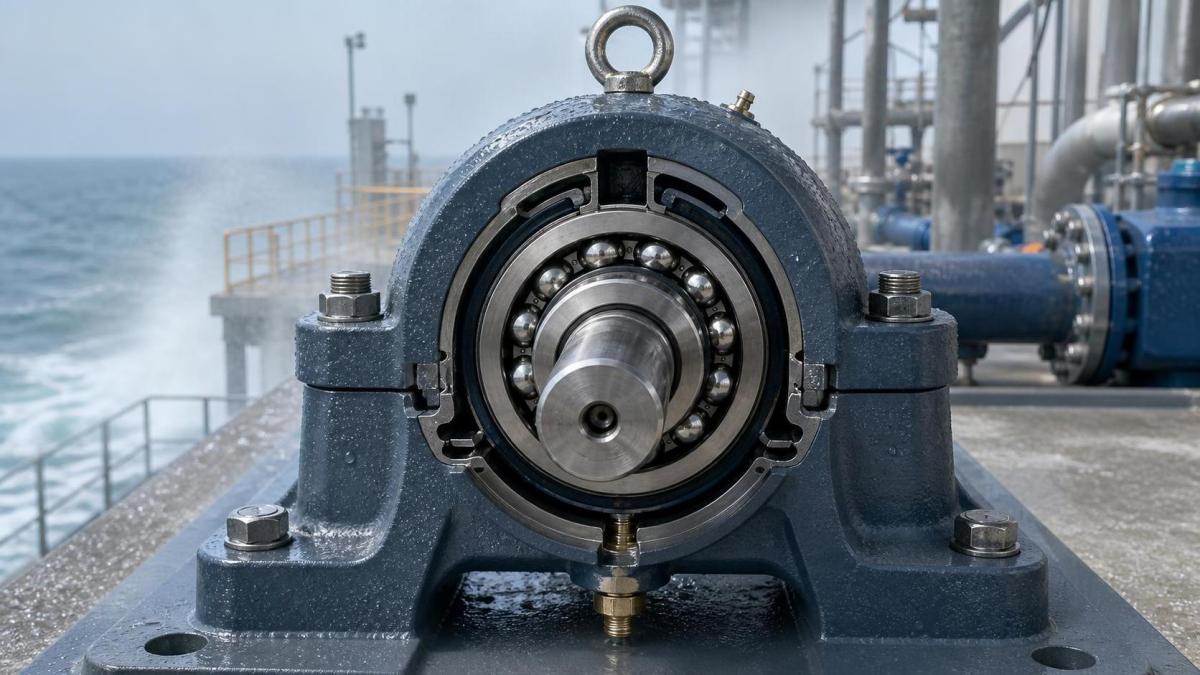
However, a standard rubber contact seal alone may not be sufficient in every coastal project. Bearings installed near sea spray, washdown zones, open docks, cooling-water systems, or frequently flooded areas may need a combination of sealed bearings and external exclusion features. These can include labyrinth seals, flingers, V-rings, bearing isolators, grease-purged housings, or purpose-designed cartridge arrangements.
A useful rule is simple: if the bearing could be exposed to direct water, saline mist, or repeated condensation, treat sealing as a system design issue rather than a bearing suffix selection.
Why coastal humidity is more damaging than ordinary damp air
Humidity alone creates a risk of condensation when equipment temperatures rise and fall. Coastal conditions add chlorides to the equation. Salt deposits attract moisture from the air and can remain wet for extended periods, creating an electrolyte that accelerates corrosion on bearing steel, shafts, housings, and fasteners.
The risk is often underestimated because the bearing may sit inside a housing and appear protected. In reality, moisture can travel through shaft clearances, damaged end covers, breather openings, poor gasket joints, or ineffective external seals. It can also enter during shutdown periods, particularly when warm equipment cools overnight. A facility may have no obvious splash exposure yet still experience repeated internal condensation.
Once water reaches the grease, the lubricant can lose consistency or suffer additive depletion. Salt contamination can promote corrosion pits on raceways. Even small pits matter: rolling elements repeatedly pass over damaged zones, generating vibration and stress concentrations that can develop into spalling. The eventual bearing failure may be recorded as fatigue, while the original cause was inadequate environmental exclusion.
Choosing between shields, contact seals, and multi-stage protection
Selection should begin with the exposure profile, not with a generic preference for “sealed bearings.” The following distinctions are especially important.
Metal-shielded bearings
Shielded deep groove ball bearings are suitable where contaminants are dry, exposure is limited, and low friction is a priority. They may work in enclosed machinery located in a climate-controlled coastal building, assuming the bearing housing itself prevents moisture ingress. They are generally a weak choice for outdoor equipment or areas with high relative humidity and salt aerosol.
Contact-sealed bearings
Rubber contact seals provide substantially better retention of factory grease and better resistance to dust and moisture than shields. For many coastal industrial applications, a bearing with seals on both sides is the practical starting point. Seal material must also suit the operating temperature, lubricant, and any chemicals present in the process environment.
Contact seals create some additional friction and may reduce the limiting speed compared with open or shielded versions. That trade-off is often acceptable for conveyors, fans, pumps, gear-driven machinery, agricultural handling equipment, and moderate-speed auxiliary systems. It requires more careful review in high-speed electric motors, precision spindles, or applications with tight thermal margins.
Non-contact and labyrinth-style external seals
Where direct spray, abrasive debris, or prolonged wetting is expected, an external sealing stage is frequently more valuable than trying to make the bearing’s integral seal do all the work. Labyrinth arrangements and bearing isolators create a tortuous path that reduces ingress without significant contact friction. Flingers and slinger rings use centrifugal action to throw water away from the critical seal zone.
These arrangements are particularly relevant for coastal pump stations, bulk material handling, marine-adjacent conveyors, outdoor fans, and equipment subject to hose-down cleaning. They also protect the shaft area, which matters because a corroded or scored shaft can quickly defeat even a well-chosen bearing seal.
When do deep groove ball bearings require special seals for coastal high-humidity projects?
The answer becomes clearer when the project team assesses the actual duty rather than the site’s postal address. A coastal location alone does not always demand a premium sealing package. An enclosed electrical room with controlled humidity has a different risk profile from a crane trolley operating beside a quay.
Special seals or enhanced sealing arrangements should be strongly considered when one or more of the following conditions apply:
- The bearing is installed outdoors, under open-sided shelters, or in an enclosure with poor weather sealing.
- Sea spray, salt fog, windborne salt particles, or tidal-zone moisture can reach the machine.
- The equipment is washed down regularly, especially with water directed toward shaft ends or housings.
- Temperature swings cause recurring condensation during shutdowns.
- The asset is difficult or expensive to access, making unplanned replacement highly disruptive.
- Fine dust, slurry, or process debris is present alongside moisture, creating an abrasive paste.
- The bearing housing has a known history of grease leakage, water ingress, or corrosion at end covers.
Conversely, standard double-contact-sealed bearings may be sufficient for lower-risk indoor machinery when the room is dry, the housing is properly designed, and routine inspection is realistic. The goal is proportional protection, not indiscriminate over-specification.
The seal is only one part of the corrosion-control package
Coastal reliability failures are rarely solved by a single component upgrade. A robust specification should consider several connected details.
Grease compatibility and fill condition
Factory-filled grease in a sealed bearing is convenient, but its suitability should be checked against temperature, speed, vibration, and moisture exposure. In difficult environments, water-resistant grease chemistry and corrosion-inhibiting additives can be important. For relubricable assemblies, the grease selected for maintenance must be compatible with the original lubricant or the bearing should be properly purged according to the manufacturer’s guidance.
Over-greasing is not a harmless insurance policy. Excess grease can increase churning, raise operating temperature, and force contaminants or lubricant past seals. A controlled relubrication plan is usually more effective than frequent, unmeasured greasing.
Bearing steel, coatings, and corrosion-resistant alternatives
Standard bearing steel can perform well when moisture is excluded. Where exposure remains unavoidable, procurement teams may evaluate coated bearing rings, corrosion-resistant bearing variants, or stainless-steel options. These choices should be made with engineering input because corrosion resistance, load capacity, fatigue performance, dimensional requirements, and cost do not always move together.
It is also important to specify compatible protection for adjacent parts. A corrosion-resistant bearing installed on an unprotected shaft or inside a corroding housing still faces compromised fit, seal damage, and difficult disassembly.
Housing design and drainage
A housing that traps water can defeat a high-quality sealed bearing. Outdoor arrangements should avoid horizontal ledges, upward-facing gaps, and blind cavities where water accumulates. Drainage paths, correctly positioned breathers, intact gaskets, and protective covers deserve attention during design review.
On equipment exposed to driving rain or washdown, the orientation of the shaft can matter as much as the bearing code. A vertically mounted shaft, a downward-facing opening, or a shielded end cover may dramatically reduce the amount of water reaching the seal lip.
A practical specification conversation for procurement and engineering teams
Rather than asking suppliers only for a “sealed deep groove ball bearing,” provide the operating context. A useful request for quotation or technical review should identify bearing size and load, rotational speed, expected temperature range, indoor or outdoor location, salt exposure, washdown frequency, relubrication practice, housing design, and required service interval.
It also helps to ask targeted questions:
- Is the proposed seal a contact design, and what material is used?
- What are the bearing’s speed and temperature limitations with this seal configuration?
- Is the factory grease suitable for moisture-prone service and the intended operating temperature?
- Does the manufacturer recommend an external seal or isolator for direct spray conditions?
- Are coated or corrosion-resistant alternatives available for this duty?
- What mounting and storage precautions are needed to avoid damage before commissioning?
This level of detail protects both sides of the supply chain. It reduces the chance that a buyer receives an otherwise correct bearing that is poorly matched to the surrounding environment.
Common mistakes that shorten bearing life near the coast
One frequent mistake is assuming that “2RS” or a similar double-seal designation means the bearing is waterproof under all conditions. Such bearings offer meaningful protection, but they are not necessarily designed for immersion, pressure washing, or constant saline spray. The manufacturer’s product data and application guidance still matter.
Another error is selecting a tighter seal without checking speed and heat. In a high-speed application, extra friction may raise bearing temperature, accelerate grease aging, and create a different reliability problem. The right design may be a lower-friction bearing seal paired with an external non-contact exclusion device.
Storage is also overlooked. Bearings kept in damp site containers, opened prematurely, or handled with contaminated gloves can begin their life with avoidable corrosion risk. Keep products in original packaging until installation, store them in a clean dry area, and protect machined seats from salt contamination during construction.
Finally, do not wait for audible noise before inspecting. In coastal equipment, early signs can include rusty grease at the housing exit, seal hardening or cracking, discoloration around end covers, rising vibration trends, or increased motor current. These clues are far less costly to address before raceway damage becomes established.
How to make the final decision
For a low-exposure coastal indoor application, a quality double-contact-sealed deep groove ball bearing, compatible grease, and a sound housing may be enough. For equipment exposed to weather, salt mist, washdown, or frequent condensation, specify enhanced protection: sealed bearings combined with external exclusion sealing, suitable grease, corrosion-aware materials, drainage, and a realistic maintenance plan.
The most dependable answer to “Do deep groove ball bearings require special seals for coastal high-humidity projects?” is therefore conditional but clear: when salt and moisture can reach the bearing arrangement, enhanced sealing is usually a reliability necessity rather than an optional upgrade. A carefully defined specification at the design or sourcing stage is far easier than managing seized bearings, damaged shafts, and unplanned downtime after the equipment is in service.
Technical Specifications
- Air Handling Unit Supplier Checklist: Performance Data, Lead Times, and SupportAuthor :Environmental Engineering Director
- Buying Fiberglass Water Tanks Wholesale: Compare Quotes and Delivery CostsAuthor :Environmental Engineering Director
- Choosing an XLPE Power Cable Supplier: Test Reports, Traceability, and Lead TimesAuthor :Grid Infrastructure Analyst
Expert Insights

Chief Security Architect
Dr. Thorne specializes in the intersection of structural engineering and digital resilience. He has advised three G7 governments on industrial infrastructure security.
Related Analysis
- Oct 19, 2026Air Handling Unit Supplier Checklist: Performance Data, Lead Times, and SupportAuthor :Environmental Engineering Director
- Oct 18, 2026Buying Fiberglass Water Tanks Wholesale: Compare Quotes and Delivery CostsAuthor :Environmental Engineering Director
- Oct 17, 2026Choosing an XLPE Power Cable Supplier: Test Reports, Traceability, and Lead TimesAuthor :Grid Infrastructure Analyst
Core Sector // 01
Security & Safety
- How to Select Flange Gaskets for Pressure, Temperature, and Media CompatibilityAuthor :Heavy Industry Strategist

- Selecting High-Temperature Gaskets for Steam, Flanges, and Thermal CyclingAuthor :Heavy Industry Strategist

- Selecting Low-Friction Pneumatic Seals for High-Cycle, Low-Pressure CylindersAuthor :Heavy Industry Strategist

- Selecting Spherical Roller Bearings for Mining: Load, Contamination, and Service LifeAuthor :Heavy Industry Strategist

- Do Deep Groove Ball Bearings Need Special Seals in Coastal Humidity?Author :Heavy Industry Strategist

- How to Select Anti Vibration Rubber Shock Absorbers for Machinery and EquipmentAuthor :Heavy Industry Strategist

- When to Specify Induction Hardened Slewing Ring Bearings for Heavy-Duty EquipmentAuthor :Heavy Industry Strategist

- How to Evaluate Weather Resistant EPDM Extrusion for Outdoor Sealing ApplicationsAuthor :Heavy Industry Strategist