Police batons wholesale: expandable models vs fixed batons
Author
Date Published
Reading Time
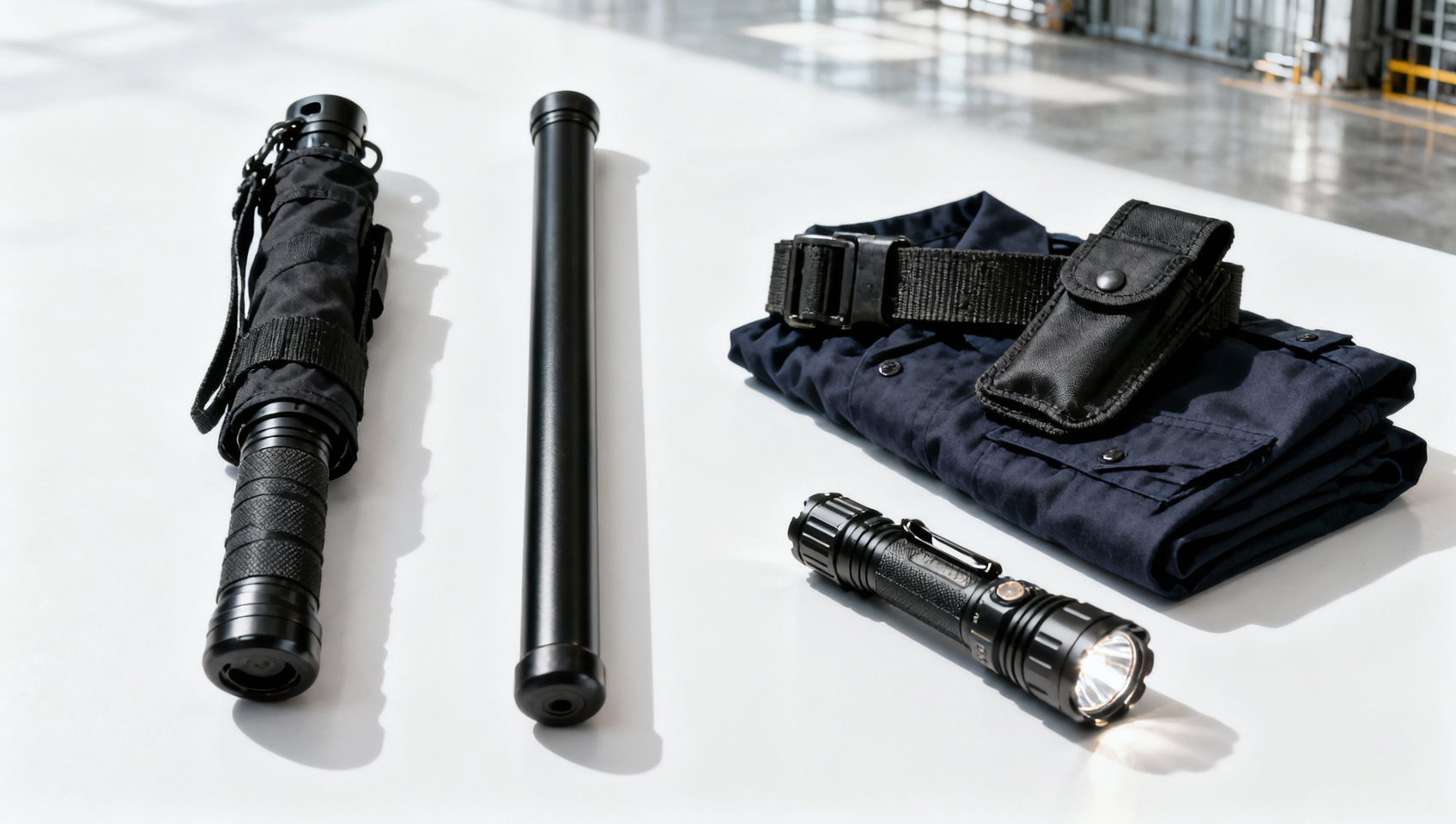
Choosing the right police batons wholesale strategy can affect officer safety, deployment speed, and long-term procurement value. This guide compares expandable and fixed batons from the perspectives of durability, training, carry convenience, and operational use, while also touching on related sourcing needs such as wholesale tactical flashlights, security guard uniforms, and wholesale traffic batons for professional security and law enforcement buyers.
How should buyers compare expandable and fixed batons at the start of procurement?
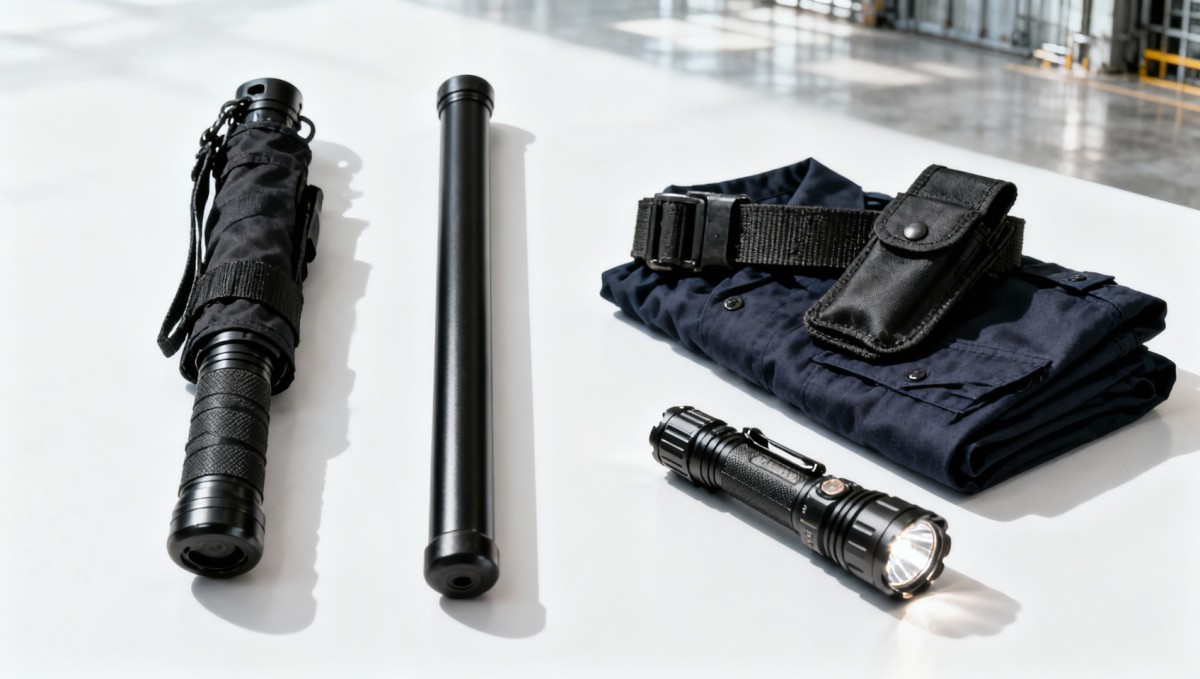
For procurement teams, the first decision is not which baton looks more tactical, but which baton matches use conditions, training capability, and policy constraints. In police batons wholesale projects, expandable models are often selected for portability and compact carry, while fixed batons are chosen for structural simplicity and immediate readiness. The best choice depends on whether the unit prioritizes daily patrol comfort, crowd-control visibility, or reduced moving-part maintenance.
A practical evaluation usually starts with 4 questions: who will carry the baton, how often it will be deployed, what retention gear is already in use, and which local rules govern impact tools. These 4 questions quickly narrow the field. For example, an urban patrol unit working 8–12 hour shifts may value lower carry bulk, while an industrial site security team may prioritize simpler issue, storage, and inspection routines.
Expandable batons generally fold into a shorter form for belt carry. Fixed batons remain at full length and are visible at all times. That difference affects deployment speed, vehicle seating comfort, locker storage, and even user acceptance during long shifts. For information researchers and decision-makers, this is why product selection should be linked to operating environment rather than treated as a generic catalog purchase.
GIC typically advises industrial and institutional buyers to review baton decisions alongside adjacent equipment categories in the same security and safety program. A baton choice can influence holster specification, flashlight placement, uniform reinforcement, and training duration over a 2–4 week rollout. In larger sourcing packages, this coordinated approach reduces mismatch risk and helps standardize issue procedures across multiple sites.
The table below gives a procurement-level comparison for police batons wholesale buyers who need a fast but operationally useful overview before moving into technical selection.
This comparison shows why there is no single universal winner. Expandable models often support comfort and discretion, while fixed batons can simplify issue control and reduce dependence on extension mechanics. Buyers should treat the product as part of a broader duty system, not as an isolated line item.
Which baton type fits which operational scenario?
Application context matters more than catalog language. A baton that performs well for municipal patrol may not be the right choice for perimeter security at utilities, transport hubs, industrial compounds, or logistics yards. In police batons wholesale planning, scenario mapping should cover at least 3 dimensions: shift length, deployment frequency, and environmental constraints such as vehicles, gates, stairwells, and dense pedestrian areas.
Expandable batons are often better suited to teams that spend long hours sitting, driving, or moving through narrow access routes. Their collapsed form reduces snag risk around seat belts, door frames, and control panels. For users and operators, that can improve comfort over 6–10 hour mobile duties. However, this advantage only pays off if personnel can deploy the baton reliably under stress and follow approved use procedures.
Fixed batons are commonly considered for site security, training academies, static posts, and visible deterrence roles. Their full-size profile can reinforce command presence in crowd-management or checkpoint operations. They are also easier to inspect visually during issue and return. In environments where baton deployment may be infrequent but immediate readiness is valued, fixed designs can be operationally attractive.
Procurement personnel should also think beyond the baton itself. A bundled security sourcing program may include wholesale tactical flashlights for low-light searches, wholesale traffic batons for traffic control, and reinforced security guard uniforms compatible with duty belts. These linked categories affect carry load, belt spacing, and operator fatigue. When 3 or more duty tools share the same belt platform, equipment interference becomes a real selection issue.
Typical use cases by buyer profile
Information researchers often need a fast use-case framework before comparing specific specifications. A useful method is to separate mobile patrol, static security, transport support, and training inventory. This reduces confusion and helps internal teams discuss function rather than personal preference.
- Mobile patrol units: often prefer expandable batons because compact carry improves movement in vehicles, elevators, and indoor corridors.
- Static posts and access checkpoints: may prefer fixed batons for immediate readiness, visual presence, and simpler routine inspection.
- Industrial security teams: should align baton choice with gloves, uniform design, flashlight carriage, and post orders for mixed indoor-outdoor duty.
- Training centers or academies: may use fixed batons for introductory handling and expandable models for advanced carry-and-deployment drills.
The main lesson is simple: the more varied the mission profile, the more valuable a structured scenario review becomes. For multi-site buyers, a mixed procurement model is sometimes more rational than forcing one baton type across every team and location.
What technical and inspection points matter most in police batons wholesale?
Technical review should focus on measurable procurement criteria rather than marketing phrases. In most tenders, buyers should examine 5 core areas: material construction, locking or structural integrity, grip design, carry interface, and inspection method. These factors affect service life, user control, and training burden. They also influence whether the baton can be managed efficiently across small-batch issue or large-volume deployment.
For expandable batons, the locking mechanism is a priority. Buyers need to understand whether the design relies on friction lock, mechanical lock, or another accepted mechanism, and how it behaves after repeated opening and closing cycles. For fixed batons, the review shifts toward one-piece strength, grip security, and resistance to surface damage during storage and transport. Neither type should be selected without a documented incoming inspection checklist.
Grip texture and diameter are often underestimated. Yet in real use, hand fit matters when personnel wear gloves, operate in rain, or work in oily or dusty conditions common at industrial facilities. A baton that feels acceptable in a sales sample may perform differently after 3 months of regular issue. This is why many procurement teams request sample evaluation before committing to medium or large volume orders.
Holster compatibility also deserves attention. A compact expandable baton may still create problems if the holster retention system conflicts with a flashlight holder or radio pouch. In broader sourcing projects, GIC often recommends checking belt integration during the sample phase and not after mass ordering. A 7–15 day sample review window can prevent costly changes later.
Inspection checklist for buyers and end users
The following table can be used as a practical screening tool during sample review, pre-shipment inspection, or first-batch acceptance for police batons wholesale orders.
This checklist helps standardize product review across departments. It is especially useful when different stakeholders are involved, such as procurement, operations supervisors, training staff, and senior management. A shared checklist reduces subjective decision-making and supports faster tender comparison.
A simple 4-step acceptance process
- Confirm specifications against tender documents, including quantity bands, packaging, and accessory requirements.
- Run a sample handling review with operators from at least 2 duty types, such as patrol and static post.
- Check carry compatibility with duty belts, flashlight mounts, and uniform configuration.
- Record deviations before batch approval, especially for deployment feel, grip fit, or visible finish issues.
Even a basic 4-step process can improve consistency and reduce reordering mistakes. It also gives enterprise decision-makers a clearer basis for approving framework agreements or annual supply contracts.
How do cost, training, and compliance affect the final baton decision?
The purchase price of a baton is only one part of the cost picture. Buyers should calculate total deployment cost across 3 layers: unit acquisition, training time, and lifecycle inspection or replacement. A lower-price option may become less attractive if it requires more frequent retraining, causes carry complaints, or creates compatibility issues with existing belts and pouches.
Expandable batons may require more focused familiarization, particularly for extension control, closure technique, and re-holstering. That does not automatically make them expensive, but it can influence rollout planning. For organizations issuing batons to 50, 200, or 500 personnel, even an additional 1–2 training sessions per user can change the implementation schedule. Fixed batons may reduce some of that complexity, though they can increase storage and carry management concerns.
Compliance review is equally important. Buyers should verify what local law, departmental policy, and procurement documentation require. Depending on the jurisdiction and use environment, teams may also ask suppliers for relevant product documentation, material information, labeling details, packaging consistency, and any applicable testing records. For international B2B sourcing, consistency in documents is often as important as consistency in the product.
This is where a strategic sourcing partner adds value. GIC supports buyers by organizing technical comparison, requirement alignment, and supply-side communication across security and safety categories. That is particularly useful when batons are sourced alongside tactical flashlights, traffic control tools, gloves, belts, or uniform systems, and procurement teams need one coherent decision framework rather than isolated quotations.
Common mistakes that increase procurement risk
- Choosing only by unit price without accounting for training hours, sample review, and replacement planning over 12 months.
- Ignoring duty belt integration, which can create interference between baton holsters, radios, and wholesale tactical flashlights.
- Standardizing one baton type across every team even when mobile patrol and static site security have different operational needs.
- Skipping a pilot batch and moving directly to large-volume purchase before operators test deployment, grip, and carry comfort.
Avoiding these mistakes often saves more than negotiating a small discount. For most institutional buyers, a controlled pilot order, followed by a structured review within 2–3 weeks, is a more reliable path to value than rushing a full-scale award.
FAQ for police batons wholesale buyers
The questions below reflect common concerns from procurement teams, operators, and enterprise managers comparing expandable and fixed batons in professional security and law enforcement sourcing.
How do I choose between expandable and fixed batons for mixed teams?
Start by separating teams into at least 2 groups: mobile roles and static roles. If one group spends most of the shift in vehicles or narrow indoor routes, expandable batons may offer better carry convenience. If another group works checkpoints, gates, or high-visibility positions, fixed batons may be easier to manage. Mixed-team procurement is often more effective than forcing one format across all duty patterns.
What should I ask a supplier before placing a bulk order?
Ask about specification consistency, sample availability, packaging, lead time, accessory compatibility, and documentation support. In many wholesale projects, buyers also confirm whether the supplier can support pilot quantities first, then move to medium or large batches. A common planning rhythm is sample review in 7–15 days, order confirmation after internal approval, and shipment scheduling based on quantity and destination.
Are fixed batons always more durable than expandable models?
Not automatically. Fixed batons have fewer moving parts, which can simplify inspection and reduce some mechanical concerns. But real durability still depends on material quality, manufacturing consistency, storage conditions, and use discipline. Expandable batons can also perform well when the locking system is appropriate for the application and the maintenance routine is followed. The correct question is not which type is always stronger, but which type is easier for your organization to manage correctly.
Should baton sourcing be bundled with other security products?
In many B2B security programs, yes. Bundling police batons wholesale with wholesale tactical flashlights, wholesale traffic batons, belts, pouches, and security guard uniforms can improve compatibility and reduce fragmented procurement. It also helps decision-makers compare full deployment cost instead of evaluating each item in isolation. The key is to keep the bundle operationally logical and avoid adding unrelated items just for pricing leverage.
Why work with GIC when evaluating baton sourcing and related security equipment?
For serious B2B buyers, the challenge is rarely finding a baton in the market. The challenge is making a defensible decision across technical suitability, operator usability, procurement timing, and adjacent equipment compatibility. GIC helps bridge that gap by aligning sourcing analysis with real industrial and institutional operating conditions, especially where security equipment must function reliably within broader infrastructure environments.
Our value is practical. We help teams compare expandable and fixed batons through structured application review, not generic product claims. We also support linked sourcing discussions involving tactical flashlights, traffic batons, uniforms, and other duty-use equipment that affect the same deployment system. This approach is especially useful for EPC contractors, facility managers, procurement directors, and security integrators handling multi-site or cross-border supply decisions.
If you are preparing a new tender or replacing an existing baton program, you can consult GIC on 6 key areas: parameter confirmation, use-case matching, training impact, delivery cycle planning, documentation expectations, and bundled sourcing strategy. This allows internal stakeholders to move from broad discussion to actionable comparison with less delay and less procurement uncertainty.
Contact us to discuss sample evaluation, product selection logic, expected lead times, compatible accessory planning, document review, or quotation coordination for police batons wholesale and related security categories. If your project involves multiple sites or multiple duty profiles, we can help structure a sourcing path that is clearer, faster, and better aligned with operational reality.
Technical Specifications
Expert Insights

Chief Security Architect
Dr. Thorne specializes in the intersection of structural engineering and digital resilience. He has advised three G7 governments on industrial infrastructure security.
Related Analysis
- Apr 14, 2026How accurate is a true RMS multimeter on VFD signals?Author :Precision Metrology Expert
- Apr 14, 2026When a digital oscilloscope wholesale quote looks cheap at firstAuthor :Precision Metrology Expert
- Apr 14, 2026What changes when an ozone generator goes commercial gradeAuthor :Environmental Engineering Director
Core Sector // 01
Security & Safety
- Automatic hand sanitizers with sensors or pedals?Author :Safety Compliance Lead

- Does a wholesale shoe cover dispenser really reduce contamination?Author :Safety Compliance Lead

- ESD anti static shoes that pass tests but feel unsafe on siteAuthor :Safety Compliance Lead

- Why wholesale cleanroom garments vary so much in durabilityAuthor :Safety Compliance Lead

- Scaffolding tags are simple until weather starts erasing themAuthor :Safety Compliance Lead

- Do wholesale safety nets hold up after months of UV exposure?Author :Safety Compliance Lead

- Wheel chocks wholesale: rubber or polyurethane on sloped ground?Author :Safety Compliance Lead

- Why wholesale traffic batons get dim after short daily useAuthor :Safety Compliance Lead