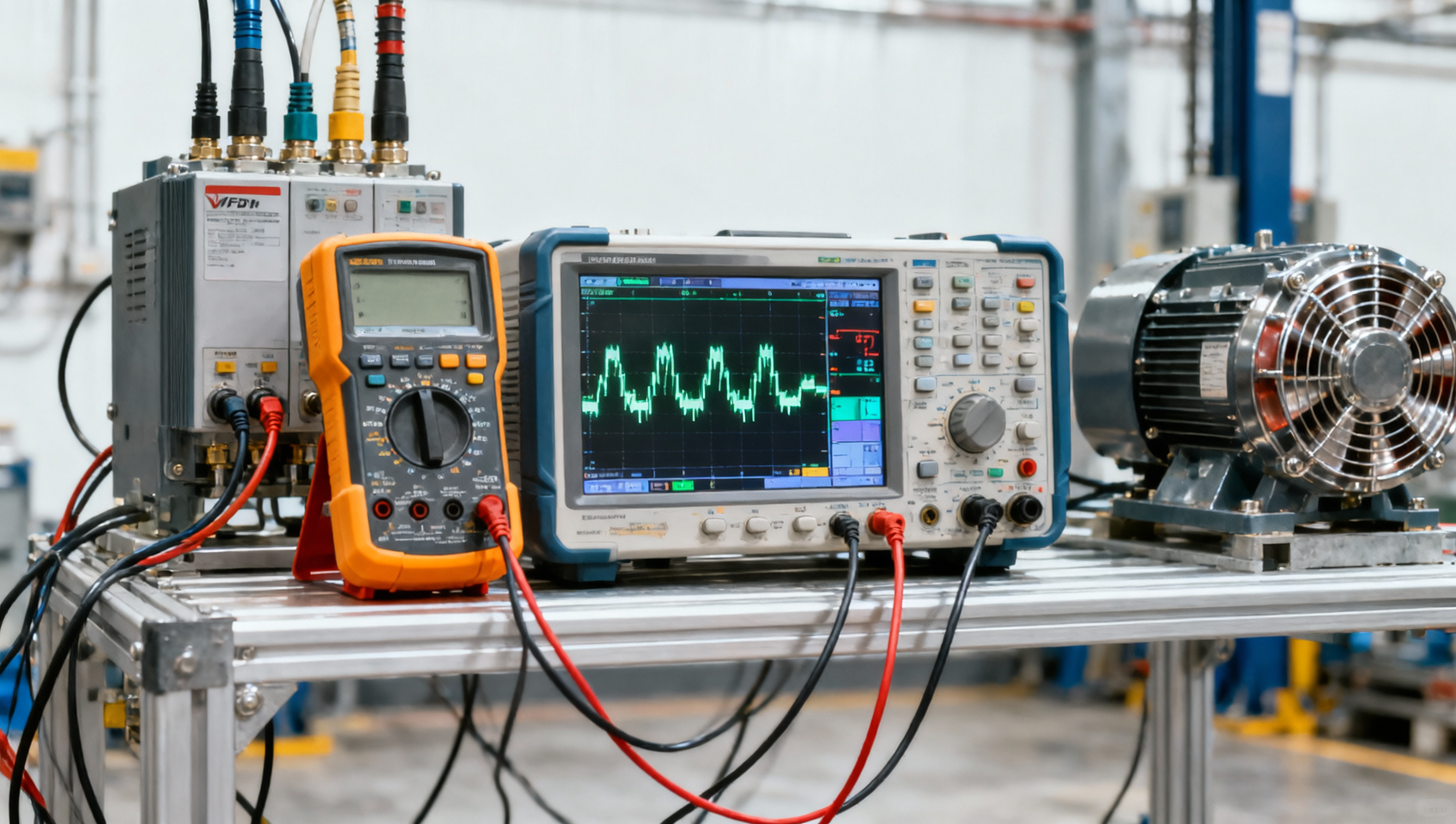
When a digital oscilloscope wholesale quote looks cheap at first
Author
Date Published
Reading Time
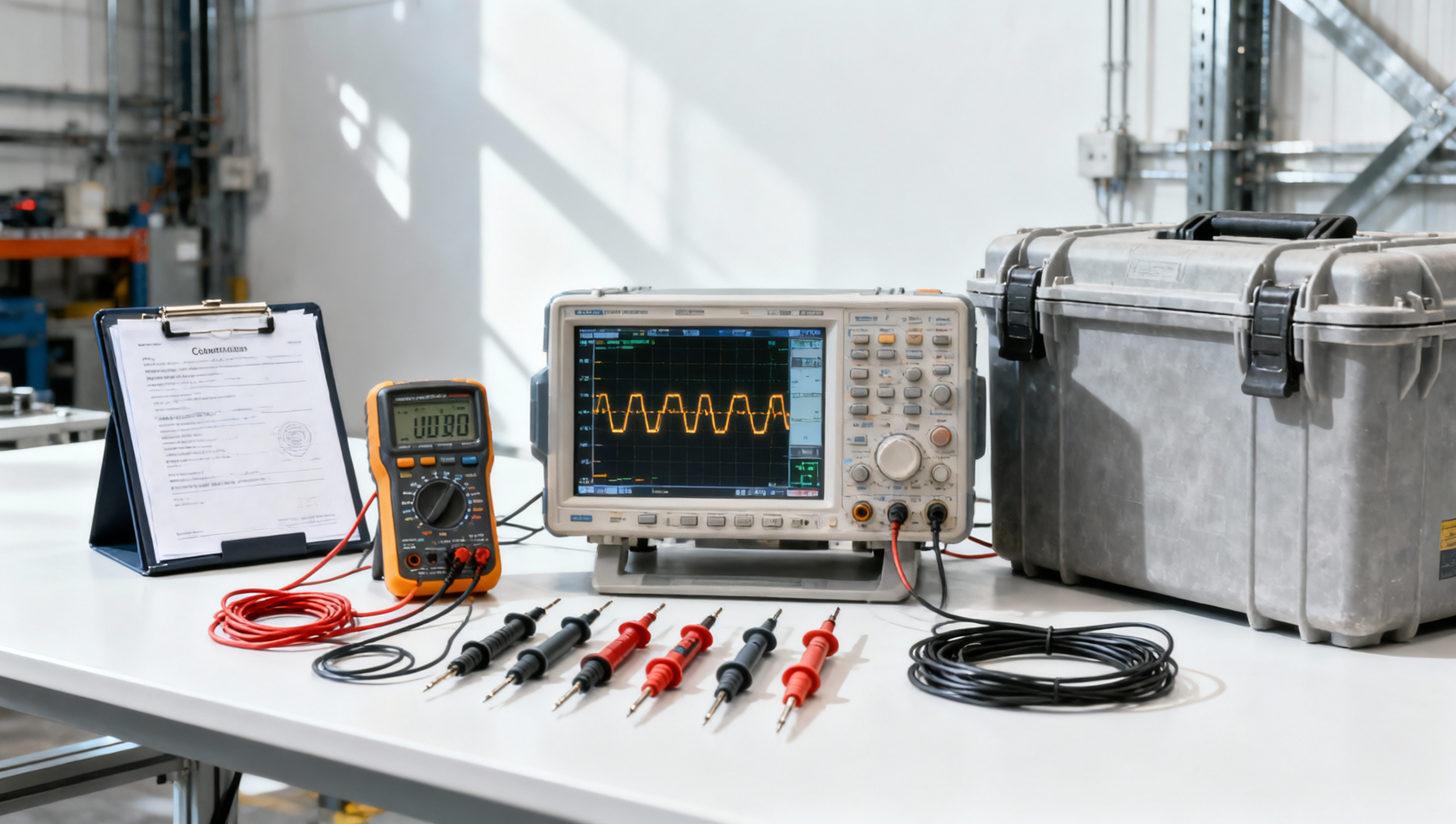
A digital oscilloscope wholesale quote can seem attractive until hidden costs surface in calibration, compliance, probes, software, and long-term reliability. For buyers comparing instruments with tools like a true rms multimeter, this guide explains how to evaluate real value, reduce sourcing risk, and choose suppliers that support industrial-grade performance rather than just a low upfront price.
Why a low digital oscilloscope wholesale quote often becomes expensive later
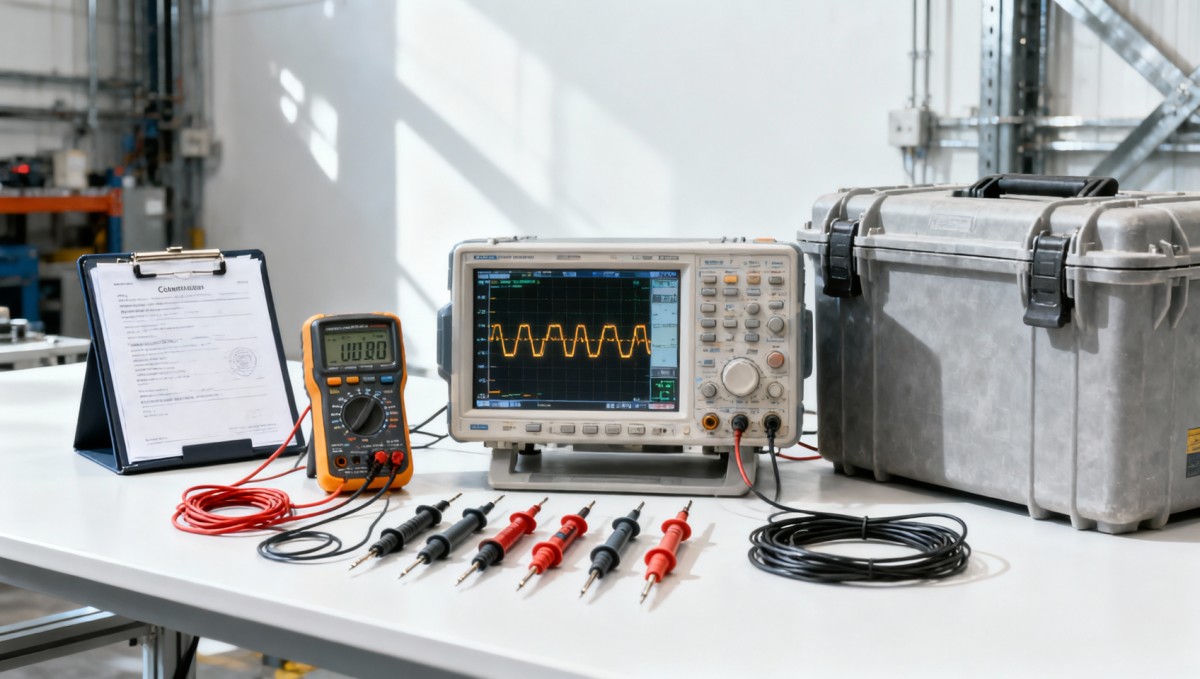
In industrial sourcing, the first number on a quotation rarely represents the full cost of ownership. A digital oscilloscope wholesale offer may exclude standard probes, calibration certificates, firmware access, localized power cords, packaging for export, or after-sales response time. For EPC contractors, plant maintenance teams, and procurement managers, those omissions matter because an instrument that arrives incomplete can delay commissioning by 7–15 days and increase emergency purchasing pressure.
The issue becomes sharper when buyers compare oscilloscopes only by bandwidth and screen size. A unit listed at a lower entry price may have narrower memory depth, fewer decoding options, weaker trigger stability, or no traceable calibration support. In a workshop, laboratory, or field service environment, such limits can reduce test confidence and force operators to repeat measurements 2–3 times before reaching a decision.
Global Industrial Core focuses on the sourcing realities behind instruments and measurement equipment used in demanding operating environments. In sectors where downtime, compliance failure, or poor waveform visibility can affect safety and productivity, instrument selection must extend beyond simple quote comparison. Buyers need to review operating conditions, documentation, support terms, and integration with broader electrical test workflows.
A practical purchasing review usually starts with 5 core questions: what is included in the quote, what is optional, what standards must be met, what service level is available, and what the instrument will cost to maintain over 12–36 months. When those questions are answered early, a cheap digital oscilloscope wholesale quote becomes easier to judge on real commercial value rather than headline price alone.
- Check whether the quote includes 2 or 4 probes, not just the main unit.
- Confirm if a calibration certificate is factory-issued only or traceable to a recognized lab process.
- Review software licensing, protocol decoding, and data export functions before placing volume orders.
- Ask for warranty terms, spare parts lead time, and technical response windows in writing.
What should buyers compare beyond unit price?
A structured comparison helps information researchers, operators, and decision-makers avoid false savings. The most useful approach is to compare commercial and technical factors side by side. This matters especially in mixed procurement environments where the oscilloscope may be evaluated together with a true rms multimeter, power quality tools, current probes, and insulation test equipment for the same maintenance program.
The table below summarizes common gaps between a low initial quote and a more complete industrial procurement package. These are not universal specifications, but they reflect frequent buying checkpoints in general industrial measurement projects, especially where continuity of supply and documentation quality are important.
The key lesson is simple: a better digital oscilloscope wholesale quote is not always the lowest quote. It is the one that makes measurement capability, compliance, support, and lifecycle expense transparent. For industrial buyers, that clarity reduces internal approval friction and helps justify purchasing decisions to technical reviewers and finance teams.
Technical points that deserve early review
For most industrial diagnostics, buyers should review at least 6 technical factors before approving a vendor shortlist: bandwidth, sample rate, memory depth, vertical resolution, trigger capability, and interface options. If two quotes are close in price but differ heavily in those areas, the cheaper model may fail during motor drive troubleshooting, embedded signal checks, or transient event capture.
Environmental suitability also matters. If the instrument will be used in workshops, service vans, or plant floors with temperature variation, dust, or unstable power quality, the buyer should ask about operating temperature range, enclosure robustness, and power compatibility. A desk-grade unit may be acceptable in a controlled lab, but it may not be ideal for field maintenance cycles running every week or every month.
When the oscilloscope is purchased alongside a true rms multimeter, the use case should define the budget split. The multimeter handles quick voltage, current, resistance, and continuity checks, while the oscilloscope captures waveform behavior, switching noise, timing relationships, and transient events. A quote that looks balanced on paper can still be inefficient if it underfunds the oscilloscope functions needed for actual fault isolation.
A quick technical screening checklist
- Match bandwidth to signal type instead of buying by catalog headline alone.
- Confirm whether memory depth remains usable across 2-channel and 4-channel operation.
- Check if protocol decoding for UART, CAN, I2C, SPI, or other interfaces is included or licensed separately.
- Verify export ports and file formats for maintenance records, reports, and training workflows.
How hidden costs affect budget, uptime, and sourcing risk
Hidden cost is not only about paying more later. It also includes lost time, duplicate logistics, slower fault diagnosis, and internal approval delay. In many procurement cycles, a low digital oscilloscope wholesale quote becomes expensive when the buyer later discovers missing accessories, protocol options, test leads, replacement probes, or mandatory documentation required by the end user or project owner.
Typical cost pressure appears in 4 stages: pre-shipment clarification, customs and import documentation, commissioning readiness, and post-sale support. If one of these stages fails, the instrument may sit unused for 1–3 weeks. That is a direct commercial problem for contractors with milestone-based delivery or maintenance teams working under outage windows and plant shutdown schedules.
The following table outlines common hidden-cost areas that buyers should include in total evaluation. It is especially relevant for volume procurement, regional distribution, and industrial projects where the oscilloscope may support power electronics, control cabinets, automation systems, or service training programs.
From a budgeting view, buyers should estimate not just acquisition cost but 12-month and 24-month ownership cost. This does not require speculative numbers. It requires listing predictable items such as recalibration interval, accessories, training time, replacement probe availability, and service escalation route. That process gives procurement teams a more defensible basis for supplier comparison.
Where hidden costs create the biggest operational pain
Operators feel the impact first. If the scope lacks stable triggering or sufficient memory depth, troubleshooting variable frequency drives, PWM outputs, or startup transients becomes slower. Procurement feels it next when users request add-ons after delivery. Decision-makers feel it last when project schedules slip or maintenance reports remain incomplete because the chosen tool cannot capture the required evidence.
This is why sourcing teams should ask for a 3-part commercial package: included configuration list, options list, and service list. Without those three layers, the quote may look clean but remain commercially incomplete. In practice, this simple structure often reveals whether a supplier is prepared for industrial accounts or only focused on moving low-entry inventory.
What standards, compliance, and documentation should be checked?
Instruments used across industrial projects are not evaluated only on functionality. Buyers also need to confirm whether the digital oscilloscope wholesale package aligns with applicable safety, documentation, and import requirements. Depending on destination market and end-use environment, common checkpoints may include CE-related documentation, electrical safety information, user manuals, serial traceability, and calibration records suitable for internal quality procedures.
For procurement teams handling cross-border shipments, document completeness can save several days during receiving and internal inspection. A low quote that omits manuals, conformity paperwork, packing detail, or accessory lists may create uncertainty during warehouse acceptance. This is especially relevant when instruments are ordered in small batch, medium batch, and larger framework quantities for multiple maintenance sites.
The table below can be used as a practical compliance checklist before order confirmation. It is not a substitute for project-specific legal review, but it helps buyers identify whether the supplier can support basic industrial documentation expectations from the beginning of the negotiation.
Documentation quality is often a proxy for supplier maturity. If a vendor can clearly define configuration, calibration status, warranty route, and export support, the buyer gains confidence not only in the product but in the transaction process. For industrial organizations managing multiple sites, that consistency is often more valuable than a small upfront discount.
How GIC supports lower-risk sourcing decisions
Global Industrial Core helps buyers interpret technical and sourcing signals that are easy to miss in a standard quotation. Instead of focusing only on list price, GIC frames the decision around industrial reliability, documentation integrity, standards awareness, and use-case fit. This is especially useful when the purchasing team must align engineers, operators, and finance reviewers within a short approval window of 3–10 business days.
For organizations expanding supplier networks internationally, this approach reduces ambiguity. It supports supplier conversations around configuration scope, operating conditions, delivery realism, and after-sales readiness. In measurement and test procurement, better questions usually produce better outcomes long before the first unit ships.
How to evaluate suppliers and choose the right sourcing path
A reliable buying process should separate product evaluation from supplier evaluation, then reconnect them in a final decision matrix. The product may look acceptable, but if spare parts, documentation, or service communication are weak, the sourcing risk remains high. That is why industrial buyers often use a 4-step review model before issuing a purchase order or framework agreement.
- Define the operating scenario: lab bench, field maintenance, training room, production diagnostics, or mixed use.
- Set 3 categories of requirements: technical performance, documentation and compliance, and service response.
- Request a complete quote package with included items, optional items, lead time, and warranty details.
- Compare 2–4 suppliers using a weighted decision sheet rather than a price-only ranking.
Lead time also deserves careful attention. A quote may state stock availability, but buyers should ask whether that refers to the base unit only or the complete package with probes, software options, export packing, and required documentation. In practice, a base unit might ship quickly while the full industrial set takes 2–4 weeks. That difference matters when project mobilization dates are fixed.
For companies balancing cost and capability, an alternative strategy is to split procurement into user tiers. Basic service teams may need robust mainstream oscilloscopes for routine diagnostics, while advanced engineering teams may need deeper analysis functions. This reduces overbuying without forcing every team into a low-cost instrument that cannot meet critical troubleshooting tasks.
Common misconceptions during oscilloscope sourcing
“If the bandwidth is enough, the quote is fine.”
Bandwidth is only one line in a much larger evaluation. Trigger behavior, memory depth, accessory completeness, and software usability can affect daily performance just as much. A scope that meets headline signal range but fails to capture intermittent events may still be a poor purchasing decision.
“We can add accessories later.”
Later purchasing often means higher unit cost, extra logistics, and more approval steps. In some cases, unavailable or delayed probe options create immediate usability gaps. Consolidating the right package from the start usually lowers administrative friction and improves deployment speed.
“A true rms multimeter can cover most of the same work.”
A true rms multimeter is essential for many maintenance tasks, but it does not replace waveform visualization. If your team diagnoses switching behavior, ripple, timing issues, communication lines, or transient anomalies, the oscilloscope remains the correct tool. The question is not which tool is better in general, but which tool is right for each diagnostic layer.
FAQ and next steps for industrial buyers
How many details should a digital oscilloscope wholesale quote include?
At minimum, the quote should identify model configuration, channel count, included probes, accessory list, software status, warranty term, lead time, and documentation scope. For industrial procurement, it is also useful to confirm packing details, calibration status, and service contact method before order placement.
What lead time is realistic for wholesale orders?
It depends on stock status and configuration depth. Standard models may move faster, but complete packages with accessories, documentation review, and export preparation often require several business days to a few weeks. Buyers should ask for the lead time of the full deliverable package, not just the instrument chassis.
When should a buyer compare an oscilloscope with a true rms multimeter?
The comparison is useful during tool planning, not as a one-to-one replacement decision. A true rms multimeter suits routine electrical verification, while a digital oscilloscope is needed for waveform analysis and transient investigation. Many industrial maintenance teams need both, but with different budget logic and training priorities.
What is the safest way to reduce sourcing risk?
Use a documented review process covering 4 areas: technical fit, included content, compliance paperwork, and service support. Then compare suppliers on total clarity, not only price. This lowers the chance of receiving an incomplete package that appears cheap but disrupts field deployment.
Why choose us for sourcing guidance and supplier evaluation?
Global Industrial Core supports industrial buyers who need more than a product list. We help clarify parameter confirmation, application fit, accessory scope, delivery timing, documentation expectations, and supplier readiness across instruments and measurement categories. That means your team can review a digital oscilloscope wholesale quote in context, not in isolation.
You can contact us to discuss bandwidth and channel requirements, probe and software options, calibration expectations, target delivery windows, sample support, quote comparison, and sourcing risk checkpoints. If your team is also evaluating a true rms multimeter or related electrical test tools, we can help structure a practical procurement path that aligns technical need, operational use, and budget control.
Technical Specifications
Expert Insights

Chief Security Architect
Dr. Thorne specializes in the intersection of structural engineering and digital resilience. He has advised three G7 governments on industrial infrastructure security.
Related Analysis
- Apr 14, 2026How accurate is a true RMS multimeter on VFD signals?Author :Precision Metrology Expert
- Apr 14, 2026When a digital oscilloscope wholesale quote looks cheap at firstAuthor :Precision Metrology Expert
- Apr 14, 2026What changes when an ozone generator goes commercial gradeAuthor :Environmental Engineering Director
Core Sector // 01
Security & Safety
- How accurate is a true RMS multimeter on VFD signals?Author :Precision Metrology Expert

- When a digital oscilloscope wholesale quote looks cheap at firstAuthor :Precision Metrology Expert

- Wholesale alcohol breathalyzers and the calibration problemAuthor :Precision Metrology Expert

- China Approves Rituximab Biosimilar for All Indications, Offering Global Procurement AlternativeAuthor :Precision Metrology Expert

- Optical profile projector accuracy drops after 2 years—what causes it?Author :Precision Metrology Expert

- Temperature humidity chamber calibration drifts faster in tropical climates—here’s whyAuthor :Precision Metrology Expert

- Salt spray test chamber nozzles clog more often than expected—what’s the real culprit?Author :Precision Metrology Expert

- Environmental test chambers with touchscreen interfaces: do they survive lab dust and spills?Author :Precision Metrology Expert