Why wholesale cleanroom garments vary so much in durability
Author
Date Published
Reading Time
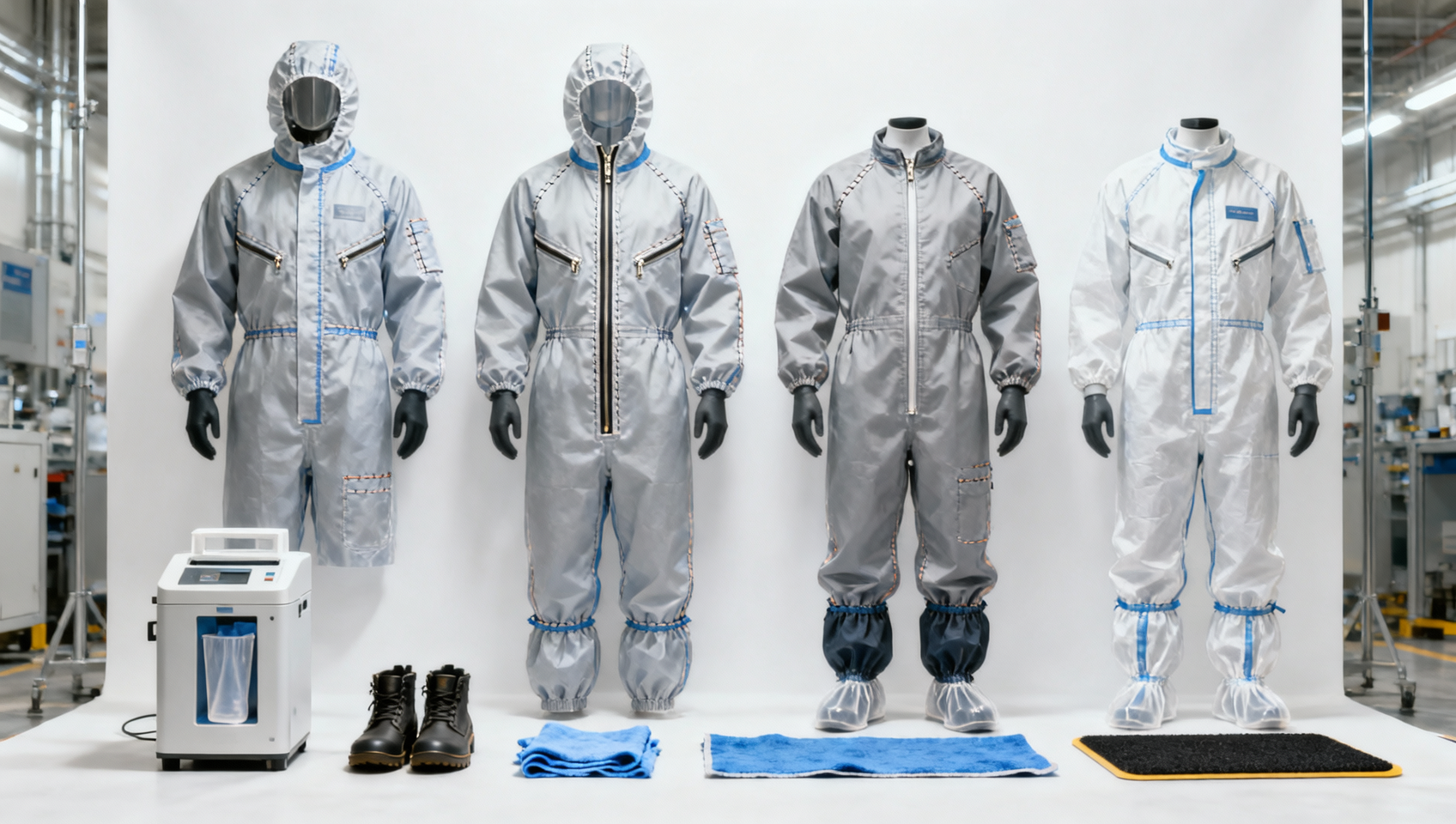
For buyers comparing wholesale cleanroom garments, durability can differ far more than price sheets suggest. Fabric blend, seam construction, sterilization cycles, and compatibility with sticky mats cleanroom systems, lint free wipes bulk usage, esd anti static shoes, and wholesale shoe cover dispenser workflows all affect service life. This guide explains why some garments fail early while others deliver better long-term value, compliance, and operational consistency.
What actually drives durability differences in wholesale cleanroom garments?
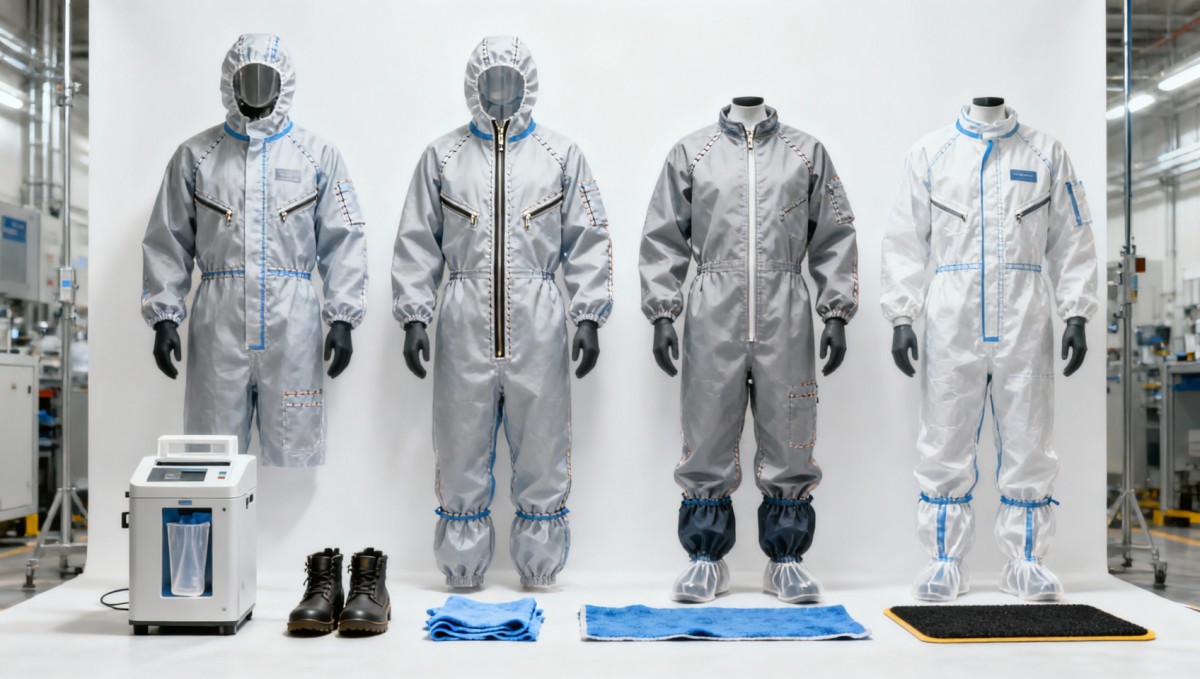
Many procurement teams assume cleanroom garment durability is mainly a fabric weight issue. In practice, service life is determined by at least 5 interacting variables: fiber type, yarn density, seam design, laundering method, and contamination-control workflow. A lightweight garment with better seam integrity can outlast a heavier garment that sheds fibers, distorts after repeated wash cycles, or loses barrier performance after sterilization.
For operators, durability means more than avoiding tears. It includes stable fit, low particle generation, controlled electrostatic behavior, and resistance to repeated donning and doffing. In facilities running 1 to 3 shifts per day, garments may be worn, washed, inspected, and redistributed several times per week. Under those conditions, weak cuffs, poor zippers, and low-grade thread can become failure points long before the fabric itself wears out.
For buyers and decision-makers, the real issue is total usable life. A garment that costs 15% less upfront but lasts only 30 to 40 wash cycles may be more expensive than one that remains stable for 60 to 80 cycles in the same cleanroom protocol. This is especially relevant in mixed industrial environments where garments interact daily with sticky mats cleanroom entry points, lint free wipes bulk handling routines, and frequent movement across changing zones.
At GIC, sourcing analysis often starts with a simple question: what is the expected stress profile? Semiconductor assembly, sterile packaging support, electronics production, and precision component manufacturing all create different wear patterns. The wrong garment specification can lead to higher replacement frequency, more audit issues, and inconsistent operator compliance within as little as 2 to 6 months of deployment.
The 4 most common durability drivers buyers overlook
- Fabric composition changes mechanical behavior. Polyester filament fabrics, polyester-carbon blends, and reusable nonwoven systems respond differently to abrasion, heat, and repeated laundering.
- Seam construction influences both lifespan and contamination control. Bound seams, serged seams, and sealed seams do not perform the same under repeated movement and washing.
- Sterilization and wash chemistry can shorten usable life faster than daily wear. Steam, gamma exposure, and aggressive detergents create different degradation patterns.
- Workflow compatibility matters. Garments used with esd anti static shoes, bench-intensive tasks, and fast gowning lanes face different stress than garments in low-motion controlled areas.
The takeaway is clear: wholesale cleanroom garments vary in durability because they are not all built for the same cycle intensity, contamination target, or movement pattern. Price lists rarely capture that complexity, so a deeper specification review is essential before bulk orders are approved.
How fabric, seams, and closures affect real service life
Fabric is the starting point, but not the full story. Continuous-filament polyester fabrics are widely used because they generate fewer particles than staple-fiber materials and generally hold up well in controlled laundering programs. However, weave density, carbon grid integration, and surface finish also affect abrasion resistance, drape retention, and electrostatic stability. Two garments described as “polyester cleanroom coveralls” can perform very differently after 25, 50, or 75 wash cycles.
Seams deserve special attention because they are often the earliest failure zone. Operators stretch elbows, knees, shoulders, and seat panels repeatedly during a shift. If the seam allowance is narrow, if thread quality is inconsistent, or if stitch density is poorly controlled, seam fatigue appears before fabric thinning. This is one reason low-cost wholesale cleanroom garments may look acceptable on delivery but lose functional reliability during the first 10 to 20 laundering cycles.
Closures also have a measurable effect on durability. Zippers exposed to frequent disinfecting, snap fasteners under repeated tension, and elastic cuffs washed at high temperatures all age differently. In busy gowning zones, garments may be opened and closed dozens of times per week. If closure systems are not selected for repeated use, replacement rates increase and downtime grows because damaged garments must be removed from circulation for inspection or repair.
The table below helps procurement teams compare common construction choices when evaluating wholesale cleanroom garments for long-term use rather than initial purchase price alone.
For industrial buyers, the best approach is to compare garments by construction system, not by headline description. A stronger seam package and better closure quality can extend usable life enough to offset higher unit price across quarterly or annual procurement cycles.
Why the same fabric can still fail at different speeds
Even when two suppliers use similar base fabric, durability may diverge because of cutting accuracy, pattern grading, thread selection, or finishing treatment. Poorly balanced garment patterns place excess tension on armholes and seat seams. In a facility with continuous bending, reaching, and equipment loading, those stress points accelerate wear within a few weeks.
This is where operational feedback matters. Users often notice early signs before buyers do: twisted cuffs, zipper snagging, collar deformation, or shrinking after wash. A structured wear trial over 2 to 4 weeks can reveal weaknesses that no brochure or sample swatch will show.
A practical 5-point inspection during sample evaluation
- Check seam consistency at shoulders, crotch, knees, and sleeves after repeated movement.
- Test closure reliability over multiple open-close cycles in normal gowning conditions.
- Review dimensional stability after 3 to 5 wash cycles, not only after first use.
- Assess compatibility with esd anti static shoes, gloves, hoods, and mask interfaces.
- Observe lint behavior during interaction with lint free wipes bulk cleaning routines and workbench contact.
Why laundering, sterilization, and workflow conditions change lifespan
One of the biggest reasons wholesale cleanroom garments vary in durability is that service life is heavily shaped by what happens after purchase. A garment tested in ideal conditions may underperform in a real facility if wash chemistry is aggressive, drying temperatures are too high, or sorting practices mix garments from different contamination classes. In many programs, post-purchase handling has as much impact as original construction quality.
Laundering frequency is a major variable. Some operations wash after every shift; others follow daily, every 2 to 3 uses, or scheduled risk-based intervals depending on process sensitivity. The more cycles a garment experiences, the more important dimensional stability, thread performance, and electrostatic retention become. For reusable systems, buyers should ask not only “Is it washable?” but “Under which wash protocol, temperature range, and inspection schedule?”
Sterilization adds another layer. Garments used in sterile support areas or sensitive packaging may be exposed to steam, autoclave conditions, or other validated decontamination steps. Not all fabrics tolerate those processes equally. A material that performs well in standard cleanroom laundering may lose fit, seam strength, or surface characteristics after repeated sterilization. The difference may appear gradually over 15 to 30 cycles rather than immediately.
Workflow design also matters. Entry systems using sticky mats cleanroom stations, high-traffic gowning areas, and wholesale shoe cover dispenser points create localized abrasion and repeated lower-leg movement. Garments used in bench assembly may wear at elbows and forearms, while logistics-facing clean zones may stress zippers, knees, and seat panels. These patterns explain why the same garment model can show very different replacement rates across departments.
Typical lifecycle stress factors by facility routine
The table below outlines how common operational conditions affect cleanroom garment longevity. It is designed for procurement and facility teams comparing garment options under realistic use rather than nominal laboratory conditions.
A disciplined garment program usually includes 3 stages: pre-qualification, controlled rollout, and periodic review. That structure helps teams connect product specification to actual wear data. Without it, even a well-made garment may be judged unfairly because the facility lacks cycle tracking, repair criteria, or removal thresholds.
How operators and facility managers can extend garment life
- Separate garments by zone, process, and wash requirement instead of pooling all reusable stock together.
- Inspect high-stress areas every week or every 10 laundering cycles, whichever comes first.
- Align garment fit with task movement; oversized and undersized garments both create premature seam stress.
- Coordinate garments with related controls such as wholesale shoe cover dispenser placement and entry-lane traffic flow.
These steps are not complicated, but they can reduce avoidable wear and improve replacement planning. For procurement teams, that means more predictable annual consumption and fewer urgent buys triggered by unexpected garment loss.
What should procurement teams compare before placing a bulk order?
When sourcing wholesale cleanroom garments, buyers should compare offers across at least 6 dimensions: fabric system, seam type, closure quality, size consistency, laundering compatibility, and documentation support. A low unit price has limited meaning if the supplier cannot explain expected wash-cycle performance, recommended inspection intervals, or compatibility with your existing contamination-control routine.
Procurement decisions also need role-based thinking. Information researchers want specification clarity. Operators need comfort and consistent movement. Purchasing staff need repeatable supply and manageable replacement cost. Decision-makers need risk control, compliance alignment, and a credible long-term sourcing plan. The best vendor evaluation process therefore combines technical review, wear testing, and commercial assessment over a defined window such as 2 to 4 weeks.
In industrial supply chains, it is smart to request a decision matrix rather than comparing quotations line by line. This is especially important when garments must work alongside lint free wipes bulk consumption plans, esd anti static shoes programs, and mixed cleanroom entry systems. One weak link in that ecosystem can reduce the usable life of the entire apparel package.
The following procurement table can be used as a practical checklist during RFQ review, supplier discussion, and sample approval.
A strong procurement process links garment selection to process conditions, not just catalogue descriptions. That reduces hidden cost, lowers replacement volatility, and gives decision-makers a cleaner basis for contract comparison.
A 4-step sourcing approach that reduces durability risk
- Define the use case by zone, operator movement, wash frequency, and contamination control level.
- Shortlist suppliers based on construction detail, documentation quality, and sample responsiveness.
- Run a controlled wear trial for 2 to 4 weeks with at least one laundering loop.
- Review total-cost impact using replacement rate, user feedback, and failure mode records.
This method is especially useful for organizations managing multiple sites or cross-border sourcing, where inconsistent garment quality can create both operational and compliance headaches.
Common questions, risks, and decision mistakes in cleanroom garment buying
Durability issues often come from assumptions rather than obvious product defects. Buyers may assume all reusable garments in the same category deliver similar lifespan. Operators may focus only on comfort. Managers may underestimate the effect of laundering or entry-point friction. A better buying process requires all three viewpoints to be considered together.
Another frequent mistake is evaluating garments without the surrounding system. If sticky mats cleanroom maintenance is poor, if lint free wipes bulk handling creates unnecessary abrasion, or if esd anti static shoes fit poorly against cuffs and hems, the garment can wear faster even when the fabric is sound. In other words, durability is partly a product issue and partly a system issue.
Lead time should also be discussed early. Standard bulk programs may move in roughly 2 to 6 weeks depending on volume, customization, and regional logistics, while special sizing, embroidery, or documentation-heavy programs can take longer. If replacement planning is weak, urgent replenishment may force buyers to accept substitute garments with lower durability or mismatched specifications.
Below are focused questions that often arise during sourcing and rollout of wholesale cleanroom garments.
How do I know whether a lower-cost garment is truly more expensive over time?
Compare cost per usable cycle, not cost per piece. If one garment lasts 30 cycles and another lasts 60 cycles under the same protocol, the higher-priced option may still be the better value. Include repair, inspection labor, user rejection, and replacement urgency in the calculation. For many B2B buyers, a quarterly review provides a realistic basis for comparison.
Which users should be involved in sample approval?
At minimum, involve 3 groups: an operator or end user, a quality or EHS-related reviewer, and a purchasing representative. If the site has ESD-sensitive production, add engineering input. This cross-functional review captures fit, durability, contamination control, and commercial practicality before the bulk order is released.
Are certification documents enough to judge durability?
No. Documents can confirm certain material or process characteristics, but they do not replace a site-specific wear evaluation. Buyers should still ask how the garment behaves after repeated washing, what inspection criteria are recommended, and how the product integrates with related controls such as shoe covers, entry systems, and cleaning consumables.
What are the most common red flags in a supplier quotation?
- No explanation of expected laundering or sterilization compatibility.
- No detail on seam type, closure materials, or stress-point reinforcement.
- No guidance on size consistency, sample evaluation, or replacement criteria.
- A unit price that is low, but no visibility on lead time, lot stability, or documentation support.
These warning signs do not automatically mean a supplier is unsuitable, but they do indicate a higher need for technical clarification before purchase.
Why choose GIC for cleanroom garment sourcing insight and next-step planning?
GIC supports industrial buyers who need more than a product list. Our value lies in structured sourcing intelligence, practical comparison frameworks, and procurement-focused interpretation across safety, measurement, electrical, environmental, and mechanical contexts. For wholesale cleanroom garments, that means helping teams connect garment durability to the wider operational environment rather than evaluating apparel in isolation.
If your team is comparing suppliers, reviewing sample results, or trying to reduce replacement volatility across multiple sites, we can help frame the decision around usable life, compliance needs, and system compatibility. This is especially useful when garment selection must align with sticky mats cleanroom layouts, lint free wipes bulk planning, esd anti static shoes programs, and wholesale shoe cover dispenser workflows.
You can contact GIC to discuss 6 practical topics: fabric and seam specification review, laundering and sterilization compatibility, sample evaluation criteria, expected lead-time planning, documentation and certification checkpoints, and quotation comparison across multiple vendors. For larger industrial procurement programs, we can also help define a phased review path covering pre-qualification, trial deployment, and supplier decision support.
If you are preparing an RFQ or validating a current garment program, reach out with your use scenario, approximate order volume, cleanroom workflow, and any known compliance or ESD requirements. A clearer specification at the start usually means fewer replacements, better operator acceptance, and a more defensible purchasing decision over the next 6 to 12 months.
Technical Specifications
Expert Insights

Chief Security Architect
Dr. Thorne specializes in the intersection of structural engineering and digital resilience. He has advised three G7 governments on industrial infrastructure security.
Related Analysis
- Apr 14, 2026How accurate is a true RMS multimeter on VFD signals?Author :Precision Metrology Expert
- Apr 14, 2026When a digital oscilloscope wholesale quote looks cheap at firstAuthor :Precision Metrology Expert
- Apr 14, 2026What changes when an ozone generator goes commercial gradeAuthor :Environmental Engineering Director
Core Sector // 01
Security & Safety
- Automatic hand sanitizers with sensors or pedals?Author :Safety Compliance Lead

- Does a wholesale shoe cover dispenser really reduce contamination?Author :Safety Compliance Lead

- ESD anti static shoes that pass tests but feel unsafe on siteAuthor :Safety Compliance Lead

- Why wholesale cleanroom garments vary so much in durabilityAuthor :Safety Compliance Lead

- Scaffolding tags are simple until weather starts erasing themAuthor :Safety Compliance Lead

- Do wholesale safety nets hold up after months of UV exposure?Author :Safety Compliance Lead

- Wheel chocks wholesale: rubber or polyurethane on sloped ground?Author :Safety Compliance Lead

- Why wholesale traffic batons get dim after short daily useAuthor :Safety Compliance Lead