Do wholesale safety nets hold up after months of UV exposure?
Author
Date Published
Reading Time
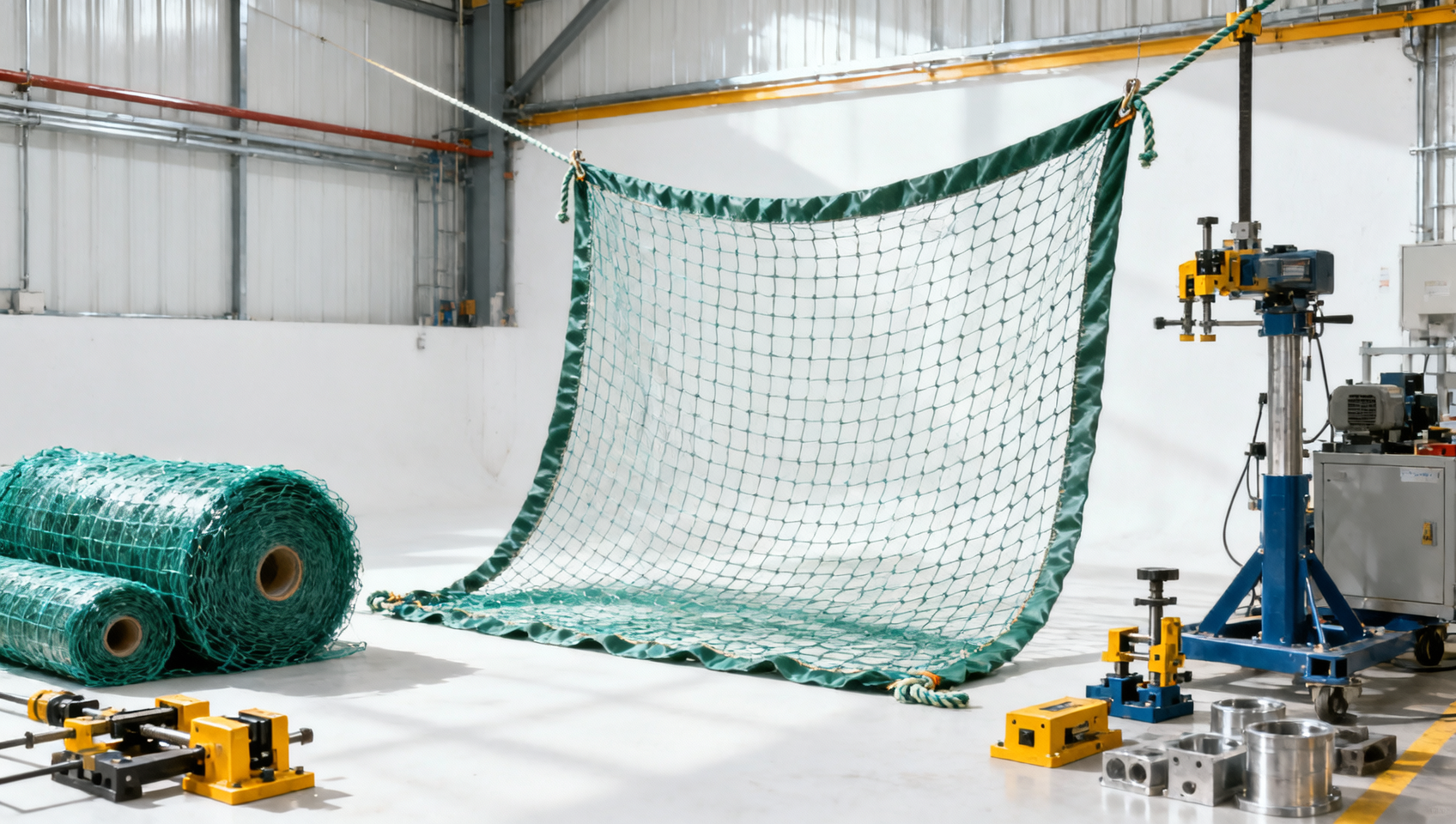
When buyers ask whether wholesale safety nets can withstand months of UV exposure, the answer depends on material grade, certification, and real-world testing. For procurement teams, site operators, and safety managers, understanding UV degradation is as critical as evaluating scaffolding tags, confined space equipment, and safety signs wholesale—because long-term performance directly affects compliance, worker protection, and total lifecycle cost.
What really happens to wholesale safety nets under long-term sunlight?
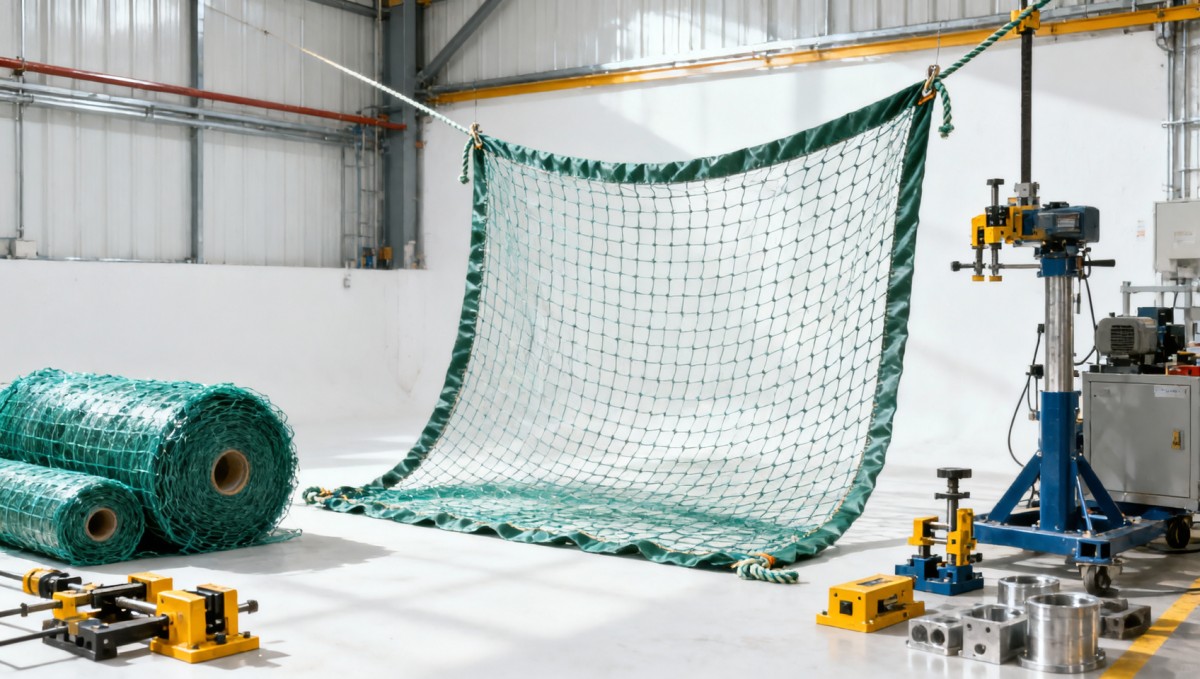
Wholesale safety nets do not fail simply because they are used outdoors. They fail when the polymer, coating, knot structure, or edge rope is not specified for the UV load of the jobsite. In practical terms, exposure over 3–12 months can reduce flexibility, color stability, and tensile performance if the net material is low grade or lacks UV stabilizers. That is why procurement decisions should begin with material data and test conditions rather than only price per square meter.
The most common industrial net materials include HDPE, polypropylene, nylon, and polyester blends. Each behaves differently when exposed to direct sun, heat cycling, moisture, dust, and chemical splash. On construction sites, logistics yards, marine edges, and maintenance platforms, UV exposure often works together with abrasion and repeated loading. This means a safety net that appears visually intact may already have lost part of its original performance envelope.
For users and operators, the key concern is not only whether the net looks faded after 6 months, but whether it still performs during an actual fall-arrest or debris-containment event. For enterprise buyers, the concern expands to compliance records, replacement frequency, and legal defensibility. A lower upfront price can turn expensive if replacement cycles move from 12 months to 4–6 months in high-UV regions.
Global Industrial Core advises evaluating wholesale safety nets as part of a broader risk-control system. In many projects, safety nets interface with scaffolding tags, warning systems, access control points, and inspection routines. If one component degrades faster than expected, the whole safety program becomes harder to manage. That is why UV resistance should be treated as a procurement variable, not a secondary product feature.
Three factors that usually determine UV durability
- Material formulation: UV-stabilized HDPE and selected industrial-grade synthetic fibers usually perform more predictably than untreated commodity fibers in long outdoor service.
- Manufacturing quality: Knot strength, mesh consistency, edge rope construction, and coating quality influence how quickly sunlight, wind movement, and abrasion turn into mechanical loss.
- Service environment: A net used at 25°C–35°C in direct sun with dust and wind behaves differently from the same net used under intermittent shade or in short project cycles of 30–90 days.
This distinction matters because many buyers still compare wholesale safety nets as if they were interchangeable commodities. They are not. UV resistance is tied to formulation, process control, and exposure profile. A net for temporary facade work and a net for long-duration perimeter protection may look similar in photos yet differ significantly in service life.
How can buyers compare materials, exposure risk, and likely replacement cycles?
For information researchers and procurement managers, the most efficient comparison starts with material behavior under field conditions. The table below summarizes common patterns seen in industrial sourcing discussions. It is not a substitute for supplier testing data, but it helps narrow the shortlist before requesting samples, certificates, and technical sheets.
The table shows why the phrase wholesale safety nets can be misleading if used without technical qualifiers. Bulk sourcing does not reduce environmental stress. It only magnifies the consequences of a wrong specification. A 500-unit purchase with unclear UV resistance can create inspection burdens, replacement delays, and inconsistent site safety outcomes across multiple projects.
Buyers should also separate visual aging from structural aging. Fading in 2–4 months does not automatically mean the net is unsafe, but visible discoloration can indicate the material is under stress. Conversely, a net with limited color change may still lose meaningful tensile performance if the polymer formulation is weak. This is why supplier claims should be checked against test methods, outdoor-use notes, and recommended inspection intervals.
A practical 5-point comparison framework
- Confirm intended service duration: Is the net for 30–60 days, one season, or ongoing use beyond 6 months?
- Check exposure severity: Direct equatorial sun, rooftop heat, coastal glare, and wind-driven movement all increase stress.
- Review retention criteria: Ask what properties are expected after aging, not only at day 1.
- Assess installation variables: Incorrect tensioning, sharp edges, and overloaded spans shorten useful life.
- Plan replacement logic: Define whether inspection is weekly, monthly, or linked to operating events and weather cycles.
For enterprise decision makers, this method turns UV exposure from a vague concern into a sourcing metric. Instead of asking only whether a net is UV resistant, ask how long it can remain in service under a defined exposure profile, what inspection cadence is required, and what documentation supports that claim.
Which certifications, test evidence, and field checks matter most?
In industrial procurement, compliance is not a single document. It is a package of product information, test records, installation guidance, and traceability. For wholesale safety nets, buyers should review whether the product aligns with the relevant safety net, industrial textile, or construction safety requirements applicable in the destination market. Depending on project location, that may involve CE-related documentation, ISO-based quality systems, or contractor-specific approval procedures.
A common mistake is to ask only for a certificate number and ignore the scope. Buyers should confirm what exactly was tested: the net body, the border rope, the attachment system, or the complete assembly. A UV claim without context is incomplete. Was the material tested after artificial aging? Was the result based on a yarn sample or the finished product? Was the test linked to impact performance or only surface appearance?
Site operators should translate document review into field checks. A net that passed testing can still become unsafe through poor storage, contaminated handling, or incorrect installation. Good practice is to inspect at 3 points: before installation, during the first 7–14 days of use, and then at regular intervals such as every month or after major weather events. This is especially relevant in projects where nets work alongside scaffolding tags, fall-protection lines, or temporary barriers.
GIC generally recommends treating UV resistance claims as part of a compliance matrix rather than as a marketing phrase. Buyers should collect technical data sheets, batch identification, installation instructions, care limits, and replacement guidance in one review file. That makes it easier for EPC contractors, facility managers, and procurement directors to compare bids on a like-for-like basis.
What should be reviewed before approving a supplier?
The checklist below helps procurement teams compare supplier submissions for wholesale safety nets without relying on vague quality language. It is particularly useful when several offers appear similar in price but differ in usable service life, inspection burden, and documentation quality.
A structured compliance review often reduces downstream disputes. If your team is choosing between two similar offers, the better-documented product is usually the safer operational choice, even if its unit price is moderately higher. The difference may be recovered through fewer replacements, cleaner audits, and more predictable maintenance planning over 6–12 months of service.
Four field indicators that deserve immediate attention
- Brittleness when flexed by hand during routine inspection, especially along folds or sun-facing sections.
- Localized cracking, broken filaments, or edge-rope wear near anchor points.
- Loss of uniform mesh geometry caused by creep, overloading, or repeated wind action.
- Discoloration combined with stiffness or abrasion dust, which may indicate more than cosmetic change.
These checks help operators distinguish normal weathering from conditions that justify removal from service. A disciplined inspection routine is often more valuable than assuming all UV-rated wholesale safety nets age at the same pace.
How should procurement teams choose between lower price, longer life, and project risk?
The purchase decision for wholesale safety nets is rarely about material science alone. It is usually a balance between project duration, replacement tolerance, labor cost, downtime exposure, and audit pressure. A lower-cost net may be acceptable for short-duration use in moderate sunlight. It becomes much less attractive if your sites need consistent outdoor performance across 4–8 months, multiple shifts, and repeat inspections.
Procurement teams should model the net as part of total installed cost. That includes freight, fitting accessories, installation time, site inspections, replacement labor, and waste handling. If one option saves 8% on purchase price but doubles replacement frequency, the real cost can move in the wrong direction. This is especially true in large projects where access equipment and work stoppages cost more than the net itself.
A practical sourcing path is to divide demand into 3 categories: short-cycle temporary projects, standard outdoor use, and high-exposure or compliance-sensitive sites. This avoids overbuying premium specifications for every project while preventing under-specification where the failure cost is high. GIC often sees better procurement outcomes when buyers create a category-based spec sheet rather than a one-size-fits-all RFQ.
For decision makers, the strongest question is not “What is the cheapest wholesale safety net?” It is “What specification gives acceptable risk, predictable replacement planning, and defensible documentation for this project profile?” That question aligns technical selection with finance, operations, and compliance at the same time.
A simple selection guide by project profile
The following matrix helps teams map project conditions to a sourcing strategy. It is especially useful when buyers need to compare standard safety nets with higher-grade UV-stabilized options, or when coordinating related purchases such as safety signs wholesale and temporary access safety items.
This selection logic prevents a common purchasing error: buying to visual similarity instead of service profile. Two nets may share mesh size and color, yet one may be intended for shorter turnover while the other supports longer exposure windows. The difference becomes visible in replacement rates, operator confidence, and the quality of audit records.
FAQ: what do buyers and site teams ask most about UV-exposed safety nets?
Do UV-resistant wholesale safety nets last the same in every region?
No. Service life changes with sunlight intensity, temperature, altitude, wind movement, pollution, and maintenance. A net used for 6 months in one climate may require earlier replacement in another. That is why procurement teams should ask for guidance based on exposure category, not a universal lifespan statement.
Can I rely on color fading as the main sign of UV damage?
Not by itself. Fading may occur before structural decline becomes critical, or structural decline may begin without dramatic visual change. The better approach is a 3-part review: visual inspection, tactile flexibility check, and confirmation against the supplier’s inspection and withdrawal guidance. Where risk is higher, maintain documented checks every month or after severe weather.
What should procurement teams request before placing a bulk order?
Request the material specification, applicable test information, use instructions, storage conditions, batch traceability method, and sample evaluation support. If the project is critical, ask for clarification on recommended service duration, inspection intervals, and accessory compatibility. This is particularly important when the purchase includes related safety lines such as scaffolding tags or safety signs wholesale, where documentation consistency matters.
Is a heavier net always better for outdoor UV performance?
Not always. Weight can indicate more material, but UV performance depends on polymer quality, stabilizer package, construction method, and how the net is installed. A heavier but poorly stabilized net may underperform a lighter net engineered for outdoor use. Buyers should avoid using weight as a shortcut for durability.
Why work with GIC when evaluating wholesale safety nets for long outdoor service?
Global Industrial Core supports B2B buyers who need more than a catalog comparison. Our approach is built for EPC contractors, facility managers, sourcing teams, and industrial decision makers who must connect product selection with compliance, risk control, and operational continuity. When UV exposure, replacement planning, and documentation quality affect jobsite safety, a clearer sourcing framework saves time and reduces uncertainty.
We help teams evaluate wholesale safety nets in the context of actual industrial environments: direct outdoor exposure, multi-site deployment, audit-sensitive projects, and integrated safety systems. That includes aligning net selection with material grade review, certification scope, inspection cadence, accessory matching, and procurement logic across broader safety categories.
If your team is comparing suppliers, planning a new RFQ, or troubleshooting early outdoor degradation, you can contact GIC for practical support on 6 key points: parameter confirmation, material and application matching, lead-time expectations, documentation review, sample coordination, and quotation comparison. This is useful whether you are sourcing for one project or building a repeat purchasing standard across multiple sites.
Share your operating environment, expected service period, installation method, and certification requirements, and we can help structure the evaluation criteria before you commit to volume. That gives procurement teams and decision makers a more reliable basis for choosing wholesale safety nets that hold up under real UV exposure, not just in sales language.
Technical Specifications
Expert Insights

Chief Security Architect
Dr. Thorne specializes in the intersection of structural engineering and digital resilience. He has advised three G7 governments on industrial infrastructure security.
Related Analysis
- Apr 14, 2026How accurate is a true RMS multimeter on VFD signals?Author :Precision Metrology Expert
- Apr 14, 2026When a digital oscilloscope wholesale quote looks cheap at firstAuthor :Precision Metrology Expert
- Apr 14, 2026What changes when an ozone generator goes commercial gradeAuthor :Environmental Engineering Director
Core Sector // 01
Security & Safety
- Automatic hand sanitizers with sensors or pedals?Author :Safety Compliance Lead

- Does a wholesale shoe cover dispenser really reduce contamination?Author :Safety Compliance Lead

- ESD anti static shoes that pass tests but feel unsafe on siteAuthor :Safety Compliance Lead

- Why wholesale cleanroom garments vary so much in durabilityAuthor :Safety Compliance Lead

- Scaffolding tags are simple until weather starts erasing themAuthor :Safety Compliance Lead

- Do wholesale safety nets hold up after months of UV exposure?Author :Safety Compliance Lead

- Wheel chocks wholesale: rubber or polyurethane on sloped ground?Author :Safety Compliance Lead

- Why wholesale traffic batons get dim after short daily useAuthor :Safety Compliance Lead