Security guard uniforms that look neat but wear out too fast
Author
Date Published
Reading Time
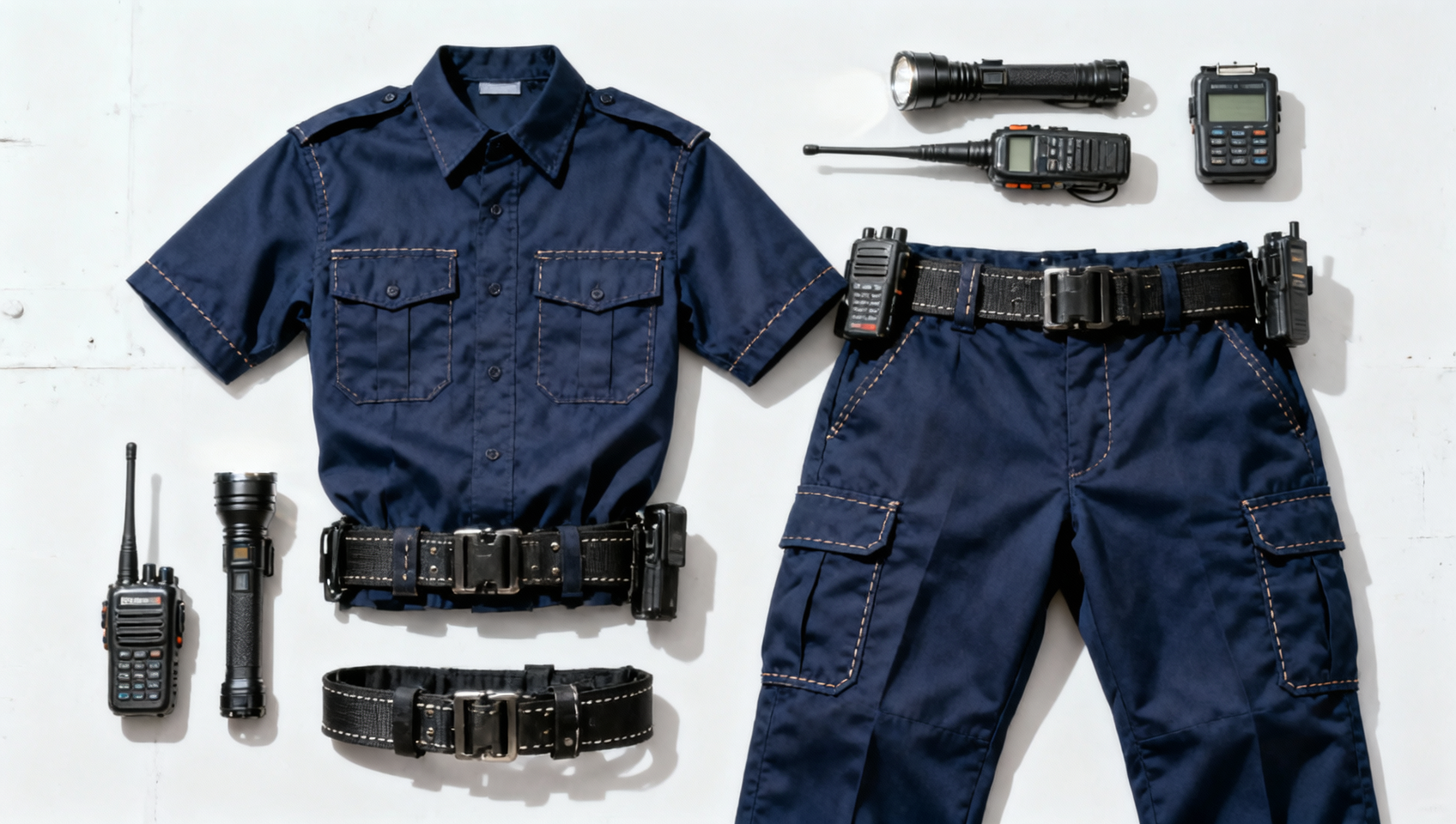
Security guard uniforms may project a sharp, professional image, but if they fade, tear, or lose structure too quickly, they create hidden costs for buyers and daily frustration for wearers. For procurement teams comparing security guard uniforms alongside wholesale tactical flashlights, body worn cameras oem, and convex safety mirrors, durability matters as much as appearance. This article explores why neat-looking uniforms fail early and how to source options built for long-term performance.
Why do security guard uniforms look sharp at first but fail so quickly?
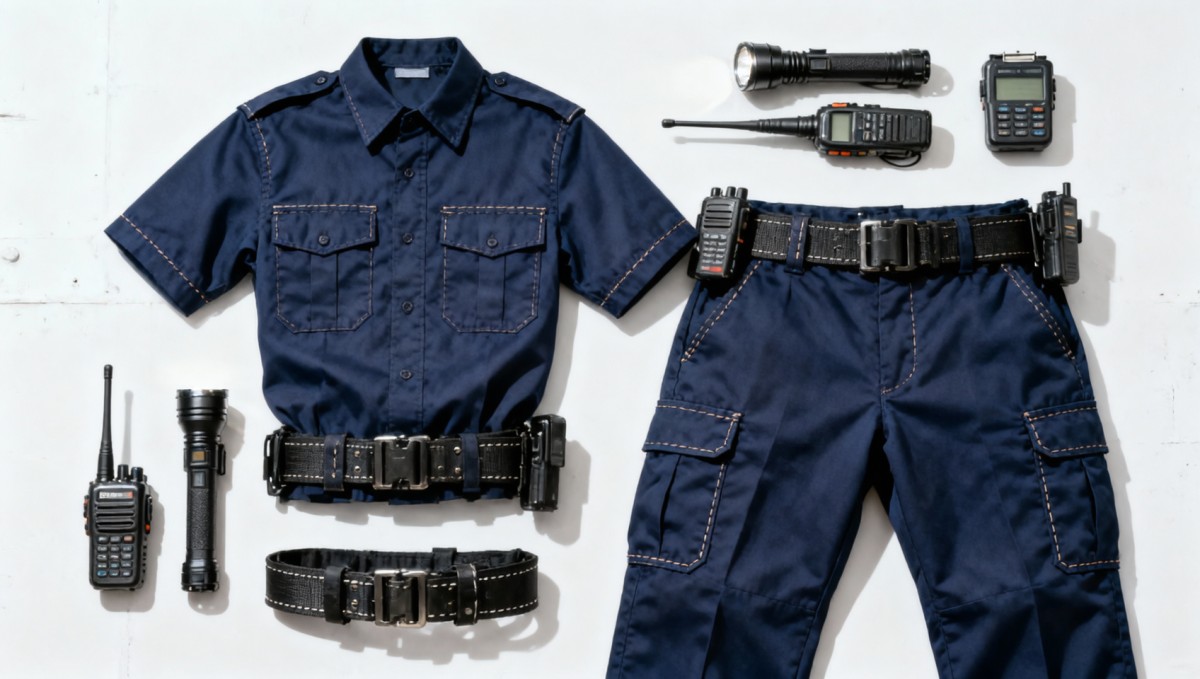
In many industrial, commercial, and mixed-use facilities, security guard uniforms are expected to send two signals at the same time: authority and reliability. The problem is that some uniforms are designed mainly for showroom appearance. They may photograph well, hang neatly on a sample rack, and satisfy short-term visual checks, yet they begin to lose color, shape, or seam integrity after only 3–10 wash cycles or a few weeks of shift rotation.
This mismatch usually comes from material imbalance. A fabric can look crisp because of surface finishing, high starch effect, or a tight initial press, but that does not mean it can survive long hours of patrol, repeated vehicle entry, outdoor exposure, and equipment friction. In security operations, shirts and trousers often face 8–12 hour shifts, weekly laundering, and daily contact with belts, radios, flashlights, body cameras, and access control hardware.
For information researchers and procurement teams, the key issue is not whether a uniform looks neat on day one. The real question is whether it still looks controlled and professional after 60–90 days of actual wear. When uniforms wear out too fast, companies absorb more than replacement cost. They also face inconsistent team appearance, user complaints, and more frequent emergency purchasing.
Global Industrial Core (GIC) approaches this topic from an industrial sourcing perspective. In environments where infrastructure reliability matters, apparel procurement should be treated like any other operational support category: review usage conditions, define performance thresholds, compare supply consistency, and verify whether the garment remains stable under real duty cycles rather than under catalog conditions.
Common reasons early wear happens
- Fabric weight is too low for the assignment, especially when lightweight office-style uniforms are used for patrol, gate control, warehouse, or construction-adjacent security posts.
- The fiber blend favors visual smoothness over abrasion resistance, leading to pilling, shine marks, or thinning at elbows, knees, and pocket edges.
- Seam construction and reinforcement are weak in high-stress zones such as shoulder points, crotch panels, belt loops, and side seams.
- Colorfastness is insufficient for frequent industrial laundering, sunlight exposure, or repeated contact with sweat and cleaning agents.
These failure points are especially relevant when buyers manage multiple security-related categories together. A team that evaluates tactical flashlights, surveillance wearables, and safety mirrors with detailed technical criteria should apply the same discipline to security guard uniforms. Uniform performance affects front-line presentation every day, not only during audits or inspections.
Which fabric and construction choices make the biggest difference?
Not every security post requires the same garment specification. A lobby receptionist, a logistics yard patroller, and an industrial perimeter officer operate under very different stress conditions. That is why fabric selection should begin with application mapping. In practical sourcing, buyers often compare at least 3 core variables: fiber blend, fabric weight, and reinforcement design. These factors influence comfort, appearance retention, and replacement frequency over a 6–12 month cycle.
For many mixed-duty security teams, polyester-cotton blends remain common because they balance shape retention and wearability. However, blend ratio alone is not enough. Two garments with a similar blend can perform very differently if one uses better yarn quality, tighter weave density, bartack reinforcement, and more durable dyeing. A neat finish without structural support is often what causes uniforms to age badly.
Buyers should also distinguish between appearance features and performance features. Epaulets, badge tabs, crease lines, and sharp collars contribute to professional image, but they do not predict durability. Long-term performance comes more from stitch count consistency, seam allowance, pocket anchoring, abrasion resistance, and the garment’s ability to recover its shape after repeated wash-and-wear cycles.
The table below helps procurement teams compare the most relevant construction factors when assessing security guard uniforms for routine commercial and industrial use.
The most useful takeaway is simple: neat appearance should be treated as a baseline, not a performance claim. In most procurement reviews, a uniform that keeps acceptable structure and color through regular weekly washing will usually deliver better value than a more polished option that needs replacement after a short usage window.
How duty type changes the ideal uniform specification
Indoor reception and commercial access control
These posts usually prioritize clean presentation, lower heat load, and frequent public interaction. Here, a lighter and smoother security guard uniform may be suitable, provided the fabric still holds color after repeated laundering and the collar, cuffs, and front placket do not deform within 2–3 months.
Warehouse, yard, and logistics patrol
This environment creates more friction and movement. Guards enter vehicles, pass through gates, inspect pallets, and walk long distances. Trousers need stronger seam reinforcement and pocket support. Shirts should resist snagging from radios, reflective gear, and ID accessories. A more tactical workwear construction often outperforms a purely formal uniform style here.
Industrial site and mixed-risk facilities
For facilities with power equipment, outdoor perimeters, or dusty process zones, buyers should look beyond appearance and review compatibility with site PPE practices. Even when a security guard uniform is not specialized protective apparel, it still needs enough structural integrity to function alongside boots, belts, high-visibility layers, and seasonal outerwear.
What should procurement teams compare before placing a bulk order?
Bulk buying security guard uniforms without a wear-plan often leads to poor cost control. The most effective sourcing process uses a 4-step comparison model: define operating conditions, request technical details, test samples in use, and confirm replenishment capability. This is particularly important for B2B buyers who manage multiple sites or contract security providers where appearance consistency must be maintained across rotating teams.
A common mistake is to compare only unit price. A lower-cost uniform can become more expensive if it needs replacement twice as often, generates high wearer complaints, or creates visual inconsistency across shifts. Procurement decisions should include total use value over a typical service period, often 6 months, 9 months, or 12 months depending on duty intensity and laundering frequency.
GIC recommends asking suppliers to support evaluation with measurable checkpoints rather than general promises. Buyers can request sample sets, laundering guidance, stitching details, and lead-time planning. Even when exact laboratory data is unavailable, suppliers should be able to explain expected use conditions, recommended care methods, and replenishment timelines such as 2–4 weeks for standard items or longer for custom trims.
The following procurement table can help standardize comparison across different uniform vendors.
When interpreted correctly, these dimensions turn uniform sourcing into a controllable procurement category. They also make it easier for enterprise decision-makers to compare bids on operational logic rather than marketing language alone. This is especially valuable when uniforms are bundled with other security and safety purchases in a larger facility program.
A practical 5-point sample review checklist
- Check stress zones after a short wear trial of 7–14 days, especially knees, seat area, sleeve ends, and pocket corners.
- Wash samples according to supplier guidance for at least 3 cycles and compare shrinkage, fading, and collar stability.
- Test compatibility with belts, radios, flashlights, notebooks, and body-worn devices used by the guard team.
- Review whether the cut supports walking, sitting, vehicle entry, and arm movement during routine shifts.
- Confirm replenishment logic for new hires, seasonal changes, and replacement units over the next 6–12 months.
This checklist is simple, but it often reveals more than a catalog sheet. Many early failures in security guard uniforms become visible only when garments are worn with actual accessories and washed under normal facility conditions.
How do cost, compliance, and replacement strategy affect the final decision?
In a B2B setting, uniform cost should be viewed in layers. First is the visible purchase price. Second is operational cost: replacement frequency, emergency top-ups, fitting corrections, and administrative handling. Third is image cost, which becomes important in front-facing security operations for industrial parks, office towers, energy facilities, and logistics centers. A uniform that loses structure too early can weaken the professional signal the security team is supposed to project.
Compliance also matters, even when standard security guard uniforms are not classified as specialized protective clothing. Buyers may still need to verify supplier consistency, labeling clarity, fiber content disclosure, care instructions, and compatibility with broader site safety policies. In international procurement, it is also useful to check whether documentation is organized in a way that supports corporate sourcing review, vendor qualification, and contract traceability.
A replacement strategy can reduce budget waste. Instead of buying all positions with one identical spec, companies can divide inventory into 3 tiers: front-desk image uniforms, standard patrol uniforms, and heavier-duty garments for rougher environments. This approach often improves cost control because wear intensity is not equal across all posts. It also prevents overbuying premium appearance details for staff who need more rugged performance.
For enterprise decision-makers, the better question is not “Which uniform is cheapest?” but “Which uniform model offers the best service stability across our duty mix, replacement cycle, and supplier support structure?” That framing leads to better long-term value and fewer disruptions.
Common purchasing mistakes to avoid
- Selecting formal-looking garments for physically demanding patrol work without checking abrasion and seam strength.
- Approving samples based on appearance under showroom lighting rather than field wear, laundering, and accessory use.
- Ignoring replenishment consistency, which can create mismatched shades or inconsistent tailoring across later orders.
- Treating uniforms as a low-risk category even though they affect daily staff performance and public-facing professionalism.
These mistakes are avoidable when security guard uniforms are reviewed with the same discipline applied to other operational assets. The most reliable sourcing outcomes come from combining user feedback, procurement controls, and site-specific usage mapping before a full rollout begins.
FAQ and next steps for buyers evaluating security guard uniforms
Below are the questions most buyers, facility managers, and operations teams raise when a security guard uniform looks good initially but does not hold up in service. These answers can help shorten evaluation time and reduce procurement risk.
How long should security guard uniforms normally last?
There is no single answer because duty intensity varies. In moderate indoor use with weekly laundering, a reasonable expectation is that the uniform should maintain acceptable appearance for several months rather than only a few washes. In patrol or industrial use, lifespan depends heavily on friction, climate, accessories, and care routine. This is why comparing garments over a 6–12 month planning horizon is more useful than looking only at purchase price.
What matters more: fabric blend or stitching quality?
Both matter, but stitching quality and reinforcement often determine where failure starts first. A decent fabric can still fail early if high-stress points are poorly sewn. Conversely, a well-constructed garment made from a blend unsuitable for heat, abrasion, or laundering will also disappoint. Buyers should review fiber content, fabric hand, seam design, and stress-point finishing as one package.
Are cheaper security guard uniforms always a poor choice?
Not always. A lower-cost option can be suitable for low-intensity, indoor, image-focused posts if sizing is stable and the garment holds its form through normal care. The problem begins when low-cost formal styling is used in environments that require stronger wear resistance. Cost only makes sense when matched to task type, replacement expectation, and supplier consistency.
What should be confirmed with the supplier before ordering?
At minimum, confirm 6 items: fabric composition, care instructions, sample approval process, size chart logic, expected lead time, and repeat-order consistency. If the security team uses radios, flashlights, body worn cameras oem solutions, or duty belts, confirm functional compatibility as well. This prevents choosing a uniform that looks neat but becomes impractical during real shifts.
Why choose us for security and industrial sourcing guidance?
Global Industrial Core (GIC) supports buyers who need more than a basic product list. We help procurement teams and enterprise stakeholders compare security guard uniforms in the wider context of security and safety infrastructure, including related categories such as tactical lighting, wearable recording systems, and site visibility equipment. That means decisions can be aligned with site duty patterns, replacement planning, and operational practicality rather than isolated price checks.
If you are reviewing security guard uniforms for a new project or replacing a fast-wearing current program, you can consult us on parameter confirmation, duty-based product selection, lead-time expectations, customization scope, documentation requirements, sample evaluation, and quotation comparison. This is especially useful for EPC contractors, facility managers, security service operators, and procurement directors managing multi-site or cross-border sourcing needs.
Contact GIC when you need a structured review of uniform durability, supplier comparison support, or a bundled sourcing discussion covering uniforms together with wholesale tactical flashlights, body worn cameras oem options, and convex safety mirrors. A clearer specification at the start usually saves far more than a rushed replacement order later.
Technical Specifications
Expert Insights

Chief Security Architect
Dr. Thorne specializes in the intersection of structural engineering and digital resilience. He has advised three G7 governments on industrial infrastructure security.
Related Analysis
- Apr 14, 2026How accurate is a true RMS multimeter on VFD signals?Author :Precision Metrology Expert
- Apr 14, 2026When a digital oscilloscope wholesale quote looks cheap at firstAuthor :Precision Metrology Expert
- Apr 14, 2026What changes when an ozone generator goes commercial gradeAuthor :Environmental Engineering Director
Core Sector // 01
Security & Safety
- Automatic hand sanitizers with sensors or pedals?Author :Safety Compliance Lead

- Does a wholesale shoe cover dispenser really reduce contamination?Author :Safety Compliance Lead

- ESD anti static shoes that pass tests but feel unsafe on siteAuthor :Safety Compliance Lead

- Why wholesale cleanroom garments vary so much in durabilityAuthor :Safety Compliance Lead

- Scaffolding tags are simple until weather starts erasing themAuthor :Safety Compliance Lead

- Do wholesale safety nets hold up after months of UV exposure?Author :Safety Compliance Lead

- Wheel chocks wholesale: rubber or polyurethane on sloped ground?Author :Safety Compliance Lead

- Why wholesale traffic batons get dim after short daily useAuthor :Safety Compliance Lead