Wheel chocks wholesale: rubber or polyurethane on sloped ground?
Author
Date Published
Reading Time
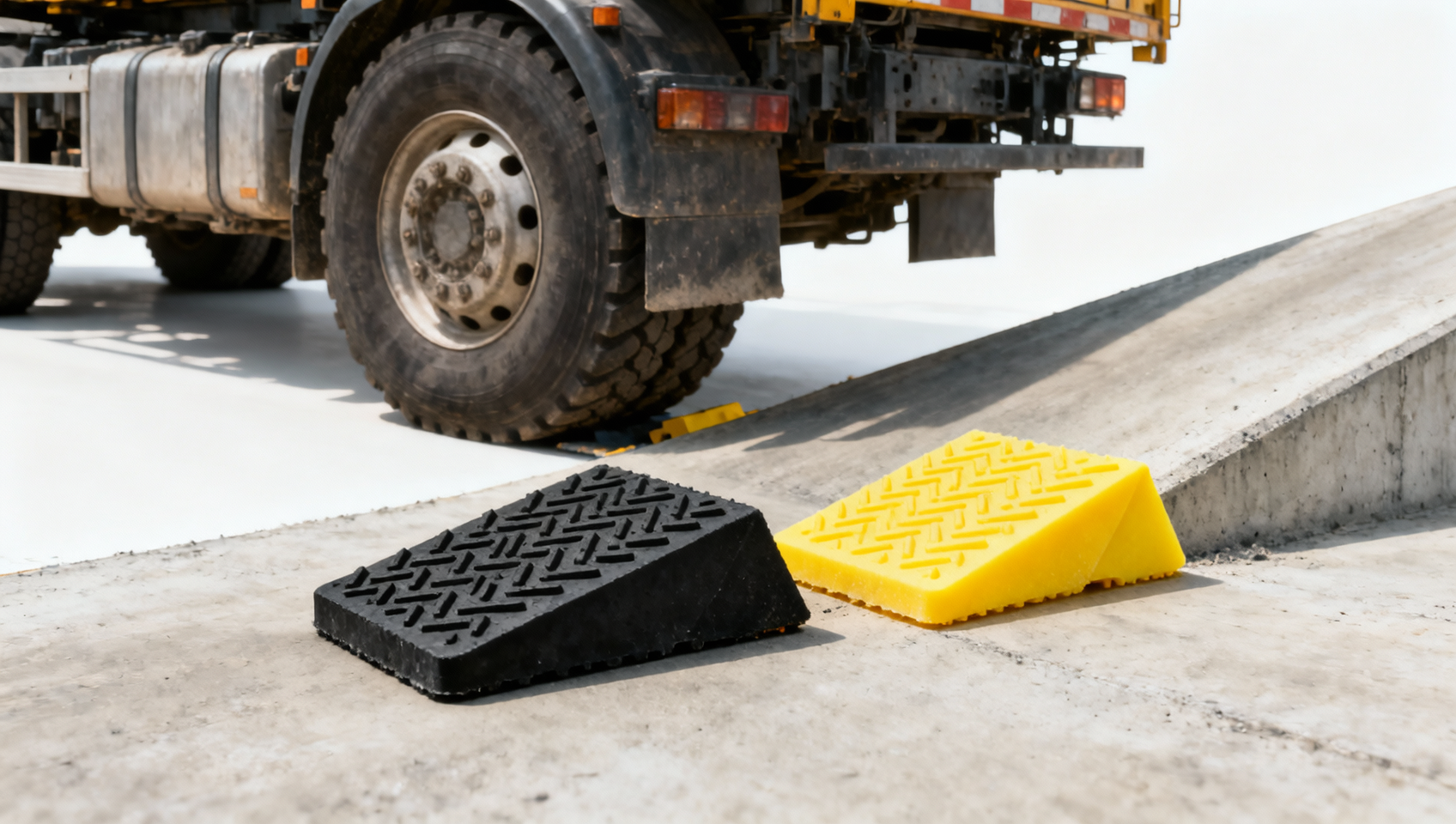
Choosing the right wheel chocks wholesale option for sloped ground is critical to vehicle stability, worker safety, and compliance in demanding industrial sites. This guide compares rubber and polyurethane wheel chocks in terms of grip, durability, weather resistance, and cost, helping procurement teams, operators, and decision-makers identify the safer, longer-lasting solution for fleets, loading docks, construction zones, and heavy-duty operations.
Why sloped ground changes the wheel chock buying decision
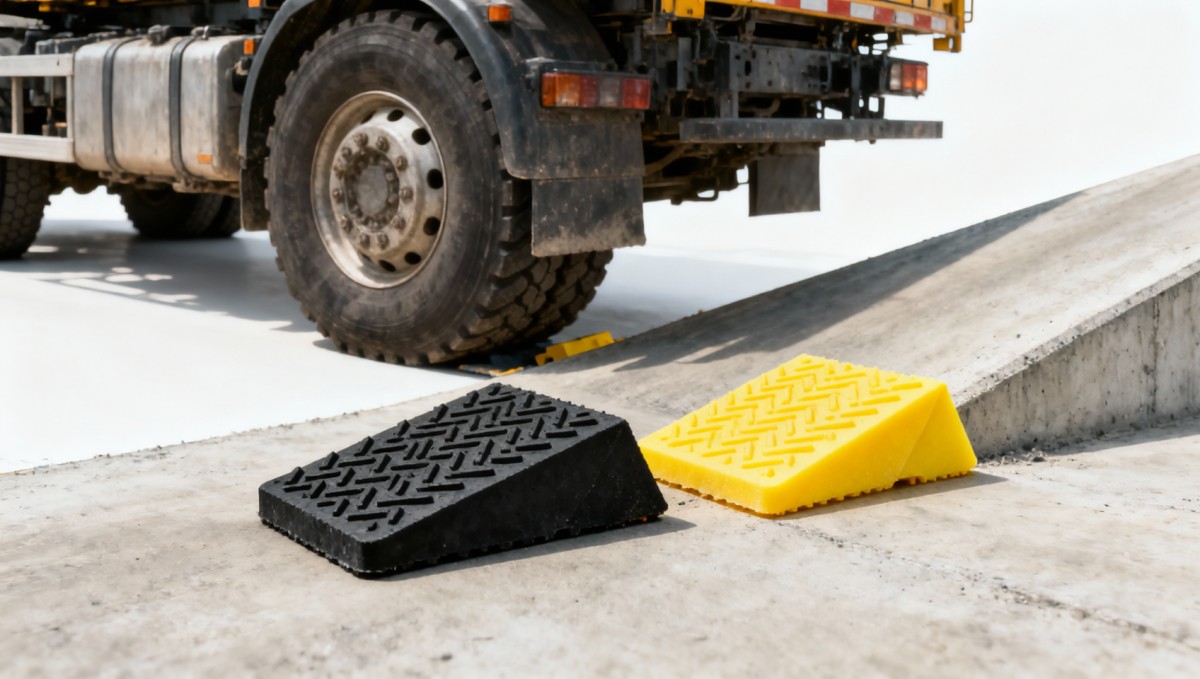
On flat pavement, many buyers treat wheel chocks as simple accessories. On sloped ground, that assumption creates risk. Gravity adds continuous rolling force, drainage patterns introduce water, oil, mud, or ice, and operators often need chocks to perform during repeated loading cycles over 8–12 hours per shift. In these conditions, wheel chocks wholesale decisions affect not only safety but also downtime, inspection outcomes, and replacement frequency.
For information researchers and procurement teams, the real question is not whether rubber or polyurethane is generally better. The right question is which material performs more reliably on a specific slope angle, tire size range, surface condition, and duty cycle. A warehouse ramp at 3%–5% grade behaves differently from a quarry road, a marine loading point, or a construction access lane with loose debris.
Operators usually focus on immediate grip and handling. Purchasing managers often focus on unit price and lead time. Decision-makers, however, must weigh total lifecycle value: fewer replacements over 12–24 months, reduced slip incidents, easier inspection, and alignment with internal safety procedures. That is where a structured material comparison becomes more useful than a basic catalog listing.
Global Industrial Core supports this decision process by translating technical material differences into sourcing logic for industrial environments. For EPC contractors, facility managers, and heavy-duty fleet buyers, the most practical evaluation usually starts with 4 variables: surface friction, compression behavior, environmental resistance, and maintenance burden.
- Surface friction: How the chock interacts with concrete, asphalt, steel plates, compacted soil, or wet ramps.
- Compression behavior: Whether the material deforms too much under heavy vehicle loads or maintains a stable wedge profile.
- Environmental resistance: Exposure to UV, rain, low temperatures, oils, and chemicals over seasonal cycles.
- Maintenance burden: Cleaning frequency, storage condition, inspection interval, and replacement planning.
Rubber vs polyurethane wheel chocks: what matters on slopes?
When buyers compare wheel chocks wholesale options, material selection should be tied to traction behavior and structural consistency. Rubber wheel chocks are widely chosen because they usually provide strong initial grip, especially on concrete and asphalt. Their higher surface friction can help on moderate slopes, particularly when the site has stop-and-go vehicle activity and operators need fast manual placement.
Polyurethane wheel chocks are often favored where buyers want lower weight, cleaner handling, and better resistance to abrasion, UV exposure, and many chemicals. On some sloped surfaces, polyurethane can maintain shape more consistently under repeated load cycles. That said, the exact grip level depends heavily on formulation, tread design, and the condition of the contact surface. Material alone never tells the full story.
A practical comparison should separate short-term grip from long-term reliability. Rubber may feel more secure at first contact, but some grades can harden, crack, or absorb contamination over time. Polyurethane may cost more initially, yet in environments with frequent outdoor exposure or rough handling, its service life can offset the price premium across 6–18 months of use.
The table below summarizes the most common selection factors procurement teams review when comparing rubber and polyurethane wheel chocks for sloped ground applications.
For many industrial buyers, the takeaway is simple: rubber tends to be a strong candidate for moderate slopes and cost-sensitive programs, while polyurethane becomes more attractive when outdoor exposure, chemical contact, or replacement frequency are major concerns. On steep or contaminated surfaces, buyers should validate design details beyond raw material type.
Where rubber usually performs best
Rubber wheel chocks are commonly selected for loading docks, distribution centers, bus depots, and maintenance yards where the surface is paved and the grade is controlled. In these settings, the combination of high friction and mass can support stable placement. If chocks are inspected every month and stored away from direct sunlight when not in use, service life can remain practical for routine operations.
They are also useful where buyers need bulk replenishment at lower upfront cost. A wholesale program serving 50, 100, or 500 vehicle positions may prioritize standardization and immediate availability. Rubber can fit this model well, provided the environment does not involve aggressive solvents, prolonged UV exposure, or extreme seasonal cracking risk.
However, procurement teams should check whether the rubber compound leaves marks, absorbs oils, or loses elasticity after repeated compression. On sloped ground with fine dust or standing water, a rubber chock that looked effective on day 1 may behave differently after 3–6 months of field use.
Where polyurethane usually performs best
Polyurethane wheel chocks are often chosen for construction fleets, utilities, mining support vehicles, outdoor substations, and sites where chocks are exposed to rain, sunlight, rough transport, and frequent relocation. Buyers value their lower handling weight and cleaner surface condition, especially when operators must carry them across large work zones several times each day.
In environments where the chocks are dragged, dropped, or stored on service trucks, polyurethane can maintain condition better over time. This matters when field teams cannot replace accessories quickly or when procurement wants a longer replenishment cycle, such as every 12 months rather than every quarter.
Still, buyers should never assume that all polyurethane wheel chocks are automatically safer on slopes. A lightweight chock with insufficient profile depth, poor base geometry, or no traction features can underperform. On sloped ground, shape, contact area, and visibility features matter just as much as material durability.
How to match wheel chocks wholesale options to real industrial scenarios
The most effective sourcing process starts with application mapping. Instead of ordering one generic wheel chock for every vehicle, buyers should group needs into at least 3 categories: light commercial vehicles, medium fleet vehicles, and heavy-duty industrial equipment. The slope condition should then be reviewed alongside tire diameter, wheel width, and whether the chock will be used as a single unit or in paired placement.
For sloped ground, the operating surface is often the deciding factor. Smooth concrete ramps, uneven asphalt, steel dock plates, gravel transitions, and muddy construction staging areas all create different friction patterns. In practical procurement reviews, 5 checks are usually more useful than one broad material label.
- Confirm the expected vehicle class and parked load condition, including whether the vehicle is empty, partially loaded, or fully loaded.
- Identify the slope range, such as flat, moderate incline, or steeper service ramp conditions.
- Review environmental exposure, including water, fuel splash, hydraulic oil, and UV over 4 seasons.
- Check operator handling needs, especially lifting frequency during 6–10 placements per shift.
- Define inspection and replacement intervals, such as monthly checks and annual bulk reorder planning.
The table below helps connect common site conditions with a practical material preference. It is not a substitute for engineering validation, but it gives procurement and operations teams a faster starting point.
This scenario-based view helps avoid a common procurement mistake: assuming a single material should serve every site equally. Many organizations get better results by standardizing two wheel chock types, one for controlled paved environments and one for harsher outdoor or mobile operations.
What operators need that buyers sometimes miss
Operators often notice failure signals before procurement does. If a wheel chock is too heavy, awkward to grip, or difficult to place tightly against the tire, actual field usage declines. A material that looks ideal in a specification sheet may be used inconsistently if it slows routine work. For shift-based operations, ease of handling can be just as important as lab-style material properties.
High-visibility coloring, rope handles, base texture, and wedge profile all influence whether the wheel chock performs correctly on sloped ground. These design features should be included in wholesale selection reviews, especially when the site has multiple operators across 2 or 3 shifts.
A practical 4-step evaluation path
A practical sourcing path often includes 4 stages over 1–3 weeks: define the use case, shortlist material options, test sample units in actual slope conditions, and then finalize batch purchasing terms. This process reduces the risk of buying a large volume based only on catalog claims.
For larger organizations, it is wise to involve safety personnel, site operations, and procurement in the same review cycle. That alignment reduces disputes later about whether the chosen wheel chocks wholesale program prioritized price over operational suitability.
Cost, compliance, and lifecycle value: what procurement should compare
A lower unit price does not automatically mean a lower ownership cost. For wheel chocks on sloped ground, procurement should compare at least 3 cost layers: purchase price, replacement frequency, and operational disruption. If one material requires replacement every 6 months while another remains serviceable for 12–18 months in the same environment, the total program cost can shift quickly.
Compliance also matters. Buyers should ask suppliers about applicable product testing, material specifications, and whether the design aligns with internal safety procedures or site operating rules. Depending on the region and end use, procurement teams may need to confirm relevant documentation, traceability, or quality control consistency rather than relying on general marketing language.
In industrial sourcing, lead time is another hidden cost driver. A standard wheel chocks wholesale order may ship faster than a customized version with branding, special colors, or modified dimensions. Common delivery windows may range from 7–15 days for available stock to 3–6 weeks for custom production, depending on volume and logistics route.
Before placing a large order, use a procurement checklist that links cost to field performance rather than price alone.
- Review the expected service environment and decide whether the site is indoor, outdoor, mixed-use, or mobile-field based.
- Estimate replacement planning over 12 months, not just the initial purchase quarter.
- Request dimensional confirmation for tire contact suitability and placement stability.
- Ask about packaging, batch consistency, and whether sample evaluation is available before full rollout.
- Verify what site documentation is needed for safety audits, receiving inspection, or internal approval.
Common buying mistakes on sloped ground
One common mistake is choosing by material alone. Another is ignoring the relationship between wheel size and chock geometry. A third is failing to test on the actual contaminated surface found at the site. Even a strong wheel chock can underperform if oil film, loose gravel, or steel transition plates reduce friction at the base.
A second mistake is treating all slopes as the same. A slight warehouse incline may allow a broader range of options, while a steeper loading approach requires tighter control of placement, shape, and sometimes paired-use procedures. Procurement teams should document where each wheel chock type will be used instead of assigning one stock code to every operational area.
A third mistake is overlooking operator compliance. If the product is hard to carry, too dirty to handle, or frequently misplaced, the safety program weakens. This is why site usability should be reviewed alongside technical data and commercial terms.
FAQ: key questions before ordering wheel chocks wholesale
The questions below reflect what buyers, operators, and project teams frequently ask when selecting wheel chocks for sloped ground. They are especially relevant when comparing bulk purchase options across mixed industrial environments.
Are rubber wheel chocks safer than polyurethane on sloped ground?
Not in every case. Rubber often offers stronger initial grip on paved surfaces, which can make it a very good choice for moderate slopes and routine loading areas. Polyurethane, however, may maintain performance better in outdoor, abrasive, or chemically exposed environments. Safety depends on the full combination of material, wedge design, tire fit, and surface condition.
What should procurement ask a wheel chocks wholesale supplier first?
Start with 5 points: material type, intended vehicle class, dimensional suitability, recommended environment, and lead time. Then ask whether samples are available, what batch consistency controls exist, and how the product should be inspected in service. These questions help filter out options that look acceptable on paper but may fail on site.
How often should wheel chocks be inspected in industrial use?
A common practice is visual inspection before use and a more formal review every month or quarter, depending on site intensity. Check for cracking, hardening, tearing, deformation, contamination buildup, and handle damage. Outdoor and high-abuse locations usually need shorter review intervals than controlled indoor facilities.
Is polyurethane worth the higher upfront cost?
It can be, especially if your site has high UV exposure, frequent relocation, rough handling, or a replacement cycle that currently disrupts operations. If polyurethane extends usable life from one replacement cycle to two within a 12-month period, the cost difference may be justified. The decision should be based on lifecycle value, not just unit price.
Why work with GIC when evaluating wheel chocks wholesale programs
For industrial buyers, the challenge is rarely finding a wheel chock supplier. The challenge is finding decision-grade guidance that matches the product to slope conditions, operating risk, compliance expectations, and sourcing realities. Global Industrial Core helps bridge that gap with structured technical review and procurement-oriented comparison logic designed for complex B2B environments.
If your team is comparing rubber and polyurethane wheel chocks for loading docks, fleet yards, construction access routes, or other sloped ground applications, GIC can support the next step with focused discussion around parameter confirmation, material trade-offs, application fit, and supplier evaluation criteria. This is especially useful when multiple sites require different specifications under one purchasing framework.
You can contact GIC to discuss 6 practical items before purchase: wheel chock material selection, dimensional matching, expected delivery window, sample support, custom requirements, and documentation needs for internal approval. This allows procurement teams, operators, and decision-makers to move from broad comparison to a more controlled sourcing plan.
If you are planning a new wheel chocks wholesale inquiry, prepare your vehicle class, slope condition, surface type, environmental exposure, estimated order volume, and required delivery timing. With those details, the sourcing conversation becomes faster, clearer, and more aligned with safe long-term use on sloped ground.
Technical Specifications
Expert Insights

Chief Security Architect
Dr. Thorne specializes in the intersection of structural engineering and digital resilience. He has advised three G7 governments on industrial infrastructure security.
Related Analysis
- Apr 14, 2026How accurate is a true RMS multimeter on VFD signals?Author :Precision Metrology Expert
- Apr 14, 2026When a digital oscilloscope wholesale quote looks cheap at firstAuthor :Precision Metrology Expert
- Apr 14, 2026What changes when an ozone generator goes commercial gradeAuthor :Environmental Engineering Director
Core Sector // 01
Security & Safety
- Automatic hand sanitizers with sensors or pedals?Author :Safety Compliance Lead

- Does a wholesale shoe cover dispenser really reduce contamination?Author :Safety Compliance Lead

- ESD anti static shoes that pass tests but feel unsafe on siteAuthor :Safety Compliance Lead

- Why wholesale cleanroom garments vary so much in durabilityAuthor :Safety Compliance Lead

- Scaffolding tags are simple until weather starts erasing themAuthor :Safety Compliance Lead

- Do wholesale safety nets hold up after months of UV exposure?Author :Safety Compliance Lead

- Wheel chocks wholesale: rubber or polyurethane on sloped ground?Author :Safety Compliance Lead

- Why wholesale traffic batons get dim after short daily useAuthor :Safety Compliance Lead