Automatic hand sanitizers with sensors or pedals?
Author
Date Published
Reading Time
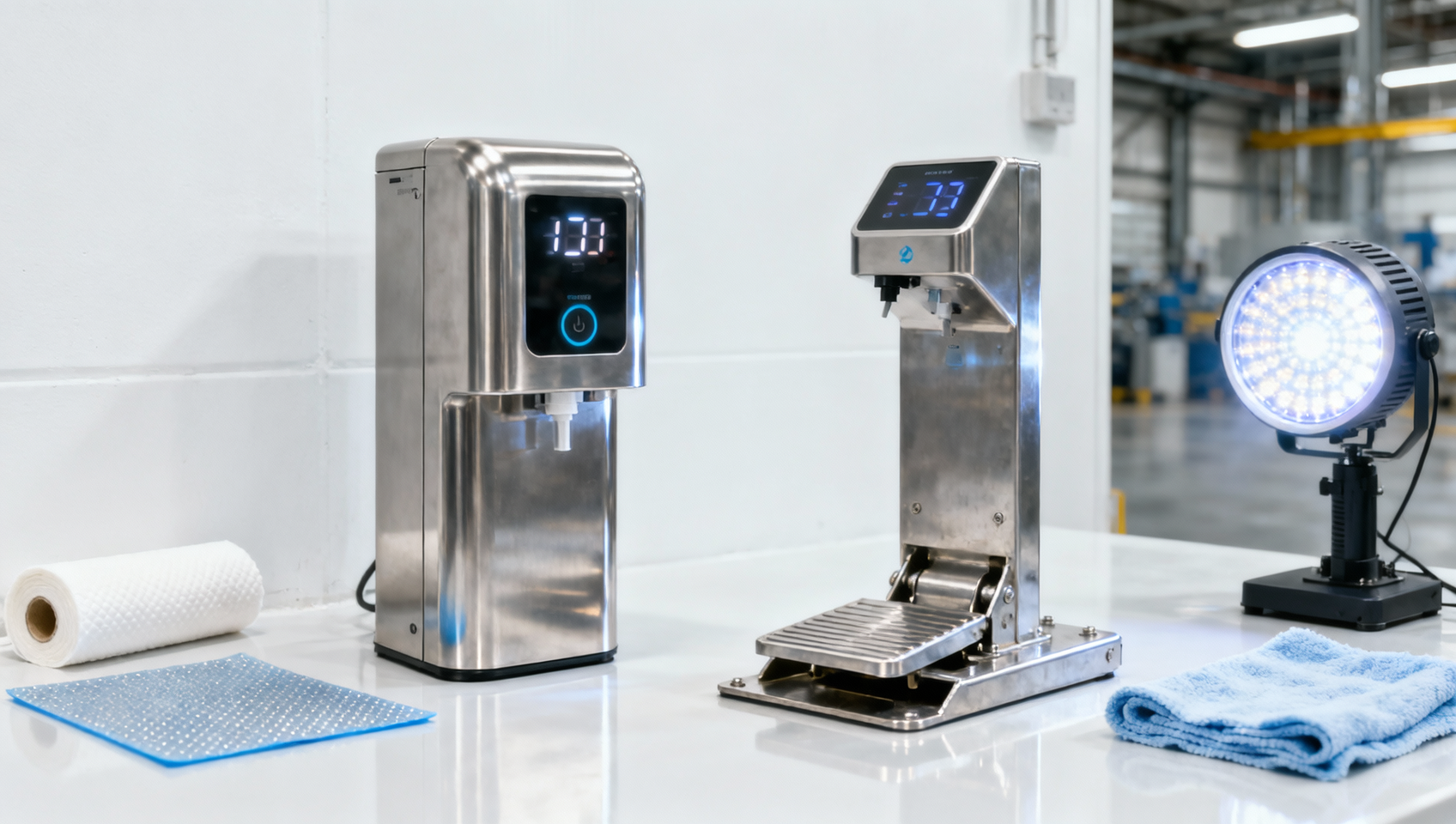
Choosing between automatic hand sanitizers with sensors or pedals affects hygiene, maintenance, and user experience across industrial and commercial sites. For buyers comparing automatic hand sanitizers alongside broader safety and facility essentials like wholesale uv sterilization lamps, sticky mats cleanroom solutions, and lint free wipes bulk, the right dispensing system depends on traffic volume, contamination control goals, and operating conditions. This guide outlines the practical differences to support smarter purchasing and deployment decisions.
How do sensor and pedal hand sanitizer dispensers differ in real operations?
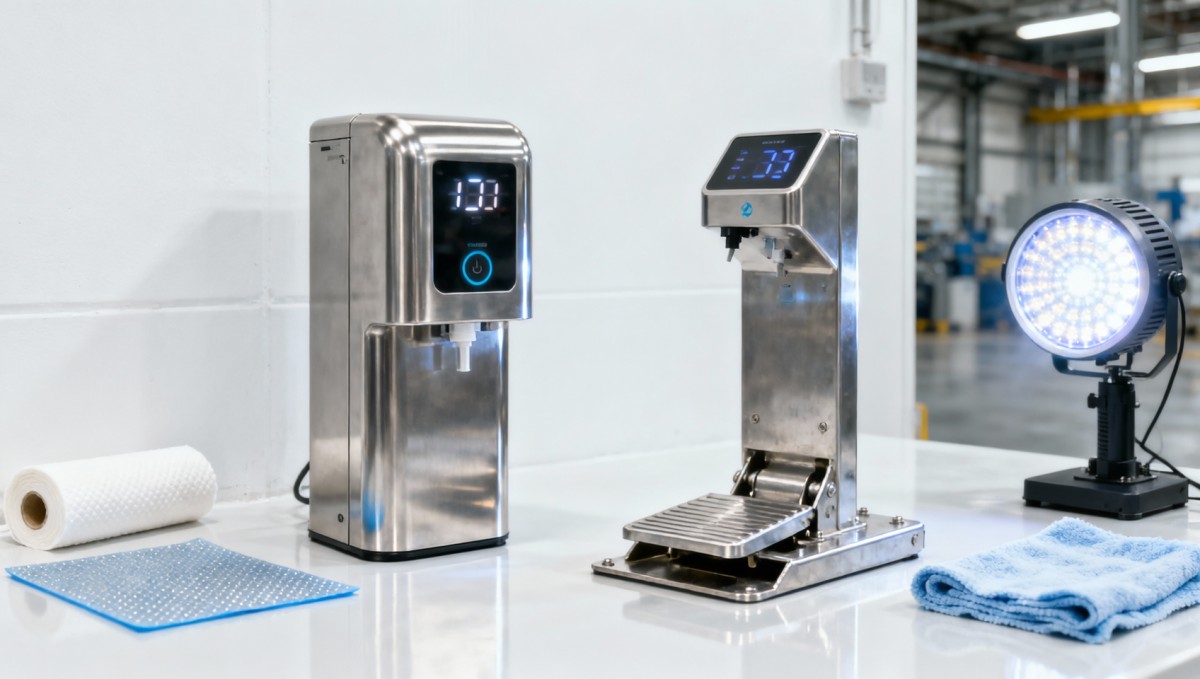
In procurement terms, both options are touch-minimized dispensing solutions, but they reduce contact in different ways. Sensor-based units use infrared or proximity detection to trigger a measured dose without direct hand contact. Pedal-operated units rely on a mechanical foot press, keeping hands away from the dispenser head while shifting the activation point to the floor level.
For information researchers and facility operators, the practical question is not which type sounds more advanced, but which type fits the site. A warehouse entrance handling 300 to 800 entries per shift has different demands than a laboratory gowning room, a hospital corridor, or a food processing wash station. Activation reliability, refill speed, battery dependence, and cleaning burden all matter.
Sensor automatic hand sanitizers are often preferred when visual presentation, user convenience, and controlled dosing are priorities. Pedal designs are often selected where simplicity, no-power operation, and rough-condition durability matter more. In mixed-use industrial facilities, the final decision often comes down to 3 core indicators: contamination risk, daily use frequency, and maintenance capability.
This distinction becomes more important when sanitizer stations are part of a broader hygiene program. Buyers who also source wholesale uv sterilization lamps, sticky mats cleanroom systems, and lint free wipes bulk usually need consistency across the full control chain. A dispenser that works well in a lobby may be poorly matched to a dusty fabrication area or a splash-prone utility corridor.
Quick operational comparison for buyers
The table below compares common decision points procurement teams and site managers review before ordering automatic hand sanitizers at single-site or multi-site scale.
The comparison shows why many organizations do not standardize on one format for every zone. A practical deployment plan often uses sensor units in public-facing and controlled spaces, then places pedal models in high-abuse areas where electrical dependence creates unnecessary service calls.
Which dispensing system suits different industrial and commercial scenarios?
Application context is the fastest way to narrow the choice. In offices, schools, clinics, retail entries, and reception zones, sensor dispensers usually provide a smoother user experience. They are intuitive for first-time users, reduce hesitation, and support controlled output volume. In locations with 50 to 300 uses per day, this convenience can reduce underuse caused by awkward activation.
Pedal-operated models become more attractive in manufacturing and field support settings. Steel fabrication shops, warehousing lanes, loading docks, and temporary project compounds often have dust, vibration, unstable power access, or rough handling. In these conditions, a mechanical unit can be easier to keep in service over 6 to 12 months with fewer failure points.
Contamination control level also matters. In clean-adjacent spaces, buyers frequently evaluate hand sanitizer dispensers as one element of a larger hygiene workflow that may include sticky mats cleanroom products at transitions, lint free wipes bulk for surface preparation, and wholesale uv sterilization lamps for equipment or room treatment. In those environments, touch reduction alone is not enough; consistency and placement discipline matter.
Operators should also consider accessibility and user behavior. A pedal dispenser may be less convenient where users carry tools, boxes, or samples, and it may be less suitable for individuals with limited mobility. A sensor unit can improve compliance in these cases, provided the activation distance is stable and the nozzle position is easy to approach.
Scenario-based selection logic
- Choose sensor dispensers for reception zones, visitor routes, healthcare access points, and controlled entrances where appearance, intuitive use, and measured dispensing are important.
- Choose pedal dispensers for workshops, logistics corridors, temporary work camps, and heavy-duty industrial sites where impact resistance and no-power operation reduce downtime.
- Use a hybrid approach for sites with 3 or more hygiene tiers, such as public areas, production zones, and controlled process rooms, each with different contamination risks.
- Review refill format compatibility before scale purchase. Cartridge-specific systems may simplify dosing but can constrain sourcing flexibility across regions.
For enterprise decision-makers, this scenario-based logic helps prevent a common mistake: buying a single dispenser style based on unit price alone. The lower-cost unit may create higher labor cost, lower compliance, or more replacement events when placed in the wrong environment.
Application matrix by environment
The following matrix can support early-stage site surveys and cross-functional discussions between EHS teams, operations staff, and procurement managers.
This table is especially useful when sanitizer procurement sits within a bundled hygiene purchase. Matching dispenser type to environmental stress helps the broader package perform better and keeps supporting products, from cleanroom entry controls to disinfection accessories, aligned with actual risk zones.
What should procurement teams evaluate before buying automatic hand sanitizers?
Procurement teams often receive broad requests such as “hands-free sanitizer station,” but implementation success depends on much more detailed checks. At minimum, buyers should verify 5 areas: dispenser mechanism, sanitizer compatibility, refill capacity, installation stability, and maintenance workload. These factors influence total operating cost more than the headline unit price.
Sanitizer chemistry is a frequent oversight. Some dispensers perform differently with gel, liquid, or foam, and viscosity affects output consistency. If the site plans to source sanitizer regionally or through multiple vendors, the dispenser should be tested for formulation compatibility before a 100-unit or 500-unit roll-out. Otherwise, dripping, clogging, or irregular dosing can appear within weeks.
Refill logistics also matter. A large freestanding station may reduce refill frequency from daily to every 3 to 7 days in moderate traffic zones, while smaller countertop units may need more frequent attention. For operators, the relevant metric is not just capacity, but labor minutes per refill cycle across all installed units.
For enterprise buyers and EPC-linked projects, coordination with compliance, facilities, and sourcing teams is essential. Global Industrial Core supports this decision process by translating technical product information into procurement-ready evaluation logic, helping teams compare operational fit rather than relying only on sales descriptions or generic catalog claims.
A practical 4-step evaluation process
- Map usage zones by traffic level: low, medium, and high. A site with fewer than 50 daily uses per point can tolerate simpler refill planning than a point with 500 or more uses.
- Match dispenser type to environmental stress, including dust, splash risk, power access, and user PPE. Gloves and face shields can affect how users approach a sensor unit.
- Confirm compatibility with sanitizer format, mounting method, and spare parts support. This is especially important for cross-border sourcing and decentralized maintenance teams.
- Run a pilot for 7 to 14 days in at least 2 different zones. Track missed activation, over-dispensing, refill frequency, and cleaning time before approving scale purchase.
This structured process reduces the risk of buying an attractive dispenser that performs poorly under actual site conditions. For procurement managers, a short pilot often reveals more than a long spec sheet.
Procurement checklist table
Use the checklist below to compare suppliers and avoid missing technical details that affect daily operation and replenishment planning.
A checklist-based approach is especially valuable when the order includes other hygiene assets. It helps teams align dispenser selection with cleaning consumables, entrance contamination controls, and sterilization support equipment instead of purchasing each category in isolation.
How do maintenance, cost, and compliance affect the final decision?
The lowest purchase price does not always produce the lowest operating cost. Sensor automatic hand sanitizers can introduce battery replacement, sensor cleaning, and occasional electronic troubleshooting. Pedal units remove electrical dependence, but they may need linkage adjustment, pedal cleaning, and sturdier floor placement checks. Over a 12-month period, labor burden can shift the cost equation either way.
Maintenance planning should be based on use frequency and environment. In a clean office entry, a weekly check may be enough. In a high-dust production zone or a busy distribution center, inspection every 2 to 3 days may be more realistic. Operators should review nozzle cleanliness, trigger function, sanitizer level, stand stability, and visible residue around touch-adjacent surfaces.
Compliance is also a factor, especially for multinational buyers. While sanitizer dispensers themselves are not all regulated the same way across regions, procurement teams often still require material transparency, electrical safety documentation for powered units, and compatibility with internal EHS procedures. Where applicable, requests may include CE-related product declarations, UL-oriented electrical considerations, or alignment with site ISO management practices.
From a strategic sourcing perspective, Global Industrial Core helps buyers evaluate not just the dispenser, but the surrounding infrastructure logic: where the station sits, what supporting consumables are needed, what maintenance cadence is realistic, and how the station supports broader resilience across safety and facility operations.
Common misconceptions that create avoidable cost
“Sensor means maintenance-free”
Not necessarily. Sensor units reduce direct touching, but they still need battery management, lens cleaning, and occasional recalibration or part replacement. In high-use locations, missed activation can quickly undermine user trust and reduce compliance.
“Pedal units are always more hygienic because hands never touch them”
Pedal activation keeps hands off the mechanism, but the pedal itself sits in the dirtiest environmental zone. Without routine cleaning, dirt transfer around the base can increase. Hygiene is determined by the full maintenance routine, not only by the trigger method.
“Any dispenser works with any sanitizer”
This is one of the most expensive assumptions. Pump design, tubing, seal material, and nozzle geometry can all react differently to liquid, gel, or foam formulations. A short compatibility test is often cheaper than replacing a failed batch of dispensers.
- Review service intervals before purchase, not after installation.
- Ask for spare parts policy and refill format details.
- Standardize only where site conditions are truly similar.
- Keep dispenser choice aligned with the full hygiene chain, including wipes, mats, and sterilization support tools.
When teams evaluate total cost across procurement, operation, and maintenance, the better choice becomes clearer. The right answer is often conditional, not universal.
FAQ: what do buyers and users ask most often?
Are sensor dispensers better for high-traffic sites?
They can be, especially in entrances, clinics, schools, and offices where user convenience drives compliance. However, in rough industrial zones with dust, vibration, or poor power management, pedal units may stay operational more consistently. The best approach is to evaluate traffic together with environmental stress, not traffic alone.
Which type is easier to maintain across multiple locations?
Pedal units are often simpler for decentralized sites because they avoid battery and sensor issues. Sensor units may still be easier in customer-facing locations if maintenance teams can support monthly inspections and battery planning. Multi-site organizations should compare labor hours, spare parts availability, and refill standardization before making a network-wide decision.
How long does a typical deployment decision take?
For standard commercial or industrial procurement, a practical cycle is often 7 to 15 days for requirement gathering and supplier comparison, followed by a 1 to 2 week pilot if the project size justifies testing. Larger roll-outs may take longer because facilities, EHS, and procurement teams all need to approve the configuration.
Should sanitizer dispensers be purchased together with other hygiene products?
In many B2B settings, yes. Bundling automatic hand sanitizers with wholesale uv sterilization lamps, sticky mats cleanroom products, and lint free wipes bulk can simplify sourcing, align maintenance routines, and improve consistency across contamination control points. The key is to define where each product contributes within the workflow rather than buying them as disconnected items.
Why work with Global Industrial Core for selection and sourcing support?
For buyers in industry, healthcare-adjacent operations, infrastructure projects, and commercial facility management, selecting automatic hand sanitizers is rarely a standalone task. The decision often sits inside a larger package covering safety, contamination control, maintenance planning, and supply reliability. Global Industrial Core helps organizations evaluate these requirements with a sourcing and engineering mindset rather than a catalog-only view.
Our support is useful when your team needs to compare sensor and pedal configurations, confirm sanitizer compatibility, review deployment by zone, or align dispenser purchases with related products such as wholesale uv sterilization lamps, sticky mats cleanroom systems, and lint free wipes bulk. This is especially important when multiple departments influence the decision and the site cannot afford operational mismatch.
You can contact Global Industrial Core for practical guidance on 6 key topics: parameter confirmation, application matching, delivery cycle planning, custom deployment suggestions, documentation and certification review, and quotation coordination. If needed, teams can also discuss sample evaluation logic and pilot-stage comparison criteria before larger procurement commitments.
If you are comparing automatic hand sanitizers for industrial, commercial, or controlled environments, reach out with your expected traffic level, sanitizer format, installation type, and compliance needs. A clearer input set leads to faster product screening, fewer procurement revisions, and a more reliable hygiene deployment from day one.
Technical Specifications
Expert Insights

Chief Security Architect
Dr. Thorne specializes in the intersection of structural engineering and digital resilience. He has advised three G7 governments on industrial infrastructure security.
Related Analysis
- Apr 14, 2026How accurate is a true RMS multimeter on VFD signals?Author :Precision Metrology Expert
- Apr 14, 2026When a digital oscilloscope wholesale quote looks cheap at firstAuthor :Precision Metrology Expert
- Apr 14, 2026What changes when an ozone generator goes commercial gradeAuthor :Environmental Engineering Director
Core Sector // 01
Security & Safety
- Automatic hand sanitizers with sensors or pedals?Author :Safety Compliance Lead

- Does a wholesale shoe cover dispenser really reduce contamination?Author :Safety Compliance Lead

- ESD anti static shoes that pass tests but feel unsafe on siteAuthor :Safety Compliance Lead

- Why wholesale cleanroom garments vary so much in durabilityAuthor :Safety Compliance Lead

- Scaffolding tags are simple until weather starts erasing themAuthor :Safety Compliance Lead

- Do wholesale safety nets hold up after months of UV exposure?Author :Safety Compliance Lead

- Wheel chocks wholesale: rubber or polyurethane on sloped ground?Author :Safety Compliance Lead

- Why wholesale traffic batons get dim after short daily useAuthor :Safety Compliance Lead