What separates a reliable wholesale tactical flashlight
Author
Date Published
Reading Time
When sourcing wholesale tactical flashlights, reliability is defined by more than price or brightness. For procurement teams, security professionals, and industrial buyers, the right supplier must prove consistent performance, verified certifications, durable construction, and dependable delivery. This guide explains what truly separates a reliable wholesale tactical flashlight partner from the rest, helping decision-makers reduce risk and secure products built for demanding real-world use.
Why reliability matters more than a low unit price
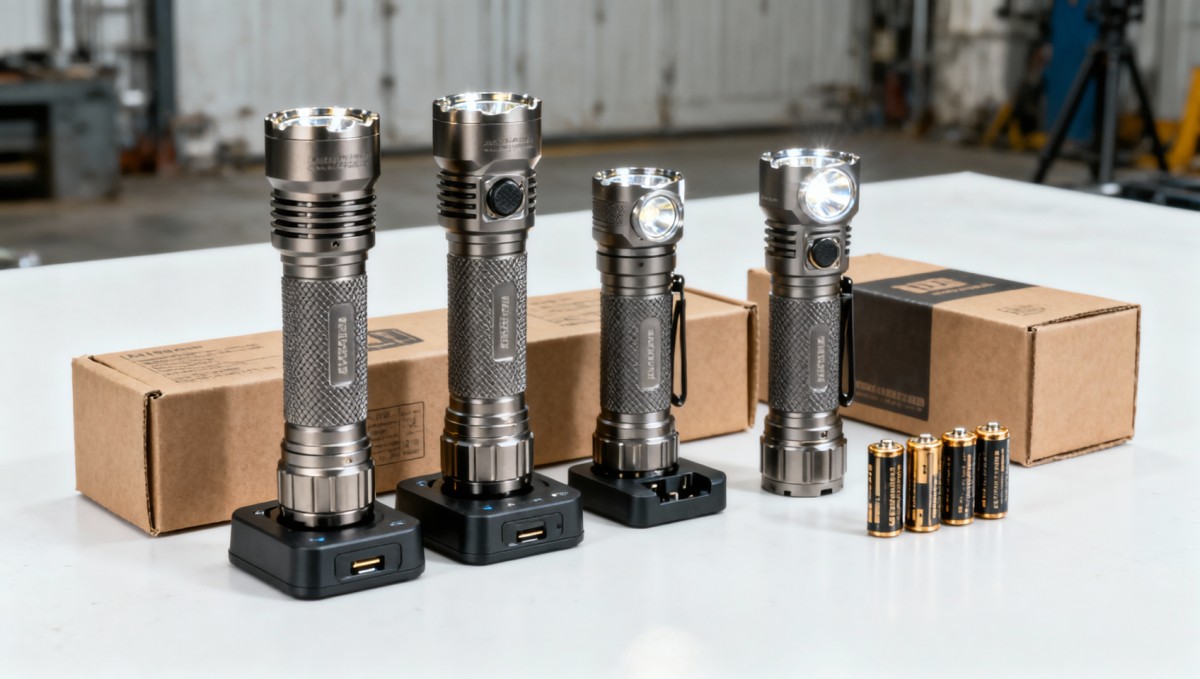
In wholesale tactical flashlight procurement, the lowest quoted price often hides the highest downstream cost. A flashlight used in patrol, maintenance shutdowns, warehouse inspections, utility response, or emergency backup is not a casual consumer item. It is a working tool that may be exposed to dust, rain, vibration, drops, and repeated charging cycles. If 1 weak component causes failure during a night shift or field inspection, the impact can extend far beyond replacement cost.
For information researchers and enterprise buyers, reliability means the supplier can maintain quality consistency across small pilot orders, medium-volume replenishment, and large batch procurement. For operators, reliability means stable output, practical beam control, manageable weight, and switches that function with gloves. For decision-makers, it means reduced complaint rates, lower return frequency, and fewer disruptions across a 6-month to 24-month purchasing horizon.
A reliable wholesale tactical flashlight supplier should also fit industrial procurement logic. That includes traceable specifications, standard test references, packaging discipline, batch identification, and realistic lead times such as 2–4 weeks for standard models or longer for customized configurations. Suppliers that cannot answer technical questions clearly often create avoidable risk later in the supply chain.
At GIC, sourcing decisions are evaluated through the lens of operational continuity. In security and safety procurement, a flashlight is part of a wider risk-control system. That is why a dependable partner is assessed not only by lumens, but also by material quality, ingress protection, battery platform, compliance readiness, and after-sales response discipline.
- A low quote may exclude battery packs, charging accessories, or export-grade packaging, making the actual landed cost higher.
- An attractive lumen claim may not reflect sustained runtime, thermal management, or beam usability in fog, rain, or indoor inspection work.
- Inconsistent batch quality can create mixed field performance within the same order, increasing training and maintenance burden.
What separates a reliable wholesale tactical flashlight supplier
The difference between a dependable supplier and a risky one usually appears in 5 core areas: product consistency, material and construction, verification discipline, supply capability, and communication clarity. These areas matter more than marketing language. Procurement teams should ask for specification sheets, available test references, battery details, and production controls before discussing volume discounts.
Product consistency is the first separator. A flashlight that performs well in 10 samples but varies across 1,000 units is a sourcing problem. Buyers should confirm whether the supplier can keep the same LED configuration, driver design, anodizing finish, sealing method, and packaging format across repeat orders. Stable sourcing of components is especially important when the procurement cycle runs every quarter or every 6 months.
Construction quality is the second separator. Industrial and tactical-style flashlights are commonly expected to use aluminum alloy housings, impact-resistant lenses, sealing structures, and switches designed for repeated activation. Claimed durability should be supported by practical details such as drop-resistance references, ingress protection levels like IPX4 to IPX8 where applicable, and clear battery contact design for vibration-prone environments.
Verification discipline is the third separator. Reliable suppliers do not avoid questions about CE, RoHS, battery transport considerations, or applicable quality management processes. They explain what is available, what applies to the product, and what belongs to the battery pack or charger instead of the flashlight body itself. This distinction matters in cross-border procurement and helps avoid compliance misunderstandings.
Five practical indicators procurement teams should check
Before approving a wholesale tactical flashlight supplier, purchasing teams can use a structured review instead of relying on sales claims. The table below focuses on indicators that directly affect operational reliability, repeatability, and vendor suitability in B2B buying.
This evaluation model helps buyers compare suppliers on operational evidence rather than broad promises. In practice, a reliable wholesale tactical flashlight source is one that can document product details, define lead-time windows, explain compliance boundaries, and support quality checks before and after shipment.
Questions that reveal supplier maturity
Strong suppliers usually answer detailed questions directly. Weak suppliers often shift the conversation back to price. Ask how runtime is measured, whether output drops significantly after the first 10–30 minutes, what battery cells are used, how many charging cycles are typical, and what defect criteria apply at incoming inspection. These answers show whether the vendor understands professional use or only basic trading.
It is also useful to ask whether mixed orders can include different beam types, whether private label packaging changes lead time by 7–15 days, and whether spare accessories can be supplied separately. Reliable communication at this stage often predicts smoother execution later.
Which technical specifications matter in real use
Brightness matters, but not in isolation. Procurement teams should look at the interaction between lumen output, candela, beam distance, runtime, battery type, charging method, and environmental resistance. For example, a very high-lumen flashlight may create marketing appeal, but if runtime at useful output is short or heat buildup forces rapid step-down, it may be less practical than a balanced unit for inspection or patrol duty.
Operators often care more about beam usability than peak output. A wide flood beam may suit warehouse checks, maintenance platforms, and close-range search tasks. A more focused beam may be better for perimeter observation or outdoor route checking. In many industrial and security applications, the practical choice sits in a moderate range that balances reach, runtime, and handling rather than pushing one metric to the extreme.
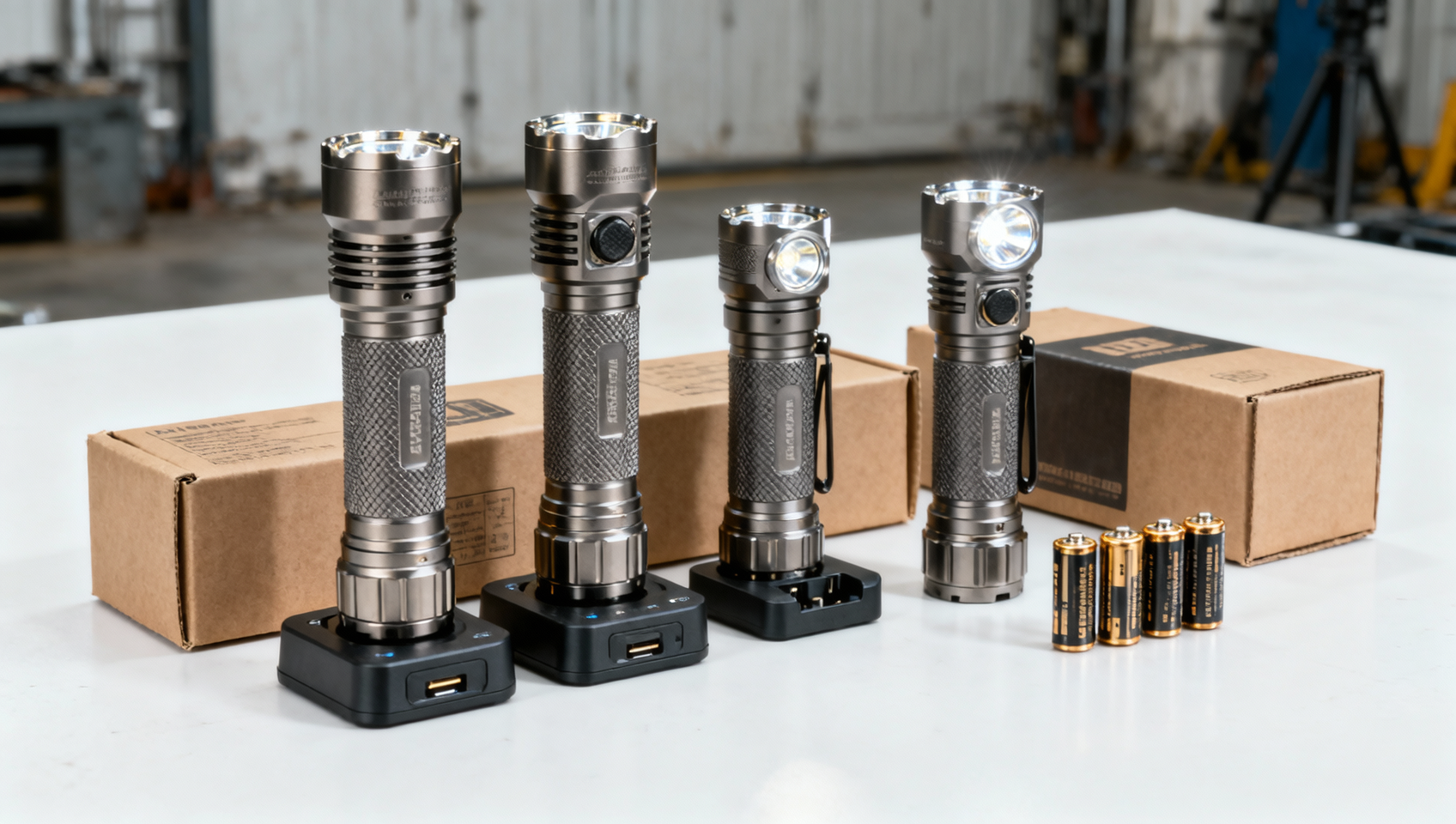
Battery configuration also affects reliability. Rechargeable formats can reduce recurring cost in daily-use fleets, while replaceable cells may remain useful for remote sites or emergency reserves. Buyers should confirm whether chargers are included, whether charging is USB-based or dock-based, and whether replacement batteries are available over a 12-month to 24-month support window.
For industrial buyers, environmental sealing and impact resistance are often the silent deciding factors. A flashlight exposed to rain, dust, vehicle vibration, or tool bag impact needs more than a strong LED. It needs dependable switch sealing, thread quality, and lens protection. These features rarely dominate catalog headlines, but they strongly influence actual field life.
Typical specification priorities by application
The best wholesale tactical flashlight choice depends on where and how it will be used. The table below helps connect common B2B application environments with specification priorities that buyers can discuss with suppliers during selection.
This comparison shows why specification review should start from the task, not the brochure headline. A reliable supplier helps buyers map performance to scenario, identify over-specification, and avoid paying for features that do not improve operational results.
A practical specification checklist
- Define 3 use cases first: daily duty, occasional inspection, or emergency reserve.
- Confirm 4 core parameters: runtime, beam style, battery platform, and sealing level.
- Request sample testing over 7–14 days instead of relying on a short bench demonstration.
- Check whether replacement accessories remain available for at least 1 purchasing cycle.
This process is simple, but it filters out many unsuitable options early. It is especially useful when a procurement team is comparing several wholesale tactical flashlight offers that look similar on paper but differ in long-term operating value.
How to evaluate compliance, delivery, and procurement risk
Reliability in wholesale supply is not only about product engineering. It also depends on whether the supplier can support import, storage, inspection, and deployment without creating hidden delays. Tactical flashlight buyers should verify what documents are available for the flashlight, charger, and battery separately, because compliance scope may differ across these components.
Common procurement questions include whether CE-related documentation is relevant for the delivered set, whether RoHS information is available where required, and whether lithium battery transport handling is understood. Buyers should also confirm carton marking, inner packaging counts, and whether batch labels align with their warehouse receiving process. These details matter when the order size grows from sample units to pallet-level shipment.
Lead time is another major reliability signal. A dependable wholesale tactical flashlight supplier usually distinguishes between standard stock-supported models, assembled-to-order units, and customized versions. Standard products may move in 7–15 days depending on quantity and export coordination, while private labeling, packaging redesign, or charger changes can extend timing by 2–4 weeks or more. Transparent timing is more valuable than optimistic promises.
Quality control checkpoints should be agreed before payment and shipment. In many B2B transactions, the useful sequence includes 4 stages: sample confirmation, pre-production specification lock, in-process verification, and pre-shipment inspection. This structure reduces disputes over appearance, accessories, switch function, and packaging completeness after the goods arrive.
Risk points buyers often overlook
- The quoted flashlight may not include the exact battery type, charger plug format, or carrying accessory expected by the end user.
- The sample may use a different LED bin, switch feel, or accessory set from the production batch if specifications are not locked in writing.
- High-output claims may refer to initial activation only, not usable output during 1–2 hours of work.
- Outer packaging may be unsuitable for distributor resale or industrial warehouse labeling unless discussed early.
A simple procurement workflow that reduces errors
For most organizations, the safest approach is to move from technical screening to controlled sampling and then to batch approval. GIC recommends aligning engineering, procurement, and operations teams around a short decision matrix before final order placement. This is especially helpful when the flashlight supports safety patrols, infrastructure maintenance, or emergency preparedness programs.
This workflow gives purchasing teams a repeatable method for evaluating supplier reliability. It also supports internal approval because technical, commercial, and operational checkpoints are documented instead of assumed.
Common questions and mistakes when buying wholesale tactical flashlights
Many buyers enter the tactical flashlight market with strong price discipline but limited product-specific criteria. That is understandable, especially when procurement spans multiple categories. However, several recurring mistakes can be avoided with a clearer framework and better supplier questions.
Is higher lumen output always better?
No. A higher output can be useful in some outdoor situations, but it may reduce runtime, increase heat, and create glare in indoor or reflective environments. For many patrol and inspection tasks, a stable medium-to-high usable mode is more valuable than a very high initial burst. Buyers should ask how the flashlight performs over 30 minutes, 1 hour, and a typical duty cycle instead of focusing on peak output alone.
What should procurement teams prioritize first?
Start with 3 priorities: application scenario, battery strategy, and durability requirement. If the flashlight is for daily duty, charging convenience and switch life may matter more than maximum beam distance. If it is for emergency reserve, storage readiness and simple operation may be more important. This sequence prevents overbuying and keeps the wholesale tactical flashlight selection aligned with actual use.
How long does wholesale delivery usually take?
For standard configurations, a common planning range is 7–15 days before shipment readiness, depending on order size, stock condition, and export preparation. Customized labeling, color changes, accessory adjustments, or package redesign may extend the cycle to 2–4 weeks or longer. Buyers should build this lead-time range into tender schedules and replenishment planning rather than assuming immediate dispatch.
What is the most common mistake in supplier comparison?
The most common mistake is comparing quotes without normalizing the specification. One supplier may include battery, charger, cable, box insert, and export carton, while another quotes the light body only. Always compare the full delivered set, not just the headline unit price. This single step improves sourcing clarity and prevents false savings.
A brief mistake-avoidance checklist
- Do not approve bulk purchase before a sample is tested by actual users.
- Do not assume all CE, battery, and charger requirements are covered by one document.
- Do not compare 2 offers unless accessories, packaging, and inspection terms are matched.
- Do not select purely on brightness if runtime and handling are mission-critical.
Why informed buyers work with a strategic sourcing partner
In industrial and security-related purchasing, product selection is only one part of the decision. Buyers also need guidance on supplier screening, compliance interpretation, specification alignment, and delivery risk. That is where GIC provides practical value. Our role is to help procurement teams move from broad market noise to sourcing decisions grounded in technical clarity and operational relevance.
For information researchers, we help organize the evaluation criteria behind a reliable wholesale tactical flashlight supplier. For operators and safety users, we highlight field-use considerations that are often missed in catalogs. For procurement managers, we support structured comparison across specification, lead time, packaging, and support terms. For business decision-makers, we reduce uncertainty in vendor shortlisting and purchasing approval.
If your team is reviewing wholesale tactical flashlight options for security patrol, facility management, infrastructure inspection, emergency stock, or industrial distribution, GIC can help you assess 4 practical dimensions: parameter confirmation, model selection, delivery schedule, and compliance readiness. We can also help frame questions for sample evaluation, accessory matching, and quotation comparison so your buying process is faster and more defensible.
Contact us if you need support with specification review, supplier comparison, sample planning, packaging requirements, certification scope discussion, or quotation communication. If your project includes customized solutions, repeat-order planning, or urgent procurement windows, provide your target application, expected quantity range, preferred battery format, and delivery timeline. That information allows a more accurate and useful sourcing discussion from the start.
Technical Specifications
Expert Insights

Chief Security Architect
Dr. Thorne specializes in the intersection of structural engineering and digital resilience. He has advised three G7 governments on industrial infrastructure security.
Related Analysis
- Apr 14, 2026How accurate is a true RMS multimeter on VFD signals?Author :Precision Metrology Expert
- Apr 14, 2026When a digital oscilloscope wholesale quote looks cheap at firstAuthor :Precision Metrology Expert
- Apr 14, 2026What changes when an ozone generator goes commercial gradeAuthor :Environmental Engineering Director
Core Sector // 01
Security & Safety
- Automatic hand sanitizers with sensors or pedals?Author :Safety Compliance Lead

- Does a wholesale shoe cover dispenser really reduce contamination?Author :Safety Compliance Lead

- ESD anti static shoes that pass tests but feel unsafe on siteAuthor :Safety Compliance Lead

- Why wholesale cleanroom garments vary so much in durabilityAuthor :Safety Compliance Lead

- Scaffolding tags are simple until weather starts erasing themAuthor :Safety Compliance Lead

- Do wholesale safety nets hold up after months of UV exposure?Author :Safety Compliance Lead

- Wheel chocks wholesale: rubber or polyurethane on sloped ground?Author :Safety Compliance Lead

- Why wholesale traffic batons get dim after short daily useAuthor :Safety Compliance Lead