How to compare heavy duty safety goggles for impact and fit
Author
Date Published
Reading Time
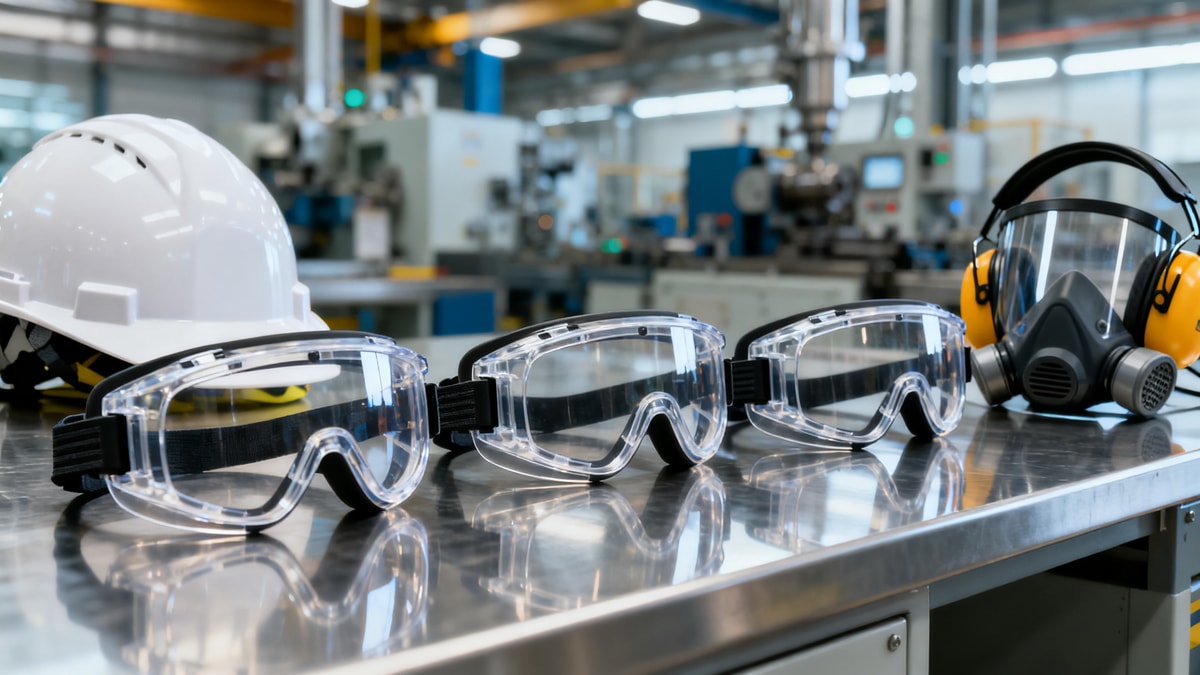
Choosing the right heavy duty safety goggles is not just about basic eye protection—it is about balancing verified impact resistance, all-day fit, and compatibility with demanding work conditions. For operators and frontline users, a poor choice can mean discomfort, fogging, gaps, or reduced safety. This guide explains how to compare key performance factors so you can select goggles that protect reliably and fit correctly.
Why a checklist is the fastest way to compare heavy duty safety goggles
When users compare heavy duty safety goggles, the biggest mistake is judging them by appearance or price alone. Two models may look similar, yet one may offer better impact protection, a tighter seal, lower fogging risk, and better comfort during long shifts. A checklist approach helps you focus on practical decision points instead of marketing claims.
This matters in industrial environments where operators move between grinding, cutting, chemical handling, dusty maintenance zones, and hot indoor spaces. In these settings, eye protection must do more than pass a basic standard. It has to stay in place, work with other PPE, remain clear, and protect from both direct impact and secondary hazards such as debris intrusion or splash exposure.
Use the following guide as a practical comparison tool. It is designed to help users narrow options, identify weak points, and select heavy duty safety goggles that match real working conditions.
Start with the non-negotiable checks before you compare comfort
Before evaluating fit, strap feel, or lens tint, confirm the essentials. If a model fails in these areas, it should not stay on your shortlist.
- Check the impact rating. Verify that the goggles meet the required standard for your site or task, such as ANSI Z87.1, EN166, or other recognized industrial eye protection benchmarks. Look for product markings, not just brochure claims.
- Confirm the hazard type. Some heavy duty safety goggles are mainly built for impact, while others are intended for splash, dust, or mixed-use protection. Match the goggle to the actual exposure.
- Inspect lens material. Polycarbonate is common because it combines high impact resistance with light weight, but coating quality can vary greatly.
- Review seal design. A strong frame and lens mean little if particles can enter around the sides, top, or nose area.
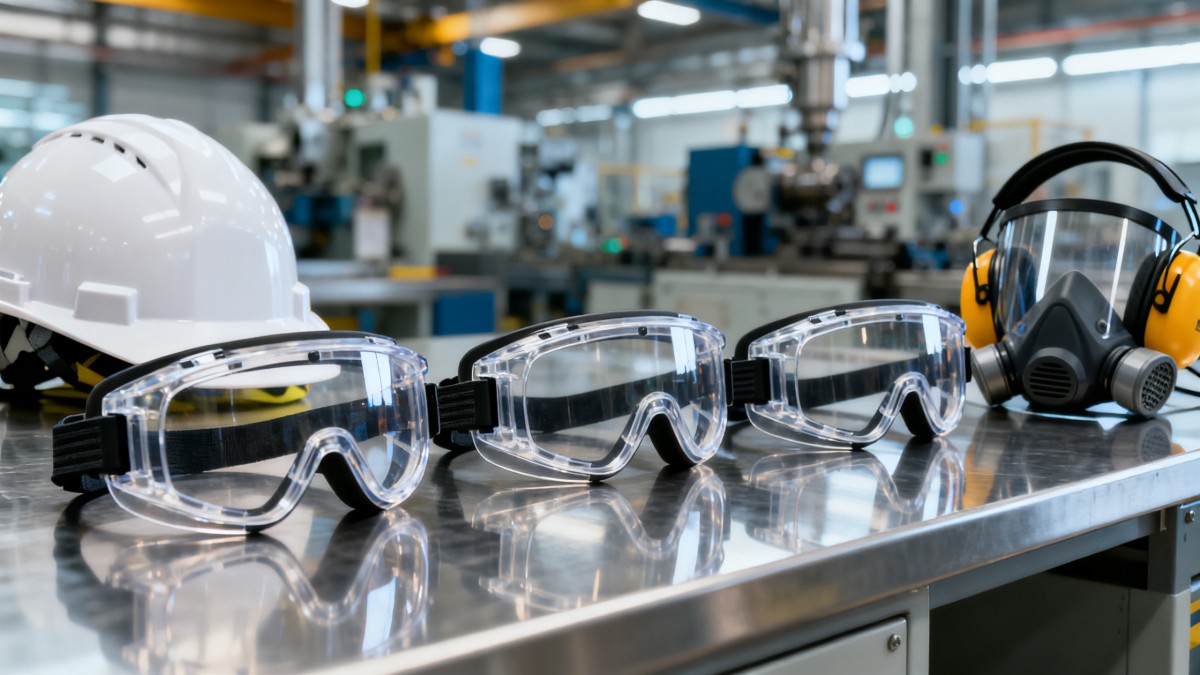
- Check PPE compatibility. If you wear a hard hat, hearing protection, respirator, or face shield, make sure the goggles can work with that combination without lifting away from the face.
These first checks quickly separate general-purpose eyewear from true heavy duty safety goggles suitable for industrial use.
Core comparison checklist: how to judge impact performance
Impact resistance is often the first reason users buy heavy duty safety goggles, but the comparison should go beyond one line on a label. Use these criteria to judge real protective value.
1. Look for test-backed standards, not vague “high strength” claims
Reliable products clearly state compliance with relevant standards and often include markings on the lens or frame. This is more dependable than product pages that only mention “durable” or “impact proof.” For buyers and operators, traceable certification is the best starting point.
2. Compare full-frame protection, not lens strength alone
A lens can resist impact, but the frame, vents, strap anchors, and seal must also hold under stress. Heavy duty safety goggles should remain stable if struck by flying chips or fast-moving particles. Weak frame flex or poor strap retention can reduce protection.
3. Review side, brow, and lower-face coverage
Debris rarely arrives from only one direction. Compare how well each model wraps the face and whether the design leaves exposed entry points. This is especially important in grinding, drilling, cutting, and overhead maintenance work.
4. Check anti-scratch durability as part of usable protection
If lenses scratch easily, visibility drops and users are more likely to remove them or misuse them. A goggle that keeps optical clarity longer often performs better in the field than one that only looks strong when new.
Core comparison checklist: how to judge fit and wearing comfort
Fit is not a minor issue. Poor fit can create safety gaps, pressure pain, heat buildup, and frequent repositioning. For many users, discomfort is the main reason eye protection is worn incorrectly.
- Test the seal around the nose and cheeks. Heavy duty safety goggles should sit close enough to block intrusion, but not so tightly that they leave painful pressure marks within minutes.
- Adjust the strap and check stability during movement. Bend, look down, and turn your head. If the goggles shift, lift, or slide, the fit is not secure enough for active work.
- Assess padding quality. Soft contact areas can improve comfort, but poor foam may absorb sweat, degrade quickly, or trap contaminants. Compare durability and hygiene needs.
- Review size range and face compatibility. Some goggles fit narrow faces well but create gaps on broader faces. Others are too bulky for smaller users. Adjustable features matter only if they truly improve sealing.
- Consider prescription use. If the user needs prescription glasses, compare over-the-glasses designs carefully. Some heavy duty safety goggles claim OTG compatibility but create side pressure or poor sealing in practice.
A good fit should feel secure without becoming a distraction. If users notice constant pressure, slipping, or edge gaps during a short test, those problems usually become worse over a full shift.
Compare ventilation and fog control before making a final choice
Fogging is one of the most common failures in heavy duty safety goggles. Even impact-rated goggles lose practical value if users cannot see clearly. The best model for your worksite often depends on how it balances seal integrity and airflow.
Indirect vented designs can help reduce fogging while still protecting against dust and splash better than direct vents. Fully sealed goggles may be necessary for certain tasks, but they often need stronger anti-fog coatings or better moisture management. Compare the coating quality, vent placement, and user feedback from conditions similar to your own.
Also think about temperature transitions. Users moving from outdoor cold zones into warm indoor spaces often trigger fogging immediately. In these cases, anti-fog performance is not optional. It becomes a primary selection criterion.
Use this quick comparison table to shortlist models
If you are reviewing several heavy duty safety goggles at once, a simple scorecard helps keep the evaluation practical and consistent.
Different work scenarios require different comparison priorities
Not every user needs the same balance of features. Compare heavy duty safety goggles based on the actual environment, not a generic idea of protection.
Grinding, cutting, and machining
Prioritize high-impact certification, wraparound coverage, secure fit, and durable anti-scratch coating. Flying particles are the main risk, and lens wear can become a fast issue.
Dusty maintenance and construction zones
Focus on seal quality, dust intrusion resistance, and ventilation that limits heat buildup. A loose fit may allow fine particles inside even if the lens itself is strong.
Chemical handling or washdown areas
Compare splash protection, indirect venting, material resistance, and full-face PPE compatibility. Here, a simple impact lens is not enough.
Long-shift indoor operations
Comfort, anti-fog reliability, and pressure distribution may matter as much as impact rating. If users wear goggles for hours, comfort directly affects safe use.
Commonly overlooked issues that reduce real-world protection
Many users think they have selected strong heavy duty safety goggles, but practical weaknesses appear once the product reaches the jobsite. Watch for these often-missed issues.
- Ignoring head movement tests and only checking fit while standing still.
- Assuming anti-fog works equally well in humidity, heat, sweat, and rapid temperature change.
- Choosing oversized goggles that interfere with respirator sealing or helmet position.
- Overlooking lens replacement availability and maintenance cost.
- Using one model for every task, even when splash, dust, and impact risks differ.
- Failing to inspect scratches, strap wear, or seal degradation during use cycles.
These details often determine whether heavy duty safety goggles remain protective after weeks of actual use, not just on the first day.
A simple field test process operators can use before approval
If several models are available, do a short user trial instead of picking from specifications alone. A basic field comparison can reveal more than a catalog page.
- Wear each pair for at least 15 to 20 minutes.
- Test with the other PPE normally used on site.
- Perform routine movements: bending, reaching, head turns, and upward viewing.
- Check for fogging, pressure points, slipping, and edge gaps.
- Compare visibility quality in both bright and low-light work areas.
- Record user feedback by task type, not only by overall preference.
This process creates a more reliable basis for selecting heavy duty safety goggles than relying only on supplier descriptions.
FAQ: practical questions users ask when comparing heavy duty safety goggles
Are all impact-rated goggles suitable for heavy-duty work?
No. Some models meet minimum requirements but may not provide the fit stability, coverage, coating durability, or comfort needed for sustained industrial use. Heavy duty safety goggles should be judged by full performance, not one label alone.
Is a tighter fit always safer?
Not always. The goal is a secure seal without painful compression. Excessive tightness can lead to user fatigue, headache, skin marks, or frequent removal, which lowers actual safety.
Should I prioritize anti-fog or impact resistance?
Impact resistance is essential, but if fogging is a daily issue, visibility can become the immediate risk. In many workplaces, the right choice is a model that meets impact needs and delivers proven fog control in the same environment.
Final selection advice and next steps
To compare heavy duty safety goggles effectively, start with verified impact certification, then narrow your choice through seal quality, fit stability, fog resistance, and PPE compatibility. The best product is the one that protects consistently under your actual work conditions and remains comfortable enough to wear correctly throughout the shift.
If your team needs to move from basic comparison to purchase evaluation, prepare a short requirement list first: hazard type, required standards, other PPE worn, shift length, indoor or outdoor temperature conditions, prescription needs, cleaning routine, and replacement cycle expectations. With that information, suppliers or internal procurement teams can compare heavy duty safety goggles more accurately on fit, protection level, service life, budget, and deployment readiness.
Technical Specifications
Expert Insights

Chief Security Architect
Dr. Thorne specializes in the intersection of structural engineering and digital resilience. He has advised three G7 governments on industrial infrastructure security.
Related Analysis
- May 01, 2026PTZ dome camera placement mistakes that waste zoom performanceAuthor :Safety Compliance Lead
- May 01, 2026Biometric access control systems: where integration gets expensiveAuthor :Safety Compliance Lead
- May 01, 2026Facial recognition door lock accuracy drops in these common settingsAuthor :Safety Compliance Lead
Core Sector // 01
Security & Safety
- Custom high visibility clothing without long lead time problemsAuthor :Safety Compliance Lead

- Reflective safety vests bulk: color fading can become a safety issueAuthor :Safety Compliance Lead

- What separates a reliable steel toe work boots manufacturerAuthor :Safety Compliance Lead

- Flame retardant coveralls: why fabric weight affects comfort and complianceAuthor :Safety Compliance Lead

- Cut resistant gloves wholesale: sizing errors that raise replacement costsAuthor :Safety Compliance Lead

- Chemical resistant suits: what breakthrough time really tells youAuthor :Safety Compliance Lead

- Choosing an industrial hard hats manufacturer beyond certificationsAuthor :Safety Compliance Lead

- Fall protection harnesses: fit problems that reduce real safetyAuthor :Safety Compliance Lead