What separates a reliable steel toe work boots manufacturer
Author
Date Published
Reading Time
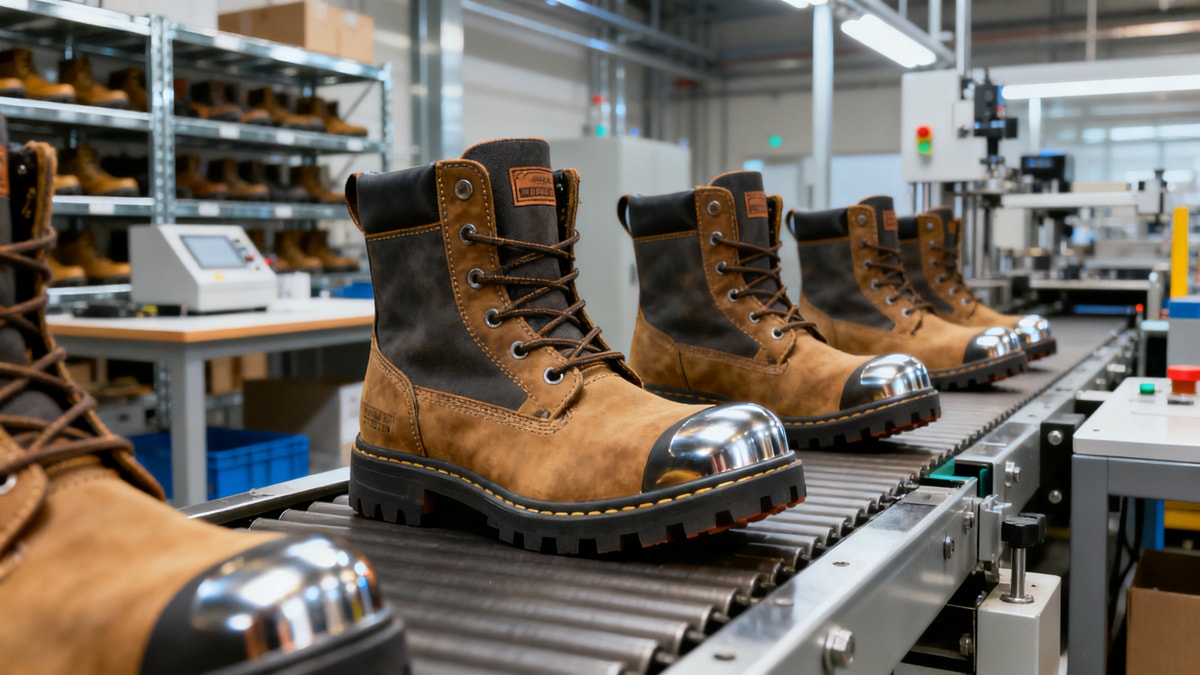
Choosing a reliable steel toe work boots manufacturer goes far beyond comparing prices or catalogs. For business evaluators, the real difference lies in certified safety compliance, material durability, production consistency, and supply chain reliability. This article explores the key indicators that separate dependable manufacturers from risky suppliers, helping industrial buyers make informed sourcing decisions with long-term operational value in mind.
Why scenario differences matter in supplier evaluation
A steel toe work boots manufacturer may look qualified on paper, yet still fail in the field if its products are not aligned with the actual work environment. Business evaluators rarely buy safety footwear for a single generic use case. They assess suppliers for construction crews, warehouse operators, utility teams, oil and gas workers, mining staff, logistics personnel, and maintenance contractors. Each setting places different demands on toe protection, slip resistance, puncture resistance, waterproofing, heat tolerance, electrical hazard performance, and comfort over long shifts.
This is why a dependable supplier must be judged by scenario fit, not just factory scale. The strongest steel toe work boots manufacturer understands how application conditions affect design, testing, materials, and quality control. A lower-cost vendor that cannot match product structure to field risk often creates hidden costs through injury exposure, returns, inconsistent sizing, early sole failure, and procurement disruption.
For procurement teams and commercial evaluators, the practical question is simple: can the manufacturer supply the right boot, at the right compliance level, for the right operational scenario, and do it repeatedly across purchase cycles?
Typical business scenarios where manufacturer quality becomes visible
The difference between a trustworthy and risky supplier becomes clearer when specific operating environments are compared. Below is a practical scenario view that helps evaluators identify what matters most.
For a business evaluator, this comparison highlights a key point: the best steel toe work boots manufacturer is rarely the one with the broadest marketing claims. It is the one that can demonstrate scenario-specific engineering and evidence-based performance.
What separates a reliable steel toe work boots manufacturer in construction and project-based sourcing
Construction and EPC procurement often involves tight timelines, workforce variability, and demanding site safety requirements. In this scenario, a reliable steel toe work boots manufacturer must prove more than product quality. It must also show order coordination capability, production scalability, and documentation readiness.
Project buyers should verify whether the supplier can support mixed size runs, repeat orders during project expansion, and standardized labeling for site distribution. Delays in safety footwear delivery can affect labor mobilization and compliance readiness. Manufacturers with poor planning systems may offer an attractive quotation but fail when urgent replenishment is required.
In this scenario, reliable partners typically provide ASTM, EN ISO, or equivalent test references, clear material specifications, production lead time transparency, and documented inspection processes. They also understand that a boot used on a mixed civil, structural, and mechanical site must balance protection with all-day wearability. Excessively heavy boots may meet basic safety expectations but reduce workforce acceptance and increase replacement pressure.
How warehousing and logistics change the evaluation criteria
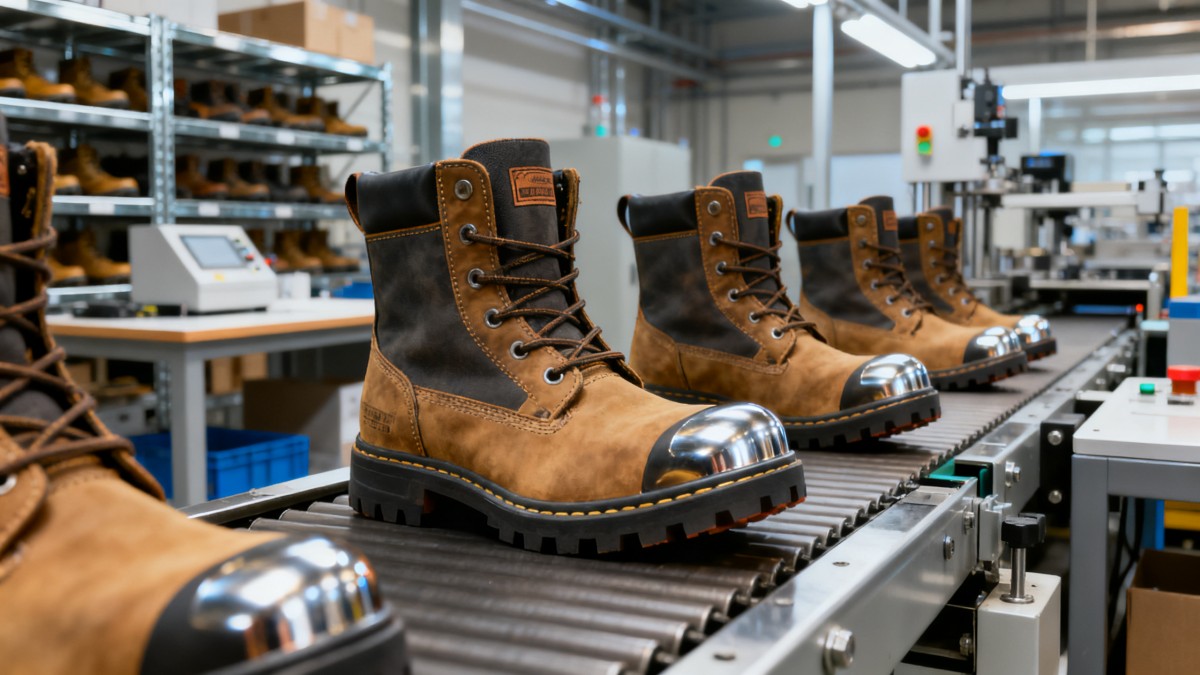
In warehouse, distribution, and logistics operations, the best supplier is not always the one focused on maximum ruggedness. Employees may walk for ten to twelve hours a day on smooth concrete, loading ramps, or slightly wet flooring. Here, comfort, traction, weight, and sizing consistency often matter as much as impact protection.
A dependable steel toe work boots manufacturer serving this segment should show strong last design capability, sole flexibility, and anti-slip testing appropriate to indoor and semi-industrial surfaces. If the manufacturer cannot maintain stable fit across batches, even a certified boot can become a return management problem. Evaluators should ask for historical return-rate data, outsole wear test results, and consistency records across repeat production.
This is also a scenario where product line breadth matters. Some buyers need low-cut safety footwear, some need waterproof mid-cut designs, and others need breathable models for hot climates. A mature manufacturer can support these variations without compromising safety standards or QC discipline.
High-risk industrial environments require stronger proof, not broader promises
In oil and gas, mining, heavy maintenance, and processing plants, business evaluators should apply a stricter filter. Marketing language such as “industrial grade” or “heavy duty” means little without technical support. In these environments, outsole compound quality, upper material resilience, toe cap integrity, and chemical compatibility become procurement-critical.
A reliable steel toe work boots manufacturer for these scenarios usually has deeper material control. That may include full-grain leather traceability, slip-resistant rubber formulations, heat-resistant outsole options, stitched or direct-injection construction expertise, and detailed failure analysis from prior field applications. The supplier should also be able to explain how the product behaves under oil contact, mud accumulation, repetitive flexing, and abrasive terrain.
For business evaluation teams, this is where factory audit quality matters. It is not enough to see a clean showroom or polished catalog. Review in-line inspection checkpoints, compression and impact testing references, defect handling procedures, and batch traceability. The more severe the operating environment, the more important process evidence becomes.
Key indicators that signal long-term manufacturer reliability
Across scenarios, several indicators consistently distinguish a reliable steel toe work boots manufacturer from a short-term trading source or unstable factory partner.
1. Verifiable compliance, not vague certification claims
Look for test reports tied to specific models and standards, such as ASTM F2413 or EN ISO 20345, rather than generic statements about being “certified.” Reliable manufacturers understand that certification must match the exact product supplied.
2. Material transparency
The supplier should clearly specify steel toe type, midsole construction, leather grade, outsole material, lining system, and closure components. If the technical file is weak, consistency risk is high.
3. Production consistency and sizing control
Business buyers need repeatability. A good first order is not enough. Reliable factories maintain fit consistency, color stability, and sole bonding performance across production cycles.
4. Supply chain resilience
A dependable steel toe work boots manufacturer manages raw material sourcing, lead time planning, and contingency arrangements. This is especially important for global buyers facing seasonal demand peaks or multi-site rollouts.
5. Responsiveness after the order is placed
Top suppliers do not disappear after shipment. They support claims review, replacement analysis, and product improvement discussions. Post-sale discipline is often the clearest sign of a serious manufacturing partner.
Common scenario-based mistakes buyers make
Many sourcing failures come from applying the wrong criteria to the wrong environment. Evaluators may overemphasize price in a harsh-use setting, or overbuy ruggedness for a low-impact warehouse team where worker comfort matters more. Both errors create avoidable cost.
Another frequent mistake is assuming that a large exporter is automatically a reliable steel toe work boots manufacturer. Some suppliers are strong in private label merchandising but weak in technical validation, material consistency, or industrial account support. Others perform well for one region’s standard but are not ready for another market’s compliance expectations.
Buyers also underestimate the risk of incomplete sampling. A showroom sample may not represent mass production. For scenario-sensitive procurement, evaluators should compare pre-production samples, test records, and pilot-order results before scaling up.
Practical supplier-fit checklist for business evaluators
Before approving a steel toe work boots manufacturer, procurement and vendor assessment teams should confirm the following points in relation to their actual use case.
FAQ for evaluating a steel toe work boots manufacturer
Is the lowest-cost supplier ever the right choice?
Only when the supplier can still meet required safety, durability, and delivery standards for the intended scenario. Lowest initial cost often becomes highest total cost when failure rates or returns increase.
Should business evaluators prioritize factory ownership over trading flexibility?
Not always, but control matters. Whether direct factory or integrated sourcing partner, the supplier must show accountability for testing, QC, and production traceability.
What is the most overlooked signal of a reliable manufacturer?
Scenario-specific problem solving. A reliable steel toe work boots manufacturer asks detailed questions about environment, shift length, hazards, and end-user feedback before recommending a model.
Final decision guidance for scenario-based sourcing
What separates a reliable steel toe work boots manufacturer is not a single feature but a pattern of evidence: relevant compliance, material honesty, repeatable production, operational responsiveness, and real alignment with end-use conditions. For business evaluators, the most effective approach is to begin with the scenario, then test the supplier against that scenario’s risks, workforce needs, and procurement realities.
If your organization is comparing suppliers, define the application environment first, map the required safety and performance criteria second, and request proof from each manufacturer third. That process leads to stronger vendor selection, lower lifecycle cost, and safer industrial operations over time.
Technical Specifications
Expert Insights

Chief Security Architect
Dr. Thorne specializes in the intersection of structural engineering and digital resilience. He has advised three G7 governments on industrial infrastructure security.
Related Analysis
- May 01, 2026PTZ dome camera placement mistakes that waste zoom performanceAuthor :Safety Compliance Lead
- May 01, 2026Biometric access control systems: where integration gets expensiveAuthor :Safety Compliance Lead
- May 01, 2026Facial recognition door lock accuracy drops in these common settingsAuthor :Safety Compliance Lead
Core Sector // 01
Security & Safety
- Custom high visibility clothing without long lead time problemsAuthor :Safety Compliance Lead

- Reflective safety vests bulk: color fading can become a safety issueAuthor :Safety Compliance Lead

- What separates a reliable steel toe work boots manufacturerAuthor :Safety Compliance Lead

- Flame retardant coveralls: why fabric weight affects comfort and complianceAuthor :Safety Compliance Lead

- Cut resistant gloves wholesale: sizing errors that raise replacement costsAuthor :Safety Compliance Lead

- Chemical resistant suits: what breakthrough time really tells youAuthor :Safety Compliance Lead

- Choosing an industrial hard hats manufacturer beyond certificationsAuthor :Safety Compliance Lead

- Fall protection harnesses: fit problems that reduce real safetyAuthor :Safety Compliance Lead