Cut resistant gloves wholesale: sizing errors that raise replacement costs
Author
Date Published
Reading Time
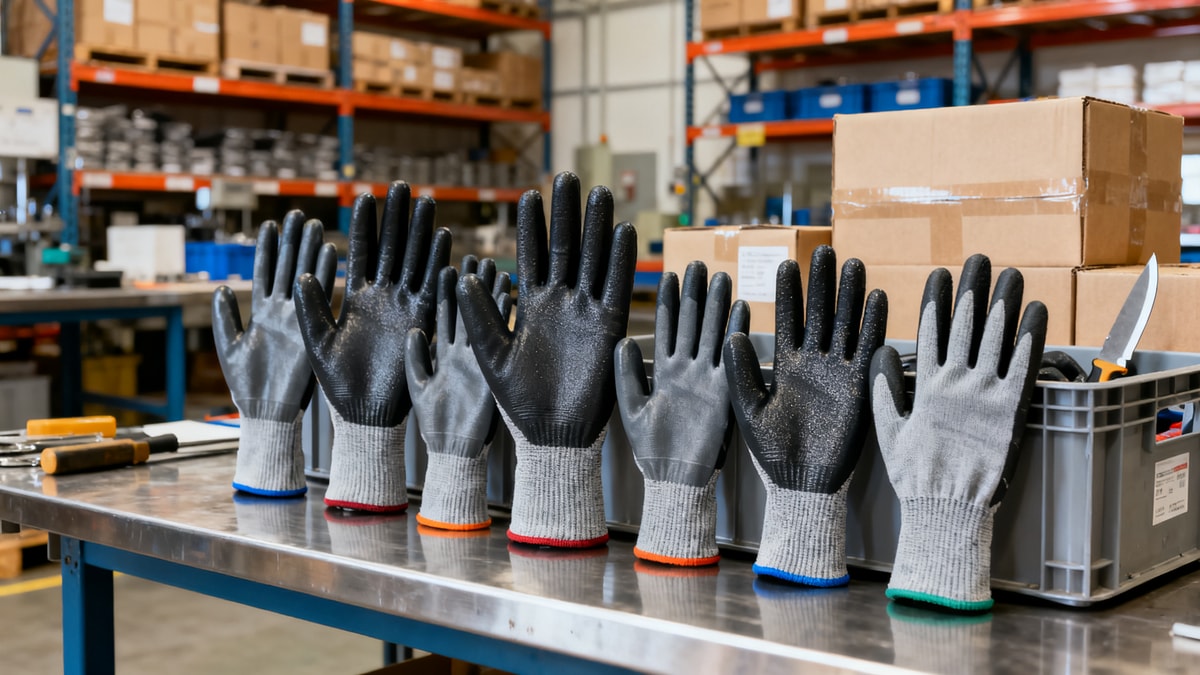
In cut resistant gloves wholesale programs, sizing mistakes rarely look serious at purchase—but they quietly drive repeat orders, higher replacement rates, and avoidable budget waste. For financial approvers, understanding how poor fit affects glove lifespan, worker compliance, and total procurement cost is essential before approving volume buys that appear economical on paper.
Why do sizing errors matter so much in cut resistant gloves wholesale decisions?
Many bulk glove purchases are approved on visible numbers: unit price, carton quantity, and supplier discount. Yet in cut resistant gloves wholesale programs, the hidden cost driver is often fit. A glove that is too tight puts stress on the coating, seams, and liner fibers; a glove that is too loose slips during handling, catches on edges, and encourages workers to remove it for precision tasks. In both cases, replacement frequency rises faster than the initial spreadsheet predicted.
For finance teams, this is not just a comfort issue. It is an asset-life issue. Industrial PPE must perform across repeated work cycles, not merely pass a receiving inspection. If sizing is wrong across even 15% to 20% of a workforce, the organization may see accelerated wear, reduced compliance, more emergency replenishment orders, and fragmented inventory. The result is a higher annual spend even when the quoted wholesale rate looked competitive.
That is why procurement leaders and budget approvers should evaluate glove fit as part of total cost of ownership. In safety categories, the cheapest line item can become the most expensive operating habit.
What replacement costs increase when glove sizing is wrong?
Replacement costs in cut resistant gloves wholesale are broader than simply buying more pairs. Poor sizing creates direct and indirect expenses that often bypass the original approval logic.
- Higher pair consumption: Tight gloves split faster at stress points; loose gloves suffer abrasion from excess movement.
- More size exchanges: Warehouses and plants end up redistributing stock internally, creating labor and tracking overhead.
- Rush reorders: Misaligned sizing profiles trigger small emergency purchases at weaker negotiated terms.
- Inventory imbalance: Too many unusable sizes remain on shelves while high-demand sizes run out.
- Lower worker compliance: Employees may avoid wearing ill-fitting gloves, increasing risk exposure and potential incident cost.
- Task inefficiency: Reduced dexterity can slow handling, sorting, cutting, fabrication, and maintenance work.
For financial approvers, the most overlooked element is replacement velocity. A glove program can stay within budget for the first month and still fail economically across two quarters if wear rates climb because fit was never validated at the user level.
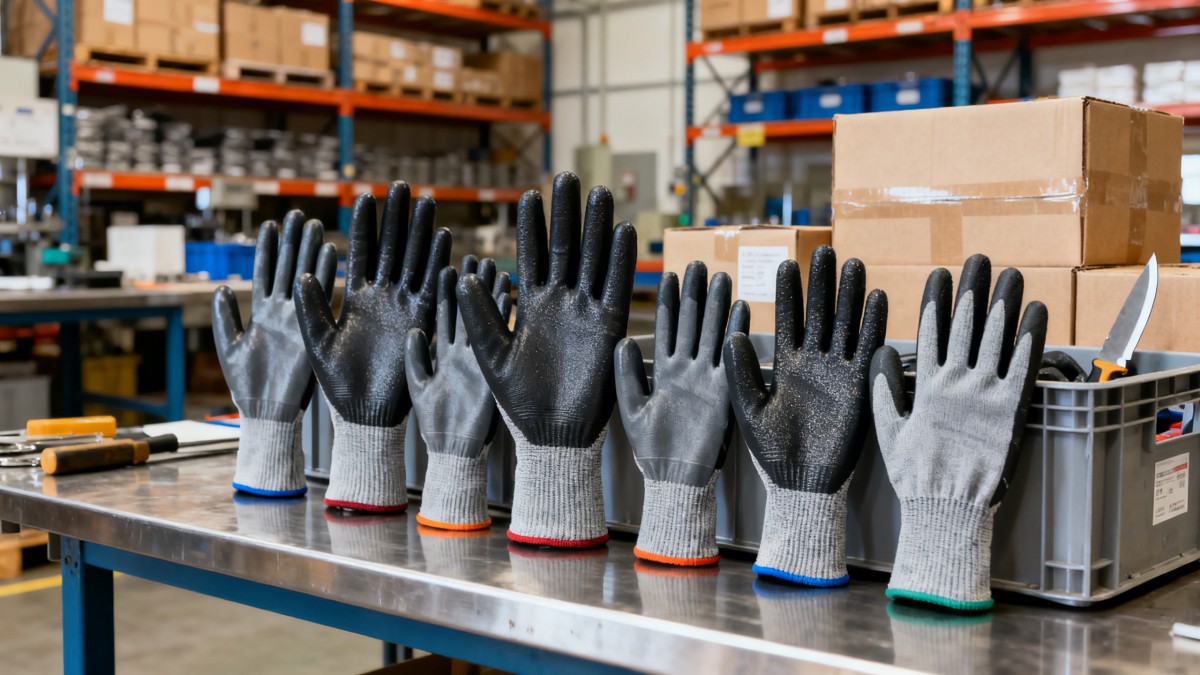
How does poor fit affect glove lifespan, safety behavior, and real-world usage?
The impact of poor sizing is mechanical and behavioral at the same time. Mechanically, materials engineered for cut protection perform best when the glove sits correctly on the hand. When stretched too far, yarn tension increases and coating layers may crack earlier. When oversized, the glove bunches in the palm and fingertips, increasing friction and snagging during repetitive handling.
Behaviorally, workers react quickly to discomfort. In metal handling, glass processing, warehousing, assembly, automotive supply, or maintenance environments, staff often need grip sensitivity and fingertip control. If a glove feels bulky or unstable, users may pull it off for “just one task,” which undermines both safety and consumption planning. Gloves that are repeatedly removed, stuffed into pockets, or dragged across work surfaces typically degrade faster.
This is especially relevant in cross-functional industrial settings where one approved model is expected to serve multiple roles. A glove size profile suitable for general material handling may be unsuitable for technicians doing precise work. Finance teams should therefore avoid assuming that a single broad order in standard size ratios will fit all departments equally well.
Which sizing mistakes are most common in wholesale glove programs?
The most common errors in cut resistant gloves wholesale are not dramatic procurement failures. They are small assumptions repeated at scale.
1. Using generic size curves without workforce data
Many buyers default to a standard split such as medium, large, and extra-large because that is operationally simple. But labor forces differ by region, role, and gender mix. Without actual hand-size sampling, the order ratio may be wrong from day one.
2. Assuming all glove brands size the same
Even when labels show the same size, fit can vary due to liner construction, coating thickness, cuff tension, and intended application. A “large” in one model may feel like a “medium-large” in another. Switching suppliers without rechecking fit often leads to unplanned replacement costs.
3. Buying for cut level first and fit second
Protection standards matter, but a high cut rating does not automatically create value if the glove is poorly tolerated by users. In practice, usable protection is what workers will wear consistently.
4. Ignoring task-specific dexterity requirements
Operations that combine lifting, sorting, machine loading, inspection, and packaging may need more than one fit profile or glove style. Standardizing too aggressively can raise issue rates.
5. Approving volume before conducting a wear trial
A trial is often seen as a delay, but in reality it is an insurance step. A small pre-approval test can prevent months of waste across a large site network.
How can financial approvers judge whether a cut resistant gloves wholesale quote is truly cost-effective?
A strong quote should be tested beyond price per pair. Financial approvers should ask whether the supplier helps reduce replacement frequency and fit-related waste. In industrial sourcing, lower annual cost often comes from better size alignment, not only better negotiation.
Use the following evaluation logic before approving a bulk glove contract:
This approach aligns with the needs of industrial buyers who care about resilience, compliance, and predictable operating cost. It also fits the decision framework used by organizations that rely on technical sourcing intelligence instead of superficial discount comparisons.
What is the best way to prevent sizing-related replacement waste before placing a wholesale order?
The most effective prevention method is a structured sizing and wear-validation process. For cut resistant gloves wholesale, this should happen before full rollout, not after complaints appear.
- Map tasks by department: Separate heavy handling, fine assembly, maintenance, and logistics needs.
- Sample actual users: Measure hand-size distribution instead of relying on assumptions.
- Test multiple sizes and models: Include enough users to detect fit outliers.
- Track wear days, comfort complaints, and non-use behavior: These are early signals of future replacement cost.
- Adjust size ratios by site: Different plants often need different carton mixes.
- Build reorder logic from trial results: Budgeting should follow verified consumption patterns.
This process is especially useful for multi-site enterprises, EPC contractors, and procurement directors handling safety categories at scale. It transforms glove purchasing from a commodity action into a managed cost-control program.
Are there signs in current purchasing data that suggest a sizing problem already exists?
Yes. Financial and procurement data often reveal glove fit issues long before operations formally report them. If your organization already buys cut resistant gloves wholesale, review these indicators:
- One or two sizes are constantly out of stock while others remain unused.
- Monthly glove consumption rises without a clear increase in labor hours or production output.
- Users request alternate models even when protection ratings are adequate.
- Sites place frequent top-up orders outside the master contract.
- Supervisors report glove removal during precision work.
- Procurement teams spend time handling internal exchanges and complaints.
These patterns usually point to a mismatch between procurement assumptions and field reality. For budget holders, such signals justify a fit review before renewing the next supply agreement.
What should buyers ask suppliers before approving a large cut resistant gloves wholesale contract?
The right supplier conversation should go beyond “What is your best price?” Buyers should verify whether the supplier can support fit accuracy, stable product quality, and long-term cost control.
Useful questions include:
- What hand measurement guide do you recommend for size allocation?
- Do you have fit comparison data between models or production batches?
- Can you provide trial quantities across a full size run?
- Which applications is each glove geometry optimized for: grip, dexterity, abrasion, or multi-purpose use?
- How do you support sites with mixed workforce demographics?
- Can you help monitor replacement rates after deployment?
- What certification and test documentation is available for each SKU?
This is where credible industrial sourcing partners add value. High-trust platforms and technical intelligence providers can help procurement teams compare not just products, but program suitability, compliance strength, and risk exposure.
What is the key takeaway for financial approvers reviewing wholesale glove budgets?
The key takeaway is simple: in cut resistant gloves wholesale, sizing accuracy is a financial control variable. It influences replacement frequency, inventory efficiency, worker adoption, and contract performance. A low unit price cannot offset a glove program that wears out faster, sits unused in the wrong sizes, or triggers unplanned reorder activity.
Before approving large-volume purchases, decision-makers should require evidence of fit testing, size-distribution planning, and realistic wear assumptions tied to actual tasks. That discipline turns PPE spending into measurable cost management rather than reactive replenishment.
If you need to confirm a practical sourcing direction, parameters, rollout cycle, pricing structure, or supplier fit for your environment, prioritize discussions around workforce size mix, application types, certification needs, pilot testing, replacement benchmarks, and reorder flexibility. Those are the questions most likely to protect budget quality before the purchase order is signed.
Technical Specifications
Expert Insights

Chief Security Architect
Dr. Thorne specializes in the intersection of structural engineering and digital resilience. He has advised three G7 governments on industrial infrastructure security.
Related Analysis
- May 01, 2026PTZ dome camera placement mistakes that waste zoom performanceAuthor :Safety Compliance Lead
- May 01, 2026Biometric access control systems: where integration gets expensiveAuthor :Safety Compliance Lead
- May 01, 2026Facial recognition door lock accuracy drops in these common settingsAuthor :Safety Compliance Lead
Core Sector // 01
Security & Safety
- Custom high visibility clothing without long lead time problemsAuthor :Safety Compliance Lead

- Reflective safety vests bulk: color fading can become a safety issueAuthor :Safety Compliance Lead

- What separates a reliable steel toe work boots manufacturerAuthor :Safety Compliance Lead

- Flame retardant coveralls: why fabric weight affects comfort and complianceAuthor :Safety Compliance Lead

- Cut resistant gloves wholesale: sizing errors that raise replacement costsAuthor :Safety Compliance Lead

- Chemical resistant suits: what breakthrough time really tells youAuthor :Safety Compliance Lead

- Choosing an industrial hard hats manufacturer beyond certificationsAuthor :Safety Compliance Lead

- Fall protection harnesses: fit problems that reduce real safetyAuthor :Safety Compliance Lead