Choosing an industrial hard hats manufacturer beyond certifications
Author
Date Published
Reading Time
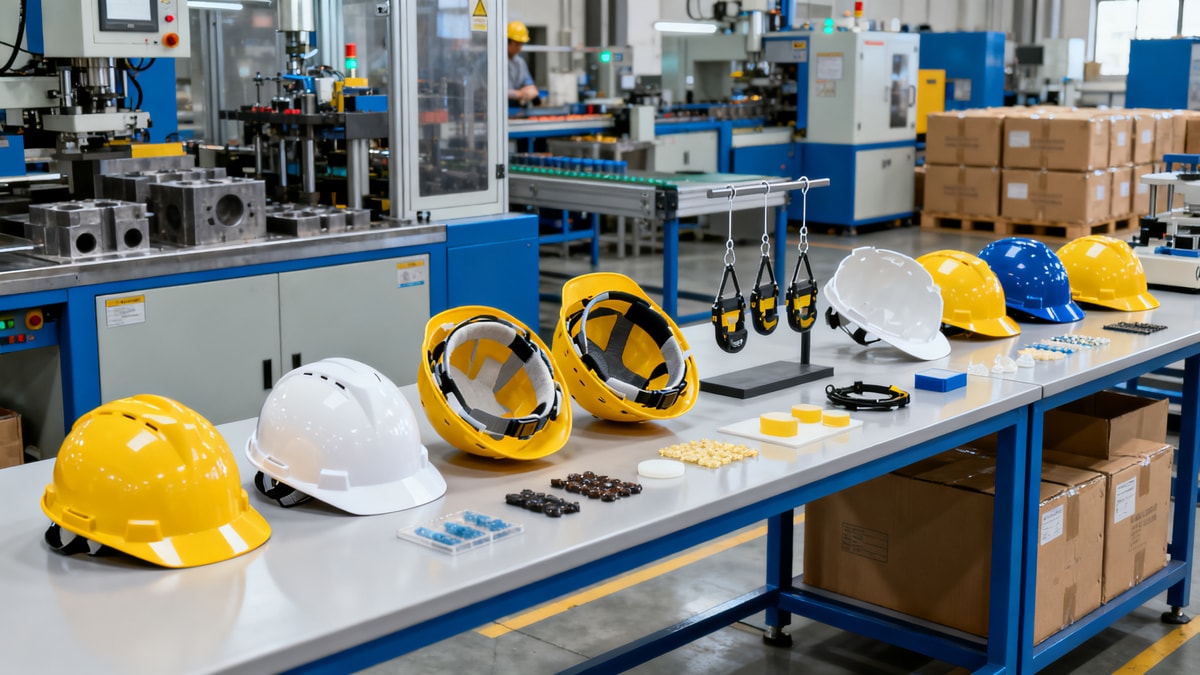
Choosing an industrial hard hats manufacturer is rarely a simple certification check. Procurement teams need to know whether a supplier can deliver consistent shell quality, dependable impact performance, stable lead times, documentation for multiple markets, and practical support for customization or private labeling. Certifications matter, but they are only the starting point.
For buyers in construction, utilities, oil and gas, mining, manufacturing, and infrastructure projects, the bigger question is this: can the manufacturer reliably protect workers and support your supply chain at scale? The answer depends on how well you evaluate production discipline, material selection, testing transparency, compliance scope, and after-sales responsiveness.
This article explains how procurement professionals can assess an industrial hard hats manufacturer beyond labels alone, reduce sourcing risk, and build a supplier shortlist that performs in the field as well as on paper.
What procurement teams are really buying when they choose a hard hat supplier
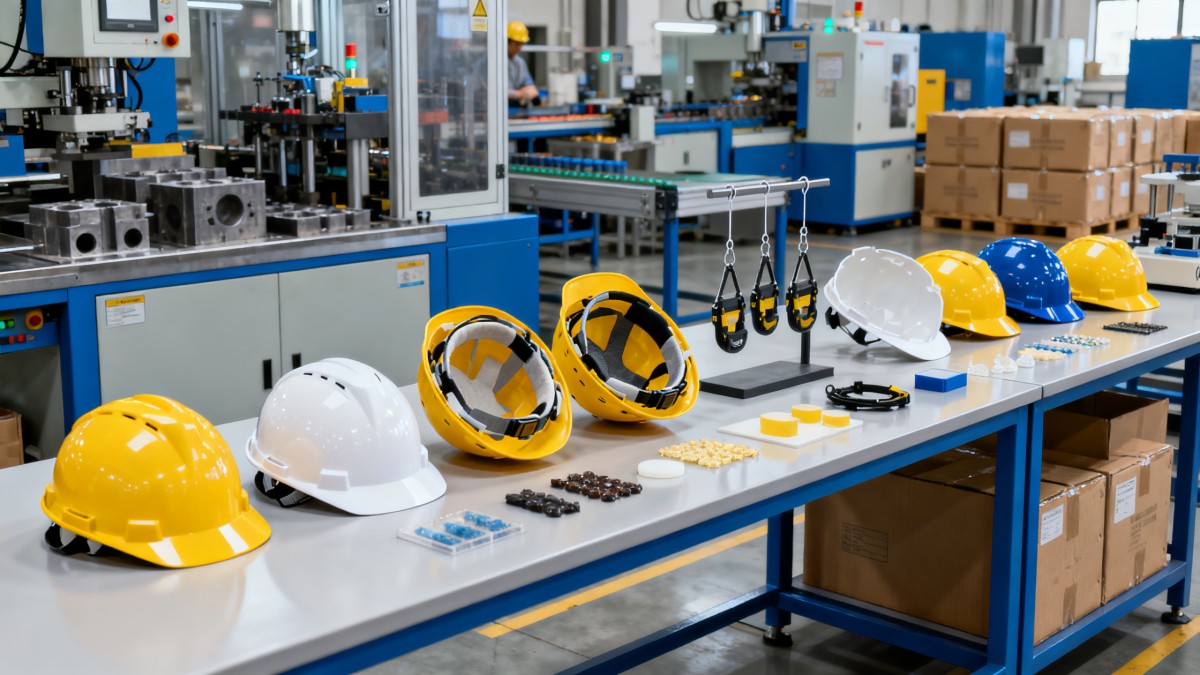
Industrial hard hats are not just PPE items with a logo and a certificate. In industrial procurement, they are part of a broader safety system tied to worker protection, site compliance, audit readiness, and brand liability. A low-cost unit that fails in harsh conditions can create a much larger operational and legal problem than its purchase price suggests.
That is why experienced buyers look beyond the visible product and assess the manufacturer behind it. They want evidence that the supplier can maintain repeatable quality across batches, support different suspension systems, handle climate-specific requirements, and provide traceable documentation during inspections or tenders.
In practical terms, buyers are procuring three things at once: the helmet itself, the manufacturing process that ensures consistent performance, and the supplier relationship that keeps inventory and compliance stable over time.
Certifications are necessary, but they do not tell the full story
Standards such as ANSI/ISEA Z89.1, EN 397, EN 50365, and other national or regional requirements are essential reference points. They confirm that a product has been tested against defined criteria. However, they do not automatically prove that every production batch is equally controlled, that the supplier can meet your market-specific labeling needs, or that performance remains consistent under real jobsite conditions.
Some procurement teams make the mistake of treating certificates as the end of due diligence. In reality, certifications should be the beginning of a deeper review. A document can verify that a model passed testing at a certain point in time. It does not replace questions about incoming raw material control, in-process inspection, aging resistance, accessory compatibility, or packaging discipline for export shipments.
When comparing manufacturers, ask not only which certifications they hold, but also how they maintain them. Do they conduct periodic retesting? Can they supply current test reports tied to specific models? Are certifications issued by recognized laboratories? Can they explain which product variants are covered and which are not?
Manufacturing consistency matters more than most buyers expect
For industrial hard hats, consistency is a core procurement concern. A helmet that performs well in one approved sample but varies in shell thickness, harness fit, or material composition from one batch to the next creates hidden safety and supply-chain risk.
A reliable manufacturer should be able to explain its process controls clearly. That includes raw material sourcing, molding parameters, trimming standards, assembly checks, and final inspection criteria. Buyers do not always need every engineering detail, but they should understand whether the factory operates with documented quality systems rather than ad hoc production habits.
Useful questions include: How are shell dimensions checked? How often are impact and penetration tests performed internally? How are defective parts segregated? What is the acceptance threshold for suspension defects? Is there lot traceability from finished goods back to resin batches and production dates?
If the manufacturer cannot answer these questions with confidence, the risk is not only technical. It may also indicate weak management discipline, which can affect delivery reliability, complaint handling, and responsiveness during urgent replenishment cycles.
Material selection should match the work environment, not just the price target
Different industrial settings place very different demands on hard hats. A manufacturer suitable for general construction may not be the right fit for high-heat environments, electrical work, outdoor exposure, or sites with demanding accessory integration. Procurement teams should evaluate whether the supplier’s material options genuinely match the conditions in which workers operate.
Common shell materials such as HDPE, ABS, and fiberglass-reinforced options can differ in impact response, weight, heat tolerance, chemical resistance, and long-term durability. Suspension design also affects comfort and wear compliance, which matters because a helmet only protects when workers keep it on correctly throughout the shift.
Instead of asking which material is “best” in general, ask which is most appropriate for your use case. If your crews work in strong sun, high humidity, or temperature swings, UV stability and aging performance matter. If electrical protection is required, confirm the exact class and limitations of the model. If branding or color coding is important across multiple sites, verify color consistency and fade resistance.
The best industrial hard hats manufacturer for your business is the one that can explain these tradeoffs in operational terms, not simply offer the lowest quote.
Field usability is a procurement issue, not just a worker preference
Many sourcing decisions focus on compliance and unit cost while overlooking wearability. That is a mistake. If hard hats are uncomfortable, poorly balanced, difficult to adjust, or incompatible with other PPE, workers are more likely to misuse them, remove them, or request replacements sooner than expected.
Procurement teams should assess suspension comfort, headband adjustment, chin strap options, compatibility with face shields or earmuffs, and ease of cleaning or maintenance. These details affect replacement frequency, user acceptance, and total cost of ownership.
For large employers, ergonomic consistency also helps with training and site standardization. A manufacturer that can support multiple models with a common accessory platform may reduce complexity across procurement, warehousing, and field issuance.
In short, comfort and compatibility are not secondary concerns. They directly influence safety performance, usage compliance, and long-run purchasing efficiency.
Global compliance support can separate strategic suppliers from basic vendors
If your organization buys for multiple countries or supports international EPC projects, compliance support becomes more complex than a single domestic standard. An industrial hard hats manufacturer may have a strong product but still be a weak partner if it cannot handle multilingual labeling, country-specific documentation, customs paperwork, or differing regulatory expectations.
Procurement teams should check whether the manufacturer can provide declarations of conformity, test reports, user instructions, carton markings, and product labels aligned with the destination market. This is especially important when products are distributed across regions with different requirements for language, traceability, electrical rating, or certification display.
Suppliers that understand export compliance reduce administrative friction. They also lower the chance of delays at inspection points, tender disqualification, or site-level disputes over product legitimacy. For multinational buyers, that support can be as valuable as the product itself.
Customization capability should be judged by control, not by promises
Many buyers need more than a standard helmet. They may require custom colors, logo printing, accessory slots, suspension variations, packaging for distributor channels, or private-label execution. These needs are common, but they should be approached carefully.
Customization can introduce quality variation if the manufacturer does not control the process tightly. For example, special pigments may affect consistency, logo placement may create cosmetic rejection issues, and packaging modifications may slow lead times if not integrated into the production system.
Ask the supplier how custom projects are managed. What are the minimum order quantities? Are custom variants covered by existing certifications, or will they require additional testing? How are color approvals documented? What is the sample approval workflow before mass production?
A capable manufacturer will define the boundaries clearly. That is a good sign. Vague assurances often lead to downstream problems in quality, delivery, or compliance.
Supply continuity and lead-time reliability deserve equal weight with product quality
A hard hat that meets every technical requirement is still a poor sourcing choice if the supplier cannot deliver on schedule. Procurement teams should examine production capacity, safety stock strategy, raw material sourcing resilience, and the manufacturer’s performance during demand spikes.
Useful indicators include average lead time by order size, on-time delivery history, backup plans for resin shortages, and the ability to support framework agreements or scheduled releases. If your projects involve phased rollouts or emergency replenishment, ask whether the supplier can prioritize urgent orders without destabilizing routine shipments.
It is also wise to understand geographic risk. A factory located in a region vulnerable to power interruptions, transport bottlenecks, or policy volatility may require contingency planning. In many cases, the strongest supplier is not simply the largest manufacturer, but the one with transparent communication and realistic production commitments.
How to evaluate a manufacturer before signing a long-term agreement
Procurement decisions improve when evaluation criteria are structured. A practical supplier review should combine technical, operational, and commercial factors rather than relying only on brochures and sample impressions.
Start with documentation. Review certifications, test reports, quality system evidence, product specifications, and traceability methods. Then evaluate samples for finish quality, fit, harness stability, labeling accuracy, and accessory compatibility. If volumes are significant, request a pilot order to test batch consistency and packaging execution.
Next, assess the supplier relationship itself. How quickly do they answer technical questions? Can they explain compliance limitations honestly? Do they provide complete export and quality documents without repeated follow-up? Procurement professionals often learn more from a supplier’s response discipline than from its marketing materials.
Where possible, conduct a factory audit or use a qualified third-party inspection partner. Even a focused audit can reveal whether the manufacturer operates with real process control or simply assembles products around a certification claim.
A practical checklist for choosing the right industrial hard hats manufacturer
When building your shortlist, focus on evidence that reduces risk. The right supplier should demonstrate current certifications, clear model coverage, stable material sourcing, repeatable production controls, and traceable quality records. They should also show they understand your use environment rather than pushing a one-size-fits-all product.
Look for manufacturers that can support accessory integration, comfort requirements, and market-specific documentation. Confirm lead times, reorder capability, and complaint resolution procedures. Ask for references in industries similar to yours, especially if you operate in energy, infrastructure, utilities, or heavy construction.
Most importantly, compare suppliers on total procurement value. A slightly higher unit price may be justified if it delivers better wear compliance, fewer defects, lower replacement rates, faster documentation support, and more reliable delivery across multiple projects.
Final thought: buy for risk reduction, not just regulatory minimums
The best way to choose an industrial hard hats manufacturer is to think beyond the certificate file and evaluate the full supply relationship. Certifications confirm a baseline. They do not confirm manufacturing discipline, service quality, customization control, or resilience under operational pressure.
For procurement teams, the strongest supplier is usually the one that combines compliant products with transparent testing, stable production, fit-for-purpose materials, dependable logistics, and responsive support. That combination reduces safety risk, protects project continuity, and creates better long-term value than a purchase decision based on labels alone.
In a category tied directly to worker protection, buying well means looking deeper. The manufacturers worth partnering with are the ones that can prove not only that their hard hats passed a test, but that their systems, processes, and service can stand up to real industrial demands.
Technical Specifications
Expert Insights

Chief Security Architect
Dr. Thorne specializes in the intersection of structural engineering and digital resilience. He has advised three G7 governments on industrial infrastructure security.
Related Analysis
- May 01, 2026PTZ dome camera placement mistakes that waste zoom performanceAuthor :Safety Compliance Lead
- May 01, 2026Biometric access control systems: where integration gets expensiveAuthor :Safety Compliance Lead
- May 01, 2026Facial recognition door lock accuracy drops in these common settingsAuthor :Safety Compliance Lead
Core Sector // 01
Security & Safety
- Custom high visibility clothing without long lead time problemsAuthor :Safety Compliance Lead

- Reflective safety vests bulk: color fading can become a safety issueAuthor :Safety Compliance Lead

- What separates a reliable steel toe work boots manufacturerAuthor :Safety Compliance Lead

- Flame retardant coveralls: why fabric weight affects comfort and complianceAuthor :Safety Compliance Lead

- Cut resistant gloves wholesale: sizing errors that raise replacement costsAuthor :Safety Compliance Lead

- Chemical resistant suits: what breakthrough time really tells youAuthor :Safety Compliance Lead

- Choosing an industrial hard hats manufacturer beyond certificationsAuthor :Safety Compliance Lead

- Fall protection harnesses: fit problems that reduce real safetyAuthor :Safety Compliance Lead