Chemical resistant suits: what breakthrough time really tells you
Author
Date Published
Reading Time
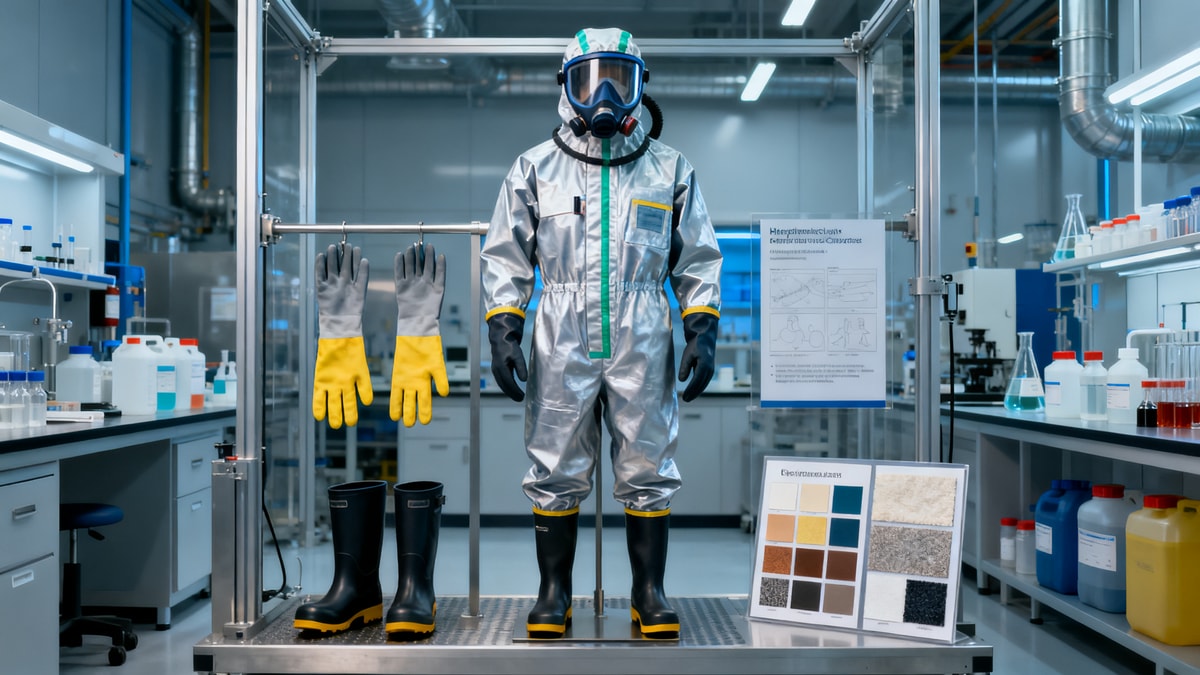
When evaluating chemical resistant suits, breakthrough time is one of the most cited yet most misunderstood performance metrics. For technical assessors, it does not simply indicate how long a suit is “safe,” but how quickly a specific chemical can permeate a tested material under defined conditions. Understanding what breakthrough time really tells you is essential for comparing garment data, verifying compliance, and making risk-based PPE decisions in demanding industrial environments.
What does breakthrough time actually mean for chemical resistant suits?
In practical terms, breakthrough time is the measured interval between the initial contact of a chemical with a suit material and the first detectable appearance of that chemical on the inner side of the material at a specified permeation rate. This matters because chemical resistant suits are not simply “resistant” or “non-resistant.” Their performance depends on the exact chemical, concentration, temperature, physical state, and test method.
For technical evaluation teams, the key point is that breakthrough time is a laboratory indicator, not a universal wear-time guarantee. A suit material may show a long breakthrough time against one acid and a short one against a solvent blend. Even within the same chemical family, performance can vary sharply. That is why competent selection of chemical resistant suits always starts with a chemical-specific review rather than with a brand claim or a generic product category.
Many assessors also confuse permeation with penetration and degradation. Breakthrough time relates to permeation: molecular movement through an intact barrier. It does not necessarily describe seam leakage, zipper failure, pinholes, abrasion damage, or visible fabric breakdown. A suit can pass one metric and still fail another risk requirement in the field.
Why is breakthrough time so often misunderstood during PPE assessment?
The misunderstanding usually comes from converting a technical test result into a simple operational rule. Procurement teams may see “240 minutes” in a chart and assume the wearer can safely stay in contact for four hours. That assumption is risky. Test conditions are standardized, while real industrial exposure is not. Splash intensity, pressure, repeated flexing, contamination on seams, ambient heat, and mixed chemicals can all reduce actual field protection.
Another source of error is overlooking the detection threshold used in the test method. Breakthrough time is tied to when permeation reaches a defined rate, not necessarily when zero chemical has passed. For high-toxicity substances, even small amounts can be operationally significant. In these cases, technical assessors should review the full permeation curve when available, rather than relying only on the headline value.
There is also a purchasing bias toward simplified comparisons. Buyers often want a quick ranking of chemical resistant suits, but the highest breakthrough time is not automatically the best solution. Mobility, heat stress, compatibility with respiratory protection, and task duration can be equally important. In short, a strong barrier material that workers cannot wear correctly may produce worse safety outcomes than a balanced option selected for the actual process.
How should technical assessors read test data for chemical resistant suits?
A disciplined reading of test data starts with five checks. First, confirm the exact chemical name and concentration. “Sulfuric acid” alone is not enough if the test report does not state whether the concentration is 30%, 70%, or 98%. Second, verify the test standard and method conditions. Third, identify whether the data is for fabric only or for the completed garment system. Fourth, check whether seam and closure performance is separately addressed. Fifth, compare the expected exposure mode in the workplace with the test scenario.
This is where experienced evaluators distinguish between screening data and decision-grade data. Screening data can narrow options quickly. Decision-grade data should support the final specification, especially in petrochemical handling, hazardous waste response, laboratory transfer operations, and process maintenance involving corrosives or solvents.
For organizations managing critical infrastructure or industrial process reliability, this structured review is more useful than broad marketing language. It allows chemical resistant suits to be assessed as engineered controls within a wider PPE system rather than as stand-alone commodities.
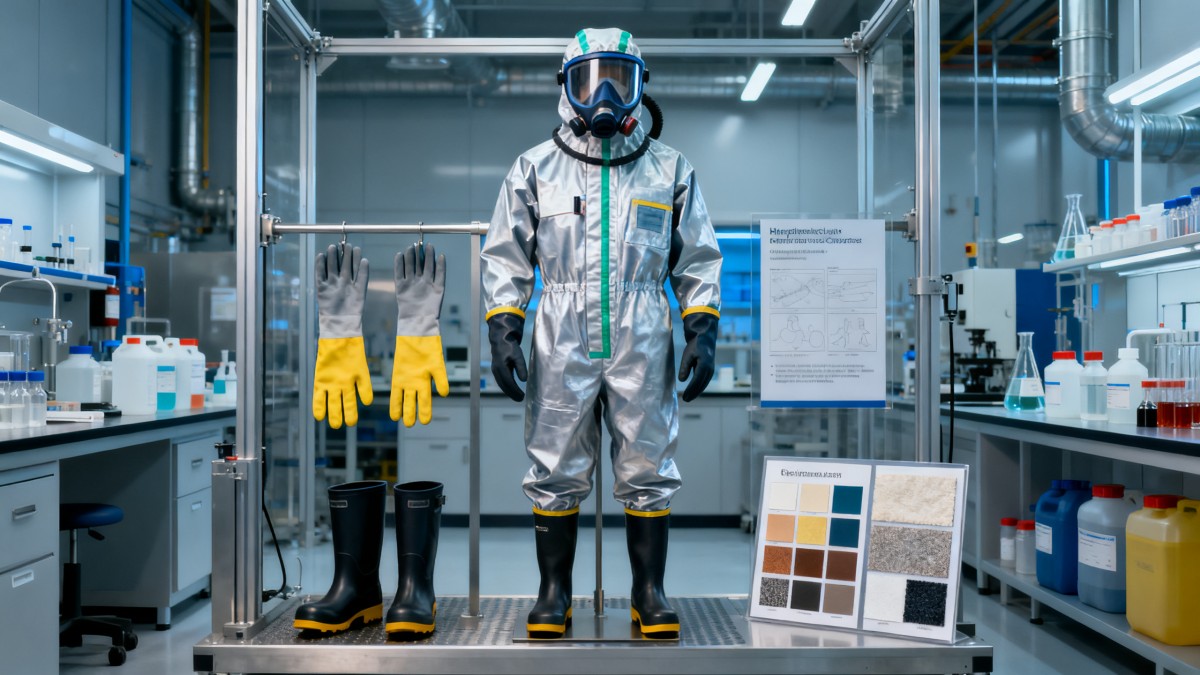
Does a longer breakthrough time always mean better protection?
Not always. A longer breakthrough time is important, but it is only one decision variable. The best chemical resistant suits must align with the actual hazard profile and the work process. For example, a heavier multilayer barrier may outperform a lighter suit in permeation testing, yet it may also increase heat burden, reduce dexterity, slow emergency egress, and create donning errors. In confined spaces or hot process areas, these tradeoffs are not minor operational details; they can shape the total risk outcome.
Technical assessors should therefore ask two linked questions: how much barrier performance is necessary, and at what cost to usability and compliance? If workers remove PPE early because of thermal stress, the nominally superior breakthrough time becomes less meaningful. A high-performing suit that is incompatible with required boots, face protection, or breathing apparatus may also introduce interface failures.
Another caution is that different chemicals may drive different suit strategies. Some tasks require broad-spectrum resistance because of uncertain contamination. Others involve a known and stable chemical inventory, making targeted material selection more effective. In both cases, breakthrough time should be read alongside degradation ratings, physical durability, anti-static needs, flame considerations, and standard compliance.
Which common mistakes lead to poor selection of chemical resistant suits?
One common mistake is selecting by industry habit instead of by current hazard data. A plant may continue buying the same chemical resistant suits because they were used in a past shutdown, even though feedstocks, cleaning agents, or process temperatures have changed. Technical reassessment should follow process change, incident review, and supplier specification updates.
A second mistake is relying on generic categories such as “acid suit” or “solvent suit.” These labels may be convenient, but they are not sufficiently precise for formal assessment. Strong performance against one solvent does not predict equal performance against aromatics, ketones, esters, or mixed formulations.
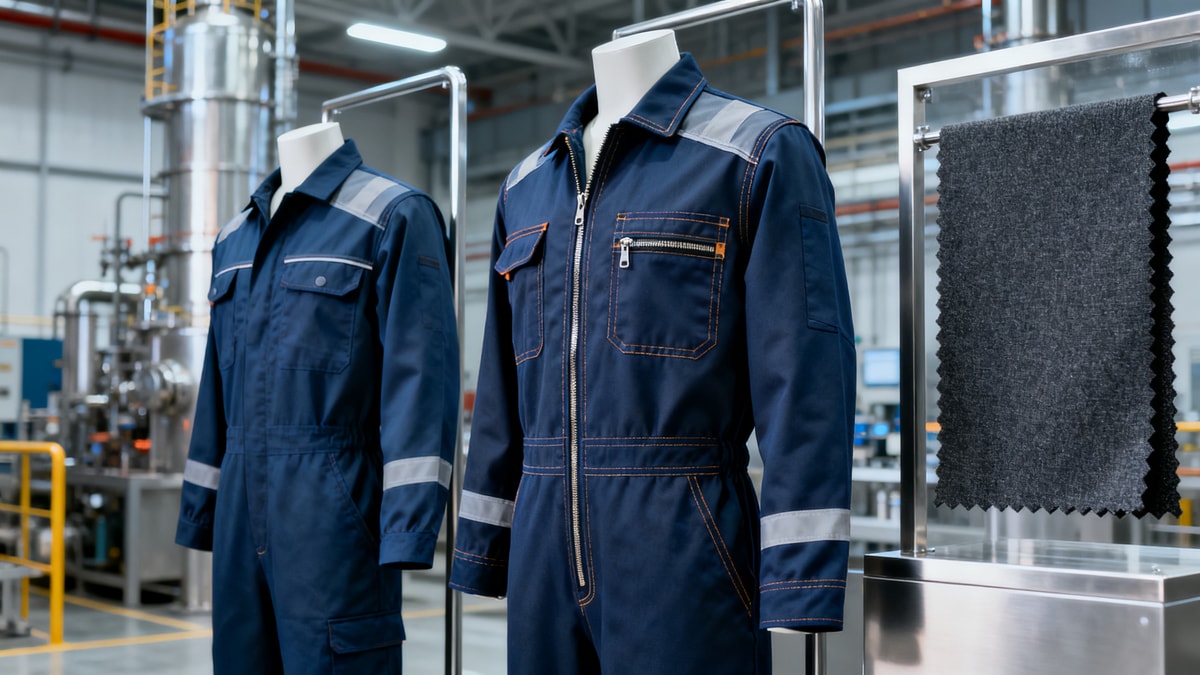
A third mistake is ignoring seams and garment construction. Fabric data alone can create false confidence. In real applications, elbows, knees, taped seams, visors, and glove interfaces may be the first failure points. Chemical resistant suits should be evaluated as complete assemblies, particularly for tasks involving crouching, climbing, tool handling, or repetitive movement.
A fourth mistake is failing to define the exposure scenario. Is the risk a light splash during transfer, an accidental spray under pressure, intermittent vapor exposure, or full emergency response? Breakthrough time carries different weight in each case. For incidental splash, decontamination speed and doffing procedures may be as critical as barrier time. For unknown or mixed chemical releases, broader resistance and ensemble integration may take priority.
How can you compare chemical resistant suits across suppliers without being misled?
Comparison becomes more reliable when the review framework is standardized. Start by creating a matrix of the actual chemicals, concentrations, task durations, temperatures, and exposure types relevant to your site. Then request harmonized supplier documentation: permeation data, degradation results, certification status, seam construction details, size range, shelf life, and storage limits.
If two products show similar breakthrough time, the deciding factor may be elsewhere. One may have stronger mechanical durability for turnaround maintenance. Another may integrate better with SCBA, chemical gloves, and boots for emergency teams. Another may be easier to inspect and train on, reducing human error. In large industrial environments, these factors can materially affect lifecycle value, not just acquisition price.
It is also wise to ask whether the chemical resistant suits were tested against single substances only or whether there is evidence relevant to mixtures similar to your process conditions. While direct test equivalence is not always possible, the discussion itself often reveals whether a supplier understands industrial risk assessment or is only presenting catalog data.
Quick comparison points for technical buyers
- Chemical-specific breakthrough time under cited standard conditions
- Material degradation after exposure, not just permeation delay
- Garment-level design, including seams, closures, and interfaces
- Compatibility with site PPE ensemble and decontamination workflow
- Certification traceability, technical support, and documented limitations
What should be confirmed before procurement or specification approval?
Before approving chemical resistant suits for a project, shutdown, framework contract, or emergency stock program, technical assessors should confirm more than a compliant datasheet. They should validate the fit between laboratory evidence and the real task environment. That means reviewing exposure duration, anticipated contamination pathways, worker mobility requirements, thermal conditions, donning and doffing procedures, and replacement triggers.
The strongest procurement decisions usually involve cross-functional input. Safety leads define the hazard controls, operations explain the task realities, maintenance identifies movement and abrasion risks, and procurement checks certificate validity and supplier consistency. This integrated approach is especially important in sectors where downtime, injury, or contamination incidents have outsized operational consequences.
Documentation discipline matters as well. Keep a chemical-to-suit selection record, identify the standards reviewed, note any assumptions about mixtures or temperature, and define conservative change-out rules. These records improve audit readiness and make future reassessment easier when process conditions evolve.
What are the most useful FAQ answers to remember about breakthrough time?
For fast reference, technical teams can keep a few core answers in mind. Breakthrough time is a material-specific laboratory result, not a direct promise of safe field use. Chemical resistant suits must be matched to the exact substance and exposure scenario. A longer number is helpful but not absolute. And garment-level details, operational wearability, and safety margins are often the difference between a paper-compliant choice and a field-ready one.
How should this understanding influence your next evaluation?
The real value of breakthrough time is not that it gives a simple answer, but that it helps technical assessors ask better questions. It reveals whether chemical resistant suits have been tested against the right hazards, under meaningful conditions, and with enough detail to support a defensible decision. Used correctly, it improves comparison, supports compliance review, and reduces the chance of selecting PPE on assumptions.
If you need to move from general review to specification or sourcing, the first questions to clarify are straightforward: Which exact chemicals and concentrations are involved? What is the realistic exposure mode? What safety margin is required beyond published breakthrough time? Are garment seams, interfaces, and certifications adequate for the task? And how will change-out, decontamination, training, and emergency response be managed in practice? Those answers will do more for selection quality than any single headline number on a datasheet.
Technical Specifications
Expert Insights

Chief Security Architect
Dr. Thorne specializes in the intersection of structural engineering and digital resilience. He has advised three G7 governments on industrial infrastructure security.
Related Analysis
- May 01, 2026PTZ dome camera placement mistakes that waste zoom performanceAuthor :Safety Compliance Lead
- May 01, 2026Biometric access control systems: where integration gets expensiveAuthor :Safety Compliance Lead
- May 01, 2026Facial recognition door lock accuracy drops in these common settingsAuthor :Safety Compliance Lead
Core Sector // 01
Security & Safety
- Custom high visibility clothing without long lead time problemsAuthor :Safety Compliance Lead

- Reflective safety vests bulk: color fading can become a safety issueAuthor :Safety Compliance Lead

- What separates a reliable steel toe work boots manufacturerAuthor :Safety Compliance Lead

- Flame retardant coveralls: why fabric weight affects comfort and complianceAuthor :Safety Compliance Lead

- Cut resistant gloves wholesale: sizing errors that raise replacement costsAuthor :Safety Compliance Lead

- Chemical resistant suits: what breakthrough time really tells youAuthor :Safety Compliance Lead

- Choosing an industrial hard hats manufacturer beyond certificationsAuthor :Safety Compliance Lead

- Fall protection harnesses: fit problems that reduce real safetyAuthor :Safety Compliance Lead