Ear muffs noise protection: when higher NRR is not always better
Author
Date Published
Reading Time
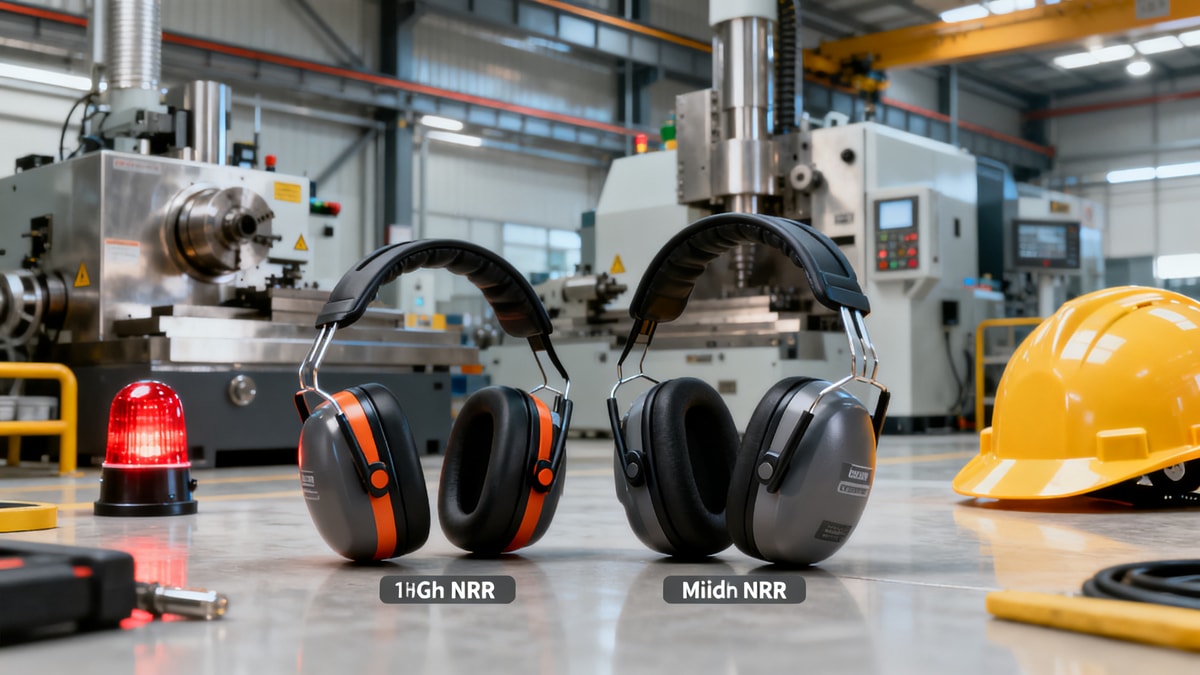
When choosing ear muffs noise protection, many users assume a higher Noise Reduction Rating always means safer hearing. In reality, the best protection depends on the jobsite, noise frequency, communication needs, and wearing comfort. Understanding when a higher NRR helps—and when it may create new risks—can lead to smarter, safer decisions for daily operations.
What does NRR really mean in ear muffs noise protection?
NRR, or Noise Reduction Rating, is a laboratory-based number that estimates how much sound a hearing protector can reduce under controlled test conditions. In ear muffs noise protection, that number is useful, but it is not a promise of real-world performance. A muff rated NRR 31 does not automatically protect every worker better than one rated NRR 24. Actual attenuation depends on fit, seal quality, head movement, eyewear, helmet compatibility, and how consistently the operator wears the product throughout the shift.
This matters because industrial noise is rarely simple. A fabrication line may produce steady low-frequency rumble, while a metal stamping station creates repeated impulse noise. A power room may expose staff to constant fan and transformer sound, while a maintenance team moves between loud and moderate areas all day. Ear muffs noise protection should therefore be judged as a system decision, not just a single number on packaging.
Users should also remember that hearing protection is only one part of the hierarchy of control. If a site can reduce exposure through enclosure, isolation, maintenance, or scheduling, that should remain the first priority. Ear muffs are critical, but they are not a substitute for noise control engineering.
Why is higher NRR not always better for every job?
A higher NRR can be valuable in very loud environments, but overprotection is a real concern. When operators are isolated too much, they may miss warning alarms, backup vehicle signals, machine changes, or shouted instructions from coworkers. In many industrial settings, safe performance depends on hearing important sounds clearly enough to react. Ear muffs noise protection that blocks too much sound can reduce situational awareness, especially in mixed-noise areas where personnel need both protection and communication.
Another issue is comfort. Heavier or bulkier high-NRR earmuffs may cause heat buildup, pressure around the ears, and fatigue during long shifts. If a user lifts the cups periodically for relief, real protection drops sharply. A moderately rated product worn correctly for eight hours often protects better than a top-rated model worn inconsistently.
There is also a task-specific factor. In inspection, forklift coordination, confined-space entry support, or process line supervision, workers must often hear speech and changes in equipment behavior. In such cases, ear muffs noise protection may need to balance attenuation with audibility rather than maximize one value at all costs.
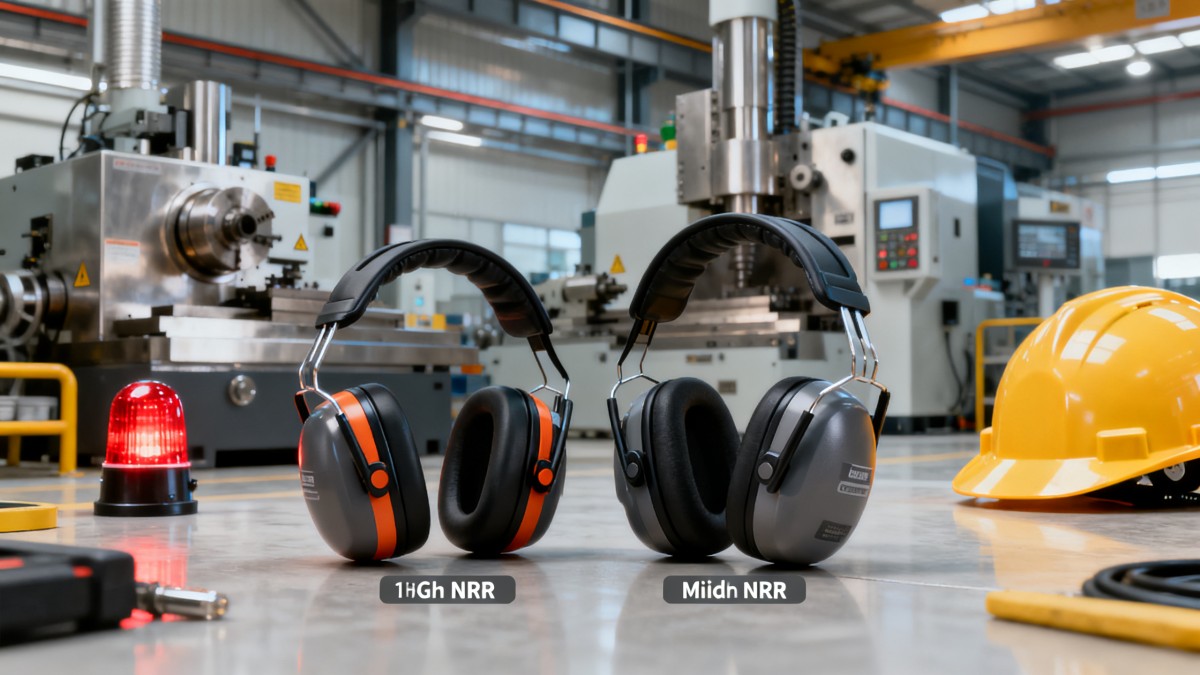
Which jobs and users benefit most from higher-NRR ear muffs noise protection?
Higher-NRR earmuffs are most appropriate where noise exposure is consistently high, communication demands are limited, and users can maintain a proper seal. Common examples include grinding bays, heavy forging zones, turbine halls, certain mining operations, airport ground support, and some demolition or concrete-breaking activities. In these environments, the primary challenge is reducing hazardous sound to safer exposure levels.
They can also be a strong choice for short-duration tasks with extreme noise peaks, especially when combined with training and supervision. Workers entering very loud areas for maintenance checks or shutdown procedures may need a higher level of ear muffs noise protection, provided they are still able to receive task-critical signals through established protocols.
For some users, dual protection may be appropriate: earmuffs over earplugs. This is common in environments with severe exposure or impulse noise. However, dual protection should be chosen based on risk assessment, not assumption. It increases attenuation, but it also increases isolation, heat, and communication difficulty.
How can operators tell when lower or mid-range protection is actually the smarter option?
Lower or mid-range ear muffs noise protection may be the better choice when the work area is noisy enough to require hearing conservation, but not so loud that maximum attenuation is necessary. This is common in utilities, packaging lines, equipment rooms, municipal maintenance, and mobile field service tasks. In these situations, users often need to hear speech, alarms, and equipment condition cues.
A practical sign of overprotection is when workers routinely remove one cup to hear others talk. That behavior means the selected device may not match the task. Another warning sign is poor compliance: if the earmuffs stay on the helmet instead of on the ears, comfort and usability may be failing the operation. Ear muffs noise protection should support real work behavior, not only pass a specification check.
The smarter option is the one that reduces exposure to a safe range while preserving enough hearing function for the job. That may mean selecting a model with moderate attenuation, lower clamping force, better ventilation, slimmer cups, or built-in communication capability.
What should you compare besides NRR when selecting ear muffs noise protection?
NRR is only one decision point. A better selection process compares the full operating context. For industrial users and supervisors, the following factors usually matter just as much as the rating itself:
For site buyers and operators alike, ear muffs noise protection should be evaluated in wear trials, not only in catalog reviews. A short pilot with real users often reveals whether a model interferes with hard hats, safety glasses, or task flow. That feedback is usually more valuable than chasing the highest label rating.
What are the most common mistakes people make with ear muffs noise protection?
The first mistake is believing “more attenuation” always means “more safety.” Safe hearing protection means appropriate reduction, not blind maximization. The second mistake is ignoring fit issues caused by eyewear arms, hooded clothing, helmet mounts, or worn ear cushions. Even a small leak can reduce performance significantly.
A third mistake is using the same model for every zone. Facilities often have mixed environments: workshops, compressor rooms, assembly areas, loading zones, and control spaces all create different hearing demands. One universal choice may simplify purchasing, but it can reduce safety or compliance if the tasks vary widely.
Another common problem is poor maintenance. Dirty cushions, cracked foam, weak headbands, and damaged mounts reduce sealing ability. Ear muffs noise protection is not a buy-once product. It requires inspection, cleaning, and timely replacement parts. For high-use industrial sites, consumable planning matters as much as initial purchase cost.
Finally, some users overlook training. Workers need to know why a certain attenuation level was selected, when dual protection is required, how to check the seal, and when to replace parts. Better understanding usually leads to better compliance.
How do you match ear muffs noise protection to real workplace scenarios?
A simple scenario-based approach works well. Start with measured exposure levels, then map them to work patterns. Ask whether the user stays in one high-noise area, moves through changing zones, or needs frequent communication. Next, check other PPE interactions. Finally, confirm comfort over the full shift.
This type of matching helps users avoid both underprotection and overprotection. It also supports more credible procurement decisions, especially for organizations that need documented safety logic, PPE consistency, and standards alignment.
What should users and buyers confirm before purchasing?
Before selecting ear muffs noise protection, confirm five basics: measured noise exposure, task duration, communication requirements, other PPE used at the same time, and maintenance expectations. If those points are unclear, even a premium product can become the wrong choice.
Buyers should also ask practical questions that directly affect field performance: Are replacement cushions available locally? Does the model work with hard-hat slots or face shields? Has it been trialed by actual operators? Is the product certified for the relevant market? Can workers keep it on comfortably during peak heat and long shifts? These details often decide whether hearing protection succeeds operationally.
In short, ear muffs noise protection is not about choosing the biggest number. It is about matching protection to exposure and work reality. If you need to confirm a specific solution, parameters, rollout plan, procurement direction, or supplier comparison, start by discussing measured noise levels, communication risks, PPE compatibility, certification requirements, replacement-part support, and trial feedback from the actual users who will wear the equipment every day.
Technical Specifications
Expert Insights

Chief Security Architect
Dr. Thorne specializes in the intersection of structural engineering and digital resilience. He has advised three G7 governments on industrial infrastructure security.
Related Analysis
- May 01, 2026PTZ dome camera placement mistakes that waste zoom performanceAuthor :Safety Compliance Lead
- May 01, 2026Biometric access control systems: where integration gets expensiveAuthor :Safety Compliance Lead
- May 01, 2026Facial recognition door lock accuracy drops in these common settingsAuthor :Safety Compliance Lead
Core Sector // 01
Security & Safety
- Custom high visibility clothing without long lead time problemsAuthor :Safety Compliance Lead

- Reflective safety vests bulk: color fading can become a safety issueAuthor :Safety Compliance Lead

- What separates a reliable steel toe work boots manufacturerAuthor :Safety Compliance Lead

- Flame retardant coveralls: why fabric weight affects comfort and complianceAuthor :Safety Compliance Lead

- Cut resistant gloves wholesale: sizing errors that raise replacement costsAuthor :Safety Compliance Lead

- Chemical resistant suits: what breakthrough time really tells youAuthor :Safety Compliance Lead

- Choosing an industrial hard hats manufacturer beyond certificationsAuthor :Safety Compliance Lead

- Fall protection harnesses: fit problems that reduce real safetyAuthor :Safety Compliance Lead