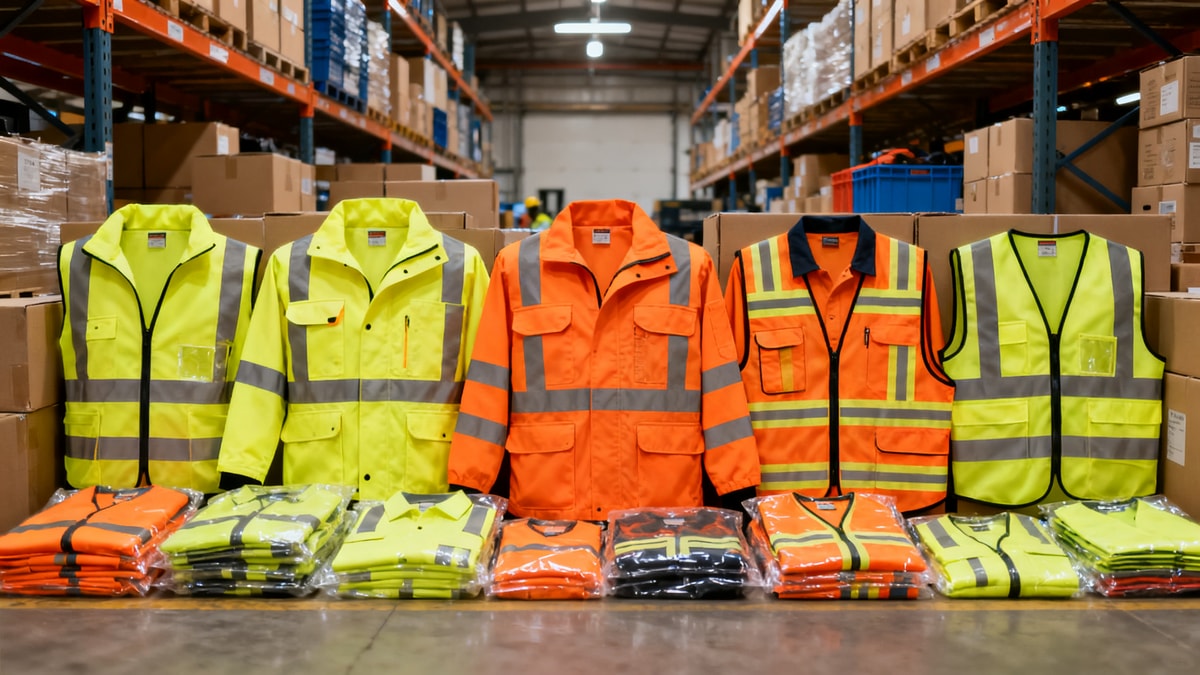
Reflective safety vests bulk: color fading can become a safety issue
Author
Date Published
Reading Time

When sourcing reflective safety vests bulk, color fading is often treated as a cosmetic issue—but for quality control and safety managers, it can directly reduce visibility, weaken compliance, and increase workplace risk. Understanding why fading happens, how it affects performance, and what to verify before purchase is essential to protecting both workers and operational standards.
Why color fading in reflective safety vests bulk should be treated as a safety risk

In industrial environments, a reflective vest is not only a garment. It is a visibility control measure used to separate people from moving equipment, vehicle traffic, suspended loads, and restricted operating zones. When buyers evaluate reflective safety vests bulk only by price, GSM, or color preference, they often miss a more serious issue: fading changes how quickly a worker can be seen and recognized under real field conditions.
For safety managers, this matters most in mixed-risk sites such as logistics yards, warehouses, roadwork, utilities, fabrication plants, ports, and EPC projects. Fluorescent background fabric supports daytime conspicuity, while reflective tape improves low-light recognition. If the fluorescent base color fades after repeated washing, UV exposure, or chemical contact, the vest may still look usable to procurement staff but perform poorly where visibility margins are already narrow.
Quality control teams should therefore treat fading as a measurable product-performance issue, not a visual nuisance. In many cases, the first sign of weak material stability is early loss of brightness, patchy shading, or a fabric tone that no longer matches approved incoming samples. Once this starts, complaints from workers often follow: the vest looks old too quickly, supervisors struggle with team color coding, and replacement cycles become shorter than planned.
- Reduced worker conspicuity in daytime operations, especially in dusty, outdoor, or high-glare settings.
- Higher risk of nonconforming PPE inventory when color retention is not aligned with internal inspection criteria.
- Increased total lifecycle cost because replacement frequency rises even when the initial bulk price appears attractive.
- Operational confusion when faded color coding affects contractor identification, area access control, or role differentiation.
What usually causes fading in reflective safety vests bulk purchases?
The root causes of fading are rarely limited to one factor. In bulk procurement, the most common problem is a mismatch between expected service conditions and actual fabric or dye performance. A vest intended for light-duty warehouse use may be acceptable indoors, but the same design can fail quickly on an infrastructure project with high UV exposure, frequent laundering, sweat, oils, and abrasive contact.
Material and dye limitations
Polyester is widely used because it is lightweight, durable, and cost-efficient. However, not all polyester fabrics are equal. The yarn quality, dyeing method, finishing chemistry, and process control all influence colorfastness. Lower-grade materials may show faster fading under sunlight or after repeated industrial washing. Fabric blends can also behave differently, especially when moisture management or breathability is prioritized over long-term brightness retention.
Environmental and operational exposure
Outdoor construction, utility maintenance, mining support, and transport yards expose vests to UV radiation, dust, heat, rain, fuel mist, and surface contamination. Even a compliant-looking vest can lose visual effectiveness if these conditions were not considered during sourcing. In some facilities, chlorine-based washing agents, alkaline detergents, or drying temperatures accelerate fading far more than end users expect.
Weak specification control during procurement
Many teams issue purchase orders for reflective safety vests bulk with basic criteria such as size run, fluorescent color, zipper or Velcro closure, and reflective tape width. Yet the tender package may omit colorfastness thresholds, washing expectations, light exposure performance, or sample retention rules. This creates room for substitution risk, lot-to-lot variation, and disputes after delivery.
The table below helps quality and safety teams connect common fading triggers with field impact and sourcing responses when evaluating reflective safety vests bulk.
A useful buying lesson is this: fading is usually a system failure, not just a fabric failure. It reflects how specification, supplier process control, user environment, and maintenance practice interact across the vest’s service life.
How fading affects compliance, visibility, and audit readiness
Safety managers are often asked a difficult question after an incident or internal audit: the vests were issued, so why were workers still hard to see? In practice, the answer may lie in degraded fluorescent performance rather than complete PPE absence. This is why reflective safety vests bulk programs should be linked to inspection criteria, replacement triggers, and documented acceptance standards.
Common high-visibility garment frameworks such as ANSI/ISEA 107 or EN ISO 20471 focus on visibility design, background material, and retroreflective performance. While product compliance depends on specific tested construction, buyers should remember that field wear, contamination, and fading can erode practical visibility even when the original shipment was acceptable. Compliance on paper does not remove the need for lifecycle control.
- Daytime visibility drops when the fluorescent ground color loses intensity against the surrounding environment.
- Team identification becomes weaker where different colors separate visitors, contractors, riggers, signalers, or emergency responders.
- Audit findings may increase if issued PPE appears poorly maintained or inconsistent across departments.
- Incident investigations become harder when no clear replacement policy exists for visibly degraded garments.
A practical inspection standard for site teams
Not every organization has laboratory testing access for every incoming lot. However, site-level controls still help. Supervisors can compare current-use garments against a sealed reference sample, check for uneven fading around seams and high-contact zones, and flag vests where the background color looks muted even before tape damage appears. QC staff can then escalate questionable lots for more detailed review.
What to verify before buying reflective safety vests bulk
A good bulk purchase decision starts with a specification that reflects actual use conditions. If your team only asks for “high visibility vest, fluorescent yellow, standard reflective tape,” suppliers may quote very different quality levels under the same description. A stronger RFQ reduces ambiguity and gives quality control teams objective checkpoints.
Key specification items to define
- Intended work environment: indoor logistics, outdoor roads, utility maintenance, heavy construction, port operations, or mixed-use facilities.
- Expected wear duration: short-term visitor use, daily shift wear, or long-cycle contractor supply.
- Wash and care profile: home laundering, commercial laundering, or limited-wash disposable use.
- Performance requirements: background color retention, tape durability, closure life, stitching integrity, and size stability.
- Documentation package: declaration of conformity where applicable, test references, care instructions, and lot traceability details.
The following evaluation matrix is useful when comparing reflective safety vests bulk offers from different suppliers.
This matrix helps procurement move from generic price comparison to performance-based selection. It also creates a stronger internal record when safety, operations, and sourcing teams need to justify why one offer is worth a slightly higher unit cost.
Which application scenarios create the highest fading risk?
Not all sites stress vests in the same way. The best reflective safety vests bulk choice for a distribution center may not suit an infrastructure contractor or municipal maintenance unit. The risk profile changes with sun exposure, contamination, washing practice, and duty cycle.
Higher-risk use cases
- Roadside and traffic control work, where sunlight, grime, and constant outdoor exposure accelerate visual degradation.
- Ports and yards, where salt air, abrasion, and mixed lighting conditions put pressure on both fabric and reflective trim.
- Heavy construction and EPC sites, where dust, cement residue, fuel contact, and daily use shorten garment life.
- Utility and field maintenance teams, where compact vehicle travel, weather variation, and irregular washing can create uneven fading patterns.
Lower-risk but still important environments
Indoor manufacturing, warehousing, and visitor management usually expose vests to less UV stress. Even so, repeated laundering, forklift traffic, and dust accumulation can still reduce brightness over time. In these settings, the main purchasing mistake is assuming any low-cost vest is good enough because the work is indoors.
Cost control: cheaper unit price or lower replacement cost?
For many buyers, reflective safety vests bulk decisions are driven by annual PPE budgets. That is understandable, but unit price alone can distort the real cost picture. A lower-cost vest that fades early may trigger faster replacement, more user complaints, emergency reorders, and extra inspection time. In contrast, a slightly higher-priced option may lower annual spend if it remains visually acceptable longer.
A practical approach is to compare cost per service month rather than cost per piece. This is especially useful for organizations with large contractor populations or rotating labor forces. If fading becomes visible after a small number of wash cycles or a short outdoor period, the original savings often disappear.
- Include estimated replacement frequency in budget reviews.
- Track complaint rates and rejected lots as part of total procurement cost.
- Consider role-based vest tiers instead of one-spec-fits-all purchasing.
- Request wear-trial samples before finalizing large-volume orders.
Common mistakes quality and safety teams make with reflective safety vests bulk
Mistake 1: treating color as branding instead of safety function
Fluorescent color is not just an appearance choice. It contributes to worker conspicuity. If the purchasing discussion focuses only on matching corporate color preference or simple stock availability, the safety role of the background fabric can be undervalued.
Mistake 2: approving samples without wash or exposure review
A fresh sample can look excellent. The problem appears later. Whenever the vest will be used repeatedly, approval should consider likely washing practice and site exposure. For larger contracts, even a small pilot test can reveal whether fading will become an operational issue.
Mistake 3: failing to align procurement, safety, and laundry practice
A vest may be selected for light-duty care instructions but then cleaned with harsher industrial methods. This mismatch is common in shared facilities and contractor-managed sites. Cross-functional coordination is essential if the goal is stable appearance and visibility over time.
FAQ: reflective safety vests bulk questions from QC and safety managers
How do we judge whether fading is severe enough to replace a vest?
Start with a reference sample from the approved lot and define a visible replacement trigger in your PPE policy. If the fluorescent background looks noticeably dull, uneven, contaminated beyond cleaning recovery, or inconsistent with team identification needs, replacement should be considered even if the vest is physically intact.
Are all reflective safety vests bulk products suitable for outdoor use?
No. Many products can serve low-demand indoor applications but degrade faster outdoors. Buyers should ask how the fabric and reflective elements are expected to perform under UV exposure, weathering, and repeated washing, rather than assuming that all hi-vis vests have the same field durability.
What should be included in an RFQ for better color retention?
Include intended use scenario, care method, expected service life, sample approval rules, lot consistency expectations, applicable compliance references, and any colorfastness or light-exposure requirements relevant to your operation. The clearer the RFQ, the lower the risk of post-delivery disputes.
Can a faded vest still pass internal audits if reflective tape looks fine?
That depends on your internal policy, task risk, and the garment condition. However, from a practical safety standpoint, a visibly faded background can still reduce conspicuity. Tape condition alone should not be the only inspection criterion when the vest is intended for high-visibility use.
Why work with GIC for reflective safety vests bulk evaluation and sourcing support
For quality control personnel and safety managers, the hardest part of buying reflective safety vests bulk is not finding suppliers. It is separating acceptable-looking offers from genuinely fit-for-purpose solutions. GIC supports this decision process with an industrial sourcing perspective shaped by compliance awareness, application analysis, and technical evaluation discipline across safety-critical categories.
If your team is comparing options for infrastructure, utilities, manufacturing, logistics, or EPC environments, GIC can help clarify the key decision points before volume commitment. That includes parameter confirmation, use-case matching, supplier comparison logic, documentation expectations, and practical risk checks related to fading, durability, and field maintenance.
- Confirm whether a vest specification fits your operating environment and duty cycle.
- Review product selection criteria for indoor, outdoor, temporary, or long-cycle use.
- Assess delivery timing, sample support, and lot consistency requirements before bulk ordering.
- Discuss documentation, labeling, and applicable certification expectations for your market or project.
- Compare cost versus replacement risk when evaluating multiple reflective safety vests bulk proposals.
If color fading has already created rejection issues, worker complaints, or uncertainty during audits, now is the right time to review your bulk specification. Contact GIC to discuss sample evaluation, product selection, delivery planning, certification-related questions, and quotation alignment for your next reflective safety vests bulk program.
Technical Specifications
Expert Insights

Chief Security Architect
Dr. Thorne specializes in the intersection of structural engineering and digital resilience. He has advised three G7 governments on industrial infrastructure security.
Related Analysis
- May 01, 2026PTZ dome camera placement mistakes that waste zoom performanceAuthor :Safety Compliance Lead
- May 01, 2026Biometric access control systems: where integration gets expensiveAuthor :Safety Compliance Lead
- May 01, 2026Facial recognition door lock accuracy drops in these common settingsAuthor :Safety Compliance Lead
Core Sector // 01
Security & Safety
- Custom high visibility clothing without long lead time problemsAuthor :Safety Compliance Lead

- Reflective safety vests bulk: color fading can become a safety issueAuthor :Safety Compliance Lead

- What separates a reliable steel toe work boots manufacturerAuthor :Safety Compliance Lead

- Flame retardant coveralls: why fabric weight affects comfort and complianceAuthor :Safety Compliance Lead

- Cut resistant gloves wholesale: sizing errors that raise replacement costsAuthor :Safety Compliance Lead

- Chemical resistant suits: what breakthrough time really tells youAuthor :Safety Compliance Lead

- Choosing an industrial hard hats manufacturer beyond certificationsAuthor :Safety Compliance Lead

- Fall protection harnesses: fit problems that reduce real safetyAuthor :Safety Compliance Lead