Biometric access control systems: where integration gets expensive
Author
Date Published
Reading Time
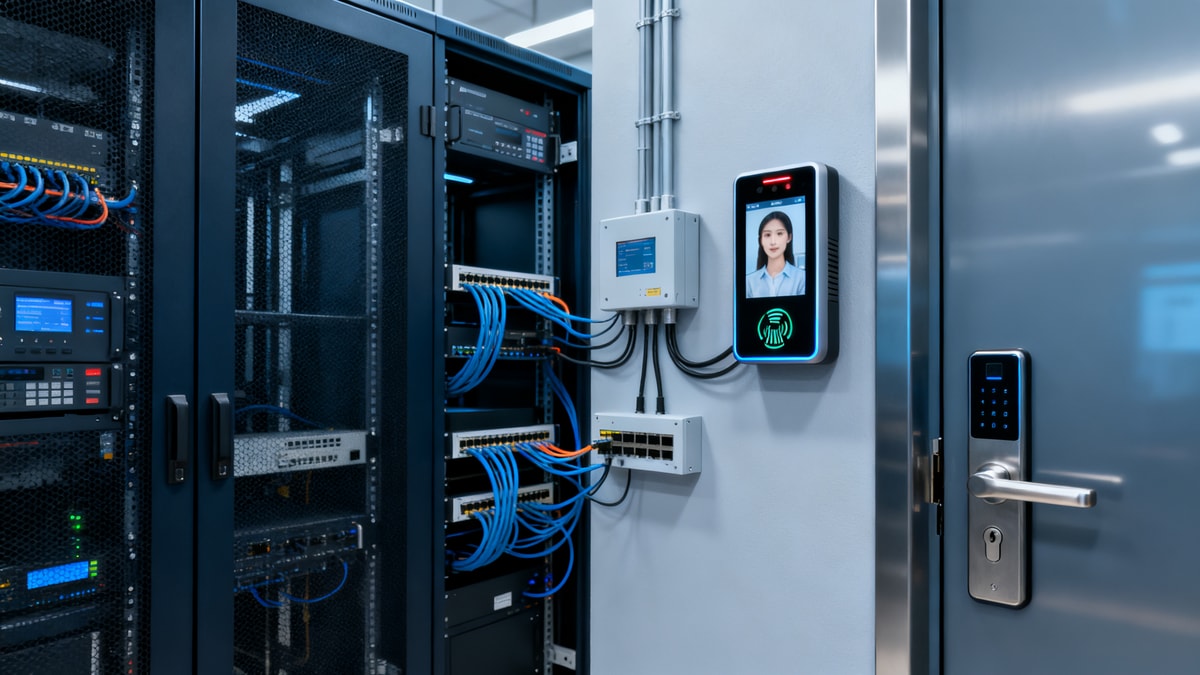
Biometric access control systems can look straightforward on a vendor quote: readers, controllers, software licenses, and installation. For finance leaders, however, the real budget pressure usually begins after that first line-item view. Integration with existing security platforms, identity systems, HR databases, door hardware, networks, and compliance workflows is where costs often multiply.
That matters because the business case for biometrics is rarely about technology alone. It is about reducing credential fraud, improving auditability, strengthening site security, and lowering operational risk without creating a long tail of unplanned spend. If integration is underestimated, projects that appeared financially sound can turn into multi-year cost centers.
For financial approvers, the key question is not whether biometric access control systems are effective. In many environments, they are. The better question is whether the organization can deploy them without triggering avoidable infrastructure upgrades, software rework, compliance exposure, and support burdens that erode ROI. A disciplined evaluation framework is essential before approval.
Why integration is the most expensive part of biometric access control systems
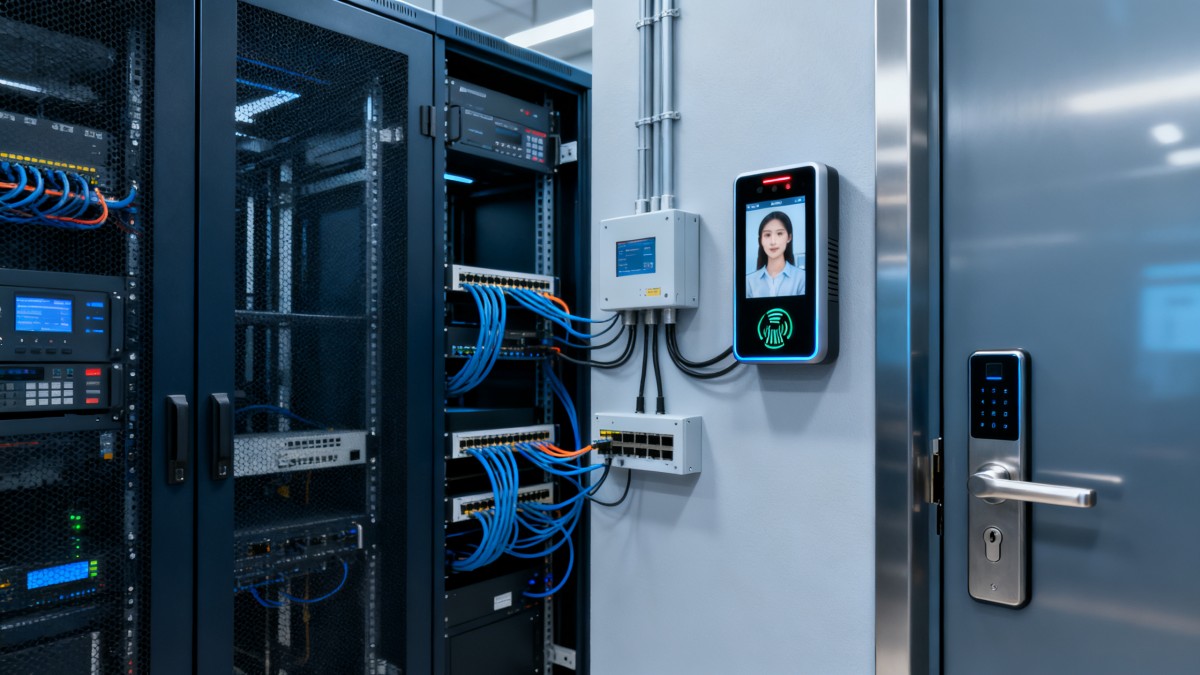
Hardware pricing is visible. Integration costs are not. A fingerprint or facial recognition reader may be easy to price, but connecting that device into a functioning enterprise security environment usually requires far more effort than buyers expect. That is especially true in industrial, commercial, and multi-site settings where infrastructure has grown over time through different vendors and standards.
Most organizations already operate a mix of legacy access control panels, identity directories, visitor management tools, surveillance systems, time-and-attendance platforms, and building management systems. Biometric access control systems must either integrate with those assets or force partial replacement. Both paths can be expensive, but the second is often much more expensive than initially assumed.
From a finance perspective, integration becomes costly for three reasons. First, it introduces custom technical work that is hard to estimate precisely in advance. Second, it creates dependencies across multiple departments, which can extend project timelines and inflate labor costs. Third, it often reveals hidden weaknesses in the existing environment, such as outdated controllers, insufficient network capacity, or noncompliant data handling practices.
In other words, integration is expensive not because biometric technology is inherently uneconomical, but because it touches identity, physical security, compliance, IT operations, and facilities at the same time. That cross-functional complexity is the real budget risk.
What financial decision-makers should examine before approving a project
Financial approvers typically do not need to assess algorithm quality at the engineering level. Their role is to determine whether the project has a credible commercial structure, a realistic risk profile, and a measurable path to value. That starts with asking the right questions before vendor selection is finalized.
First, identify the existing systems that biometric access control systems must connect to. These often include card access platforms, Active Directory or other identity sources, HR systems, contractor onboarding tools, video management systems, and payroll or workforce systems. Every integration point increases cost and implementation risk.
Second, determine whether the deployment is intended to replace credentials entirely or operate in a hybrid model. Hybrid deployments, such as badge-plus-biometric or biometric verification at critical zones only, can be more financially practical. They allow organizations to target the highest-risk areas while avoiding full-site disruption and broad hardware replacement.
Third, ask whether the vendor’s integration capability is native, certified, API-based, or effectively custom. These are not the same. Native or certified integrations usually reduce risk and support costs. API-based integrations can be workable but may still require paid development and ongoing maintenance. Custom integrations often create long-term vendor dependence and increase the cost of future upgrades.
Finally, look at implementation ownership. If the proposal depends heavily on internal IT, security, legal, and facilities teams, then labor costs may be understated because they are buried outside the project budget. Finance teams should capture total organizational effort, not only external invoices.
The hidden cost drivers that change the ROI calculation
The most common budgeting mistake is focusing too narrowly on reader and software costs. The larger ROI picture changes when hidden cost drivers are fully modeled. For many organizations, these secondary costs can exceed the price of the biometric devices themselves.
One major cost driver is legacy infrastructure remediation. Older door controllers, power supplies, cabling, and network switches may not support modern biometric devices or encryption requirements. If the deployment also requires edge processing, higher bandwidth, or centralized image handling, network upgrades can quickly become material.
Another cost driver is identity data quality. Biometric systems depend on reliable enrollment and identity matching processes. If employee records are inconsistent across HR, security, and contractor management systems, implementation slows down. Additional data cleansing, record reconciliation, and process redesign may be needed before the system can perform as intended.
Software licensing can also distort the business case. Some vendors price biometric access control systems with separate fees for enrollment stations, integrations, mobile administration, analytics, cloud hosting, multi-site management, or advanced reporting. A quote that appears competitive at phase one can become much less attractive once all required modules are added.
Compliance adds another layer. Biometric data is sensitive personal data in many jurisdictions. Depending on geography and sector, the organization may need legal review, privacy impact assessments, consent frameworks, retention controls, data localization measures, and revised incident response procedures. These are not optional overheads; they are part of the real deployment cost.
There is also the cost of user adoption. Enrollment campaigns, exception handling for failed reads, labor policy updates, union consultation where relevant, and training for site administrators all require time and budget. A system that performs well technically can still fail commercially if the enrollment and operating model is not practical.
Where projects typically go wrong: the integration risks behind cost overruns
Many projects go over budget not because the selected biometric technology is poor, but because the integration assumptions were too optimistic. Financial approvers should recognize a few recurring warning signs that often precede overruns.
The first is vague language around compatibility. If a proposal states that the solution “can integrate” with existing platforms but does not define version compatibility, method of integration, responsibility for testing, and support boundaries, costs are likely to rise later. Compatibility claims without implementation detail are not a reliable basis for budgeting.
The second warning sign is a pilot that does not represent production complexity. A single-door or single-site proof of concept may work well, yet fail to expose problems with enterprise identity synchronization, multi-site latency, contractor workflows, or centralized reporting. Finance teams should be cautious about scaling assumptions derived from limited pilots.
The third is unclear responsibility for failures. When access control, biometric software, network services, and identity systems come from different vendors, service ownership becomes blurred. During go-live issues, each party may argue that the problem sits elsewhere. That dynamic can extend outages, increase consultancy spend, and delay acceptance milestones.
Another problem is underestimating maintenance. Biometric access control systems are not “install and forget” assets. They require software updates, cybersecurity patching, template management, sensor cleaning or replacement, performance tuning, and ongoing support for user exceptions. If maintenance is excluded from the financial model, the project may look better on paper than in reality.
How to evaluate ROI without relying on overly optimistic assumptions
For financial decision-makers, the ROI case should be built from operational outcomes rather than vendor promises. That means separating hard savings, soft savings, and risk reduction benefits, then stress-testing each category.
Hard savings may include reduced card reissuance, lower guard staffing at selected checkpoints, fewer manual identity checks, and lower losses tied to credential sharing or unauthorized access. These are the easiest benefits to validate because they have a direct cost baseline.
Soft savings often include improved throughput, less administrative effort, better audit readiness, and streamlined contractor access. These benefits can be real, but they are also easier to overstate. Finance teams should request process maps and volume assumptions, not just high-level narratives.
Risk reduction benefits are frequently the strongest justification in sensitive environments. Biometrics can materially improve non-repudiation, reduce tailgating exposure in controlled workflows, and support forensic investigation with cleaner access logs. However, those gains should be linked to actual business risk: compliance penalties, theft exposure, insider threat scenarios, safety incidents, or insurance impacts.
A practical ROI model should include implementation contingencies, recurring subscription or support costs, user enrollment costs, and expected upgrade cycles. It should also compare a full deployment with targeted alternatives, such as biometric access only at high-consequence zones, data centers, control rooms, labs, or hazardous process areas. In many cases, selective deployment produces a better return than enterprise-wide rollout.
A better procurement approach: reduce integration cost before signing
The best time to control integration cost is before contract award. Financial approvers can materially improve project outcomes by requiring a stronger procurement structure rather than accepting broad claims of interoperability.
Start with a documented integration map. This should list every system the biometric access control systems must connect to, the specific versions in use, the integration method, the data exchanged, and the party responsible for delivery and support. Without that map, pricing accuracy is limited.
Next, require vendors to distinguish standard scope from custom scope. Standard scope should cover native integrations, documented connectors, and normal configuration activities. Custom scope should be itemized separately, with assumptions, timelines, and support terms. This helps prevent hidden customization from being smuggled into an apparently simple deployment.
It is also wise to insist on milestone-based acceptance criteria. These should include enrollment performance, false reject handling procedures, system uptime expectations, audit log integrity, and successful integration testing with named third-party systems. Finance teams benefit when payment schedules are tied to measurable outcomes rather than installation activity alone.
Another useful safeguard is to model five-year total cost of ownership rather than first-year cost. For many biometric access control systems, the recurring economics determine whether the project remains attractive. Subscription fees, support, spare devices, software updates, retraining, and integration maintenance can significantly alter long-term value.
Finally, ask for reference cases that resemble your operating environment. A system that performs well in a corporate office may not translate directly to industrial sites, multi-contractor facilities, high-dust environments, outdoor perimeters, or regulated sectors. Comparable deployment evidence is far more valuable than generic success stories.
When biometric access control systems make financial sense
Despite the integration challenges, biometric access control systems can make strong commercial sense in the right conditions. They are often justified where the cost of unauthorized access is high, where auditability is business-critical, or where shared credentials create persistent risk that conventional card systems do not solve well.
Examples include critical infrastructure, pharmaceutical production, energy assets, data centers, logistics hubs with bonded areas, and industrial environments with hazardous zones or strict segregation requirements. In these settings, the cost of a security failure, compliance breach, or safety incident can far outweigh the added integration expense.
They can also be justified when integrated as part of a broader modernization program. If an organization is already replacing legacy access control, upgrading networks, or consolidating identity systems, adding biometrics may be more cost-effective than treating it as a standalone project. The incremental cost can be easier to absorb when foundational upgrades are already funded.
What usually does not make financial sense is deploying biometrics everywhere simply because the technology is available. Finance leaders should be skeptical of universal rollouts that lack a risk-based prioritization model. Precision beats breadth in most business cases.
Conclusion: finance should approve the architecture, not just the device
The central lesson for financial approvers is simple: the expensive part of biometric access control systems is rarely the scanner on the wall. It is the architecture around it. Integration into legacy security platforms, identity ecosystems, compliance processes, and operating workflows is what determines whether the project delivers value or drains budget.
That does not mean organizations should avoid biometrics. It means they should evaluate them with the same rigor applied to other infrastructure investments: total cost of ownership, integration dependencies, support accountability, compliance impact, and scenario-based ROI. When procurement is disciplined and deployment is targeted, biometric access control systems can deliver strong security and audit benefits without becoming a financial surprise.
For decision-makers controlling capital approval, the right move is not to ask, “Do biometrics improve security?” The more useful question is, “Can this specific deployment integrate cleanly, scale reliably, and produce measurable business value over time?” That is the question that protects both security performance and budget discipline.
Technical Specifications
Expert Insights

Chief Security Architect
Dr. Thorne specializes in the intersection of structural engineering and digital resilience. He has advised three G7 governments on industrial infrastructure security.
Related Analysis
- May 01, 2026PTZ dome camera placement mistakes that waste zoom performanceAuthor :Safety Compliance Lead
- May 01, 2026Biometric access control systems: where integration gets expensiveAuthor :Safety Compliance Lead
- May 01, 2026Facial recognition door lock accuracy drops in these common settingsAuthor :Safety Compliance Lead
Core Sector // 01
Security & Safety
- PTZ dome camera placement mistakes that waste zoom performanceAuthor :Safety Compliance Lead

- Biometric access control systems: where integration gets expensiveAuthor :Safety Compliance Lead

- Facial recognition door lock accuracy drops in these common settingsAuthor :Safety Compliance Lead

- Smart security alarms: fewer alerts can mean better protectionAuthor :Safety Compliance Lead

- RFID card readers wholesale: hidden differences in reading stabilityAuthor :Safety Compliance Lead

- Network video recorder NVR limits that only appear after expansionAuthor :Safety Compliance Lead

- CCTV camera wholesale: why image sensors change return ratesAuthor :Safety Compliance Lead

- What affects wholesale traffic cone pricing more than volumeAuthor :Safety Compliance Lead