Flame retardant coveralls: why fabric weight affects comfort and compliance
Author
Date Published
Reading Time
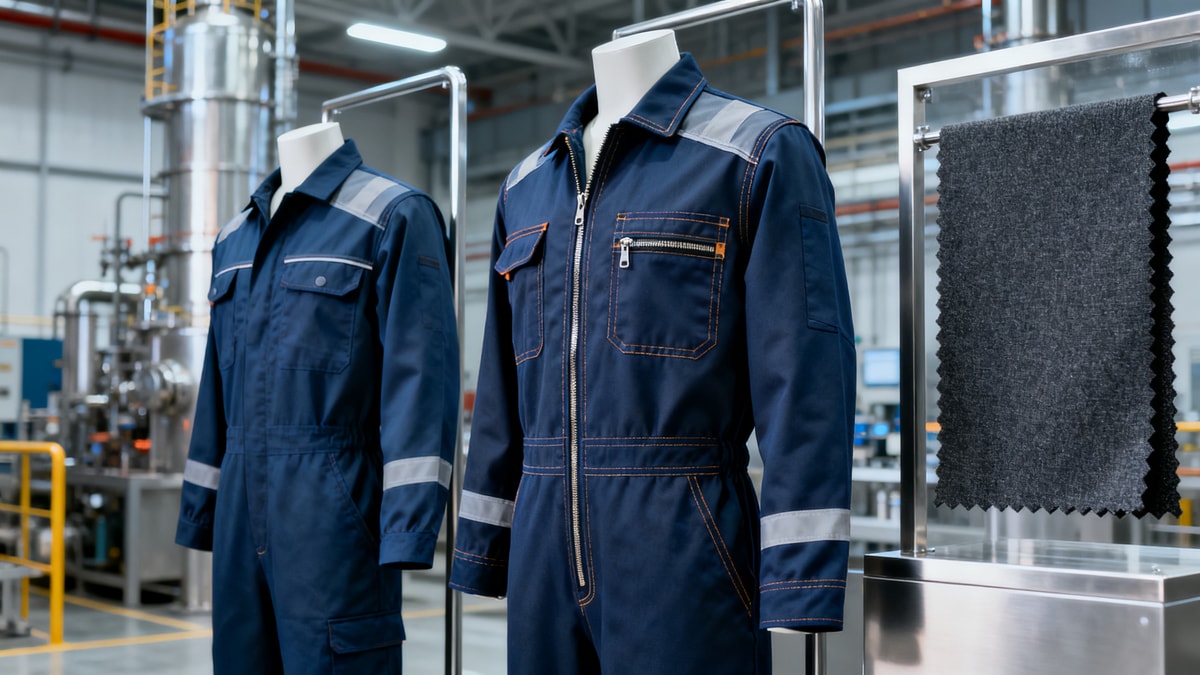
For quality control and safety managers, selecting flame retardant coveralls is not just about meeting a specification—it directly affects worker comfort, wear compliance, and on-site protection. Fabric weight plays a critical role in balancing heat stress, mobility, durability, and regulatory performance, making it a key factor in any informed PPE decision.
Why fabric weight is getting more attention in PPE decisions
A clear shift is taking place in industrial PPE selection. In the past, many buyers treated flame retardant coveralls as a box-checking item: verify the standard, compare price, and place the order. Today, that approach is becoming less effective. Safety teams, quality managers, and procurement leaders are under growing pressure to prove not only that garments are compliant on paper, but also that workers actually wear them correctly and consistently in real conditions.
This is where fabric weight has moved from a secondary specification to a practical decision point. In hot plants, outdoor utility projects, fabrication zones, refineries, and maintenance environments, excessively heavy flame retardant coveralls can increase heat burden, slow movement, and reduce user acceptance. On the other hand, garments that are too light for the task may wear out faster, offer less perceived protection, or fail to support the full risk profile of the job. The current market signal is not that lighter is always better or heavier is always safer. The signal is that weight must be matched to exposure, climate, shift duration, laundering reality, and workforce behavior.
For organizations operating across multiple sites, this change matters even more. A single global PPE policy may not account for regional temperatures, indoor versus outdoor work, or the difference between continuous wear and task-based wear. As a result, flame retardant coveralls are increasingly evaluated as part of a broader risk-and-comfort system rather than as a standalone garment line item.
The market signal: comfort and compliance are now linked
One of the most important changes in industrial safety culture is the recognition that wear compliance is behavioral, not just procedural. A garment may meet relevant flame resistance requirements, but if crews unzip it, remove layers, roll sleeves, or avoid using it during peak heat, the protective intent is weakened. That is why quality control and safety managers are paying closer attention to factors that influence day-to-day usability, and fabric weight is central among them.
Heavier fabrics often support stronger abrasion resistance, longer service life, and a more robust feel, which can be beneficial in welding, mechanical maintenance, and high-contact work zones. Yet in warmer environments or in long shifts with continuous movement, they can contribute to heat strain and fatigue. Lighter flame retardant coveralls may improve comfort and range of motion, but they require careful verification of durability, shrinkage behavior, seam integrity, and maintenance compatibility.
The trend, therefore, is toward smarter segmentation. Instead of asking for one universal FR garment, more companies are considering task-specific programs, seasonal issue plans, and climate-adjusted PPE frameworks. This is especially relevant in global industrial operations where compliance standards remain constant but operating conditions do not.
What is driving this shift in flame retardant coveralls selection
Several forces are pushing fabric weight into the foreground. First, climate and heat exposure are becoming harder to ignore. Whether due to hotter seasons, enclosed process areas, or physically demanding work, employers are seeing a stronger connection between PPE burden and worker fatigue. In many operations, comfort is no longer considered a “nice to have”; it is becoming part of risk control because uncomfortable garments can trigger unsafe workarounds.
Second, compliance expectations are maturing. Buyers are asking more detailed questions about test methods, certification scope, fabric construction, and garment durability after laundering and wear. This has changed conversations around flame retardant coveralls from simple fabric claims to performance over time. Fabric weight affects drape, thermal feel, drying speed, and often the service profile of the garment, so it naturally becomes part of the compliance discussion.
Third, workforce expectations are changing. Skilled labor shortages and retention pressures mean employers are paying closer attention to usable PPE. A coverall program that workers dislike can create friction across onboarding, supervision, and replacement cycles. A program that balances protection with comfort is more likely to support adoption and reduce daily resistance.
Why fabric weight affects both comfort and regulatory confidence
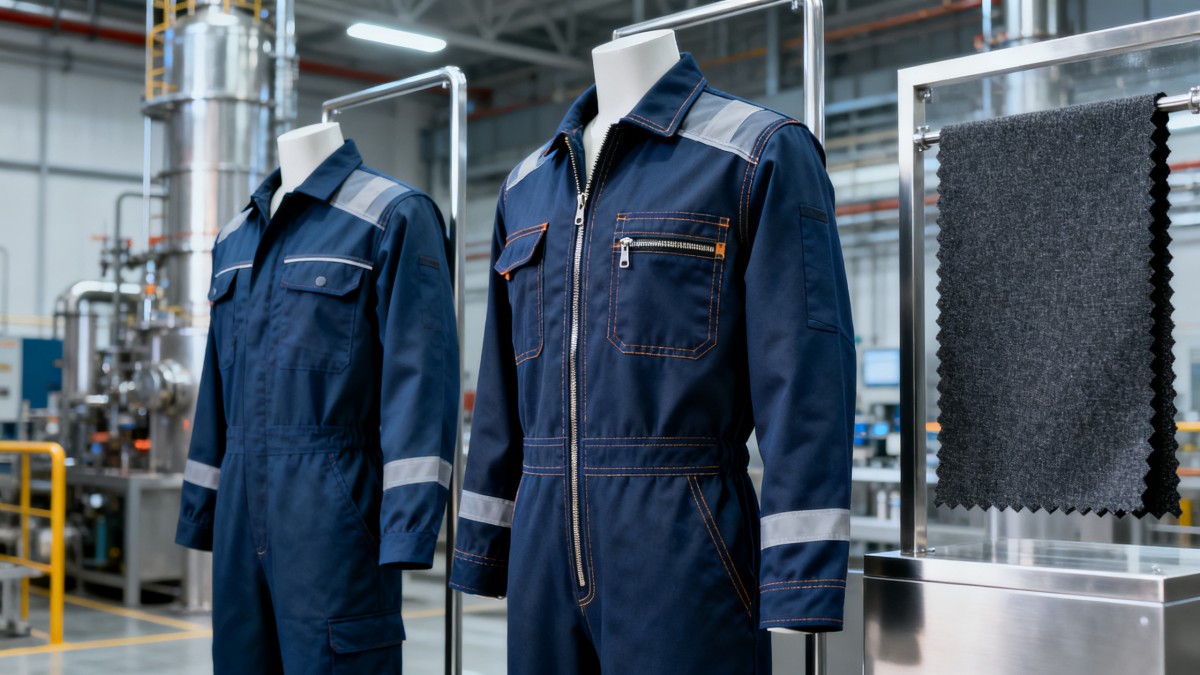
Fabric weight is often discussed in ounces per square yard or grams per square meter, but the business implication is more useful than the number itself. Weight influences how the garment feels against the body, how much heat it retains, how it moves during climbing or bending, and how resilient it may be under repeated abrasion and washing. For safety managers, the core issue is not choosing the lightest or heaviest option. It is understanding how weight changes user behavior and ongoing compliance confidence.
In practical terms, lighter flame retardant coveralls can support comfort in hot-weather work, mobile inspection tasks, and facilities where continuous wear is mandatory. This may improve closure compliance, reduce partial doffing, and encourage workers to keep garments on for the full shift. However, lighter constructions should be reviewed carefully for tear strength, seam performance, repairability, and expected replacement intervals.
Heavier flame retardant coveralls may suit grinding, fabrication, maintenance, or rugged field service where contact wear is significant. They can also inspire greater worker confidence in harsh environments. But if thermal burden becomes too high, the compliance benefit can reverse. A garment that feels protective but is worn incorrectly is still a risk. This is why many advanced PPE programs now evaluate weight as part of a matrix that includes hazard type, ambient heat, movement demands, and maintenance cycles.
Who feels the impact most across the organization
The effect of fabric weight decisions does not stop at the wearer. It reaches multiple functions inside industrial organizations. Quality control teams need consistency in incoming garments, label claims, and post-laundering performance. Safety managers must ensure that flame retardant coveralls align with hazard assessments and real use conditions. Procurement teams need to evaluate total ownership cost, not just initial purchase price. Supervisors are often left to manage the consequences when garments are rejected by crews or replaced too often.
What quality and safety managers should review now
The next step is not to rewrite PPE policy overnight. It is to review whether current flame retardant coveralls specifications reflect actual operating conditions. Start by identifying where complaints, early replacement, or wear non-compliance appear most often. These are usually signals that the garment system is misaligned with the job rather than evidence of poor worker discipline alone.
Then check whether your specification sheets overemphasize certification labels while underemphasizing user conditions. A robust review should include fabric weight, fiber blend, expected climate, layering practice, laundering method, and the difference between continuous wear and occasional exposure work. Where possible, conduct wear trials by task category rather than by department name. A welder, utility technician, inspector, and shutdown maintenance worker may all require flame retardant coveralls, but their garment weight needs may differ significantly.
It is also wise to compare field feedback with documented incident controls. If the site relies on administrative reminders to overcome discomfort, the PPE program may be compensating for a specification issue. Better decisions often come from integrating EHS observations, QC checks, and user trial results into one evaluation framework.
How to judge future-fit options without overcorrecting
A common mistake is to react to heat complaints by moving immediately to the lightest available FR garment. That can create new issues in durability, inventory complexity, and replacement cost. The better approach is phased judgment. First define the risk category and mandatory compliance baseline. Then evaluate flame retardant coveralls by work intensity, climate, expected garment life, and laundering conditions. Finally, confirm whether the selected weight supports both protection and realistic wear behavior.
Another important trend is vendor transparency. Buyers increasingly benefit from suppliers who can explain the trade-offs between lighter and heavier constructions with clear test documentation and use-case guidance. When technical support is vague, buyers are more likely to default to legacy specifications that may no longer fit today’s workforce conditions.
Signals to watch over the next procurement cycle
Looking ahead, the most relevant signal is not a dramatic change in standards, but a more disciplined interpretation of practical suitability. Expect more buyer scrutiny around multi-site garment harmonization, heat-management strategies, and end-user trial data. In other words, the conversation around flame retardant coveralls is becoming more evidence-based.
Safety leaders should watch for three recurring indicators: first, whether workers keep garments properly worn through the entire shift; second, whether replacement rates vary sharply by job type; and third, whether climate-related complaints rise faster than incident rates. These indicators often reveal that fabric weight decisions are influencing compliance quality more than traditional purchasing metrics suggest.
For companies with global or multi-facility operations, it may be time to replace a single blanket FR specification with a controlled family of approved flame retardant coveralls. That approach can preserve compliance discipline while adapting to operational reality.
Action-focused conclusion for industrial decision makers
The biggest change in the market is not that flame retardant coveralls have become more complex. It is that decision makers can no longer afford to treat fabric weight as a minor detail. Weight now sits at the intersection of comfort, wear compliance, durability, and defensible PPE management. For quality control and safety managers, that means stronger decisions will come from matching garment weight to actual exposure conditions rather than relying on legacy assumptions.
If your organization wants to judge how this trend affects its own PPE program, focus on a few core questions: Are current flame retardant coveralls worn correctly in real heat and movement conditions? Do replacement patterns suggest overbuilt or underbuilt fabric choices? Are your specifications aligned with task reality across all sites? And can suppliers clearly explain the trade-offs between compliance, comfort, and lifecycle performance? The teams that answer those questions well will be better positioned to protect workers, strengthen compliance, and make more resilient procurement decisions.
Technical Specifications
Expert Insights

Chief Security Architect
Dr. Thorne specializes in the intersection of structural engineering and digital resilience. He has advised three G7 governments on industrial infrastructure security.
Related Analysis
- May 01, 2026PTZ dome camera placement mistakes that waste zoom performanceAuthor :Safety Compliance Lead
- May 01, 2026Biometric access control systems: where integration gets expensiveAuthor :Safety Compliance Lead
- May 01, 2026Facial recognition door lock accuracy drops in these common settingsAuthor :Safety Compliance Lead
Core Sector // 01
Security & Safety
- Custom high visibility clothing without long lead time problemsAuthor :Safety Compliance Lead

- Reflective safety vests bulk: color fading can become a safety issueAuthor :Safety Compliance Lead

- What separates a reliable steel toe work boots manufacturerAuthor :Safety Compliance Lead

- Flame retardant coveralls: why fabric weight affects comfort and complianceAuthor :Safety Compliance Lead

- Cut resistant gloves wholesale: sizing errors that raise replacement costsAuthor :Safety Compliance Lead

- Chemical resistant suits: what breakthrough time really tells youAuthor :Safety Compliance Lead

- Choosing an industrial hard hats manufacturer beyond certificationsAuthor :Safety Compliance Lead

- Fall protection harnesses: fit problems that reduce real safetyAuthor :Safety Compliance Lead