CPSC Tightens Inhalation Resistance for Industrial Dust Masks to ≤35Pa
Author
Date Published
Reading Time

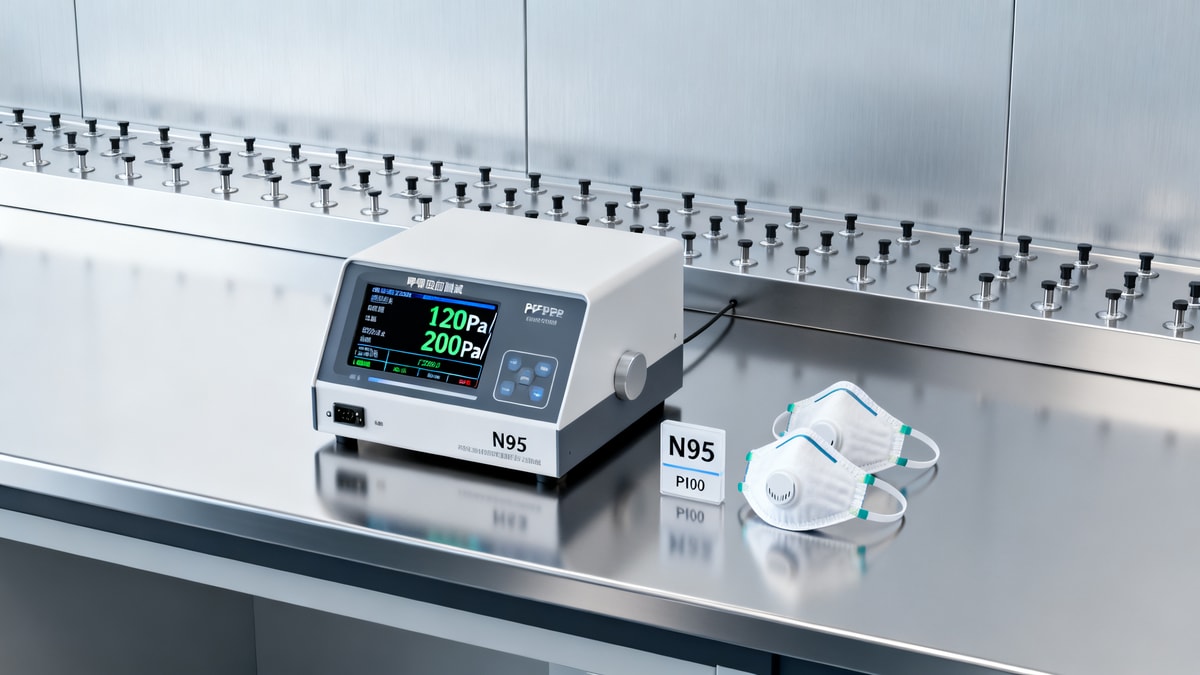
On April 29, 2026, the U.S. Consumer Product Safety Commission (CPSC) issued its Industrial Respiratory PPE Compliance Alert, lowering the maximum allowable inhalation resistance for imported industrial particulate-filtering respirators (N95/N99/P100-class) from ≤50 Pa to ≤35 Pa. This change applies immediately and directly affects exporters, distributors, and importers of respiratory PPE—particularly those supplying U.S. industrial safety, construction, mining, and manufacturing sectors.
Event Overview
The U.S. Consumer Product Safety Commission (CPSC) published the Industrial Respiratory PPE Compliance Alert on April 29, 2026. It specifies that all imported industrial-grade filtering facepiece respirators classified as N95, N99, or P100 must demonstrate inhalation resistance of ≤35 pascals (Pa), down from the prior limit of ≤50 Pa. The updated requirement is now active and has been integrated into the U.S. Food and Drug Administration’s (FDA) import alert system. Non-compliant shipments lacking updated test reports will be subject to automatic detention upon U.S. entry. Overseas distributors are required to re-verify compliance of existing inventory.
Industries Affected by This Change
Direct Exporters and Trading Companies
Exporters of industrial respirators from China—and other non-U.S. jurisdictions—are directly impacted because compliance verification now hinges on updated third-party test reports reflecting the ≤35 Pa threshold. Failure to submit valid documentation triggers FDA import alerts and CPSC enforcement actions, including port detention and shipment rejection.
Manufacturers and Contract Producers
Manufacturers producing N95/N99/P100 respirators for export must reassess product design, filter media selection, and fit testing protocols. A 15 Pa reduction in allowable inhalation resistance may require adjustments to filtration layer density, valve integration, or shell geometry—potentially affecting unit cost, lead time, and certification timelines.
Distributors and Channel Partners
U.S.-based and overseas distributors holding legacy stock must re-evaluate current inventory against the new metric. Products certified under the previous ≤50 Pa standard do not grandfather in; re-testing or supplier confirmation is necessary before further sale or distribution in the U.S. market.
Testing Laboratories and Certification Bodies
Laboratories accredited for respirator testing (e.g., under ISO 16900-1 or ASTM F2299) must ensure their protocols explicitly measure and report inhalation resistance at the new 35 Pa threshold. Clients may request revised test reports or full re-certification—even for previously approved models—if original reports did not capture performance at this stricter level.
What Relevant Enterprises or Practitioners Should Monitor and Do Now
Track official updates from CPSC and FDA
While the April 29 alert is effective immediately, CPSC has not yet published formal rulemaking in the Federal Register. Enterprises should monitor for potential notice-and-comment rulemaking, technical guidance revisions, or clarifications on transition periods or grandfathering—none of which are confirmed at this time.
Verify test report scope and validity
Exporters and importers must confirm whether existing test reports include inhalation resistance measured per ASTM F2299 or ISO 16900-1 at 85 L/min airflow—and whether the reported value is ≤35 Pa. Reports stating “≤50 Pa” or omitting test conditions are insufficient for current U.S. entry.
Engage with supply chain partners early
Manufacturers should proactively communicate with filter media suppliers and assembly subcontractors to assess feasibility of meeting ≤35 Pa without compromising filtration efficiency (e.g., N95’s ≥95% particle capture). Distributors should contact suppliers for written compliance statements and updated test summaries before restocking.
Flag high-risk SKUs for immediate review
Products previously tested near the 45–50 Pa range—or those using dense electret media or non-valved designs—are most likely to exceed the new limit. Prioritize re-testing or engineering review for these SKUs before new shipments are scheduled.
Editorial Perspective / Industry Observation
Observably, this alert functions less as a standalone regulatory revision and more as an enforcement signal aligned with broader U.S. trends toward harmonizing occupational respiratory standards with performance-based metrics—not just filtration grade. Analysis shows CPSC is increasingly leveraging FDA’s import surveillance infrastructure to enforce non-FDA-regulated PPE categories, suggesting cross-agency coordination is tightening. From an industry perspective, the ≤35 Pa threshold appears calibrated to reflect real-world usability concerns raised in recent NIOSH and OSHA field evaluations—particularly for extended wear in hot/humid industrial environments. Current more appropriate interpretation is that this is an operational enforcement shift, not a long-term policy announcement: no formal rulemaking has followed, and no transition period has been announced. That said, the integration into FDA’s automated import alert system means practical compliance is required now—not pending future guidance.

In summary, the CPSC’s April 29, 2026, inhalation resistance update represents an immediate operational requirement for exporters, manufacturers, and distributors of industrial respirators entering the U.S. market. It reflects a measurable tightening of usability criteria—not just filtration efficacy—and signals growing alignment between safety enforcement agencies on functional PPE performance. Enterprises should treat this as an active compliance checkpoint, not a future-planning item.
Source: U.S. Consumer Product Safety Commission (CPSC), Industrial Respiratory PPE Compliance Alert, issued April 29, 2026. FDA Import Alert 66-41 (updated to reference CPSC’s ≤35 Pa requirement). Note: Formal rulemaking, transitional provisions, or exemptions remain unannounced and are under ongoing observation.
Technical Specifications
Expert Insights

Chief Security Architect
Dr. Thorne specializes in the intersection of structural engineering and digital resilience. He has advised three G7 governments on industrial infrastructure security.
Related Analysis
- Apr 30, 2026Egypt SMIIC Mandates Arabic Energy Labels for Industrial PumpsAuthor :Heavy Industry Strategist
- Apr 30, 2026TÜV SÜD Launches China Industrial Optics Fast TrackAuthor :Precision Metrology Expert
- Apr 30, 2026LME Nickel Surges 5.2% on April 29, 2026: Impact on Stainless Bearings & SealsAuthor :Heavy Industry Strategist
Core Sector // 01
Security & Safety
- CPSC Tightens Inhalation Resistance for Industrial Dust Masks to ≤35PaAuthor :Safety Compliance Lead

- CPSC Tightens Respiratory Resistance Standards for N95/P100 PPEAuthor :Safety Compliance Lead

- Wholesale Safety Padlocks: What to Look ForAuthor :Safety Compliance Lead

- How to Place Eye Wash Stations IndustrialAuthor :Safety Compliance Lead

- CPSC Urgent Recall: ASTM F3502-23 Respiratory Resistance Re-Testing Required for Industrial PPE MasksAuthor :Safety Compliance Lead
![]()
- CPSC Mandates ASTM F3502-23 Respiratory Resistance Re-testing for Industrial Dust MasksAuthor :Safety Compliance Lead
![]()
- Breathability vs protection in safety equipmentAuthor :Safety Compliance Lead

- EU PPE Regulation (EU) 2026/789 Enforces Dual CE+UKCA for Chinese ExportsAuthor :Safety Compliance Lead
![]()