Fall protection harnesses: fit problems that reduce real safety
Author
Date Published
Reading Time
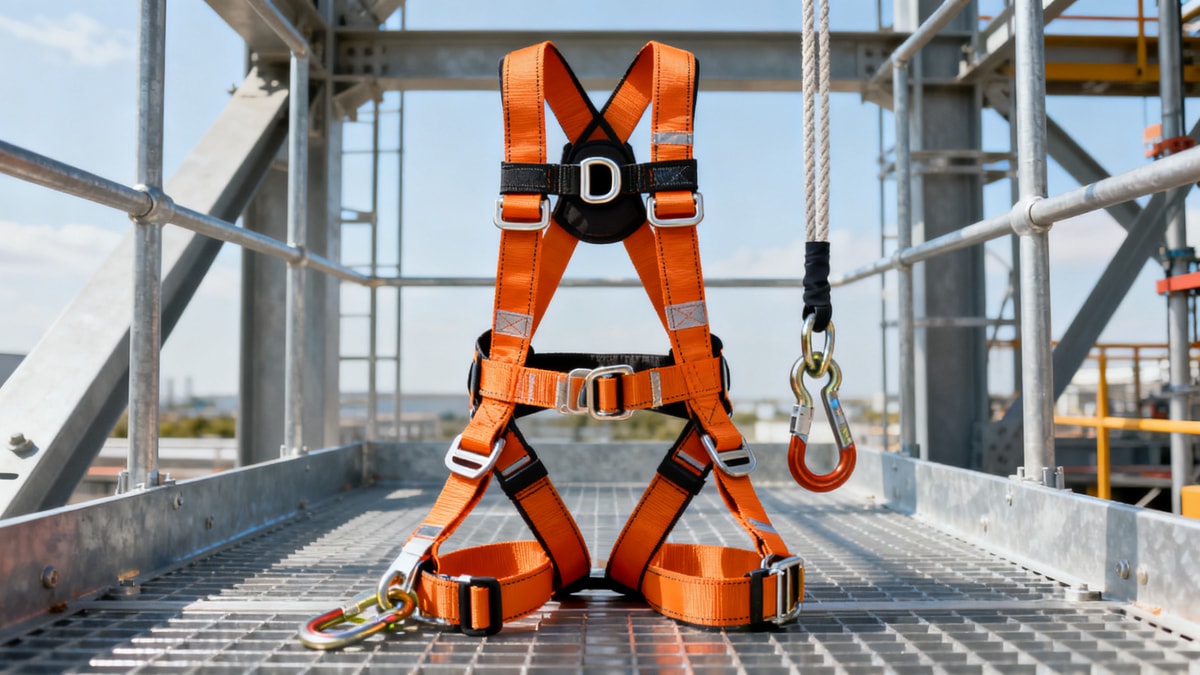
Fall protection harnesses are only effective when they fit the worker correctly. A harness that is too loose, too tight, or poorly adjusted can reduce mobility, create pressure points, and compromise arrest performance during a fall. Before trusting any system at height, operators need to understand how common fit problems quietly turn certified protection into real-world risk.
Why a checklist is the safest way to assess fall protection harnesses
For operators, harness fit is often treated as a quick pre-use adjustment. That is where mistakes begin. A harness can appear acceptable on the ground yet perform badly once the worker climbs, bends, reaches, or hangs after a fall. Using a checklist prevents guesswork and forces attention onto the few fit points that truly affect safety: strap routing, snugness, D-ring position, body shape compatibility, and task-specific movement.
This matters across construction, maintenance, utilities, warehousing, manufacturing shutdowns, and industrial service work. In all of these environments, fall protection harnesses are part of a system, but the worker experiences them as worn equipment. If the fit is wrong, even a compliant harness can create delayed rescue complications, restricted circulation, unstable body posture during arrest, or dangerous operator behavior such as loosening straps for comfort.
Start with these five fit checks before every shift
Before discussing advanced selection issues, operators should first confirm the essential checks below. These are the fastest indicators of whether fall protection harnesses are likely to protect the user as intended.
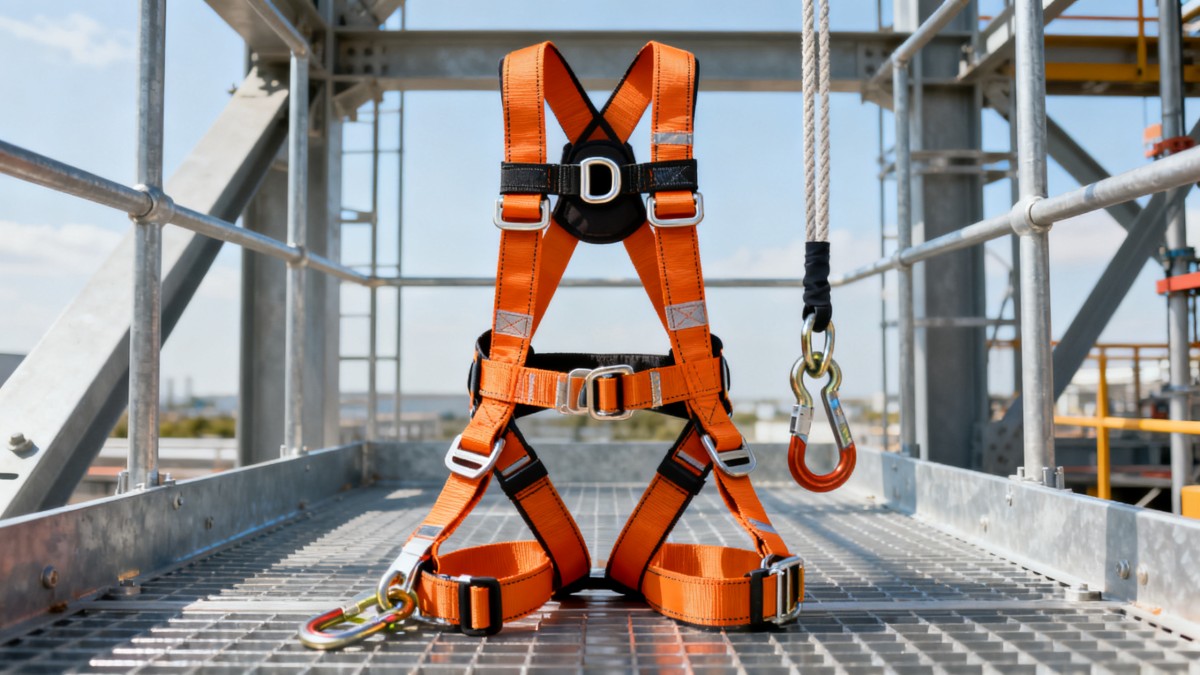
- Shoulder straps sit flat without twisting and keep the dorsal D-ring centered between the shoulder blades.
- Leg straps are snug enough to prevent excessive movement but not so tight that they cut into the groin or restrict circulation.
- The chest strap sits across the mid-chest area, not too high near the throat and not too low where shoulder straps can spread apart.
- The harness stays in position during bending, climbing, crouching, and reaching; it should not shift dramatically with movement.
- Excess strap ends are secured so they do not snag on structure, tools, rotating equipment, or ladders.
If any one of these checks fails, the operator should stop and re-fit the harness immediately. Minor discomfort is not the only warning sign. A harness that slips, rotates, pinches, or causes the user to compensate with body posture is already giving evidence of poor real-world fit.
Core fit problems that reduce real safety
1. Loose leg straps
Loose leg straps are among the most common problems with fall protection harnesses. Operators may prefer extra slack for comfort during long shifts, but that slack can become dangerous during a fall. Excess movement increases impact on soft tissue, raises the chance of poor body positioning after arrest, and can make suspension more painful and less stable. A practical field rule is that the strap should be snug and flat, with no large gap that allows uncontrolled movement.
2. Chest strap in the wrong position
When the chest strap rides too high, it can press toward the neck. When it sits too low, the shoulder straps may spread during loading. Either condition affects how the body is supported. Operators should check the chest strap after moving around, not just while standing still, because some harnesses migrate upward or downward with repeated motion.
3. D-ring not centered on the back
The dorsal D-ring should remain centered between the shoulder blades. If it shifts too high, too low, or off to one side, the harness may not distribute forces properly. This often happens when shoulder straps are uneven, torso length is mismatched, or the wrong harness size is being used. A centered D-ring is not a cosmetic detail; it is a core alignment check for fall arrest performance.
4. Tight shoulder straps that limit movement
Some users over-tighten shoulder straps to keep the harness “secure.” The result can be restricted overhead reach, rubbing at the neck, and fatigue during climbing or tool handling. Over time, the operator may loosen other straps to compensate, creating a second safety problem. Good fall protection harnesses should feel controlled without forcing unnatural posture.
5. One-size assumptions
A frequent procurement and site issue is assuming that a standard range covers all body types equally. It does not. Height, hip shape, chest build, winter clothing, tool belts, and gender-specific fit differences can all change how fall protection harnesses sit on the body. A harness that fits one worker safely may create major risk for another worker using the same adjustment logic.
Use this practical judging standard during wear trials
When selecting or rechecking fall protection harnesses, operators and supervisors should judge fit under working motion, not only at issue time. The table below offers a simple decision reference.
Extra checks for different work scenarios
Climbing ladders and towers
Operators need enough hip and leg mobility to step cleanly without the harness pulling at the groin. If the harness shifts upward on every climb, leg strap adjustment or overall sizing may be wrong. Fall protection harnesses used for vertical movement should be checked after several climbing cycles, not just before starting.
Roofing and sloped surfaces
On sloped work, users bend frequently and change center of gravity. Poorly fitted harnesses may slide, bunch up, or create lower-back discomfort that encourages unsafe loosening. Workers should test fit while kneeling, standing, and transitioning between positions.
Confined or obstructed industrial areas
In plants, platforms, and process areas, snag risk increases. Loose strap tails and badly placed attachments become more hazardous. Fall protection harnesses in these spaces must be fitted with special attention to strap management and compatibility with other PPE, including respirators, coveralls, and communication gear.
Cold weather or layered clothing
Seasonal clothing changes often create hidden fit problems. A harness adjusted over a thin shirt may become too tight over insulated gear, while a harness loosened for winter may become dangerously slack in warmer conditions. Re-fit every time clothing bulk changes, especially at leg and chest locations.
Commonly ignored warning signs operators should not dismiss
- You need to readjust the harness repeatedly during the shift.
- You feel numbness, rubbing, or pressure points within a short time of wearing it.
- The chest strap drifts from its original position after normal work movement.
- The D-ring is hard to keep centered unless another strap is over-tightened.
- The harness fits only when worn over one specific clothing combination.
- The user avoids full tightening because the harness becomes painful or restrictive.
These are not comfort complaints to be ignored. They are operational indicators that the harness, the size, or the configuration may be wrong for the user and task. In practice, many accidents are made worse not by total equipment absence, but by accepted “almost right” fit.
Execution advice for operators, supervisors, and buyers
If a site wants better results from fall protection harnesses, the solution is not only stricter rules. It is better fitting practice supported by better selection and verification. The most effective steps are straightforward.
- Conduct fit checks while the worker performs real motions: climb, squat, reach, twist, and connect tools.
- Keep more than one size and, where possible, more than one body-shape-friendly design on site.
- Train users to identify function-related fit issues, not just wear sequence and buckle closure.
- Review compatibility between harnesses, lanyards, anchors, tool belts, and seasonal PPE.
- Document recurring fit complaints by task group; repeated discomfort often reveals a product mismatch, not worker error.
What to prepare before asking for a better harness solution
If your team needs to improve selection, replacement, or standardization of fall protection harnesses, prepare the right information first. Share user height and body-size ranges, typical clothing layers, work positions, connection method, suspension concerns, site standards, and any known complaints about pressure points or restricted motion. Also confirm required certifications, inspection routines, and expected service environment such as heat, corrosion, dust, or chemical exposure.
With that information, manufacturers, distributors, or safety partners can recommend more suitable models, adjustment ranges, and trial methods. That approach saves more time than simply replacing one uncomfortable harness with another similar product.
Final operator checklist before trusting fall protection harnesses
Before every work-at-height task, ask five direct questions: Is the D-ring centered? Are the leg straps snug and stable? Is the chest strap correctly placed? Can I move naturally without the harness shifting? Have I tested this fit with today’s clothing and equipment? If any answer is uncertain, stop and correct it.
Fall protection harnesses do not fail only when webbing breaks or hardware is damaged. They also fail when fit problems are normalized. If you need to confirm model suitability, sizing range, adjustment limits, certification needs, replacement timing, budget, or supply options, the best next step is to discuss those points before the harness reaches the jobsite—not after workers start adapting unsafely to the wrong fit.
Technical Specifications
Expert Insights

Chief Security Architect
Dr. Thorne specializes in the intersection of structural engineering and digital resilience. He has advised three G7 governments on industrial infrastructure security.
Related Analysis
- May 01, 2026PTZ dome camera placement mistakes that waste zoom performanceAuthor :Safety Compliance Lead
- May 01, 2026Biometric access control systems: where integration gets expensiveAuthor :Safety Compliance Lead
- May 01, 2026Facial recognition door lock accuracy drops in these common settingsAuthor :Safety Compliance Lead
Core Sector // 01
Security & Safety
- Custom high visibility clothing without long lead time problemsAuthor :Safety Compliance Lead

- Reflective safety vests bulk: color fading can become a safety issueAuthor :Safety Compliance Lead

- What separates a reliable steel toe work boots manufacturerAuthor :Safety Compliance Lead

- Flame retardant coveralls: why fabric weight affects comfort and complianceAuthor :Safety Compliance Lead

- Cut resistant gloves wholesale: sizing errors that raise replacement costsAuthor :Safety Compliance Lead

- Chemical resistant suits: what breakthrough time really tells youAuthor :Safety Compliance Lead

- Choosing an industrial hard hats manufacturer beyond certificationsAuthor :Safety Compliance Lead

- Fall protection harnesses: fit problems that reduce real safetyAuthor :Safety Compliance Lead