PTZ dome camera placement mistakes that waste zoom performance
Author
Date Published
Reading Time
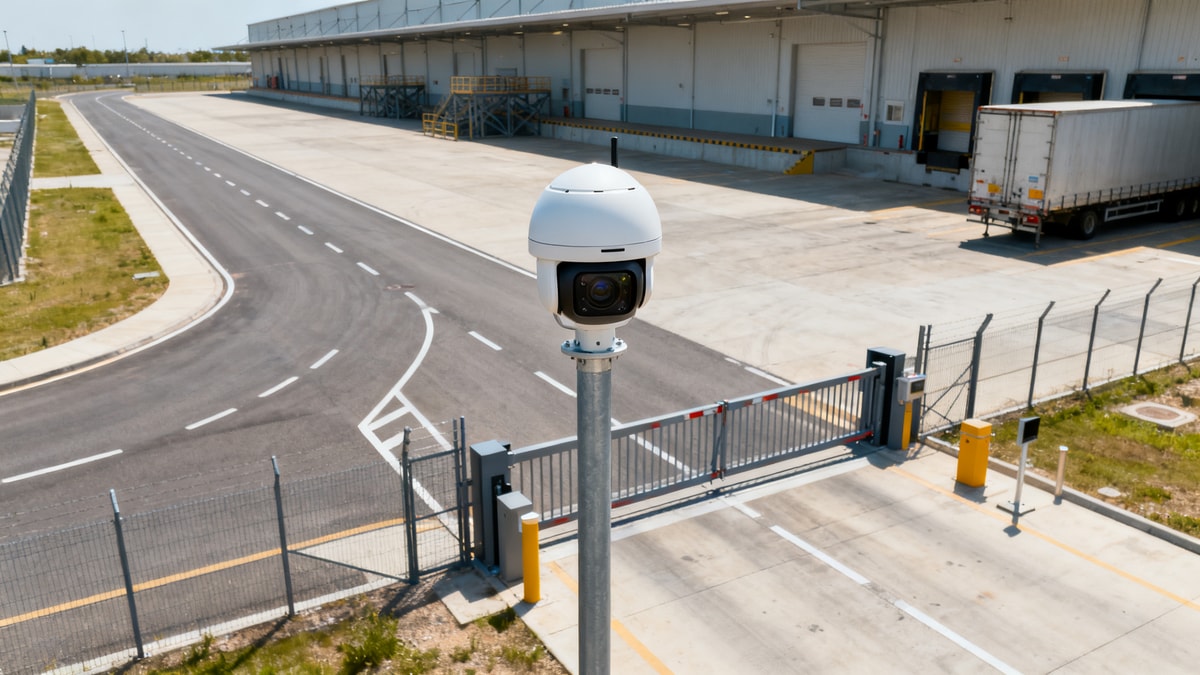
A ptz dome camera can deliver exceptional coverage, but poor placement often turns powerful zoom into wasted potential. From mounting height to viewing angle and obstructions, small installation mistakes can reduce image clarity, tracking accuracy, and operator response time. This article explains the most common placement errors and how users can avoid them to get sharper, more reliable surveillance results.
Why placement mistakes matter more now than they did a few years ago
In industrial sites, logistics yards, utilities, campuses, and mixed-use facilities, expectations for a ptz dome camera have changed. Operators are no longer using PTZ units only for occasional live viewing. Today, the same camera may be expected to support perimeter verification, incident response, license plate follow-up, low-light patrol, remote escorting, and post-event review. That shift means placement errors are no longer minor installation issues; they directly affect operational efficiency and security outcomes.
Another important change is the rise of higher-resolution sensors and longer optical zoom ranges. Many buyers assume better specs automatically mean better images. In reality, a ptz dome camera with strong zoom can still underperform if it is mounted too high, aimed across heat shimmer, blocked by structural steel, or forced to look through bad angles. As zoom capability increases, poor positioning becomes more visible because every obstruction, vibration source, and line-of-sight problem is magnified.
For users and operators, this creates a practical trend: success now depends less on the camera alone and more on how the viewing task matches the placement. The question is no longer “Do we have PTZ coverage?” but “Can the ptz dome camera actually identify, track, and confirm what matters from that location?”
The clearest trend signal: facilities want smarter coverage, not just wider coverage
Across many sectors, users are moving away from coverage maps that look impressive on paper but fail during real incidents. Wide area visibility is useful, but operators increasingly need actionable detail. A ptz dome camera may see a gate, road, loading bay, or fence line, yet still fail to produce usable evidence if the optical path is weak.
This shift is driven by several practical pressures. Security teams are often asked to do more with fewer personnel. Remote monitoring centers rely on fast visual confirmation. Safety incidents need clearer playback. Insurance and compliance expectations also push facilities toward better image quality at critical decision points. As a result, placement planning is becoming more task-based: identify faces at access points, verify vehicle behavior at choke points, and monitor process risk areas with stable, repeatable lines of sight.
The most common placement mistakes that waste zoom performance
The biggest mistake is mounting the ptz dome camera too high. A high pole or building corner may seem ideal for coverage, but extreme height often creates steep top-down viewing angles. That makes it harder to identify faces, judge behavior, or read small details. Operators may zoom in tightly and still see mostly the tops of heads, vehicle roofs, or compressed scene geometry. In many cases, moderate height produces stronger evidence than maximum height.
A second mistake is placing the camera too far from the actual decision point. For example, if incidents usually occur at a gate barrier, dock approach, pedestrian entrance, or fence breach path, a distant ptz dome camera may technically reach the area but will do so through long-range distortion, glare, or atmospheric interference. Long zoom is not the same as clear zoom, especially in outdoor industrial environments where heat shimmer, dust, rain, and vibration are common.
A third mistake is ignoring obstructions that become serious only when zooming. Light poles, cable trays, sign arms, tree growth, handrails, rooftop units, and fence toppings may look minor during a wide shot. Once the operator zooms, however, those objects can block a subject during tracking or force constant repositioning. This reduces response speed and increases the chance of losing visual continuity.
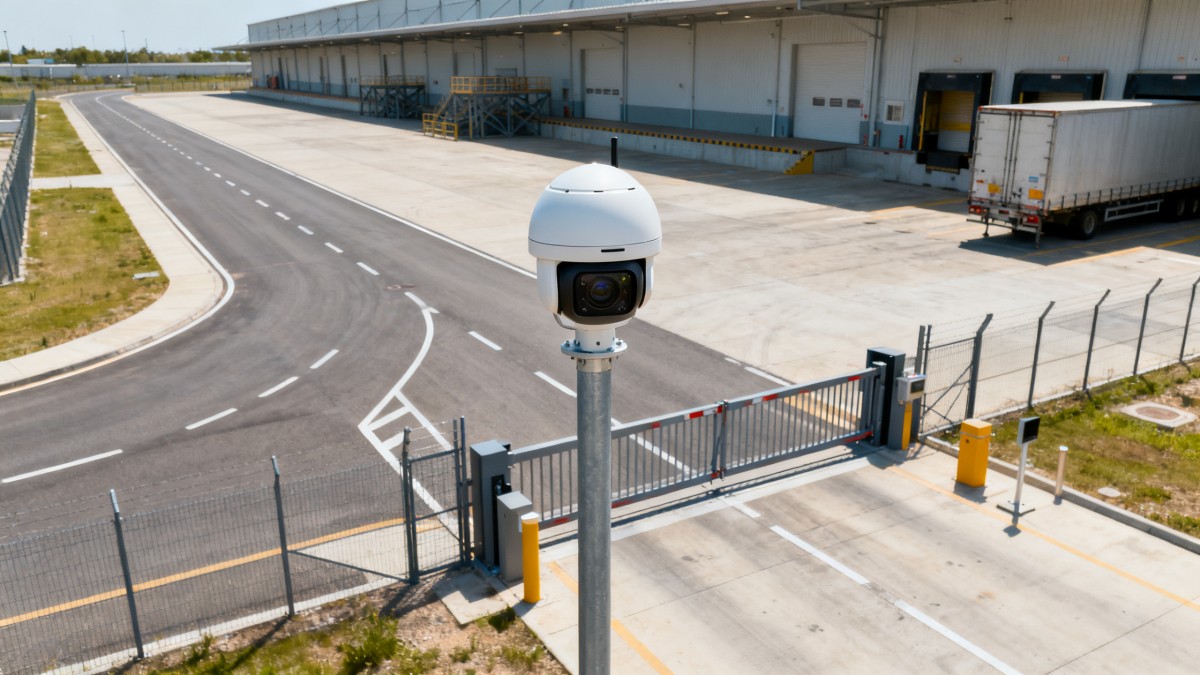
A fourth issue is poor sun and lighting orientation. A ptz dome camera aimed into recurring backlight conditions will struggle at the worst possible times, such as sunrise at vehicle entry lanes or sunset across perimeter roads. Even advanced image processing cannot fully recover detail if placement repeatedly exposes the lens to glare or strong contrast changes. The result is a camera that appears capable in specification sheets but inconsistent in real operation.
The fifth mistake is installing near vibration sources. Wind-prone poles, flexible parapets, mechanical platforms, and structures affected by passing heavy equipment can all reduce image stability. At wide angle, the movement may appear small. At high zoom, it becomes severe. Operators then experience image shake, poor autofocus behavior, and difficulty keeping subjects centered.
The sixth mistake is failing to consider handoff between fixed and PTZ views. In modern surveillance design, a ptz dome camera performs best when fixed cameras provide constant overview and event triggers. If PTZ placement leaves blind approach routes or weak visual transition zones, operators must spend valuable time reacquiring the subject. This is increasingly important in larger facilities where a single operator may monitor many areas remotely.
What is driving these mistakes in current projects
Several market and operational trends explain why placement errors continue, even as cameras improve. One driver is the temptation to rely on headline specifications. Long optical zoom, AI tracking, and high resolution can create false confidence during planning. Teams may assume the ptz dome camera will overcome weak siting decisions, when in fact performance still depends on geometry, stability, and visibility.
Another driver is installation convenience. In real projects, power availability, network routes, existing poles, and access equipment often shape the final mount point. These practical limits are understandable, but they should not override mission-critical viewing tasks. A convenient location may reduce installation effort while increasing long-term monitoring inefficiency.
There is also a workflow gap between procurement, installation, and daily operation. The people approving a ptz dome camera may focus on budget and coverage count. Installers may focus on safe mounting and cabling. Operators, however, discover the real problems during live incidents. This gap is becoming more visible as surveillance systems support broader security, safety, and operational roles across industrial environments.
Who feels the impact most
Poor PTZ placement affects more than the security team. Different roles experience the problem in different ways, and that is why the issue deserves attention beyond technical installation details.
How users can judge whether a ptz dome camera is badly placed
Users should look for repeatable operational symptoms rather than isolated complaints. If the ptz dome camera regularly loses targets behind normal site structures, placement is likely wrong. If operators must zoom excessively just to verify routine activity, the camera may be too far from key zones. If image quality drops sharply during certain hours, sun angle and lighting direction may be the issue. If patrol presets look acceptable but manual tracking feels difficult, the problem may be height, vibration, or sightline interruption rather than the camera itself.
A useful judgment method is to review recent incidents and ask four practical questions: Did the PTZ reach the event fast enough? Did the zoom deliver useful detail? Could the operator hold the subject through movement? Did playback support confident decisions afterward? When the answer is often no, placement should be re-evaluated before assuming the equipment is defective or outdated.
What better placement looks like in the current environment
The most effective installations now start with the task, not the mount point. Users should identify where a ptz dome camera must detect, observe, recognize, or identify subjects. These tasks do not require the same angle or distance. A perimeter sweep may tolerate a wider overview, while a vehicle checkpoint needs stronger frontal detail. Matching placement to the most important task usually produces better results than trying to make one view serve every purpose equally.
Moderate mounting height often improves performance because it preserves context while keeping angles more usable. Placing the ptz dome camera closer to subject paths also reduces dependence on extreme zoom. Clear corridors of view matter more than total theoretical range. In addition, users should evaluate seasonal changes such as foliage growth, low winter sun, wet weather reflections, and operational changes like stacked materials or temporary site equipment.
Facilities are also moving toward layered surveillance design. In this model, fixed cameras secure constant evidence at chokepoints, while the ptz dome camera adds flexible situational awareness. This trend is especially relevant in industrial and infrastructure settings, where reliability and repeatability are often more important than dramatic zoom distance alone.
A practical decision framework for future installations and upgrades
Before approving a new PTZ location, users and project teams should test the view against likely incident paths. Walk the route, examine approach angles, and verify whether the ptz dome camera can maintain line of sight without structural interference. Check image stability at maximum practical zoom, not just at wide angle. Review sun direction at different times. Confirm whether the operator can transition smoothly from overview to detail without losing the subject.
It is also wise to separate “coverage success” from “evidence success.” A camera that sees a large area is not automatically delivering actionable surveillance. For many users, the next upgrade decision should focus less on adding more zoom and more on correcting the position, angle, and support environment of the existing ptz dome camera.
FAQ: the placement questions users ask most often
Is higher always better for a ptz dome camera?
No. Higher placement increases overview but can reduce usable identification angles. The right height depends on the task, not just the desire for maximum visibility.
Can stronger zoom compensate for a poor location?
Only to a limited extent. Zoom cannot remove glare, vibration, blocked sightlines, bad vertical angle, or atmospheric distortion over long distances.
Should a ptz dome camera replace fixed cameras?
Usually no. Fixed cameras provide continuous evidence, while PTZ units add flexible tracking and verification. The best results come from using both in a coordinated design.
What should users review after installation?
Review preset effectiveness, zoom clarity at target zones, subject handoff from fixed views, lighting conditions by time of day, and image stability at longer focal lengths.
The key signal to act on now
The clear direction across modern surveillance is that camera value is increasingly measured by operational usefulness, not specification depth alone. A ptz dome camera remains a powerful tool, but only when its placement reflects real incident patterns, realistic zoom conditions, and operator workflow. For users, the smartest next step is to audit current PTZ views against the events that matter most, then correct the locations where zoom is being wasted by height, distance, obstruction, light, or instability.
If your facility wants to judge whether current PTZ performance truly matches risk exposure, focus on a few questions: which zones require identification rather than simple visibility, where operators most often lose subjects, what environmental conditions degrade the image, and whether each ptz dome camera is positioned for task success rather than installation convenience. Those answers will usually reveal whether the problem is the camera model or the placement logic behind it.
Technical Specifications
Expert Insights

Chief Security Architect
Dr. Thorne specializes in the intersection of structural engineering and digital resilience. He has advised three G7 governments on industrial infrastructure security.
Related Analysis
- May 01, 2026PTZ dome camera placement mistakes that waste zoom performanceAuthor :Safety Compliance Lead
- May 01, 2026Biometric access control systems: where integration gets expensiveAuthor :Safety Compliance Lead
- May 01, 2026Facial recognition door lock accuracy drops in these common settingsAuthor :Safety Compliance Lead
Core Sector // 01
Security & Safety
- PTZ dome camera placement mistakes that waste zoom performanceAuthor :Safety Compliance Lead

- Biometric access control systems: where integration gets expensiveAuthor :Safety Compliance Lead

- Facial recognition door lock accuracy drops in these common settingsAuthor :Safety Compliance Lead

- Smart security alarms: fewer alerts can mean better protectionAuthor :Safety Compliance Lead

- RFID card readers wholesale: hidden differences in reading stabilityAuthor :Safety Compliance Lead

- Network video recorder NVR limits that only appear after expansionAuthor :Safety Compliance Lead

- CCTV camera wholesale: why image sensors change return ratesAuthor :Safety Compliance Lead

- What affects wholesale traffic cone pricing more than volumeAuthor :Safety Compliance Lead