Wholesale welding helmets: lens quality issues that show up late
Author
Date Published
Reading Time
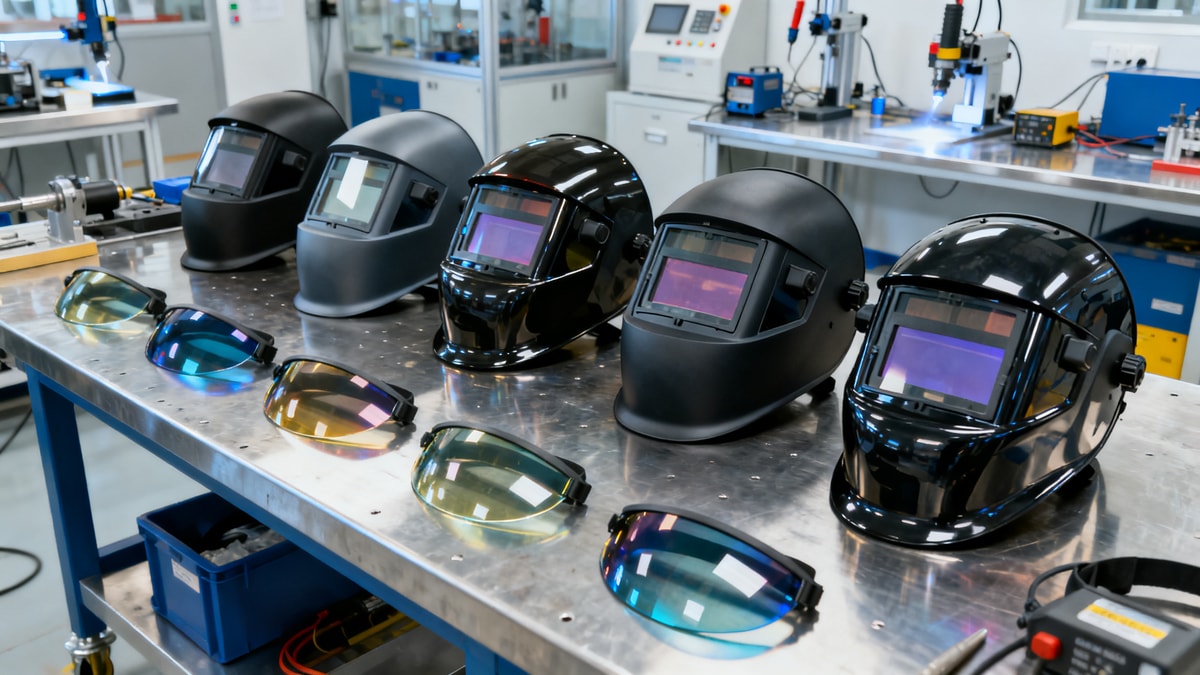
When sourcing wholesale welding helmets, many quality problems stay hidden until months into use—optical distortion, delayed auto-darkening response, coating failure, or inconsistent shade performance. For quality control and safety managers, these late-emerging defects can trigger compliance risks, worker complaints, and costly replacement cycles. Understanding which lens issues surface over time is essential to making safer, more reliable bulk purchasing decisions.
Why a checklist approach works better for late-appearing lens defects
For quality and safety teams, the problem with wholesale welding helmets is not usually obvious failure on day one. The real risk is performance drift: a lens passes incoming inspection, but after heat exposure, repeated arc flashes, cleaning cycles, and normal site wear, the optical system starts behaving differently. A checklist-based review helps teams focus on the few indicators most likely to predict long-term stability instead of relying on appearance, price, or a short sample test.
This matters across general industry because welding helmets are tied directly to eye protection, worker comfort, and compliance documentation. If late-stage defects appear after deployment, procurement savings are quickly erased by returns, downtime, and replacement purchases. A structured evaluation process also makes supplier comparisons more objective, especially when multiple factories offer similar specifications for wholesale welding helmets.
First-pass checklist: what to confirm before approving wholesale welding helmets
Before discussing advanced testing, confirm the baseline items below. These are the first checkpoints that quality control personnel should lock in during supplier qualification and pre-shipment review.
- Verify applicable certification scope, not just a logo. Confirm whether the lens assembly and complete helmet meet relevant standards such as ANSI Z87.1, EN379, EN175, CE, or other market-specific requirements.
- Request lens performance consistency data across production batches, especially for optical class, diffusion of light, luminous transmittance variation, and angle dependence.
- Check auto-darkening cartridge response under low amperage and unstable arc conditions. Many issues remain hidden when testing only under ideal shop settings.
- Review the construction of protective outer and inner cover lenses, including coating durability, scratch resistance, and replacement availability.
- Confirm battery type, solar assist design, storage behavior, and low-power performance after long warehouse periods.
- Assess supplier traceability: lot coding, test records, component source control, and corrective action process for defective wholesale welding helmets.
The lens quality issues that often show up late
1. Optical distortion that grows with use
Minor distortion is easy to miss during a short inspection, but welders notice it after long shifts. Over time, heat cycling and material stress can slightly alter lens flatness or laminate stability. The result is eye fatigue, reduced visibility of puddle edges, and more complaints from experienced operators. Ask suppliers how distortion is tested after aging, not only in new condition. A practical check is to compare straight-line visual targets through multiple helmets from the same lot before and after thermal exposure.
2. Slower auto-darkening response after repeated arc exposure
Some wholesale welding helmets perform well initially, then show delayed switching after months of use. This may come from sensor inconsistency, control circuit degradation, unstable power supply, or sensitivity drift. The danger is not always total failure; even a small delay can increase user discomfort and confidence loss. Quality teams should ask for life-cycle testing data that simulates repeated switching events, not just a factory demonstration video.
3. Inconsistent shade performance across viewing angles
Angle dependence is one of the most overlooked risks in wholesale welding helmets. In controlled front-view tests, the lens may look acceptable. But in real work, welders tilt their head, work overhead, or access tight joints. Lower-quality filters can shift shade or clarity at an angle, creating uneven protection and visibility. This issue may become more noticeable as lens layers age or as cartridges vary across batches. Include side-angle visual checks in supplier audits.
4. Coating failure, haze, and surface wear
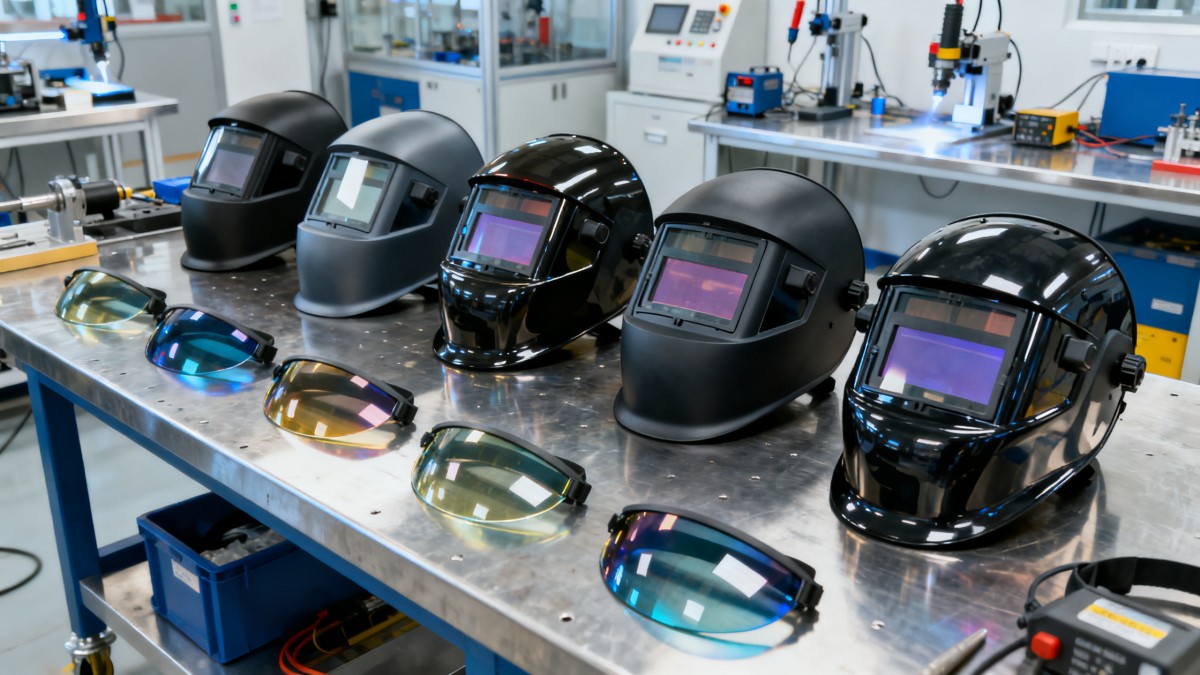
A common late-stage complaint is that the lens becomes hazy or difficult to clean. Often, the issue is not the auto-darkening filter itself but the outer lens coating or cover plate material. Repeated wiping, sparks, humidity, and chemical exposure can damage coatings, causing glare and reduced visibility. Ask whether the supplier has abrasion testing, chemical resistance information, and field replacement guidance. A low unit price on wholesale welding helmets becomes expensive if cover lenses fail too quickly.
5. Color shift and reduced true-color stability
True-color lenses are popular because they improve puddle recognition and reduce operator strain. However, not all color performance remains stable over time. Lower-grade films or adhesives may yellow, shift tone, or lose clarity after UV exposure and heat. For safety managers, this is not only a comfort issue. Poor color stability can change how operators perceive arc intensity, edge definition, and workpiece detail. Include long-term visual comparison in qualification plans, especially for premium-positioned wholesale welding helmets.
Practical judgment standards: how to separate cosmetic defects from safety-relevant ones
Not every imperfection justifies rejection, but some defects should immediately trigger supplier review. The table below helps teams prioritize.
Extra checks by role and operating scenario
For quality control teams
Prioritize batch consistency, traceability, and aging performance. For wholesale welding helmets, incoming inspection should include random unit comparison, darkening response checks, and visual distortion review under controlled lighting. If the supplier changes lens cartridge subcomponents without notice, the risk of inconsistent field results rises sharply.
For safety managers
Focus on real-world wear conditions and worker acceptance. A helmet that technically passes certification but causes strain, visibility complaints, or missed darkening events will create reporting and compliance pressure. Ask how the product performs in high-temperature fabrication, outdoor variable light, confined space welding, and long-shift use.
For multi-site industrial buyers
Standardize the evaluation method across sites. Different plants may judge wholesale welding helmets differently based on local habits. Create one acceptance checklist, one defect coding system, and one escalation threshold. This prevents low-grade lots from being accepted at one site and rejected at another.
Commonly missed risk signals during supplier selection
- Testing only one golden sample. Late-appearing lens problems are usually batch problems, not single-sample problems.
- Ignoring warehouse age. Batteries, seals, adhesives, and films may degrade before deployment if wholesale welding helmets sit too long in storage.
- Treating certification as a substitute for quality stability. Compliance is necessary, but it does not guarantee strong process control.
- Overlooking spare part availability. If outer cover lenses or headgear parts are difficult to replace, total lifecycle cost increases.
- Failing to document cleaning chemicals and maintenance practices. Some field failures are accelerated by incompatible cleaners rather than pure manufacturing defects.
Execution plan: a stronger approval process for wholesale welding helmets
A practical approval workflow should include four stages. First, complete document review: standards, certifications, material declarations, and test reports. Second, run multi-unit sample checks with emphasis on optical clarity, response consistency, and side-angle behavior. Third, perform accelerated aging or field simulation where possible, including heat, repeated switching, and cleaning exposure. Fourth, collect feedback from actual welders before full release.
For ongoing control, track complaint categories separately. Do not group all issues under “helmet defect.” Split claims into delayed darkening, distortion, haze, shade drift, battery failure, and cover lens wear. This makes supplier corrective action much more precise and helps identify whether the core issue is lens design, assembly quality, or maintenance compatibility.
FAQ for buyers reviewing wholesale welding helmets
How long should evaluation last before bulk approval?
A short bench test is not enough. For critical use, combine incoming inspection with a controlled field trial long enough to expose switching consistency, comfort, and cleaning durability. Even a limited multi-week test is more informative than a one-day demo.
Is a lower-cost helmet always a higher risk?
Not always, but low-cost wholesale welding helmets deserve closer review of process stability, cartridge source, and coating quality. Price alone should never replace technical verification.
What documents should be requested first?
Start with certification reports, batch test records, lens specification sheets, aging or durability data, spare parts lists, and lot traceability procedures. These documents reveal whether the supplier can support consistent industrial purchasing.
What to prepare before the next supplier discussion
If your team is evaluating wholesale welding helmets for safer long-term use, prepare a focused question set: required standards by market, expected service life, welding process range, indoor or outdoor use, replacement part policy, storage time limits, test sampling plan, and complaint thresholds for rejection. These points move the conversation from generic catalog claims to verifiable supply quality.
For quality control and safety managers, the best buying decision is rarely the fastest quote. It is the option that proves lens stability over time, supports traceable corrective action, and reduces the hidden cost of failures that show up late. When comparing wholesale welding helmets, prioritize evidence of long-term optical performance, not just initial compliance or attractive pricing.
Technical Specifications
Expert Insights

Chief Security Architect
Dr. Thorne specializes in the intersection of structural engineering and digital resilience. He has advised three G7 governments on industrial infrastructure security.
Related Analysis
- May 01, 2026PTZ dome camera placement mistakes that waste zoom performanceAuthor :Safety Compliance Lead
- May 01, 2026Biometric access control systems: where integration gets expensiveAuthor :Safety Compliance Lead
- May 01, 2026Facial recognition door lock accuracy drops in these common settingsAuthor :Safety Compliance Lead
Core Sector // 01
Security & Safety
- Custom high visibility clothing without long lead time problemsAuthor :Safety Compliance Lead

- Reflective safety vests bulk: color fading can become a safety issueAuthor :Safety Compliance Lead

- What separates a reliable steel toe work boots manufacturerAuthor :Safety Compliance Lead

- Flame retardant coveralls: why fabric weight affects comfort and complianceAuthor :Safety Compliance Lead

- Cut resistant gloves wholesale: sizing errors that raise replacement costsAuthor :Safety Compliance Lead

- Chemical resistant suits: what breakthrough time really tells youAuthor :Safety Compliance Lead

- Choosing an industrial hard hats manufacturer beyond certificationsAuthor :Safety Compliance Lead

- Fall protection harnesses: fit problems that reduce real safetyAuthor :Safety Compliance Lead