Regenerative thermal oxidizer RTO payback changes with VOC fluctuation
Author
Date Published
Reading Time
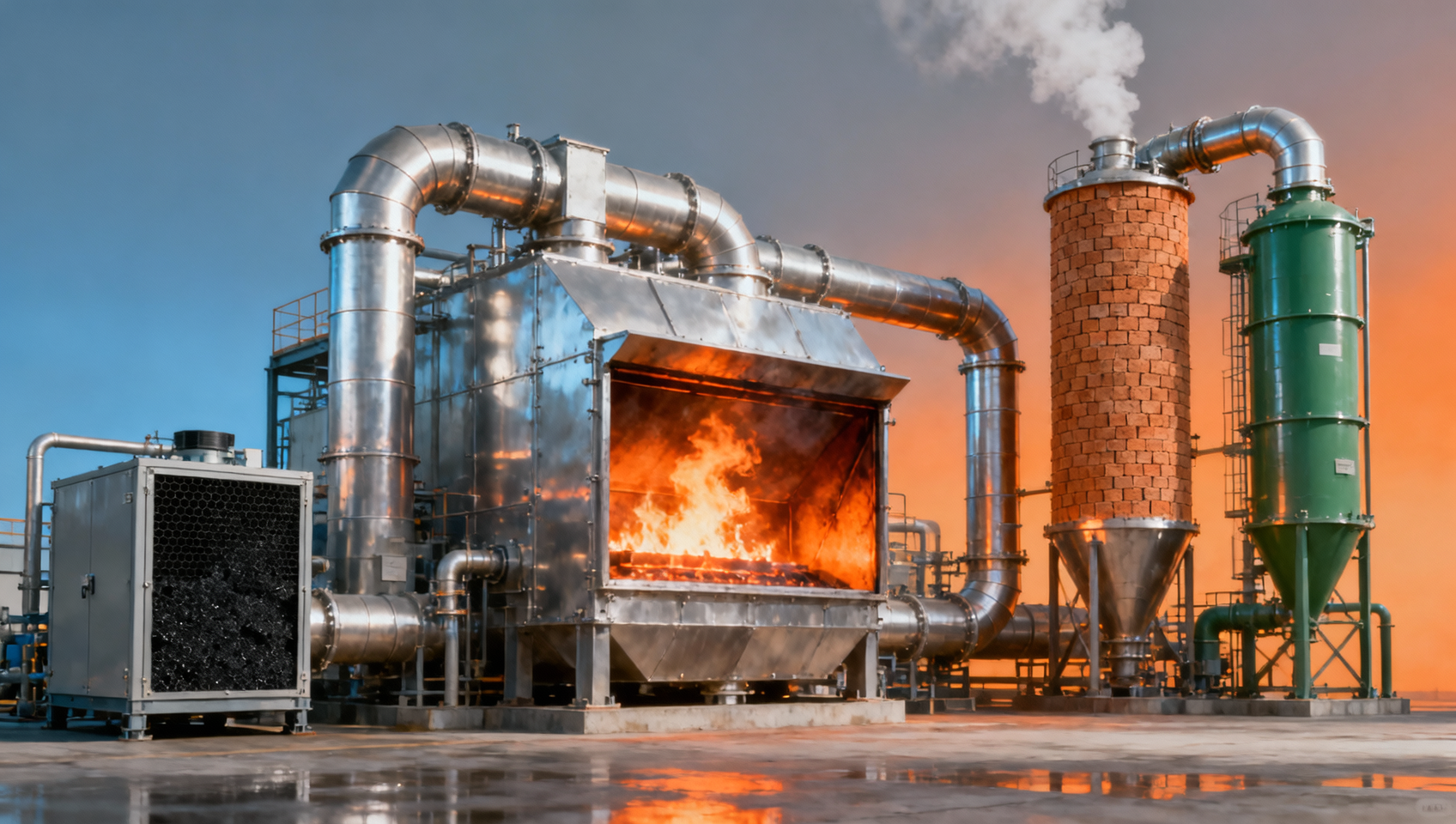
When VOC loads swing, the payback of a regenerative thermal oxidizer RTO can shift faster than many plants expect. For engineers, operators, buyers, and decision-makers comparing VOCs treatment equipment, catalytic combustion RCO, wet scrubber manufacturer options, or activated carbon air filter systems, understanding how fluctuation changes fuel use, efficiency, and compliance cost is essential before any capital commitment.
In practical terms, VOC fluctuation changes more than burner demand. It affects thermal efficiency, destruction performance, fan power, bypass strategy, media life, maintenance intervals, and even the economics of upstream process control. A project that appears to offer a 24-month payback at steady design conditions can stretch to 36 months or shorten to 15 months when solvent concentration, airflow, and operating hours move outside the original assumptions.
That is why payback analysis for a regenerative thermal oxidizer RTO should never rely on a single average VOC value. Industrial buyers need a load-profile view built around hourly variation, peak events, minimum stable operating windows, and compliance risk. This article examines how VOC fluctuation changes RTO payback, where RCO, wet scrubbers, and activated carbon systems fit, and what procurement teams should verify before issuing RFQs.
Why VOC fluctuation changes RTO economics so quickly
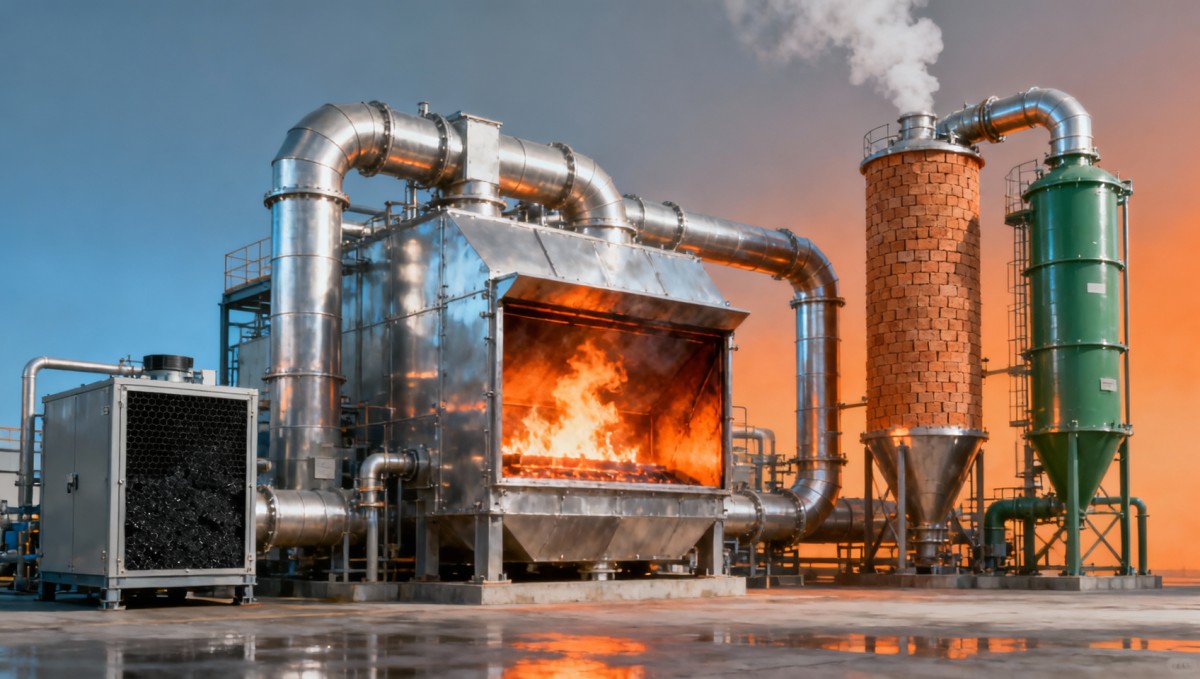
A regenerative thermal oxidizer RTO is usually selected because it can achieve high VOC destruction efficiency while recovering a large share of heat through ceramic media. Under stable conditions, thermal efficiency often falls in the 90% to 97% range, with destruction efficiency commonly designed around 95% to 99% depending on system configuration, residence time, temperature, and control quality. However, those values are not fixed in real plants.
When VOC concentration drops below the expected level, the oxidizer must consume more supplemental fuel to maintain chamber temperature, often around 760°C to 850°C for many solvent streams. If the process originally assumed autothermal or near-autothermal operation at 2.5 g/Nm³ VOC concentration, but actual average loading spends long periods near 1.0 to 1.5 g/Nm³, gas consumption can rise sharply and push annual operating cost well above budget.
The opposite situation also matters. If VOC spikes are frequent, the system may generate more heat than expected, forcing dilution, control modulation, or protective logic to avoid overheating. Those events can improve nominal fuel savings while increasing valve cycling, thermal stress, and maintenance needs. In short, fluctuation affects both the numerator and denominator of the payback calculation: capital utilization and operating cost.
For procurement teams, the key issue is that average data can hide a wide operating range. A line that runs 16 hours per day, 6 days per week, with 3 major product changeovers and 8 to 12 concentration swings per shift will behave very differently from a continuous process running at nearly constant exhaust composition. Payback must therefore be modeled with real operating profiles, not brochure values.
The three variables that matter most
In most industrial VOC control evaluations, three inputs dominate economic sensitivity: exhaust airflow, VOC concentration, and annual operating hours. A 20% rise in airflow often raises fan energy and can increase vessel size. A 30% drop in VOC concentration can eliminate self-sustaining operation. A reduction from 8,000 to 5,500 annual hours can significantly delay capital recovery even if treatment performance remains compliant.
- Airflow variation changes fan horsepower, pressure drop, valve timing demand, and chamber residence conditions.
- VOC concentration variation changes burner firing rate, thermal balance, and the chance of autothermal operation.
- Operating hour variation changes annual savings, maintenance timing, and the true value of energy recovery.
A simple payback framing
A basic payback estimate divides project investment by annual savings versus the current or alternative control method. Yet in VOC projects, annual savings are often a moving target. They depend on fuel price, electricity cost, expected solvent loading, uptime, maintenance labor, media cleaning intervals, and penalties or indirect cost from non-compliance events. Small shifts in any two of those inputs can move payback by 6 to 18 months.
How to model payback under low, normal, and peak VOC conditions
The most reliable method is scenario-based analysis. Instead of a single design point, evaluate at least 3 operating windows: low-load, normal-load, and peak-load. For many factories, low load may reflect startup, cleaning, or partial-line production. Normal load reflects the most common recipe mix. Peak load captures coating surges, solvent-rich batches, or upset conditions. Each window should include airflow, concentration, hours per year, expected burner input, and any constraint on bypass or dilution.
A realistic model also separates thermal performance from compliance performance. An RTO may still meet destruction targets under variable conditions while consuming much more gas than the original proposal suggested. That is why buyers should request expected natural gas use in Nm³/h or m³/h for each scenario, not only a single “typical” fuel figure. If the vendor cannot provide this across a load range, the payback case is incomplete.
It is equally important to map process variability over time. Hourly trend data for 30 to 90 days is often enough to identify whether the system will spend 10%, 40%, or 70% of time in low-load operation. This has direct economic value. An RTO that is attractive at 70% medium-to-high loading may be less compelling if the plant spends half the year running light product formulations with low solvent release.
The table below shows a practical framework for analyzing how fluctuation changes payback assumptions. The numbers are illustrative ranges often used in industrial evaluations rather than a universal design basis.
The main conclusion is that payback should be presented as a range rather than a single number. For example, an RTO project may show a 1.8 to 3.2 year payback depending on whether low-load hours are 15% or 45% of annual operation. That range is far more decision-useful than a headline estimate based on one idealized condition.
Data buyers should ask for before approval
- At least 30 days of VOC concentration and airflow trend data, preferably broken into 1-hour intervals.
- Expected fuel use for low, normal, and high-load scenarios at local gas heating value conditions.
- Maintenance assumptions such as valve inspection every 3 to 6 months and media cleaning intervals.
- Annual availability assumptions, including planned shutdowns and changeover events.
- Emission guarantee conditions tied to actual inlet composition and moisture range.
RTO versus RCO, wet scrubber, and activated carbon under fluctuating VOC loads
Not every fluctuation profile favors a regenerative thermal oxidizer RTO. In some cases, catalytic combustion RCO can reduce operating temperature, often into the 250°C to 450°C range, which can lower fuel demand. In other cases, activated carbon adsorption is economical for low flow and low concentration streams, particularly where solvent recovery or intermittent operation matters. Wet scrubbers are typically better suited to soluble gases, acid mists, or particulates rather than general VOC destruction, though they are often discussed in mixed-exhaust projects.
The selection question is therefore not “Which technology is best?” but “Which technology matches the fluctuation pattern, contaminant type, and compliance duty?” A plant with 25,000 Nm³/h airflow and solvent-rich coating exhaust may justify an RTO if annual hours exceed 6,000 and concentration is frequently above the thermal support threshold. A plant with 3,000 Nm³/h intermittent exhaust and low average VOC may find activated carbon more economical.
Catalytic systems introduce another variable: catalyst sensitivity. If the exhaust contains catalyst poisons, silicone compounds, halogens, heavy metals, or high particulate loading, the apparent energy advantage can be offset by catalyst replacement and pretreatment cost. That is why engineering review must consider gas composition stability as much as nominal energy efficiency.
The following comparison helps procurement teams align technology choice with real fluctuation behavior rather than generic vendor positioning.
In many mixed industrial projects, the most robust answer is a hybrid approach. Examples include concentration wheels upstream of RTO, prefiltration before RCO, or scrubber plus thermal oxidation where acid gases and VOCs coexist. The right answer depends on whether fluctuation is driven by recipe shifts, batch release, temperature, moisture, or exhaust collection design.
Selection mistakes that often distort payback
- Using a single average VOC concentration instead of a distribution across shifts and product mixes.
- Ignoring startup and purge fuel use in systems with frequent on-off cycles.
- Comparing RTO to wet scrubber for VOC duty without checking actual gas solubility and treatment target.
- Choosing RCO without evaluating catalyst poisoning risk over a 12 to 36 month horizon.
Procurement checklist: what engineers and buyers should verify before signing
For industrial procurement directors and EPC teams, the commercial risk is rarely limited to purchase price. The bigger risk is selecting a VOC control unit that performs well in a factory acceptance test but fails to meet expected economics after 6 to 12 months of production variability. A disciplined RFQ package should therefore include process fluctuation data, not just nameplate airflow and concentration.
Technical clarification should cover the minimum and maximum solvent loading, moisture content, temperature range, particulate burden, and any compounds that can foul media or poison catalysts. It should also define whether the quoted payback includes installation, ducting changes, burner train upgrades, stack monitoring, PLC integration, and local compliance testing. Hidden scope can add 15% to 35% to installed cost in some projects.
Commercial review should test the assumptions behind savings. If the proposal is based on 8,400 annual hours but the line historically runs 6,200 hours, the modeled return may be overstated. If energy price assumptions are fixed while local gas cost has moved by 20% over the last 12 months, sensitivity analysis is not optional. Serious buyers ask for low, base, and high-energy price scenarios.
Below is a procurement-oriented checklist that can be used during vendor comparison, technical clarification, and internal capex approval.
The strongest procurement practice is to evaluate total cost over 3 to 5 years, then review whether the investment remains acceptable under a 10% to 25% reduction in VOC loading. If the business case collapses under modest fluctuation, the design may be too fragile for the plant’s real operating environment.
A practical 5-step internal review process
- Collect trend data from process, environmental, and utility teams for at least 1 representative production cycle.
- Screen technology fit based on contaminant chemistry, not just airflow and concentration.
- Request scenario-based energy and maintenance estimates from vendors.
- Test sensitivity under different operating hours, gas prices, and production plans.
- Approve only after confirming installation scope, compliance obligations, and service access.
Operational strategies that protect RTO payback after installation
Even after a regenerative thermal oxidizer RTO is commissioned, payback is not fixed. Operating practice can improve or erode project return. Plants that actively stabilize exhaust collection, reduce false air ingress, coordinate batch venting, and maintain valve timing often preserve thermal efficiency better than plants that treat the RTO as a passive end-of-pipe asset. In many cases, a 5% to 10% improvement in inlet loading consistency has a measurable effect on gas use.
False air is one of the most common hidden costs. Leaks in ducting, poor hood design, or oversized capture systems dilute VOC concentration and force higher supplemental fuel demand. If a system was designed near the self-sustaining threshold, unnecessary dilution can shift the economics from favorable to marginal. A duct audit during the first 3 months of operation often delivers better return than focusing only on burner tuning.
Maintenance discipline matters as well. Valve seal wear, media fouling, and sensor drift can gradually increase pressure drop, reduce heat recovery, and create unstable temperature control. Typical inspection intervals may range from monthly visual checks to quarterly functional review and annual shutdown maintenance, depending on contamination severity. These intervals should be defined at handover, not discovered after performance drifts.
Plants with variable production schedules should also consider process-side coordination. If high-VOC operations are clustered efficiently rather than scattered through short intermittent bursts, startup losses and low-load operation can be reduced. That kind of scheduling change costs little but can materially improve the economics of VOC treatment equipment.
Actions that usually improve lifecycle economics
- Reduce false air through duct inspection, damper correction, and capture balance checks every 6 to 12 months.
- Trend inlet VOC and chamber temperature continuously so low-load periods are visible instead of assumed.
- Align maintenance spares with critical items such as valves, sensors, actuators, and burner components.
- Review production scheduling to reduce frequent cold starts and short-duration high-fuel cycles.
FAQ for decision-makers
How much can payback change when VOC load fluctuates? In many industrial cases, a projected payback can move by 20% to 50% if actual concentration or annual operating hours differ materially from the proposal basis. The exact shift depends on how close the system is to self-sustaining operation and how much low-load runtime the plant experiences.
Is an RTO always better than an RCO for variable VOC streams? Not always. RTOs are often more tolerant of wide fluctuations and higher flow volumes, but RCO can be attractive for cleaner streams where lower operating temperature is beneficial. The chemistry of the exhaust and catalyst risk must be reviewed before making an energy-based comparison.
When should activated carbon be considered instead? Activated carbon air filter systems are commonly considered when flow is lower, operation is intermittent, or recovery is preferred. They can also serve as polishing or concentration stages, but media replacement frequency must be modeled carefully if concentration spikes are frequent.
What is the most common mistake in capex approval? The most common mistake is approving on average VOC values without checking how many hours per year the plant operates below the assumed thermal support threshold. That single oversight can undermine the expected return more than a modest difference in equipment purchase price.
VOC fluctuation does not automatically make a regenerative thermal oxidizer RTO a poor investment, but it does make simplistic payback claims unreliable. The strongest projects are built on scenario-based modeling, realistic operating data, and a technology comparison that includes RTO, catalytic combustion RCO, activated carbon systems, and wet scrubber options where relevant. For information researchers, plant operators, procurement teams, and business leaders, the priority is clear: verify how the system behaves at low, normal, and peak load before treating payback as bankable.
If your facility is evaluating VOCs treatment equipment for a fluctuating process environment, Global Industrial Core can help frame the technical and sourcing questions that matter most. Contact us to discuss your load profile, compare solution paths, and get a more decision-ready basis for equipment selection, lifecycle cost review, and project planning.
Technical Specifications
- How to choose an organic fertilizer machine for wet raw materialsAuthor :Environmental Engineering Director
- What affects output stability in a hydraulic briquetting pressAuthor :Environmental Engineering Director
- Waste paper baler wholesale prices vary for reasons beyond tonnageAuthor :Environmental Engineering Director
Expert Insights

Chief Security Architect
Dr. Thorne specializes in the intersection of structural engineering and digital resilience. He has advised three G7 governments on industrial infrastructure security.
Related Analysis
- Apr 16, 2026How to choose an organic fertilizer machine for wet raw materialsAuthor :Environmental Engineering Director
- Apr 16, 2026What affects output stability in a hydraulic briquetting pressAuthor :Environmental Engineering Director
- Apr 16, 2026Waste paper baler wholesale prices vary for reasons beyond tonnageAuthor :Environmental Engineering Director
Core Sector // 01
Security & Safety
- Electrostatic precipitator ESP vs baghouse in high temperature dustAuthor :Environmental Engineering Director

- Commercial kitchen exhaust hood sizing mistakes that hurt captureAuthor :Environmental Engineering Director

- HVAC ozone generator use cases where odor control can backfireAuthor :Environmental Engineering Director

- Industrial humidifiers wholesale orders often miss water quality limitsAuthor :Environmental Engineering Director

- Commercial dehumidifiers that work in cold rooms need a closer lookAuthor :Environmental Engineering Director

- AHU handling units: where energy loss often starts in the design stageAuthor :Environmental Engineering Director

- Activated carbon air filter life span depends on more than airflowAuthor :Environmental Engineering Director

- Pocket air filters with low pressure drop are not always the best fitAuthor :Environmental Engineering Director