AHU handling units: where energy loss often starts in the design stage
Author
Date Published
Reading Time
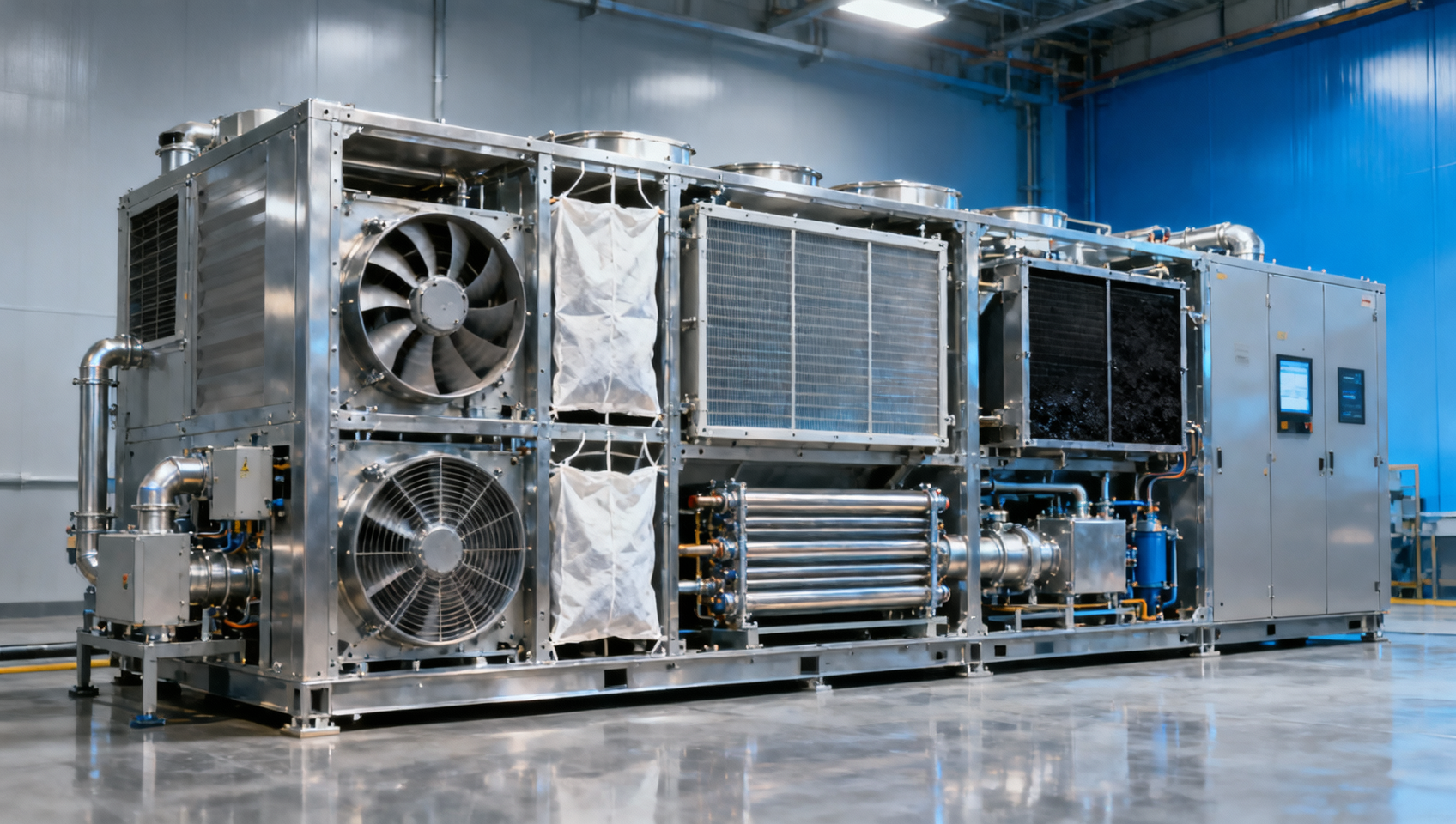
In AHU handling units, energy loss often begins long before commissioning—during design decisions that affect airflow, filtration, pressure drop, and system balance. For facility managers, operators, and procurement teams comparing activated carbon air filter, pocket air filters, hepa filters bulk, commercial dehumidifiers, and industrial humidifiers wholesale, understanding these early-stage inefficiencies is essential to building HVAC systems that are efficient, compliant, and cost-effective.
In industrial and commercial facilities, an AHU is not just a box with fans and filters. It is a system-level asset that influences energy consumption, indoor air quality, maintenance hours, and regulatory performance over 10–20 years of operation. Poor early choices in fan sizing, filter staging, coil arrangement, humidity control, and casing leakage can lock a site into higher operating costs from day one.
For EPC contractors, plant engineers, procurement directors, and operations teams, the most expensive AHU mistake is often not visible in the bid sheet. It appears later as excessive pressure drop, unstable room conditions, short filter life, or dehumidification loads that exceed the original assumptions. The design stage is where these losses are either prevented or built in.
Why AHU energy loss starts before installation
Many HVAC projects still evaluate AHU handling units mainly by initial equipment cost. That approach ignores the fact that fan power rises with system resistance, and resistance is shaped by design. A pressure increase of even 100–200 Pa across filters, coils, dampers, and duct transitions can materially raise annual energy use, especially in systems operating 12–24 hours per day.
The earliest design losses usually come from four decisions: incorrect airflow target, oversized safety margins, poor component sequencing, and weak control integration. For example, selecting a high-efficiency filter without accounting for final pressure drop can force the fan to run harder across the full service interval. The result is better particle capture on paper but poorer life-cycle efficiency in practice.
Another common issue is mismatch between sensible cooling, latent load, and moisture control equipment. When commercial dehumidifiers or industrial humidifiers are added late, rather than integrated into the original psychrometric design, the AHU may cycle inefficiently. This can create simultaneous humidification and cooling, or dehumidification and reheating, both of which are classic sources of avoidable energy waste.
Leakage and bypass also start in design. If panel construction, access door seals, and filter frame tolerances are not specified tightly enough, a system may lose conditioned air or allow unfiltered bypass. A casing leakage class and a realistic maintenance access plan should be discussed before procurement, not after site complaints begin.
Early-stage loss points that deserve priority review
- Filter selection based only on efficiency rating, without tracking initial and final pressure drop ranges.
- Fan sizing with excessive contingency, often 15%–25% beyond realistic operating demand.
- Coil face velocity that is too high, increasing pressure loss and condensate carryover risk.
- Poor layout of activated carbon air filter stages, causing unnecessary resistance in systems that do not need full-time gas-phase filtration.
- Humidity control added as an accessory rather than integrated into the control logic and load calculation.
A disciplined review at design stage typically examines 5–6 checkpoints: airflow, external static pressure, filtration strategy, moisture control, maintenance access, and controls sequence. These are not abstract engineering topics. They directly affect utility cost, spare parts frequency, indoor process stability, and procurement value.
Filtration strategy: the hidden driver of pressure drop and operating cost
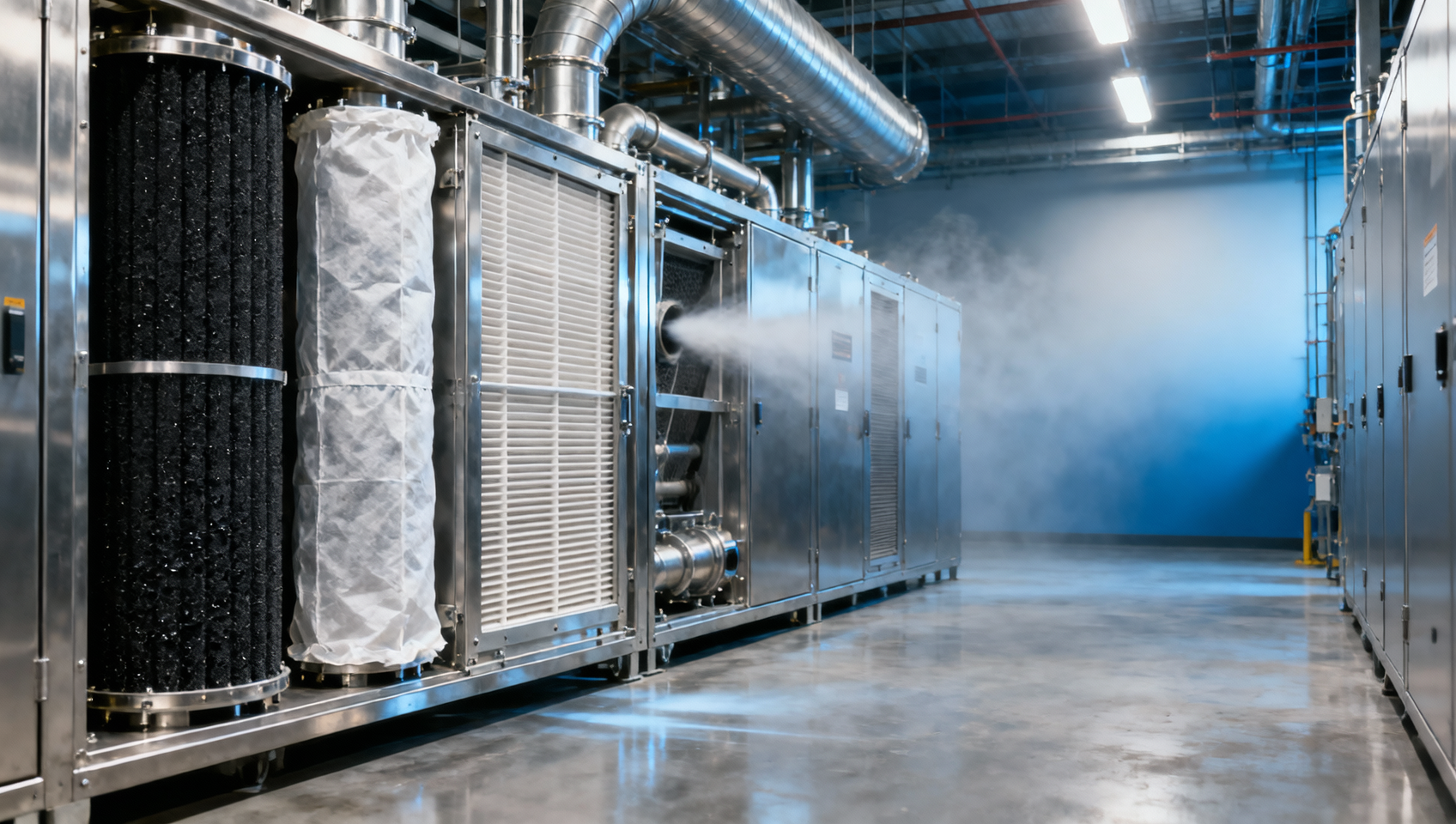
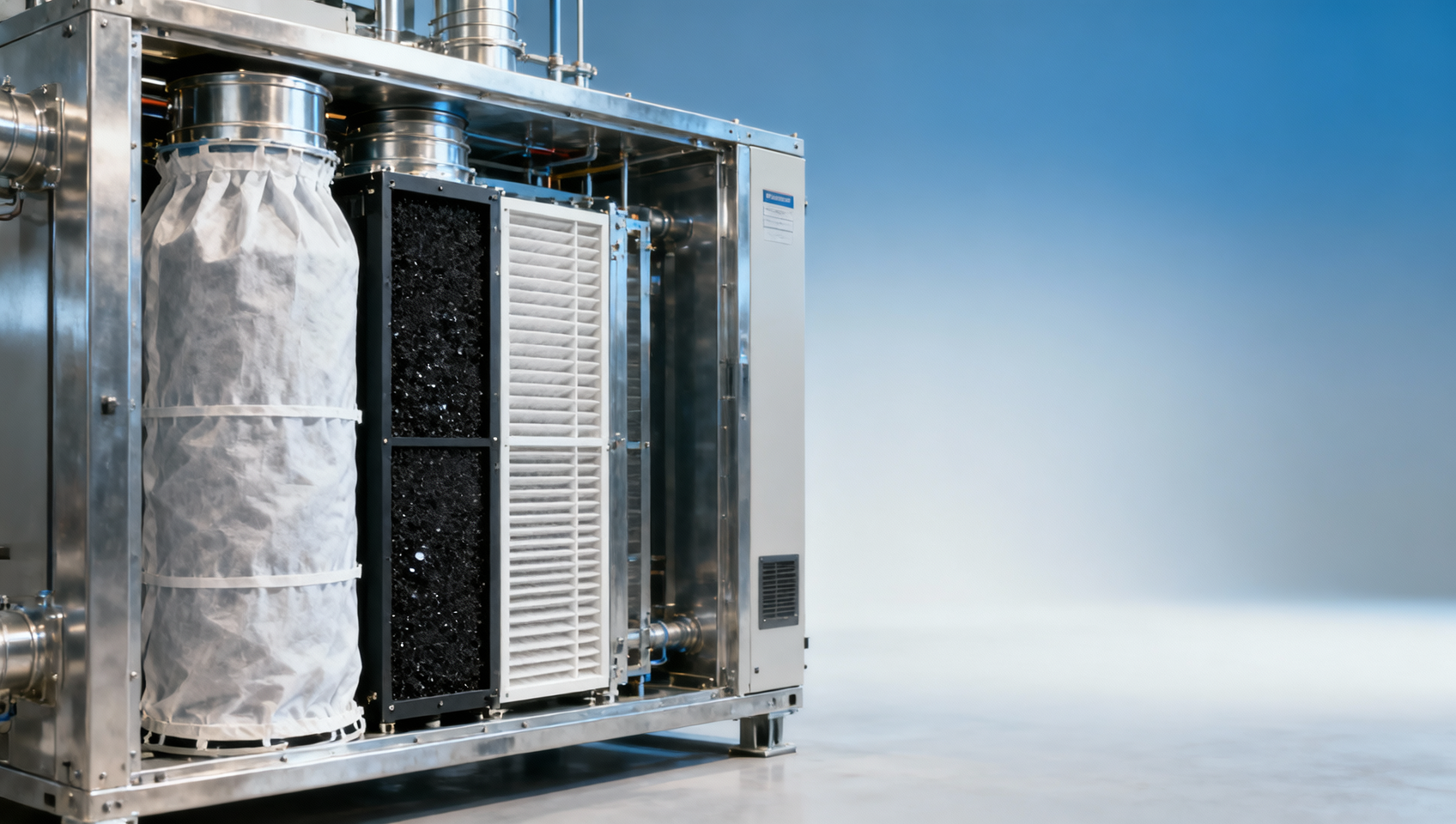
Filter design is one of the most underestimated causes of AHU inefficiency. Buyers often compare pocket air filters, hepa filters bulk options, and activated carbon air filter assemblies by purchase price or nominal efficiency alone. In reality, the better decision metric is the full pressure-drop profile over the filter life cycle, together with replacement interval and required air cleanliness.
Pocket air filters are widely used as prefilters or intermediate stages because they balance dust-holding capacity and moderate resistance. HEPA stages are necessary in critical applications such as laboratories, pharmaceutical support spaces, electronics production, and some healthcare environments, but they create significantly higher resistance than coarse or medium-grade stages. Activated carbon air filter modules address odors, VOCs, and some gaseous contaminants, yet they also add static pressure and may be unnecessary for every air stream.
The key is staging. In many systems, a 2-stage or 3-stage arrangement performs better than a single high-resistance final filter. A coarse prefilter protects a pocket air filter, and the pocket stage protects a HEPA final stage where required. This often extends service life and stabilizes pressure rise over time. The design objective is not “maximum filtration everywhere,” but “fit-for-purpose filtration with controlled resistance.”
Procurement teams should also ask whether filter data is stated at initial resistance only, or at both initial and recommended final resistance. That difference is essential when estimating fan energy. A filter that looks economical at purchase may become expensive if its operating resistance climbs sharply after 6–10 weeks in a dusty environment.
Typical filtration decision factors in AHU applications
The table below summarizes practical trade-offs among common filtration choices used in AHU handling units across industrial and commercial projects.
The operational lesson is clear: filtration must be matched to contamination type, runtime, and cleanliness target. Over-specifying HEPA or carbon stages in standard comfort applications can increase fan energy without delivering equivalent value. Under-specifying prefiltration can shorten the life of expensive final filters and increase maintenance interventions by 20%–40% in dusty sites.
What procurement should request from suppliers
- Initial and final pressure drop values, not just nominal efficiency.
- Recommended replacement intervals for low, medium, and high dust-load environments.
- Frame sealing method and bypass risk details.
- Compatibility with existing AHU tracks, housings, and access clearances.
- For hepa filters bulk orders, packaging, storage, and batch consistency information.
Humidity control and coil design: where latent load penalties multiply
Moisture control is often treated as a secondary concern until a facility starts seeing condensation, static build-up, product defects, or occupant complaints. In reality, humidity strategy should be part of the earliest AHU design conversation. Commercial dehumidifiers and industrial humidifiers wholesale options are frequently added to solve operational symptoms, but if the original airflow, coil temperature, and control sequence are wrong, those additions can increase energy use instead of solving the root cause.
A well-designed AHU must distinguish between comfort conditioning and process conditioning. Many comfort applications tolerate 40%–60% RH, while process areas may need narrower bands such as 45%–50% RH or even tighter in specialized manufacturing. If the humidity target is not defined early, the selected coil and fan arrangement may be incapable of handling peak latent load without reheat or auxiliary equipment.
Coil face velocity also matters. When velocity is too high, pressure drop rises and moisture carryover becomes more likely, especially downstream of cooling coils. That can wet downstream filters, including pocket air filters, increasing resistance and creating hygiene concerns. Lower face velocity usually needs more coil area, but it often improves both performance stability and drain management over the life of the unit.
Industrial humidifiers wholesale decisions should account for water quality, control responsiveness, maintenance burden, and actual moisture absorption distance in the duct or AHU section. Similarly, commercial dehumidifiers must be sized to real latent load rather than floor area alone. A design based on generic assumptions can leave the system short by 10%–30% during seasonal peaks.
Typical design checks for dehumidification and humidification integration
The following matrix helps engineering and purchasing teams compare common humidity-control design concerns in AHU projects.
The practical takeaway is that humidity control should never be treated as a bolt-on purchase. It must be designed as part of the AHU psychrometric path. When teams integrate coils, fans, filters, and moisture control from the start, they reduce the risk of conflicting energy loads and costly retrofits within the first 12–24 months.
Design-stage selection criteria for operators, buyers, and decision-makers
Different stakeholders look at AHU handling units from different angles. Operators care about accessibility, filter changes, alarms, and stable room conditions. Procurement focuses on specification clarity, delivery, replacement parts, and total cost. Senior decision-makers want resilience, compliance, and predictable operating expenditure. A strong specification should answer all three perspectives before the RFQ is issued.
One useful method is to rank choices by life-cycle relevance. For example, a lower-cost filter bank that requires replacement every 2–3 months may be less attractive than a slightly higher-cost option lasting 4–6 months with lower average resistance. The same logic applies to commercial dehumidifiers and industrial humidifiers wholesale decisions: maintenance intervals, controls, and spare availability often matter more than headline capacity alone.
In heavy-use facilities, procurement should request design data in a consistent format. That includes airflow range, external static pressure, filter stages, motor efficiency class, control sequence summary, casing details, and service clearances. Without this, suppliers may quote technically different units against the same line item, making price comparisons misleading.
A structured evaluation matrix also helps avoid a common error: specifying premium components in the wrong place. For instance, hepa filters bulk purchasing may make sense for a clean support zone, but not for general warehouse ventilation. Activated carbon air filter modules may be justified in odor-sensitive intake air, but not in every recirculation path. The right product in the wrong section still creates waste.
A practical 6-point evaluation framework
- Confirm design airflow and part-load range rather than relying on a single peak value.
- Review total system pressure, including dirty filter condition, not just clean start-up condition.
- Match filtration type to particles, odors, or process cleanliness requirements.
- Verify humidity-control logic for summer, winter, and shoulder-season operation.
- Check maintenance access for filters, coils, drains, sensors, and humidification sections.
- Assess supplier support on lead time, spare parts, documentation, and commissioning assistance.
Typical procurement comparison factors
Before placing orders, teams can compare AHU component packages using the following decision lens.
This type of comparison supports better cross-functional decisions. It also gives operators a clearer basis for acceptance testing and helps finance teams understand why the cheapest initial quote may not be the lowest-cost option over a 3–5 year period.
Implementation risks, common mistakes, and field-ready recommendations
Even a strong AHU design can lose value during procurement, installation, or operation if implementation discipline is weak. One common mistake is substituting “equivalent” filters, fans, or humidity accessories without rechecking pressure drop and control behavior. Another is commissioning the unit only at initial clean-filter condition, then overlooking how the system behaves after 8–12 weeks of actual loading.
Facilities should also avoid treating replacement components as isolated purchases. If a site later switches from standard pocket air filters to higher-resistance alternatives, or adds activated carbon air filter cassettes due to odor complaints, the existing fan curve may no longer provide the intended airflow. What appears to be a minor maintenance decision can turn into a system performance problem.
A practical implementation plan usually includes 3 stages: design verification, commissioning validation, and post-occupancy review. During design verification, teams confirm airflow, resistance budget, humidity logic, and access clearances. During commissioning, they test setpoints, alarms, sensor response, and drain performance. During post-occupancy review, they compare actual filter life, RH stability, and energy trends against assumptions made at design stage.
For industrial buyers working across multiple sites, standardization can improve results. Using consistent specification templates for hepa filters bulk procurement, activated carbon air filter modules, commercial dehumidifiers, and industrial humidifiers wholesale contracts can shorten sourcing cycles by 2–4 weeks and reduce ambiguity during vendor evaluation.
FAQ for teams evaluating AHU efficiency at design stage
How do I know if filtration is oversized for my AHU?
Start by comparing cleanliness requirements with actual room use. If the application is standard comfort ventilation, a multi-stage system using prefilters and pocket air filters may be sufficient. HEPA should usually be reserved for critical cleanliness applications. Review both initial and final pressure drop, and ask whether the fan can sustain required airflow at dirty-filter condition.
When should activated carbon air filter stages be considered?
They are typically justified where odor, VOCs, external pollution, or process emissions are known concerns. If the issue is particles rather than gases, carbon may add cost and resistance without solving the actual problem. Carbon stages should be selected based on contaminant profile, contact time, and replacement practicality.
What should buyers verify when comparing commercial dehumidifiers?
Check moisture removal capacity under realistic entering air conditions, not just nominal rating points. Also review power input, condensate management, controls integration, service access, and whether the unit is intended for continuous industrial duty or lighter commercial occupancy patterns.
How long are typical replacement and review cycles?
In many facilities, prefilters are reviewed monthly, pocket air filters every 2–6 months depending on dust load, and humidity systems each season or at least twice per year. The correct interval depends on runtime, environment, and operating criticality. Fixed schedules should always be adjusted using pressure readings and condition checks.
In AHU handling units, the largest efficiency gains often come not from heroic retrofits, but from disciplined design choices made early and checked carefully. Filtration staging, pressure-drop control, coil selection, humidity integration, and maintenance access all shape how much energy the system will consume over its service life. For research teams, operators, procurement specialists, and executive decision-makers, the goal is the same: specify systems that deliver stable performance without hidden operating penalties.
Global Industrial Core supports industrial buyers and project stakeholders with decision-focused insight across HVAC-related filtration, humidity control, and infrastructure reliability. If you are reviewing activated carbon air filter options, pocket air filters, hepa filters bulk supply, commercial dehumidifiers, or industrial humidifiers wholesale for an AHU project, now is the right time to align design assumptions with long-term operating reality. Contact us to discuss your application, request a tailored sourcing perspective, or explore more solutions for resilient and cost-effective air handling systems.
Technical Specifications
- How to choose an organic fertilizer machine for wet raw materialsAuthor :Environmental Engineering Director
- What affects output stability in a hydraulic briquetting pressAuthor :Environmental Engineering Director
- Waste paper baler wholesale prices vary for reasons beyond tonnageAuthor :Environmental Engineering Director
Expert Insights

Chief Security Architect
Dr. Thorne specializes in the intersection of structural engineering and digital resilience. He has advised three G7 governments on industrial infrastructure security.
Related Analysis
- Apr 16, 2026How to choose an organic fertilizer machine for wet raw materialsAuthor :Environmental Engineering Director
- Apr 16, 2026What affects output stability in a hydraulic briquetting pressAuthor :Environmental Engineering Director
- Apr 16, 2026Waste paper baler wholesale prices vary for reasons beyond tonnageAuthor :Environmental Engineering Director
Core Sector // 01
Security & Safety
- Electrostatic precipitator ESP vs baghouse in high temperature dustAuthor :Environmental Engineering Director

- Commercial kitchen exhaust hood sizing mistakes that hurt captureAuthor :Environmental Engineering Director

- HVAC ozone generator use cases where odor control can backfireAuthor :Environmental Engineering Director

- Industrial humidifiers wholesale orders often miss water quality limitsAuthor :Environmental Engineering Director

- Commercial dehumidifiers that work in cold rooms need a closer lookAuthor :Environmental Engineering Director

- AHU handling units: where energy loss often starts in the design stageAuthor :Environmental Engineering Director

- Activated carbon air filter life span depends on more than airflowAuthor :Environmental Engineering Director

- Pocket air filters with low pressure drop are not always the best fitAuthor :Environmental Engineering Director