Activated carbon air filter life span depends on more than airflow
Author
Date Published
Reading Time
The life span of an activated carbon air filter is shaped by far more than airflow alone. For buyers, operators, and industrial decision-makers comparing pocket air filters, HEPA filters bulk options, wholesale air purifiers, or complete VOCs treatment equipment, understanding contaminant load, humidity, temperature, media quality, and maintenance cycles is essential to protecting system performance, compliance, and long-term operating cost.
In industrial and commercial environments, activated carbon filtration is often treated as a simple consumable issue: install the unit, maintain the airflow, and replace the media when pressure drop rises. In practice, that approach is incomplete. Carbon filters remove gases, odors, and volatile organic compounds through adsorption, and their usable life is directly tied to the chemistry and volume of contaminants entering the system every hour.
For EPC contractors, facility managers, procurement teams, and operational users, the real question is not only how long an activated carbon air filter lasts, but under what conditions it performs reliably. A filter expected to last 6 months in a dry, low-VOC environment may be exhausted in 4 to 8 weeks in a humid process area with variable solvent emissions. That gap has direct implications for maintenance planning, warranty disputes, and total cost of ownership.
Why activated carbon filter life span cannot be judged by airflow alone
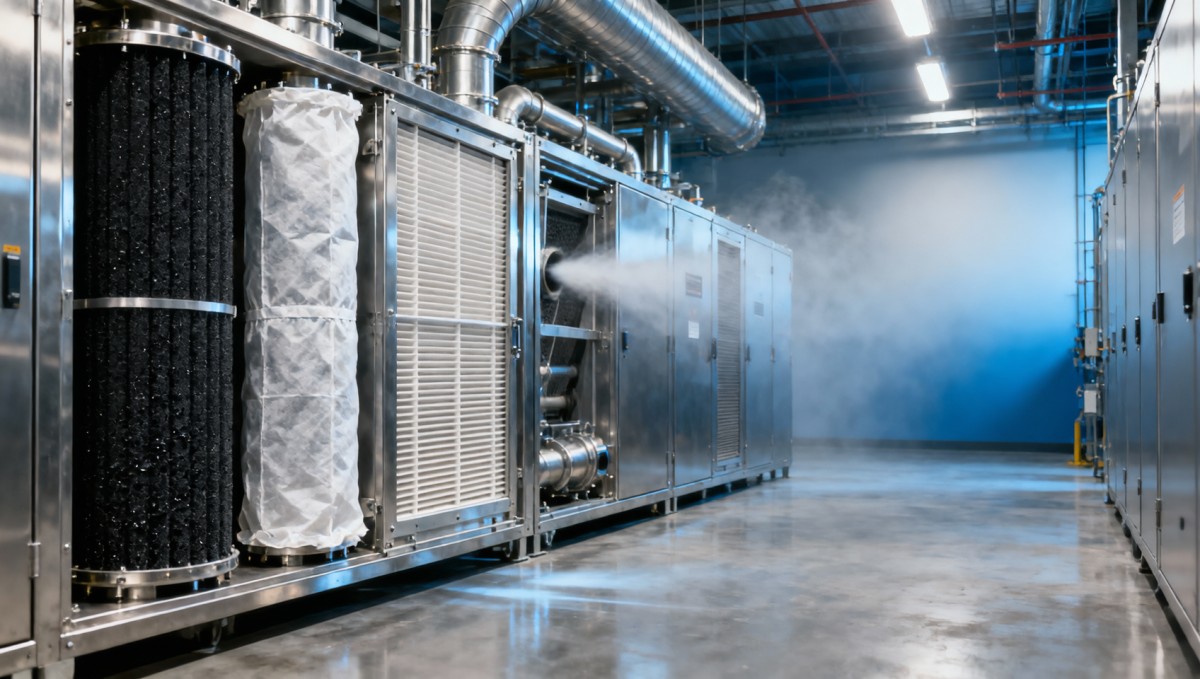
Airflow matters because contact time influences adsorption efficiency, but it is only one variable. The same filter operating at 1,000 m³/h can show very different service life depending on whether the incoming stream contains low-level ambient odors or concentrated VOCs from coating, printing, chemical blending, or waste handling processes. In many industrial systems, contaminant concentration is a stronger predictor of replacement frequency than nominal air volume.
Activated carbon works by trapping molecules within its porous structure. Once those adsorption sites are saturated, the filter can no longer remove targeted gases effectively, even if airflow remains stable. This means a filter may look mechanically intact while already failing functionally. In applications where odor control, indoor air quality, or emissions control is tied to process quality or workforce safety, that distinction is critical.
Another common mistake is assuming that all gaseous pollutants behave similarly. They do not. Light organics, sulfur compounds, ammonia, and mixed VOC streams interact with carbon media differently. Some compounds adsorb readily, while others require specially impregnated carbon or staged filtration. A standard carbon panel used in a challenging gas profile may deliver only 30% to 50% of the expected life compared with a properly matched media grade.
Temperature and humidity also change adsorption behavior. In many facilities, relative humidity above 70% can reduce carbon efficiency for certain contaminants because water vapor competes for adsorption sites. At elevated temperatures, desorption risk also increases, especially in systems exposed to hot process exhaust or outdoor summer peaks above 35°C. These environmental conditions are often ignored during initial purchasing decisions.
Key variables that shape service life
- Contaminant concentration, often expressed in ppm or mg/m³, which determines how quickly adsorption capacity is consumed.
- Residence time through the carbon bed, typically influenced by bed depth, face velocity, and system design.
- Humidity and temperature range, with many systems performing more consistently between 15°C and 30°C and below 60% RH.
- Media quality, including carbon type, pore distribution, pellet or granule form, and impregnation chemistry.
- Maintenance discipline, especially pre-filter condition, leak control, and monitoring intervals every 2 to 4 weeks.
For buyers assessing wholesale air purifiers or larger VOCs treatment equipment, this means the most useful question is not “What is the rated filter life?” but “What is the expected life under my contaminant load and operating cycle?” Without that framing, quoted life spans can be misleading and comparisons between suppliers become unreliable.
The operating conditions that shorten or extend carbon filter performance
A carbon filter in a clean office-adjacent air handling unit may last 6 to 12 months. In contrast, a filter serving a paint room, battery area, wastewater zone, or solvent storage room may need replacement in 1 to 3 months. The difference is not a product defect. It is a function of contaminant challenge, moisture, temperature swings, and upstream particulate control.
Pre-filtration has a direct impact on carbon life. When dust, oil mist, or sticky aerosols bypass upstream filters, they block carbon pores and reduce usable adsorption area. A system using a suitable pocket air filter stage before the carbon section often extends carbon service life significantly. In practical terms, improving particulate pre-filtration can reduce unnecessary carbon change-outs by one maintenance cycle or more over a 12-month period.
System operating profile also matters. Continuous 24/7 operation produces a different consumption pattern than intermittent 8-hour shifts. However, stop-start environments can create their own problem: concentration spikes. If emissions surge during line startup, cleaning cycles, or batch changes, the filter may experience short periods of very high loading that consume capacity faster than average monthly data suggests.
For facilities buying HEPA filters bulk and carbon filters together, it is important to understand that HEPA and carbon solve different problems. HEPA captures particles, while activated carbon targets gases and odors. Installing premium particle filtration does not automatically protect against VOC breakthrough unless the carbon bed design, dwell time, and media selection are correct.
Typical factors and their practical effect
The table below provides a practical reference for how common operating conditions influence activated carbon air filter life span in industrial and commercial systems.
The key takeaway is that filter life is a site-specific performance question. If a supplier cannot discuss humidity, contaminant type, duty cycle, and pre-filtration, the life estimate is likely too generic to support an industrial purchasing decision.
Common operational warning signs
- Odor complaints returning before the scheduled replacement month.
- VOC sensor trends rising even though fan speed and airflow remain normal.
- Frequent upstream dust carryover or damaged pocket air filters.
- Seasonal performance drops during humid months or heat spikes.
How buyers should evaluate media quality, housing design, and replacement cycles
Procurement teams often compare units by price per filter, but that metric alone can distort the real economics. A lower-cost carbon filter that requires replacement every 6 weeks may be more expensive over 12 months than a higher-grade option lasting 12 to 16 weeks. Labor, downtime, waste handling, and inventory exposure should all be included in the purchasing model.
Media quality is not just about the amount of carbon by weight. It also includes carbon source, activation method, pore size distribution, hardness, dust generation, and whether the media is standard or impregnated for specific gases. In gas-phase filtration, 10 kg of unsuitable carbon is not equivalent to 10 kg of correctly selected carbon. Matching the media to the contaminant profile is often the deciding factor in life span and compliance.
Housing design is equally important. Bypass leakage, poor gasket compression, uneven bed loading, or weak panel retention can reduce effective performance even when the media itself is acceptable. In larger wholesale air purifiers and VOC treatment skids, poor air distribution means some sections of the bed saturate early while other sections remain underused. That creates unpredictable breakthrough and undermines replacement planning.
Replacement cycles should be based on monitored performance, not only calendar dates. Many facilities benefit from a 3-part approach: baseline testing at commissioning, routine checks every 2 to 4 weeks, and replacement triggered by odor breakthrough, sensor trend limits, or process-specific thresholds. This method is more reliable than fixed-date replacement alone.
A practical purchasing framework
The table below helps procurement managers and technical buyers compare carbon filtration options beyond airflow ratings and unit price.
A disciplined procurement process should compare at least 4 factors together: media suitability, installed design, replacement frequency, and service accessibility. This prevents the common mistake of buying a low-capex filter that creates high opex throughout the year.
Questions buyers should ask suppliers
- What contaminant types and concentration ranges was the quoted life estimate based on?
- How does the design perform at 60%, 70%, and 80% relative humidity?
- What pre-filter grade is recommended upstream of the carbon stage?
- Is the replacement cycle based on lab conditions, field experience, or both?
- What monitoring method is recommended: odor checks, VOC sensors, or scheduled sampling?
Implementation, monitoring, and maintenance strategies that reduce total cost
The most cost-effective activated carbon program is rarely the one with the lowest first purchase price. It is the one that delivers stable removal efficiency with predictable maintenance. Facilities that pair correct carbon selection with routine inspection often achieve better annual performance than sites that only react after odor complaints or process deviations occur.
A practical implementation model starts with site characterization. That means identifying the source gases, expected ppm range, duty cycle, ambient conditions, and whether the system serves comfort air, process exhaust, recirculation air, or dedicated VOCs treatment equipment. Even a 3-step initial survey can materially improve filter selection: define contaminants, define operating hours, and define environmental stress conditions.
Monitoring should be proportional to application risk. For low-risk areas, weekly visual checks and monthly odor review may be sufficient. For solvent handling, enclosed production, or regulated odor control zones, more structured monitoring is advisable, such as 2-week trend reviews using handheld detectors or fixed VOC sensors. If the application affects product quality, worker exposure, or neighbor complaints, waiting for obvious breakthrough is too late.
Maintenance teams should also treat carbon replacement as part of a filtration chain. A clogged or damaged pocket air filter upstream can shorten downstream carbon life. Likewise, ignoring gasket wear or access door leakage can create bypass conditions that make a fresh carbon module appear ineffective. Good maintenance is not just media replacement; it is system integrity management.
Recommended maintenance workflow
- Inspect pre-filters every 2 to 4 weeks and replace when dust loading begins to compromise airflow or carryover control.
- Check for odor breakthrough, seal integrity, and abnormal pressure conditions on a scheduled route.
- Track replacement dates, operating hours, and seasonal performance changes over at least 2 cycles.
- Adjust carbon replacement intervals by season if humidity or process loads vary significantly.
- Coordinate filter changes with shutdown windows to reduce labor duplication and system downtime.
Common mistakes that raise annual cost
One major error is over-relying on pressure drop as the replacement signal. Carbon filters can become chemically exhausted without a dramatic pressure change. Another is combining all odor or VOC issues under one generic carbon specification, even when the site has multiple emission sources with different chemistry. A third is carrying excess inventory because the true replacement cycle is unknown, tying up working capital in stock that may not match future operating conditions.
For decision-makers, the financial logic is straightforward. If better media matching extends average service life from 8 weeks to 12 weeks, that is a 50% increase in interval length. Even after accounting for a higher purchase price, the reduction in labor events, disposal handling, and emergency callouts can improve annual cost control and planning stability.
FAQ for operators, buyers, and industrial decision-makers
The questions below reflect common search intent from teams comparing activated carbon systems, HEPA filters bulk procurement, pocket air filters, and larger air purification assemblies.
How long does an activated carbon air filter usually last?
In low-load environments, service life may range from 6 to 12 months. In industrial VOC or odor control applications, 1 to 3 months is also common. The usable life depends on contaminant concentration, humidity, temperature, bed depth, and maintenance discipline, not just airflow rating.
Does higher airflow always mean shorter filter life?
Not always. Higher airflow can reduce contact time, but a lower airflow system with a much higher contaminant load may consume carbon faster. Airflow should be evaluated alongside gas concentration, dwell time, and carbon volume. Looking at one variable in isolation leads to poor life estimates.
Can pocket air filters or HEPA filters replace activated carbon filters?
No. Pocket air filters and HEPA filters are primarily for particulate removal. Activated carbon is used for gaseous contaminants such as odors and VOCs. In many systems, the best design uses a staged approach: particulate pre-filtration first, then carbon for gas-phase control.
What should procurement teams prioritize when comparing suppliers?
Focus on 5 points: contaminant-media match, realistic life assumptions, housing seal quality, maintenance access, and total annual replacement cost. If a quotation only highlights airflow and unit price, it is usually missing the variables that determine long-term value.
Activated carbon air filter life span is a performance outcome shaped by contaminant chemistry, moisture, temperature, media selection, upstream filtration, and maintenance quality. For industrial users and buyers, the smartest path is to evaluate the whole filtration system rather than treating carbon as a stand-alone commodity. That approach improves reliability, supports compliance, and gives procurement teams a clearer basis for lifecycle cost decisions.
If you are assessing pocket air filters, HEPA filters bulk supply, wholesale air purifiers, or integrated VOCs treatment equipment for industrial environments, a specification aligned to actual operating conditions will deliver better results than a generic airflow-based estimate. Contact Global Industrial Core to discuss application requirements, compare solution paths, and get a tailored recommendation for your filtration and air treatment strategy.
Technical Specifications
- How to choose an organic fertilizer machine for wet raw materialsAuthor :Environmental Engineering Director
- What affects output stability in a hydraulic briquetting pressAuthor :Environmental Engineering Director
- Waste paper baler wholesale prices vary for reasons beyond tonnageAuthor :Environmental Engineering Director
Expert Insights

Chief Security Architect
Dr. Thorne specializes in the intersection of structural engineering and digital resilience. He has advised three G7 governments on industrial infrastructure security.
Related Analysis
- Apr 16, 2026How to choose an organic fertilizer machine for wet raw materialsAuthor :Environmental Engineering Director
- Apr 16, 2026What affects output stability in a hydraulic briquetting pressAuthor :Environmental Engineering Director
- Apr 16, 2026Waste paper baler wholesale prices vary for reasons beyond tonnageAuthor :Environmental Engineering Director
Core Sector // 01
Security & Safety
- Electrostatic precipitator ESP vs baghouse in high temperature dustAuthor :Environmental Engineering Director

- Commercial kitchen exhaust hood sizing mistakes that hurt captureAuthor :Environmental Engineering Director

- HVAC ozone generator use cases where odor control can backfireAuthor :Environmental Engineering Director

- Industrial humidifiers wholesale orders often miss water quality limitsAuthor :Environmental Engineering Director

- Commercial dehumidifiers that work in cold rooms need a closer lookAuthor :Environmental Engineering Director

- AHU handling units: where energy loss often starts in the design stageAuthor :Environmental Engineering Director

- Activated carbon air filter life span depends on more than airflowAuthor :Environmental Engineering Director

- Pocket air filters with low pressure drop are not always the best fitAuthor :Environmental Engineering Director