Industrial humidifiers wholesale orders often miss water quality limits
Author
Date Published
Reading Time
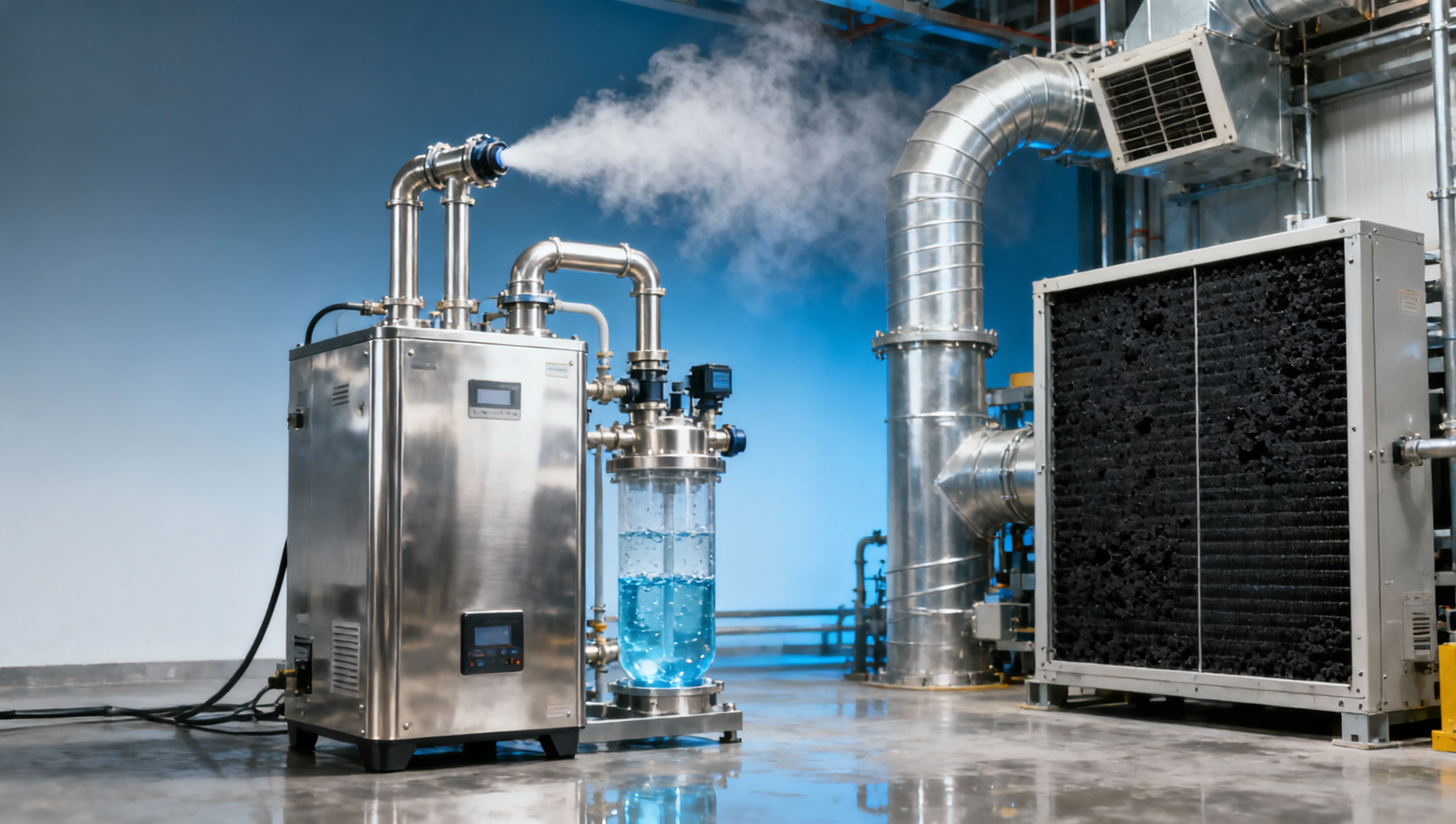
In industrial humidifiers wholesale procurement, water quality limits are often overlooked until scale buildup, corrosion, and microbial risks disrupt performance. For buyers comparing industrial humidifiers wholesale options alongside commercial dehumidifiers, ahu handling units, and activated carbon air filter systems, understanding water chemistry is essential to protecting equipment life, air quality, and compliance in demanding industrial environments.
For research teams, operators, purchasing managers, and business decision-makers, this issue is not a minor maintenance detail. Water quality directly affects nozzle life, evaporation efficiency, mist distribution, drain cleanliness, downstream filter loading, and the stability of indoor humidity control across 24/7 production sites.
In wholesale orders, the problem becomes larger because a single specification may be copied across 10, 20, or even 50 units without checking whether the local water source is softened, reverse-osmosis treated, or simply municipal supply with high hardness and variable conductivity. That mismatch can increase service intervals, shorten component life, and trigger avoidable warranty disputes.
A practical procurement decision therefore requires more than capacity, airflow, and price comparison. It should also define acceptable total dissolved solids, hardness, pH range, microbial control measures, blowdown logic, and water treatment responsibility before the order is released.
Why water quality is a first-order issue in industrial humidifier procurement
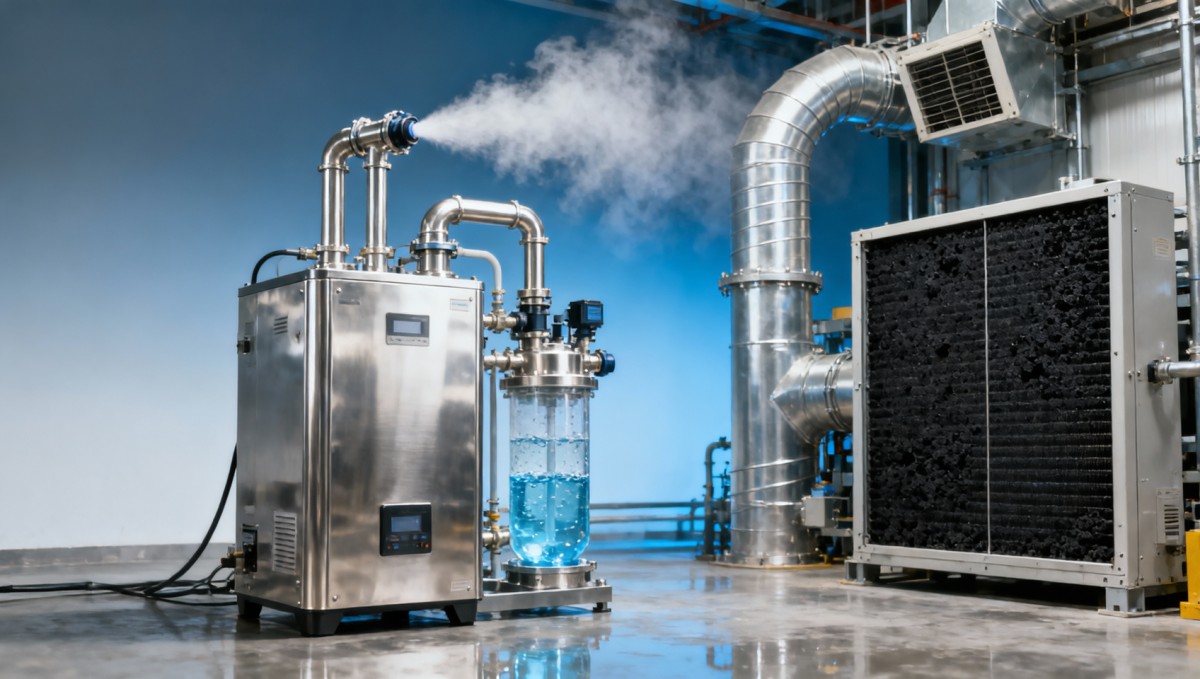
Industrial humidifiers wholesale projects often focus on output capacity such as 20 kg/h, 100 kg/h, or 500 kg/h, while water chemistry is left vague in the quotation stage. That approach may work in clean-water pilot tests, but field performance changes quickly when hardness, silica, iron, or chlorides exceed what the humidification technology can tolerate.
In atomizing and high-pressure systems, minerals can block fine nozzles and change droplet size distribution. In steam or electrode systems, conductivity and scale influence steam generation stability and cylinder life. In evaporative media systems connected to ahu handling units, poor water quality can accelerate pad fouling, odor formation, and microbial growth within 2 to 8 weeks if maintenance routines are weak.
The effect is rarely limited to the humidifier alone. Water-related deposits can contaminate ducts, increase load on activated carbon air filter systems, and alter the moisture balance expected by commercial dehumidifiers in mixed HVAC environments. Facilities that require stable relative humidity in the 40% to 60% band, especially electronics, packaging, textiles, printing, and storage sites, are more sensitive to these deviations.
For procurement teams, the key lesson is simple: if the water source is not specified, the humidifier specification is incomplete. A low initial unit price can quickly become a higher total cost when drain frequency rises, spare parts consumption increases, and operators spend 3 to 5 additional hours each week cleaning scale or flushing lines.
Common water quality variables that affect performance
The most common variables include hardness, conductivity, pH, suspended solids, silica, chlorides, iron, and biological contamination. Different humidifier types tolerate different ranges, so procurement documents should avoid a generic phrase such as “clean water preferred” and instead define measurable limits.
- Hardness: High calcium and magnesium typically increase scaling risk on nozzles, media, heating surfaces, and drain pans.
- Conductivity: Too high or too low can affect the operation of electrode steam systems and water level controls.
- pH: A typical acceptable range may sit around 6.5 to 8.5, but the exact tolerance depends on wetted materials.
- Microbial load: Stagnant sumps and warm recirculating loops can create sanitation concerns if cleaning cycles are not defined.
The table below shows how water quality concerns vary across common industrial humidity-control configurations used in integrated facility environments.
The key conclusion is that water quality limits should be linked to technology type, not treated as a general afterthought. A specification that works for one humidifier can be unsuitable for another, even within the same facility.
The hidden procurement risks when wholesale orders ignore water limits
When industrial humidifiers wholesale orders are placed without clear water acceptance criteria, the first risk is mismatch between product design and site utilities. A supplier may quote based on ideal inlet water, while the plant actually uses municipal water with seasonal hardness swings, a borewell with iron content, or recycled water with elevated conductivity.
The second risk is lifecycle cost distortion. On paper, Unit A may appear 8% to 15% cheaper than Unit B. In practice, Unit A may require more frequent blowdown, descaling chemicals every 30 to 45 days, and nozzle replacement twice as often. Over a 12-month to 24-month operating cycle, the lower-priced unit can become the more expensive option.
The third risk is system interaction. In mixed environmental control projects, humidity equipment does not operate in isolation. If a humidifier generates mineral carryover or microbial odor, downstream commercial dehumidifiers, AHU coils, and activated carbon air filter beds can face unnecessary contamination or pressure-drop penalties. This can affect maintenance windows across the whole air-handling chain.
The fourth risk is compliance and operator safety. Standing water, uncontrolled sanitation practices, and poorly defined cleaning schedules create operational exposure in food-adjacent, pharmaceutical-support, warehousing, and clean-process environments. Even where strict hygienic validation is not mandatory, poor water management still raises internal audit concerns.
Typical blind spots in RFQs and bid reviews
Many bid packages request humidification capacity, power supply, and installation footprint, but omit utility water details. The result is a quote comparison that looks complete but lacks the information needed for realistic operation.
- Water source not identified: municipal, softened, RO, demineralized, or recirculated.
- No inlet quality limits attached to the datasheet, especially hardness, TDS, and pH.
- No statement on whether pre-treatment is in the supplier scope or buyer scope.
- No expected maintenance interval under actual site water conditions.
- No drain, blowdown, or sanitation procedure defined for 24/7 use.
Risk review matrix for buying teams
A practical review matrix helps procurement compare apparent price against operational exposure before approving large-volume orders.
For decision-makers, the message is that water quality is not a technical footnote. It is a commercial control point that influences total ownership cost, installation schedule, maintenance burden, and system reliability.
How to define practical water quality limits before placing a bulk order
The best approach is to convert “acceptable water” into a documented pre-order checklist. Buyers do not need to overengineer the process, but they do need enough detail to match the humidifier technology to actual site conditions. For multisite projects, one water report per region is usually more reliable than assuming a global standard.
A workable specification should cover source type, seasonal variation, target relative humidity range, operating hours per day, cleaning frequency, and whether the system is stand-alone or integrated with AHU handling units. In many industrial facilities, 16-hour and 24-hour duty cycles create very different scaling and sanitation profiles.
It is also important to separate “must-have limits” from “preferred limits.” For example, a project may state a preferred hardness below a certain value for lower maintenance, while also defining an absolute upper limit beyond which pre-treatment is mandatory. This helps avoid confusion during vendor comparison and contract review.
Where water quality is variable, buyers should ask suppliers to state performance expectations under at least 2 scenarios: normal water and worst-case site water. That is far more useful than a single nominal rating generated in ideal factory conditions.
Suggested pre-order checklist
- Confirm the water source for each facility and test at least hardness, conductivity, pH, TDS, and iron.
- Specify whether the equipment will run 8, 16, or 24 hours per day and how many days per week.
- Define target humidity control, such as 45% to 55% RH or a broader 40% to 60% RH band.
- Clarify whether pre-treatment equipment, commissioning, and first-year consumables are included in scope.
- Request maintenance intervals under actual site water conditions, not only under laboratory assumptions.
Typical specification categories buyers should request
The table below provides a practical framework for RFQs and technical bid alignment.
A specification built this way helps information researchers compare suppliers on engineering fit, not only on headline price. It also gives operators a clearer understanding of what water preparation and maintenance routines will be needed after installation.
Implementation, maintenance, and coordination with broader air management systems
Even the right industrial humidifiers wholesale purchase can underperform if implementation is rushed. Water quality management should continue through delivery, commissioning, and routine operation. A 5-step rollout is often sufficient for most facilities: site water verification, installation review, commissioning test, maintenance training, and performance audit after the first 30 to 60 days.
During commissioning, the team should confirm actual inlet water against the agreed specification, inspect drain and overflow logic, verify alarms, and observe humidity stability under load. If the humidifier is integrated with AHU handling units, airflow, droplet absorption distance, and drain pan cleanliness need review. If commercial dehumidifiers are also present, humidity control sequences should be checked to avoid simultaneous humidifying and dehumidifying.
Maintenance routines should be adjusted to water condition, not just to a fixed calendar. High-mineral water may justify weekly visual inspection and monthly cleaning, while treated water may support longer intervals such as every 6 to 8 weeks. Activated carbon air filter systems should also be monitored if odor or moisture carryover is suspected, because excessive humidity can reduce adsorption stability in certain applications.
For multisite operators, standardization matters. A simple maintenance matrix, spare parts kit, and operator checklist can reduce inconsistency between facilities. That becomes especially valuable when 10 or more units are ordered under a single framework contract.
Recommended operational controls
- Record inlet water readings at startup and after major seasonal changes, typically every 3 to 6 months.
- Inspect nozzles, electrodes, pads, or heating surfaces at intervals matched to actual scaling tendency.
- Verify drain function and sanitize recirculating sections before peak operating seasons.
- Review RH sensor accuracy and control deadband to avoid unnecessary cycling and water waste.
- Keep a minimum spare stock for critical consumables when lead times exceed 2 to 4 weeks.
FAQ for buyers and facility teams
Below are common questions that arise during industrial humidity-control sourcing and operation.
How often should water quality be tested?
At minimum, test before purchase, at commissioning, and after seasonal supply changes. In sites with unstable municipal supply or mixed water sources, quarterly checks are often justified. If scaling or odor appears within the first 30 days, test immediately rather than waiting for the scheduled review.
Can industrial humidifiers run on untreated municipal water?
Sometimes yes, but only if the selected technology is compatible with the actual water condition and the expected maintenance burden is accepted. Untreated water may be workable for some systems, yet problematic for fine nozzles or high-hygiene applications. The decision should be based on measured water parameters, not assumption.
What should procurement prioritize besides purchase price?
Focus on four items: water compatibility, maintenance interval, pre-treatment scope, and integration with the rest of the air system. These factors usually have more impact on 12-month operating cost than a small difference in initial unit price.
Industrial humidifiers wholesale decisions are stronger when water quality limits are treated as a core specification rather than a service afterthought. For GIC audiences managing heavy-duty facilities and strategic sourcing programs, the right approach is to align humidifier technology, water treatment, maintenance planning, and HVAC integration before purchase orders are issued.
That reduces lifecycle risk, protects air quality assets such as ahu handling units and activated carbon air filter systems, and gives operators a more stable humidity platform across demanding industrial environments. If you are evaluating bulk orders, retrofit upgrades, or cross-site environmental control planning, now is the right time to validate water assumptions before they become operating problems.
Contact us to discuss your application, request a tailored sourcing framework, or obtain a practical specification checklist for your next industrial humidification project.
Technical Specifications
- How to choose an organic fertilizer machine for wet raw materialsAuthor :Environmental Engineering Director
- What affects output stability in a hydraulic briquetting pressAuthor :Environmental Engineering Director
- Waste paper baler wholesale prices vary for reasons beyond tonnageAuthor :Environmental Engineering Director
Expert Insights

Chief Security Architect
Dr. Thorne specializes in the intersection of structural engineering and digital resilience. He has advised three G7 governments on industrial infrastructure security.
Related Analysis
- Apr 16, 2026How to choose an organic fertilizer machine for wet raw materialsAuthor :Environmental Engineering Director
- Apr 16, 2026What affects output stability in a hydraulic briquetting pressAuthor :Environmental Engineering Director
- Apr 16, 2026Waste paper baler wholesale prices vary for reasons beyond tonnageAuthor :Environmental Engineering Director
Core Sector // 01
Security & Safety
- Electrostatic precipitator ESP vs baghouse in high temperature dustAuthor :Environmental Engineering Director

- Commercial kitchen exhaust hood sizing mistakes that hurt captureAuthor :Environmental Engineering Director

- HVAC ozone generator use cases where odor control can backfireAuthor :Environmental Engineering Director

- Industrial humidifiers wholesale orders often miss water quality limitsAuthor :Environmental Engineering Director

- Commercial dehumidifiers that work in cold rooms need a closer lookAuthor :Environmental Engineering Director

- AHU handling units: where energy loss often starts in the design stageAuthor :Environmental Engineering Director

- Activated carbon air filter life span depends on more than airflowAuthor :Environmental Engineering Director

- Pocket air filters with low pressure drop are not always the best fitAuthor :Environmental Engineering Director