Commercial kitchen exhaust hood sizing mistakes that hurt capture
Author
Date Published
Reading Time
Undersized or poorly configured commercial kitchen exhaust hood systems can let heat, smoke, and grease escape the capture zone, driving safety risks, code issues, and higher operating costs. For facility teams, operators, and buyers comparing commercial kitchen exhaust hood options with grease interceptor wholesale, activated carbon air filter, and hvac ozone generator solutions, understanding common sizing mistakes is the first step toward reliable performance and cleaner indoor air.
In busy foodservice environments, capture failure is rarely caused by one component alone. It usually starts with a hood that looks acceptable on paper but does not match appliance duty level, thermal plume behavior, room air movement, or duct static pressure in real operation. For EPC teams, facility managers, procurement leaders, and kitchen operators, poor sizing can turn into repeat cleaning, staff discomfort, nuisance smoke, and avoidable retrofit costs within the first 6 to 18 months.
This article explains where commercial kitchen exhaust hood sizing mistakes happen, how they reduce grease and smoke capture, what parameters should be reviewed before purchase, and how related air treatment solutions fit into a broader indoor air strategy. The focus is practical: better capture, cleaner air, lower lifecycle cost, and more reliable decision-making for B2B buyers.
Why capture performance fails even when the hood is installed
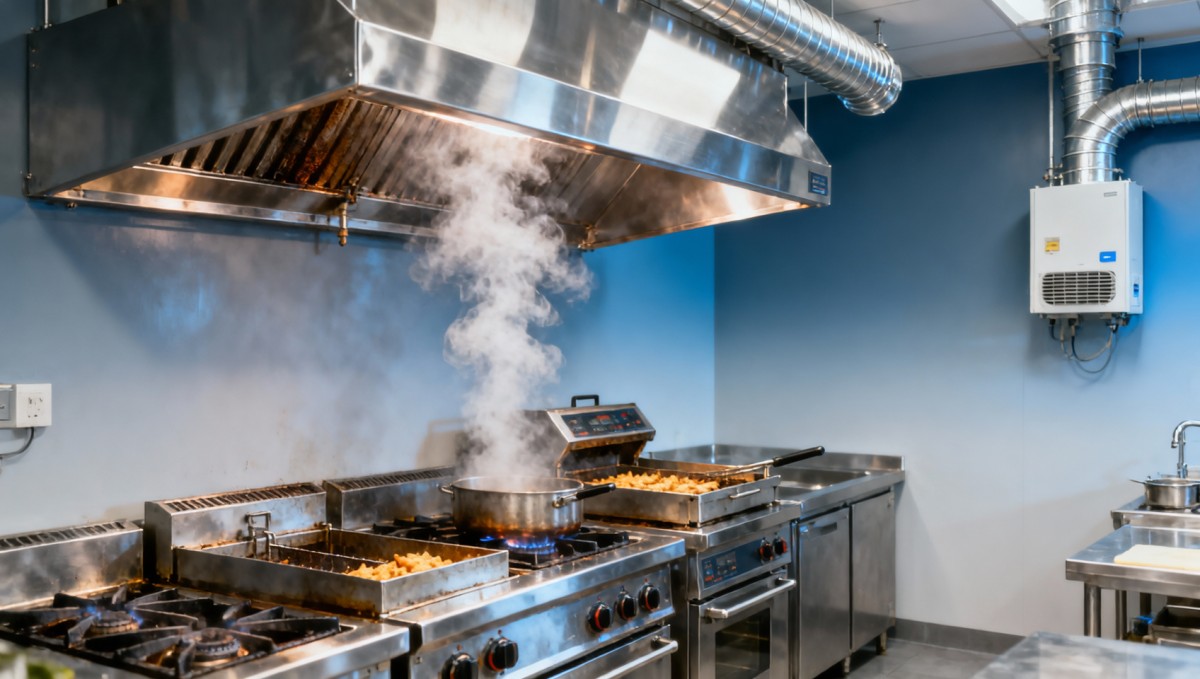
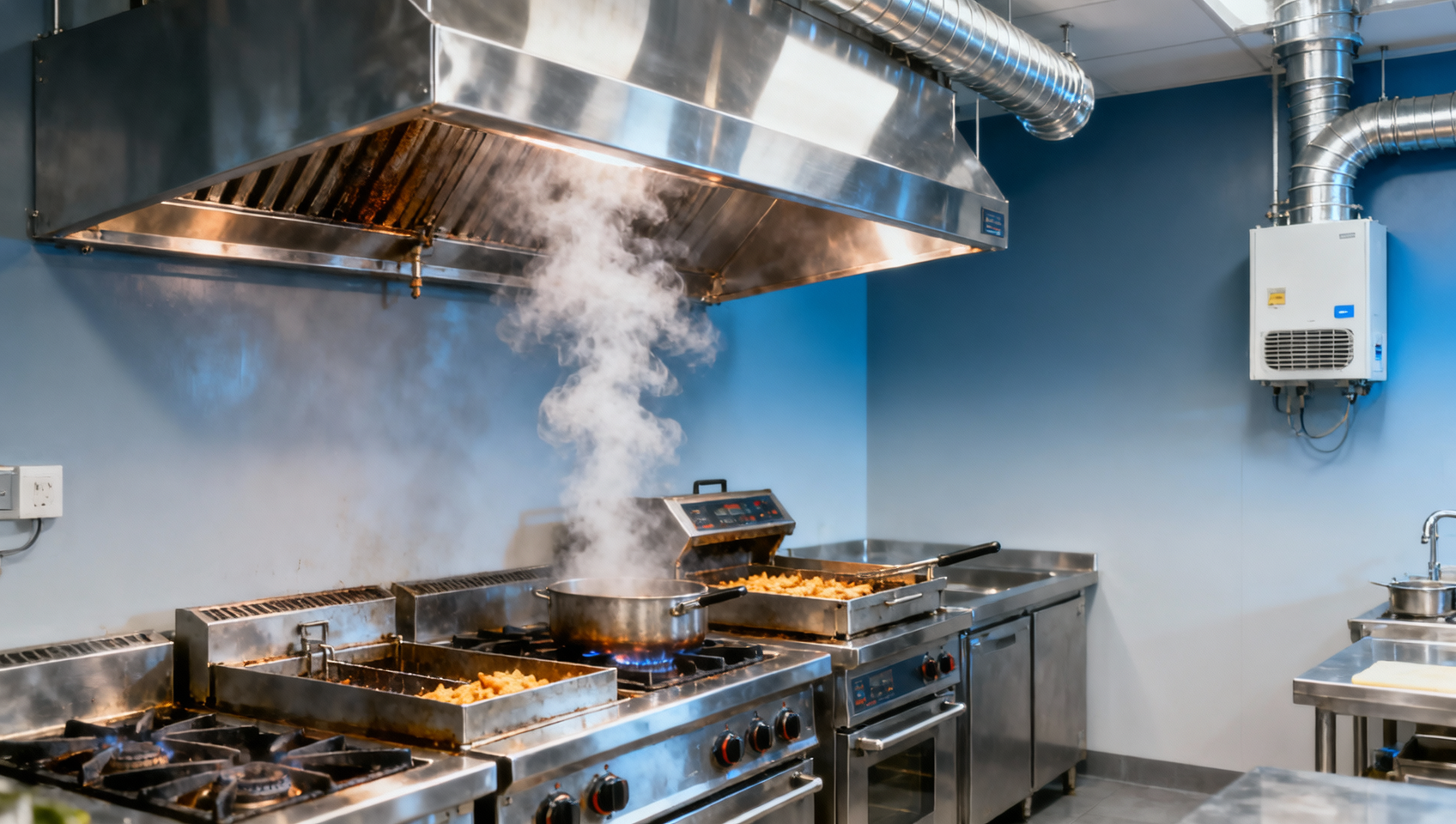
A commercial kitchen exhaust hood is designed to capture and contain the thermal plume rising from cooking equipment. When the hood is too short, too shallow, mounted too high, or paired with the wrong airflow rate, the plume spills beyond the capture zone. In practical terms, that means visible smoke at the front edge, grease deposition on nearby surfaces, and heat accumulation in the occupied area.
Many projects still treat sizing as a simple exhaust CFM calculation. That approach misses at least 4 variables that strongly affect capture: appliance duty class, hood overhang, mounting height, and cross-drafts from supply diffusers or open doors. A line of heavy-duty gas equipment can generate a much more aggressive plume than a light-duty electric line, even if both sit under hoods of similar dimensions.
Another common issue is assuming nameplate fan capacity equals delivered performance. In reality, grease filters, long duct runs, elbows, and roof terminations all add resistance. A fan selected for 3,000 CFM in free air may deliver materially less once the total static pressure rises into a typical working range such as 1.5 to 3.0 in. w.g. If actual airflow drops, capture drops with it.
Facility teams also underestimate the effect of replacement air. If makeup air is poorly distributed or oversized near the hood face, it can push the thermal plume out of the hood before it is captured. Even a well-sized canopy can underperform if room air velocities near the hood edge become too turbulent during peak service periods.
Four field conditions that often reveal sizing errors
- Smoke rolls out from the front or ends of the hood during high-heat cooking, especially within 5 to 10 minutes of peak load.
- Grease accumulates on wall tiles, ceiling grids, or nearby lighting faster than normal cleaning cycles of 1 to 2 weeks.
- Kitchen temperature rises several degrees above adjacent spaces, often by 3°C to 8°C during busy shifts.
- Operators open doors or increase general ventilation to relieve heat, which can further disrupt containment.
These symptoms matter beyond comfort. Loss of capture increases cleaning frequency, can shorten component life, and may complicate compliance with fire and mechanical code expectations. For procurement teams, the bigger risk is hidden total cost: a lower upfront hood price can lead to much higher retrofit, cleaning, and downtime costs over a 2- to 5-year period.
The most common sizing mistakes that hurt capture
The first major mistake is sizing the hood to the appliance footprint instead of the effective plume. A hood generally needs sufficient overhang beyond the cooking equipment to intercept rising heat and effluent before it spreads. In many layouts, an overhang of 6 to 12 inches on exposed sides is a practical starting point, though exact requirements depend on duty level and local code. Tight clearances save space, but they often reduce capture margin.
The second mistake is using a low-duty airflow assumption for medium- or heavy-duty cooking. Charbroilers, wok ranges, solid-fuel equipment, and high-output fryers generate stronger plumes and more grease loading than standard griddles or ovens. If designers apply a generic airflow rate without reviewing the actual appliance mix, the hood may be undersized before the kitchen even opens.
The third mistake is ignoring hood height. Raising a hood by even 6 to 12 inches above the intended installation height can noticeably reduce containment because the plume has more space to spread and entrain surrounding air. This often happens in renovations where ceiling coordination, utility routing, or sightline requests force last-minute changes.
The fourth mistake is treating grease control, odor control, and exhaust capture as the same problem. They are related but not identical. A kitchen may use an activated carbon air filter downstream to reduce residual odors, or evaluate an hvac ozone generator for specific air treatment strategies, but neither device should be expected to compensate for a hood that fails to capture grease-laden vapor at the source.
Mistakes by design stage
The table below summarizes where errors typically occur and how they affect performance, maintenance, and procurement decisions.
The key takeaway is that capture loss is often a system-level failure, not just a hood selection issue. Buyers should ask whether sizing reflects actual appliance duty, final mounting height, expected static pressure, and the replacement air strategy before comparing price alone.
A practical review checklist before release to purchase
- Confirm appliance list by fuel type, heat output pattern, and duty classification.
- Check hood overhang on all exposed sides, not just total line length.
- Verify design exhaust volume against estimated installed static pressure.
- Review makeup air diffuser placement within the first 8 to 12 feet around the hood.
- Confirm cleaning access, grease extraction method, and service intervals.
How to size the system more accurately in real projects
Accurate sizing starts with the cooking process, not with a standard hood template. A small café line, a high-throughput hotel kitchen, and a central production facility may all use stainless canopy hoods, but their thermal profiles differ sharply. Buyers should separate light-duty, medium-duty, heavy-duty, and extra-heavy-duty loads and review the hood type accordingly, whether wall canopy, island canopy, backshelf, or proximity style.
The second step is to match exhaust volume to both hood geometry and duty level. While exact values vary by code path and manufacturer guidance, airflow decisions are often expressed by linear foot or by hood area for specific duty classes. A design review should test whether the selected volume still works after accounting for filter pressure drop, duct resistance, and rooftop discharge conditions rather than relying on nominal fan data.
The third step is balancing makeup air. Many operators focus on exhaust but forget that an imbalanced kitchen can create negative pressure, make doors difficult to open, and pull unconditioned air into the space. In many facilities, supplying roughly 80% to 90% of exhausted air as controlled replacement air is more stable than dumping large volumes directly at the hood face. Distribution pattern matters as much as total volume.
The fourth step is integrating secondary air treatment only after source capture is validated. Activated carbon air filter modules can help with residual odor and some gaseous contaminants in recirculation or polishing applications. Grease interceptor wholesale decisions may relate more to wastewater handling than airborne capture, but they belong in the same facility planning discussion because grease control failures often affect both drainage and exhaust maintenance budgets.
Typical sizing and coordination parameters to verify
The matrix below does not replace engineering calculations, but it highlights the main parameters procurement and project teams should review before final approval.
For decision-makers, these parameters improve vendor discussions. Instead of asking only for a lower unit price, teams can ask whether the quoted hood package includes airflow verification, balancing assumptions, filter type, and post-installation performance checks. That changes the purchase from a metal fabrication order into a working capture solution.
Where supporting technologies fit
- Activated carbon air filter: useful for odor polishing and certain gaseous compounds after grease removal, but not a substitute for source capture.
- HVAC ozone generator: should be reviewed carefully for application limits, safety controls, and local acceptance; it must not be treated as a fix for poor hood sizing.
- Grease interceptor wholesale sourcing: relevant to kitchen infrastructure planning because high-grease operations need coordinated airside and waterside grease management.
Procurement, commissioning, and lifecycle decisions that reduce risk
For procurement teams, the best buying decision is rarely the lowest first cost. A properly sized commercial kitchen exhaust hood should be evaluated across at least 5 dimensions: capture reliability, compliance pathway, cleaning burden, energy effect, and service accessibility. If one offer saves 8% upfront but requires earlier fan replacement, more frequent degreasing, or a field retrofit, the real cost can exceed the premium option within 1 to 3 years.
Commissioning is where many projects either confirm performance or lock in future problems. A good handover should include airflow verification, filter installation review, fan rotation check, balancing records, and a live cooking observation when possible. Testing the system only at idle is not enough. Capture should be observed under representative loads such as fryer recovery, griddle operation, or mixed peak cooking for at least one service cycle.
Maintenance planning also affects capture over time. Grease filters with heavy buildup increase pressure drop, and neglected ducts can reduce airflow while raising fire risk. Depending on duty and operating hours, facilities may inspect filters weekly, perform deeper hood cleaning monthly, and review full exhaust cleaning schedules on a code-driven basis. A system that was correctly sized on day one can still lose effectiveness if maintenance frequency is too low.
For multinational buyers and industrial contractors, documentation quality matters. Submittals should clearly state design assumptions, not just material grade and outline dimensions. Teams should request appliance schedule references, target exhaust volume, pressure assumptions, recommended maintenance intervals, and any limitations related to odor-control add-ons or recirculation concepts.
Commercial evaluation points for buyers
- Ask for the basis of sizing: appliance duty, hood type, and expected installed static pressure.
- Review whether commissioning is included or offered as a separate line item within 7 to 21 days after installation.
- Check access for filter removal, plenum cleaning, and fan service to avoid excessive maintenance labor.
- Confirm whether odor-control stages, such as activated carbon air filter units, need periodic media replacement every 6 to 12 months.
- Verify how the vendor handles changes in appliance lineup before fabrication release.
FAQ for project teams and buyers
How do I know if a hood is undersized after startup?
Look for repeated smoke spill, grease residue outside the hood footprint, unusual heat buildup, or operator complaints during peak cooking. If these occur despite a running exhaust fan, review actual airflow, hood height, and nearby cross-drafts first.
Can odor-control equipment fix poor capture?
Not reliably. Activated carbon air filter systems can reduce residual odors after source capture and grease removal, but they do not stop smoke and grease from escaping the hood edge. Source capture must work first.
What is a reasonable project review timeline before purchase?
For standard projects, 1 to 2 weeks is often enough for appliance confirmation, hood selection, airflow review, and submittal alignment. More complex EPC or multi-kitchen projects may need 3 to 4 weeks if duct routing, utilities, and air treatment systems are also under review.
Should grease interceptor planning be discussed with hood selection?
Yes. Airside grease capture and waterside grease handling are different systems, but they are operationally linked. High-grease kitchens often benefit from coordinated planning so maintenance budgets, cleaning schedules, and waste handling strategies stay aligned.
Commercial kitchen exhaust hood sizing mistakes usually begin with small assumptions: too little overhang, the wrong duty classification, unverified fan performance, or replacement air that disrupts containment. Left uncorrected, these errors reduce capture, raise cleaning and energy costs, and increase the chance of post-installation complaints.
A better approach is to review the kitchen as an operating system: hood geometry, airflow, static pressure, makeup air, grease management, and downstream air treatment all need to work together. For research teams, operators, procurement professionals, and business decision-makers, that means buying proven performance rather than just sheet metal and fan nameplates.
If you are evaluating commercial kitchen exhaust hood options, comparing supporting components, or planning a retrofit, now is the right time to request a project-specific review. Contact Global Industrial Core to discuss your application, obtain a tailored sourcing perspective, and explore practical solutions for cleaner, safer, and more reliable kitchen ventilation.
Technical Specifications
- How to choose an organic fertilizer machine for wet raw materialsAuthor :Environmental Engineering Director
- What affects output stability in a hydraulic briquetting pressAuthor :Environmental Engineering Director
- Waste paper baler wholesale prices vary for reasons beyond tonnageAuthor :Environmental Engineering Director
Expert Insights

Chief Security Architect
Dr. Thorne specializes in the intersection of structural engineering and digital resilience. He has advised three G7 governments on industrial infrastructure security.
Related Analysis
- Apr 16, 2026How to choose an organic fertilizer machine for wet raw materialsAuthor :Environmental Engineering Director
- Apr 16, 2026What affects output stability in a hydraulic briquetting pressAuthor :Environmental Engineering Director
- Apr 16, 2026Waste paper baler wholesale prices vary for reasons beyond tonnageAuthor :Environmental Engineering Director
Core Sector // 01
Security & Safety
- Electrostatic precipitator ESP vs baghouse in high temperature dustAuthor :Environmental Engineering Director

- Commercial kitchen exhaust hood sizing mistakes that hurt captureAuthor :Environmental Engineering Director

- HVAC ozone generator use cases where odor control can backfireAuthor :Environmental Engineering Director

- Industrial humidifiers wholesale orders often miss water quality limitsAuthor :Environmental Engineering Director

- Commercial dehumidifiers that work in cold rooms need a closer lookAuthor :Environmental Engineering Director

- AHU handling units: where energy loss often starts in the design stageAuthor :Environmental Engineering Director

- Activated carbon air filter life span depends on more than airflowAuthor :Environmental Engineering Director

- Pocket air filters with low pressure drop are not always the best fitAuthor :Environmental Engineering Director