What affects output stability in a hydraulic briquetting press
Author
Date Published
Reading Time
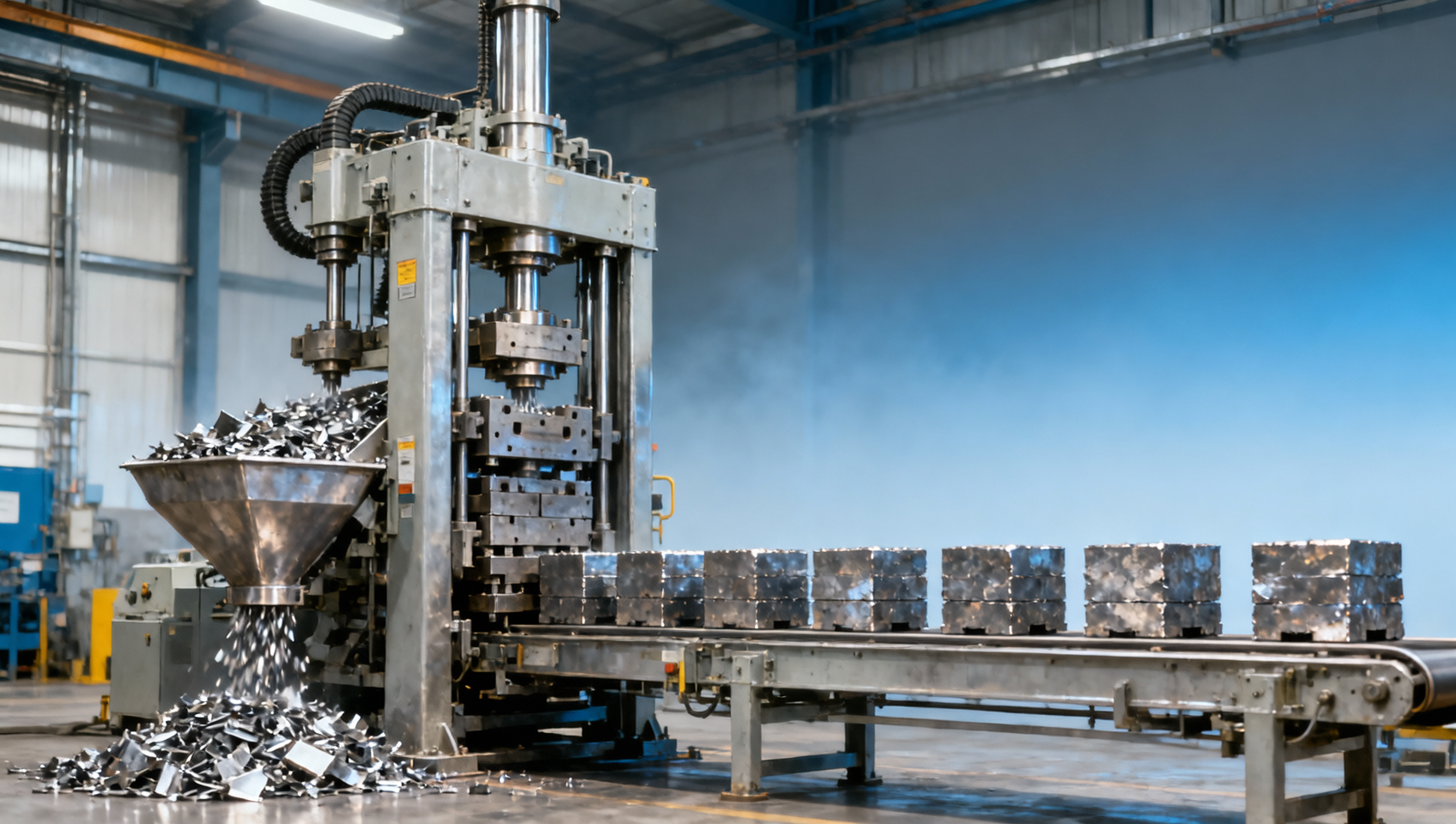
Output stability in a hydraulic briquetting press depends on far more than pressure alone. Feed consistency, moisture control, hydraulic system response, die wear, and operator settings all influence briquette density, throughput, and long-term reliability. For buyers comparing a hydraulic briquetting press with related systems such as a scrap metal baler, twin shaft shredder machine, or tire recycling machine, understanding these variables is essential for better performance and smarter investment decisions.
In industrial production, unstable briquette output does not only reduce hourly capacity. It can also increase material loss, raise power consumption, shorten maintenance intervals, and create downstream handling problems. For operators, this means more stoppages and manual correction. For procurement teams and decision-makers, it means lower return on capital equipment and a higher risk of choosing the wrong press configuration.
A hydraulic briquetting press is often selected to densify metal chips, turnings, grinding sludge, aluminum scrap, copper residues, or biomass-like industrial by-products. Yet output stability is the result of a complete system, not a single cylinder or a single pressure rating. The most reliable lines balance raw material preparation, hydraulic control, mold condition, automation logic, and routine service in one coordinated process.
Material Input Conditions Set the Baseline for Stable Briquette Production
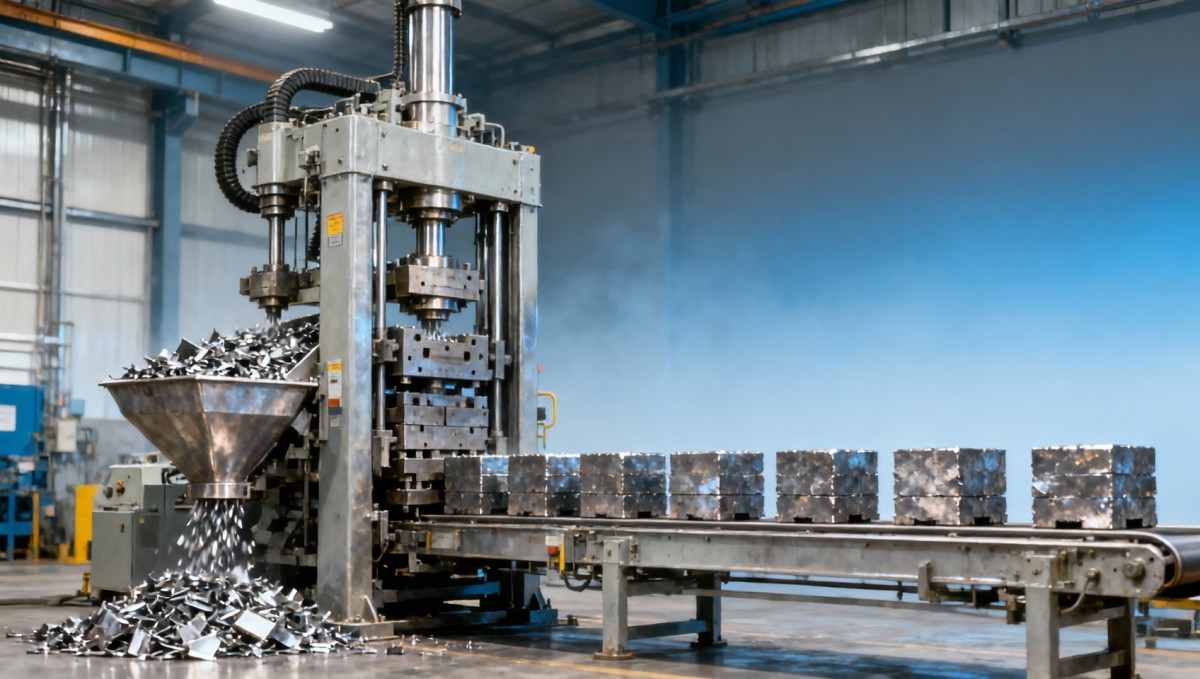
The first driver of output stability in a hydraulic briquetting press is feedstock consistency. Even a well-built press will produce variable briquette density if the incoming material changes every 10 to 20 minutes. Differences in particle size, bulk density, contamination level, and moisture content directly affect compression behavior inside the chamber.
For metal chips and machining swarf, the ideal feed should be as uniform as possible after pre-processing. Long stringy turnings can bridge in the hopper, while excessive fines may pack unevenly. In many plants, a pre-shredding or chip breaking stage reduces variation and helps keep material flow within a narrower range. This is one reason a twin shaft shredder machine is often evaluated alongside a hydraulic briquetting press in larger recycling or machining facilities.
Moisture and oil content also matter. If liquid content is too high, the press may discharge briquettes with unstable density, surface cracking, or delayed expansion after ejection. If the feed is too dry in certain material streams, friction behavior may change and pressure transmission may become less predictable. In practice, many operators try to keep moisture or residual liquid variation within a controlled band rather than chasing a single theoretical number.
Why feed uniformity is often underestimated
Buyers sometimes focus on tonnage per hour and main motor power, but output stability is heavily influenced by what enters the machine. A 15% to 25% variation in chip geometry can create noticeable swings in briquette weight and cycle time. This becomes more serious when the press feeds a furnace, remelting line, or resale packaging system that depends on consistent unit mass.
The table below shows common feed variables and their effect on stable press output in typical industrial settings.
The key takeaway is simple: raw material conditioning is not a side issue. It is one of the main determinants of whether a hydraulic briquetting press can maintain stable output over 8-hour, 16-hour, or 24-hour production windows.
Practical upstream controls
- Install magnetic separation or manual sorting to remove hard contaminants before pressing.
- Use a shredder, chip wringer, or screening stage when material geometry varies significantly.
- Set batch inspection every 1 to 2 hours for moisture, oil carryover, and visible foreign matter.
- Keep storage conditions stable to avoid sudden humidity pickup or uneven material compaction in hoppers.
Hydraulic System Response and Press Configuration Control the Compression Cycle
Once feed enters the chamber, the hydraulic system becomes the next critical factor. Output stability in a hydraulic briquetting press depends on how quickly and accurately the machine builds, holds, and releases pressure. Two presses with the same nominal force rating can perform very differently if their valves, pump sizing, control logic, or accumulator design are not equally matched to the material.
Pressure alone does not guarantee stable briquettes. The compression profile matters. If pressure rises too fast, some materials trap air and produce cracks after ejection. If pressure build-up is too slow, cycle time increases and hourly throughput drops. In many industrial applications, stable output comes from repeatable pressure curves, not peak force headlines used in sales brochures.
Oil temperature is another major variable. Hydraulic fluid that runs too hot can reduce viscosity and affect valve response. In continuous-duty operation, a temperature drift from 40°C to 60°C may be enough to change cycle consistency, especially in older systems without effective cooling or monitoring. For high-duty plants, real-time monitoring of pressure, oil temperature, and cycle duration should be treated as standard rather than optional.
Key configuration choices that affect repeatability
Procurement teams should evaluate more than press tonnage. A stable line often depends on the interaction between hydraulic capacity, chamber size, ram stroke, and control architecture. If chamber volume is too large for the actual feed density, fill variability becomes worse. If it is too small, the machine may cycle too frequently and increase component wear.
The comparison below highlights the most important machine-side factors that influence output consistency.
For buyers comparing a hydraulic briquetting press with adjacent equipment such as a scrap metal baler, this distinction is important. Balers often tolerate wider feed variation because the product format is different. Briquetting systems usually demand tighter hydraulic repeatability because the final product must meet more consistent density and geometry requirements.
Checklist for technical evaluation
- Confirm whether the press is sized for your real hourly feed rate, not only for peak promotional capacity.
- Ask for typical cycle time under material conditions similar to yours.
- Verify alarm logic for pressure drop, oil overtemperature, and sensor failure.
- Review cooling method, hydraulic component accessibility, and maintenance interval recommendations.
Tooling Wear, Maintenance Discipline, and Operator Settings Shape Long-Term Stability
Even if feed and hydraulics are well controlled, output stability in a hydraulic briquetting press will decline when wear parts are ignored. Dies, sleeves, seals, guide surfaces, and feeding components gradually change the machine’s compression geometry. The result may not appear on day one, but after several hundred operating hours the plant may see higher fines, irregular briquette edges, or density drift between shifts.
Tool wear is often accelerated by abrasive particles, poor lubrication control, or contamination from tramp metal. In shops processing cast iron or mixed metal swarf, this risk is especially high. Operators may try to compensate by raising pressure, but that usually treats the symptom rather than the root cause. Overcompensation can increase heat, stress seals, and shorten hydraulic component life.
Operator settings are another overlooked variable. Small changes in dwell time, fill duration, pre-compression, or discharge timing can shift output quality by a visible margin. If one shift runs a 12-second cycle and another shift runs 15 seconds without process justification, the plant is not operating one standard process but several different ones. Stable output requires documented setpoints and controlled adjustment authority.
Typical warning signs of deteriorating stability
- Briquette weight begins to vary beyond the plant’s normal tolerance, for example by more than 5% to 8% within the same batch.
- Cycle time gradually lengthens over 2 to 4 weeks without an increase in feed volume.
- Surface cracks, corner breakage, or soft discharge become more frequent after continuous shifts.
- Hydraulic temperature or energy use rises while output per hour stays flat or declines.
A disciplined maintenance plan should separate daily checks, weekly inspections, and planned shutdown tasks. This is especially important for facilities running 2-shift or 3-shift schedules. The cost of a 30-minute inspection is usually far lower than the cost of an unplanned stop in the middle of a production batch.
Suggested maintenance structure for stable output
The following table outlines a practical maintenance framework for a hydraulic briquetting press used in industrial duty cycles.
What this shows is that long-term stability is not only a design issue. It is also a management issue. Plants that document settings, track wear trends, and standardize maintenance usually get better briquette consistency and lower lifecycle cost.
How Buyers Should Compare Systems, Suppliers, and Production Scenarios
For procurement teams and industrial decision-makers, stable output should be evaluated as a system-level purchasing criterion. A hydraulic briquetting press may look competitive on initial price, but the real value lies in consistent briquette density, predictable throughput, serviceability, and compatibility with upstream and downstream equipment. This is particularly important when the press is integrated with conveyors, shredders, liquid recovery systems, or furnace charging operations.
A useful procurement approach is to compare at least 4 dimensions: material fit, process control, wear life, and support responsiveness. If one supplier offers lower upfront cost but cannot define expected maintenance intervals, spare part lead times, or acceptable feed limits, the total risk may be much higher than it first appears. Stable output depends on knowing the process boundaries before purchase.
It is also wise to assess whether your application really needs a briquetting press or whether another densification or recycling system is better suited. A scrap metal baler may be more suitable for bulky offcuts and mixed scrap. A tire recycling machine addresses a completely different material stream with different size reduction and separation goals. The right comparison is not only machine versus machine, but process objective versus process objective.
Procurement questions that improve decision quality
- What feed characteristics were used to estimate the quoted hourly capacity?
- What density consistency or briquette weight variation is considered normal in real production?
- How long are typical lead times for seals, dies, sensors, and hydraulic components: 7 days, 15 days, or longer?
- What training is provided to operators during commissioning and first-month operation?
- Can the supplier support future line upgrades, such as pre-shredding, liquid separation, or automated discharge handling?
Common buyer mistakes
One common mistake is evaluating the hydraulic briquetting press as an isolated asset. In reality, stable output depends on the whole production chain. If a plant feeds mixed scrap directly from bins without screening, no machine specification sheet will solve the resulting variation. Another mistake is accepting broad capacity claims without asking how material type, moisture, and bulk density affect the actual number.
A third mistake is underestimating operator influence. Even advanced presses need clear parameter management, routine inspection, and practical troubleshooting procedures. A well-matched machine with weak process control can perform worse than a mid-range machine with disciplined operation.
FAQ for industrial buyers and users
How stable should briquette weight or density be in normal production?
The acceptable range depends on the material and end use, but many plants aim to keep visible variation within a narrow internal tolerance, often around 5% or less for consistent feed streams. If variation repeatedly exceeds that level, the cause is usually found in feed inconsistency, wear, or uncontrolled settings rather than in nominal press force alone.
Is higher pressure always better for output stability?
No. Excess pressure can hide process problems temporarily, but it may increase wear and energy use. Stable output usually comes from matching compression profile, chamber design, and material condition. Pressure is essential, but it must be controlled as part of a balanced cycle.
When should a plant consider adding pre-processing equipment?
If the feed contains long turnings, oversize pieces, mixed fractions, or excessive liquid carryover, upstream processing should be considered early. In many operations, a shredder, chip wringer, or screening unit improves stability enough to justify the added equipment cost over a 12- to 24-month operating horizon.
What service support matters most after installation?
The most useful support usually includes commissioning guidance, parameter optimization during the first weeks, a defined spare parts list, and remote troubleshooting for alarms or cycle inconsistency. Fast technical response is especially important when the press is linked to production lines that cannot tolerate long stoppages.
Output stability in a hydraulic briquetting press is ultimately built on four pillars: controlled feed, responsive hydraulics, maintained tooling, and disciplined operation. Buyers who evaluate these factors together make stronger investment decisions and reduce the risk of performance gaps after installation.
For manufacturers, recyclers, facility managers, and procurement leaders, the best results come from matching the machine to the real material stream, not to a generic capacity claim. If you are reviewing briquetting equipment, comparing it with a scrap metal baler, or planning a broader recycling line with pre-shredding and handling systems, a structured technical assessment will save time and lifecycle cost.
To explore a more suitable hydraulic briquetting press configuration, evaluate line integration options, or discuss stable-output requirements for your plant, contact us today to get a tailored solution and deeper technical guidance.
Technical Specifications
- How to choose an organic fertilizer machine for wet raw materialsAuthor :Environmental Engineering Director
- What affects output stability in a hydraulic briquetting pressAuthor :Environmental Engineering Director
- Waste paper baler wholesale prices vary for reasons beyond tonnageAuthor :Environmental Engineering Director
Expert Insights

Chief Security Architect
Dr. Thorne specializes in the intersection of structural engineering and digital resilience. He has advised three G7 governments on industrial infrastructure security.
Related Analysis
- Apr 16, 2026How to choose an organic fertilizer machine for wet raw materialsAuthor :Environmental Engineering Director
- Apr 16, 2026What affects output stability in a hydraulic briquetting pressAuthor :Environmental Engineering Director
- Apr 16, 2026Waste paper baler wholesale prices vary for reasons beyond tonnageAuthor :Environmental Engineering Director
Core Sector // 01
Security & Safety
- How to choose an organic fertilizer machine for wet raw materialsAuthor :Environmental Engineering Director

- What affects output stability in a hydraulic briquetting pressAuthor :Environmental Engineering Director

- Waste paper baler wholesale prices vary for reasons beyond tonnageAuthor :Environmental Engineering Director

- When a scrap metal baler becomes too small for daily loading needsAuthor :Environmental Engineering Director

- Tire recycling machine layouts that reduce dust and wire lossAuthor :Environmental Engineering Director

- PET bottle washing line problems that lower flake purityAuthor :Environmental Engineering Director

- Plastic recycling granulator selection starts with feedstock qualityAuthor :Environmental Engineering Director

- Twin shaft shredder machine or single shaft for bulky wasteAuthor :Environmental Engineering Director