Pocket air filters with low pressure drop are not always the best fit
Author
Date Published
Reading Time
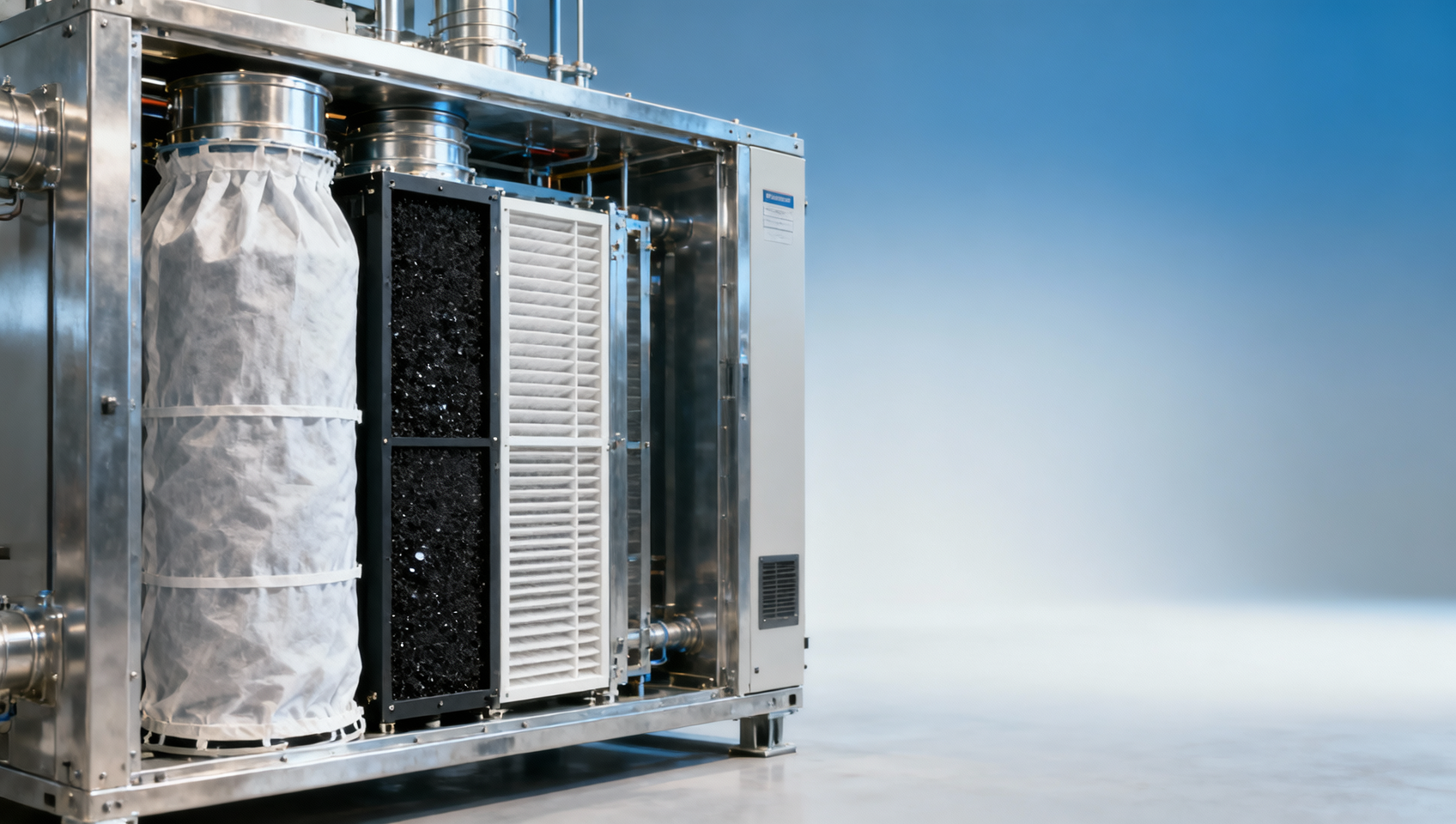
Pocket air filters are often chosen for their low pressure drop, but that advantage alone does not guarantee the best HVAC performance. In demanding industrial environments, factors such as dust loading, filtration efficiency, service life, and compatibility with activated carbon air filter systems, ahu handling units, and hepa filters bulk requirements can matter far more. This article explains why pocket air filters should be evaluated as part of a complete air management strategy.
For operators, this is not a theoretical issue. A filter that starts with a pressure drop of 60–90 Pa may look attractive on paper, yet if it loads too quickly, bypasses fine particles, or shortens changeout cycles from 6 months to 8 weeks, the total cost of ownership rises fast. In industrial plants, warehouses, electronics assembly zones, food processing lines, and large commercial AHU systems, filter selection affects energy use, indoor air quality, equipment cleanliness, and maintenance labor at the same time.
For procurement teams and decision-makers, the key question is not whether a pocket air filter has low resistance, but whether it supports stable system performance under real duty conditions. That means reviewing dust profile, airflow volume, final pressure drop limits, media efficiency class, frame integrity, odor control needs, and the role of downstream HEPA stages. A low-pressure option may be right in one air handling unit and completely wrong in another.
Why low pressure drop can be misleading in industrial air filtration
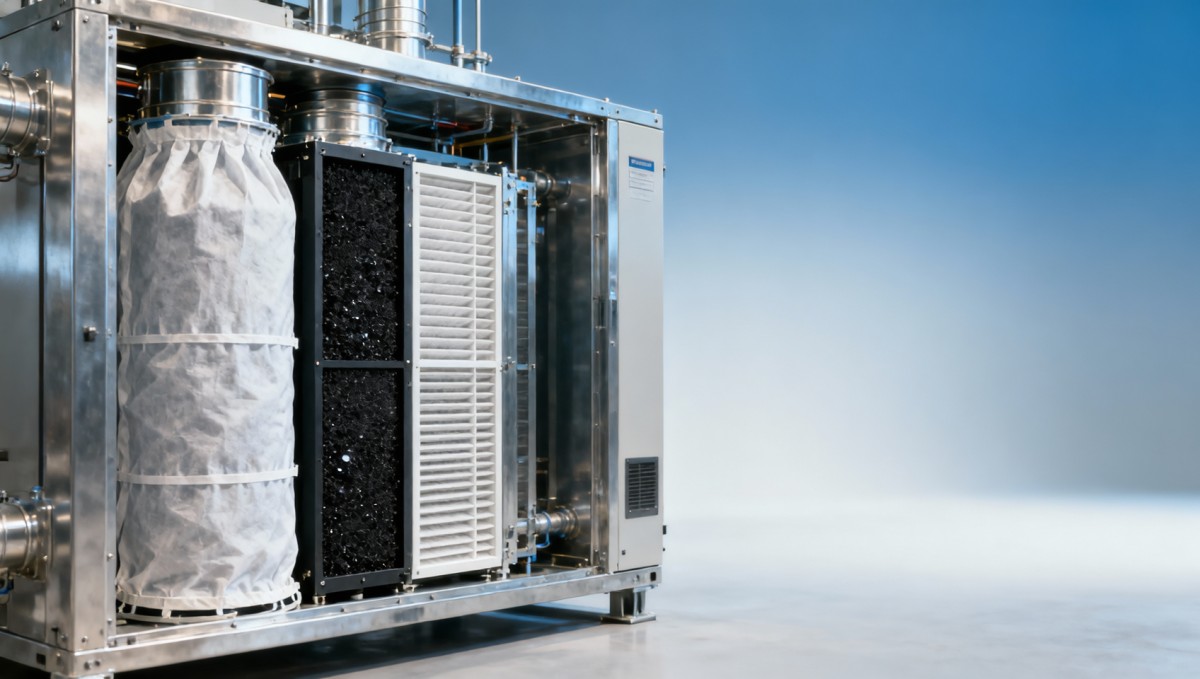
In HVAC engineering, low initial pressure drop is often associated with lower fan energy demand. That is true, but only partially true. Initial pressure drop is a starting point, not a lifecycle metric. A pocket air filter that begins at 70 Pa but reaches 250 Pa in 4–6 weeks may be less economical than a filter starting at 110 Pa and remaining stable for 4–5 months under the same dust load.
This matters most in industrial applications where airborne contaminants are not uniform. Metal dust, textile fibers, oil mist carryover, carbon fines, pollen, and construction-related coarse particles behave differently. Filters with very open media structures may reduce early resistance, yet can sacrifice depth loading and particle capture consistency. The result can be premature clogging in one facility and poor fine-particle retention in another.
Operators also need to consider system interaction. In an AHU handling unit, a pocket air filter is rarely working alone. It may sit upstream of an activated carbon air filter stage for odor and gas adsorption, or upstream of HEPA filtration in clean process areas. If the prefilter underperforms, the carbon bed can saturate faster and the HEPA stage can load early, creating much higher replacement costs than the energy savings gained from a low-resistance bag filter.
Another common mistake is treating laboratory ratings as direct field outcomes. Test conditions are controlled, but real plants often face variable airflow, 24/7 operation, humidity shifts, and uneven contaminant bursts. In a two-shift production environment, a filter may see 12–16 operating hours per day; in heavy manufacturing or logistics hubs, runtime can exceed 8,000 hours per year. Under those conditions, stability over time is usually more important than the lowest starting pressure number.
Initial resistance versus total operating performance
A better evaluation model combines at least 4 variables: initial pressure drop, average pressure drop over service life, dust-holding capacity, and filtration efficiency at the target particle range. For many industrial buyers, this immediately changes the comparison. Two filters can have a difference of 30–40 Pa at startup, yet one may deliver 2 to 3 times the dust capacity before reaching the recommended final resistance threshold.
Key warning signs during selection
- The filter is chosen only by nominal airflow and opening size, with no review of contaminant type.
- The quote highlights low pressure drop but does not state recommended final pressure drop or dust capacity.
- No compatibility check is made with carbon filters, coils, or downstream HEPA stages.
- Service intervals are assumed rather than calculated from runtime, dust loading, and maintenance access.
The table below shows why low pressure drop should be balanced against other performance criteria in a real-world procurement review.
The practical conclusion is clear: low pressure drop is valuable, but only when it is accompanied by stable efficiency, sufficient dust capacity, and good coordination with the entire air management train.
What buyers should evaluate beyond pressure drop
A procurement team comparing pocket air filters for industrial use should apply a broader checklist than a single fan-energy parameter. In most facilities, at least 6 decision points matter: filter class, pocket depth, media structure, airflow rating, final pressure threshold, frame and header integrity, and compatibility with current AHU handling units. If odor control or corrosive gases are present, the evaluation should also include activated carbon air filter integration.
Filtration efficiency is especially important when fine dust protection is required. In mixed industrial air streams, a lower-grade prefilter may be acceptable for coarse debris, but not when the system feeds spaces with electronics, instruments, packaging lines, or regulated hygiene targets. When a facility uses HEPA filters bulk procurement for multiple zones, consistent upstream prefiltration can significantly reduce variance in HEPA replacement timing.
Service life should also be measured in actual operating conditions. A pocket air filter installed in a low-dust office AHU may last 6–9 months. The same filter in a warehouse dock area or machining plant may need replacement in 6–10 weeks. Buyers should request expected service intervals based on airflow, runtime, and dust conditions rather than accepting generic catalog claims.
Mechanical durability is another overlooked factor. In systems running face velocities around 1.5–2.5 m/s, poor pocket spacing, weak stitching, or unstable frame construction can cause bag collapse, media vibration, or leakage around the seal. This reduces effective capture and can create uneven loading across coils and terminal filters.
A practical industrial selection checklist
- Confirm design airflow per unit, such as 2,000–20,000 m³/h for each AHU section.
- Define the main contaminant: coarse dust, fine PM, fibers, odor, fumes, or mixed loading.
- Set the acceptable initial and final pressure drop range, for example 80–120 Pa initial and 200–300 Pa final, depending on system design.
- Review whether a downstream carbon or HEPA stage must be protected.
- Estimate target maintenance interval, such as 8 weeks, 12 weeks, or 6 months.
- Check access space, frame type, and installation method to reduce servicing errors.
The comparison below helps buyers align filter choice with operating conditions rather than a single marketing claim.
For most B2B buyers, the best specification sheet is one that links pressure drop to replacement cycle, contaminant profile, and downstream asset protection. That is where real savings are found.
How pocket air filters interact with activated carbon and HEPA stages
Pocket air filters are often installed as a prefiltration step, and their role becomes more critical when the system includes activated carbon air filter modules or HEPA stages. In this configuration, the pocket filter is not just a standalone component. It is the first barrier that determines how much dust reaches the more expensive stages downstream. A poor prefilter decision can multiply total operating cost across the entire air system.
Activated carbon works by adsorption, not by capturing high dust loads efficiently. When coarse and fine particles enter the carbon bed, pressure drop rises and usable carbon surface is reduced. In practice, this can shorten carbon service life by 20–40% in dusty environments if upstream particulate control is weak. That means more frequent media replacement, more downtime, and less predictable odor or VOC control performance.
The same principle applies to HEPA filters bulk purchasing programs. When facilities standardize HEPA replacement across multiple lines or buildings, they need stable prefiltration to protect those higher-value filters. HEPA elements are designed for very fine particle capture, not bulk dust loading. If the pocket air filter allows inconsistent upstream carryover, the plant may see uneven HEPA pressure rise, unplanned inventory usage, and budget overruns across quarterly maintenance cycles.
In AHU handling units, correct staging is usually more important than chasing the lowest individual filter resistance. A balanced arrangement may include a coarse or medium pocket prefilter, followed by activated carbon in odor-sensitive zones, and HEPA only where process criticality justifies it. The exact combination depends on airflow, contaminant spectrum, and cleanliness target.
Typical staged filtration logic
Recommended sequence for many industrial AHU applications
- Stage 1: pocket air filter for bulk particulate reduction and protection of coils and downstream media.
- Stage 2: activated carbon air filter where odor, gases, or light VOC control is needed.
- Stage 3: HEPA filter for high-cleanliness zones, sensitive equipment, or final process protection.
The table below summarizes how filter stage coordination changes procurement priorities.
For decision-makers, this means a pocket air filter should be specified by what it enables downstream, not just by its standalone startup pressure figure.
Common mistakes, maintenance realities, and procurement guidance
One common mistake is replacing filters based only on calendar dates. In reality, replacement should follow a mix of pressure monitoring, visual inspection, contamination profile, and operational criticality. In one plant, 12 weeks may be appropriate; in another, 24 weeks may still be safe. Where differential pressure gauges are installed, a review every 2–4 weeks can prevent both premature replacement and overrun conditions.
Another mistake is underestimating installation quality. Even a correctly specified pocket air filter can fail operationally if there is frame distortion, poor gasket sealing, or air bypass around the filter bank. In large AHU handling units, leakage around the housing can reduce effective efficiency more than a one-grade difference in filter class. Procurement specifications should therefore include not only media performance, but also frame fit, sealing method, and inspection protocol.
Maintenance teams should build filter strategy around plant reality. If the site has limited shutdown windows, a slightly higher initial pressure drop may be acceptable if it extends service life and reduces changeouts from 10 times per year to 4 times per year. If labor access is difficult or safety permits are required for roof AHUs, each avoided replacement event has direct cost and scheduling value.
For enterprise buyers managing multiple facilities, standardization helps, but only within controlled ranges. It is often practical to group sites into 3 categories: general comfort ventilation, medium-dust industrial use, and high-sensitivity or odor-managed areas. Each category can then use a defined filter package rather than forcing a single low-pressure product across all environments.
Procurement questions to ask suppliers
- What is the expected service life at our airflow rate and contamination profile?
- What final pressure drop range is recommended before replacement?
- How does this pocket air filter protect activated carbon air filter stages or downstream HEPA elements?
- Is the filter construction suitable for continuous operation, vibration, and humidity fluctuations?
- Can the supplier support staggered or bulk delivery for multi-site maintenance planning?
FAQ
How do I know if a low-pressure pocket air filter is still the right choice?
It can be the right choice when dust load is moderate, airflow is stable, and downstream stages are not highly sensitive. The decision improves when the supplier can show both initial resistance and expected life to final pressure under your actual conditions, not just lab startup values.
Are pocket air filters suitable for all AHU handling units?
No. Compatibility depends on housing dimensions, face velocity, access space, sealing design, and downstream filtration strategy. In some compact units, rigid compact filters or alternate formats may fit service conditions better.
When should activated carbon be added?
Activated carbon air filter stages are typically added when odor, fumes, or VOC-related complaints cannot be solved by particulate filters alone. Carbon should usually sit after a good particulate prefilter so dust does not consume available adsorption capacity too quickly.
Why do HEPA procurement costs sometimes rise unexpectedly?
A frequent reason is unstable prefiltration. When upstream pocket air filters are selected mainly for low pressure drop and not for dust-holding consistency, HEPA filters bulk inventories can be consumed faster than forecast due to irregular loading and premature replacement.
Pocket air filters with low pressure drop can be useful, but they are not automatically the best fit for industrial HVAC systems. The right choice balances energy demand with filtration efficiency, dust capacity, maintenance interval, and protection of activated carbon and HEPA stages. For operators, buyers, and plant leaders, the strongest results come from evaluating filters as part of a complete air management strategy rather than as isolated catalog items. If you are reviewing AHU upgrades, replacement cycles, or multi-site filtration procurement, contact us to discuss a more precise specification path and get a tailored solution for your operating environment.
Technical Specifications
- How to choose an organic fertilizer machine for wet raw materialsAuthor :Environmental Engineering Director
- What affects output stability in a hydraulic briquetting pressAuthor :Environmental Engineering Director
- Waste paper baler wholesale prices vary for reasons beyond tonnageAuthor :Environmental Engineering Director
Expert Insights

Chief Security Architect
Dr. Thorne specializes in the intersection of structural engineering and digital resilience. He has advised three G7 governments on industrial infrastructure security.
Related Analysis
- Apr 16, 2026How to choose an organic fertilizer machine for wet raw materialsAuthor :Environmental Engineering Director
- Apr 16, 2026What affects output stability in a hydraulic briquetting pressAuthor :Environmental Engineering Director
- Apr 16, 2026Waste paper baler wholesale prices vary for reasons beyond tonnageAuthor :Environmental Engineering Director
Core Sector // 01
Security & Safety
- Electrostatic precipitator ESP vs baghouse in high temperature dustAuthor :Environmental Engineering Director

- Commercial kitchen exhaust hood sizing mistakes that hurt captureAuthor :Environmental Engineering Director

- HVAC ozone generator use cases where odor control can backfireAuthor :Environmental Engineering Director

- Industrial humidifiers wholesale orders often miss water quality limitsAuthor :Environmental Engineering Director

- Commercial dehumidifiers that work in cold rooms need a closer lookAuthor :Environmental Engineering Director

- AHU handling units: where energy loss often starts in the design stageAuthor :Environmental Engineering Director

- Activated carbon air filter life span depends on more than airflowAuthor :Environmental Engineering Director

- Pocket air filters with low pressure drop are not always the best fitAuthor :Environmental Engineering Director