HVAC ozone generator use cases where odor control can backfire
Author
Date Published
Reading Time
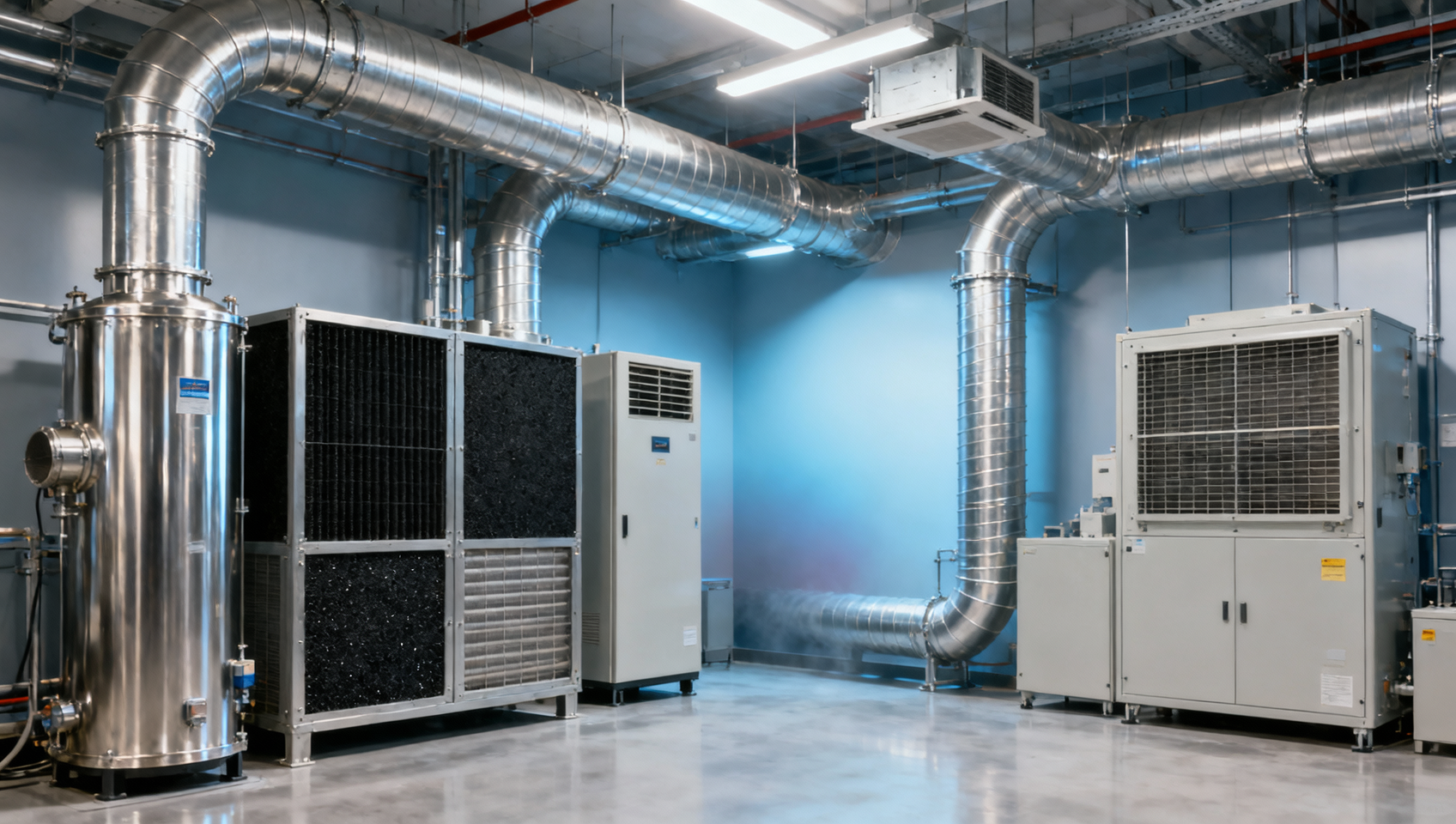
In HVAC environments, an hvac ozone generator may seem like a fast fix for persistent odors, but improper use can worsen indoor air quality, damage materials, and create compliance risks. This article examines where odor control strategies backfire, how alternatives like activated carbon air filter, biofilter odor control, and commercial dehumidifiers compare, and what facility teams and buyers should evaluate before deployment.
For facility operators, maintenance supervisors, procurement teams, and decision-makers, odor control is rarely just a comfort issue. It often signals moisture intrusion, microbial growth, VOC accumulation, process contamination, or poor air exchange. Treating the smell without addressing the source can raise lifecycle costs, increase complaint rates, and create avoidable exposure events.
In commercial buildings, warehouses, healthcare support spaces, food-adjacent facilities, and industrial utility rooms, the wrong air treatment choice can affect filters, coils, seals, electronics, and occupied-zone safety. That is why ozone-based approaches should be assessed not only for deodorization speed, but also for occupancy limits, material compatibility, ventilation design, and post-treatment verification.
Where HVAC ozone generator use goes wrong
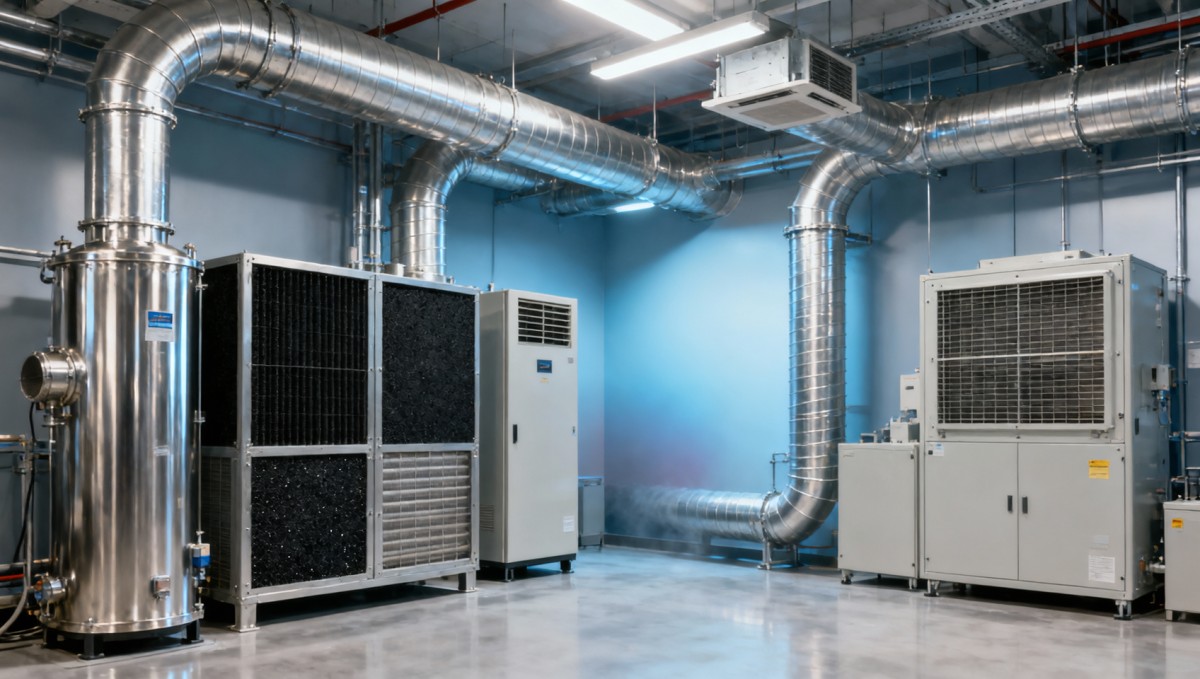
An hvac ozone generator works by oxidizing odor-causing compounds. In controlled, unoccupied remediation settings, that mechanism may help reduce certain smells. The problem starts when the technology is treated as a routine in-duct air freshening solution for occupied buildings, especially where odor sources are continuous rather than episodic.
Backfire typically happens in 4 situations: when ozone is used in occupied zones, when underlying moisture remains above 60% relative humidity, when HVAC airflow is uneven across the duct network, and when materials in the treated area are oxidation-sensitive. In these cases, the odor may fade temporarily, but the root issue often returns within days or weeks.
Another common error is assuming stronger output means faster success. In practice, higher ozone concentration can react with terpenes, cleaning residues, rubber components, adhesives, and some coatings. Instead of neutralizing risk, it can create secondary byproducts, accelerate cracking of elastomers, and leave lingering irritation complaints from occupants or staff re-entering the space too early.
High-risk facility scenarios
Not every site faces the same level of exposure. Spaces with variable occupancy, porous interior finishes, or mixed-use ventilation systems are more vulnerable. If the HVAC design serves offices, production support rooms, and storage from the same air path, ozone migration becomes harder to control.
- Schools, offices, and retail spaces with daily occupancy of 8–16 hours.
- Healthcare support areas where sensitive individuals may react to residual oxidants.
- Archive rooms, museums, or electronics rooms with oxidation-sensitive materials.
- Food handling support areas where odor indicates sanitation or humidity failures.
- Hotels and residential towers where repeat exposure can trigger complaint escalation.
For buyers, the key question is not whether ozone can reduce odors under some conditions. It is whether the HVAC ozone generator is the right engineering control for the source, occupancy pattern, and compliance framework of the building.
The table below outlines common use cases where odor control measures can backfire and the practical reason behind each failure mode.
The pattern is consistent: ozone is most likely to fail when used as a substitute for source control, ventilation correction, or humidity management. For most occupied commercial HVAC applications, the safer path is to identify the odor class first, then match the control method to the contaminant and building conditions.
Why odor control decisions must start with source identification
Odors in HVAC systems generally come from 5 categories: biological growth, moisture and stagnant condensate, chemical off-gassing, process contamination, and outdoor air intrusion. Each category requires a different response. A musty coil section, a sewer gas leak, and a solvent odor from stored materials cannot be solved by the same device choice.
A practical diagnostic sequence often takes 24–72 hours and includes a walkthrough, humidity review, condensate inspection, filter and coil check, airflow verification, and occupant complaint mapping. This process is far less expensive than repeated failed treatment cycles. Even one unnecessary ozone deployment can create added cleaning, downtime, and stakeholder communication costs.
For operators, one of the most overlooked indicators is timing. If odor spikes after startup, the cause may be stagnant water, dirty pans, or microbial growth on coils. If odor rises during peak occupancy, it may indicate insufficient outdoor air, overloaded filtration, or emissions from furnishings and products. If odor appears only in wet seasons, humidity control becomes a first-line corrective action.
A practical 5-step assessment before selecting any deodorization method
- Classify the odor: musty, chemical, sulfur-like, organic, or mixed.
- Measure relative humidity, ideally targeting 40%–60% in occupied commercial environments.
- Inspect filters, drain pans, coils, insulation, and low-flow duct sections.
- Determine whether the source is intermittent, seasonal, or continuous.
- Confirm whether the area is occupied, intermittently occupied, or can be isolated during treatment.
This sequence helps buyers avoid solution mismatch. If the main driver is moisture, a commercial dehumidifier and drainage correction may outperform an hvac ozone generator. If the issue is gaseous contamination, an activated carbon air filter may deliver steadier results. If the odor comes from composting, wastewater, or organic process emissions, biofilter odor control may be more suitable.
What procurement teams should request
Before approving a purchase, procurement should ask for 6 items: intended application conditions, occupancy restrictions, material compatibility guidance, maintenance intervals, expected treatment duration, and verification method after use. Without these details, the project shifts risk from supplier selection to facility operations.
In many B2B environments, the better investment is not a standalone odor device, but a layered remediation package. That can include cleaning protocols, upgraded filtration, dehumidification, localized capture, and post-correction monitoring over 2–6 weeks.
Comparing ozone with activated carbon, biofilters, and dehumidification
No single odor control method fits every HVAC or facility environment. An hvac ozone generator is an oxidation tool, not a universal air cleaning strategy. By contrast, activated carbon air filter systems adsorb many VOCs and odors, biofilter odor control uses biologically active media for certain organic emissions, and commercial dehumidifiers reduce the moisture conditions that often sustain odor formation.
The right choice depends on contaminant type, airflow volume, occupancy, and maintenance discipline. In occupied buildings, lower-risk and more predictable methods are usually preferred. Ozone is generally more appropriate for controlled remediation windows, while continuous occupied-zone correction often favors adsorption, drying, filtration, or source isolation.
Procurement teams should also compare hidden operating implications. Carbon filters require replacement schedules, biofilters need moisture and media management, and dehumidifiers add condensate handling and power load. But these maintenance needs are often easier to govern than the uncertainty of residual oxidants moving through occupied HVAC zones.
The following comparison helps align technology choice with real-world facility conditions and purchasing criteria.
For many commercial facilities, the most durable approach is a hybrid design: dehumidification to suppress moisture-driven odor, carbon media for residual gaseous contaminants, and targeted cleaning or source repair. This approach may require 2–3 coordinated interventions, but it usually reduces repeat complaints more effectively than relying on a single high-reactivity treatment tool.
Selection signals by environment
- If RH remains above 60% for extended periods, prioritize moisture control first.
- If odors are solvent-like or product-related, evaluate activated carbon air filter capacity.
- If the source is process exhaust with organic loading, assess biofilter odor control feasibility.
- If treatment must occur around occupants, avoid solutions that depend on exposure exclusion unless isolation is guaranteed.
This framework reduces the chance of buying a technology that looks efficient on paper but performs poorly under site-specific operating conditions.
Procurement and compliance factors buyers should evaluate
From a purchasing perspective, odor control equipment should be evaluated as a risk-managed system, not a commodity line item. Initial price matters, but so do occupancy controls, installation constraints, maintenance burden, operator training, and the cost of failed remediation. A lower-cost device can become the higher-cost option if it triggers repeat deployment, complaint investigations, or material replacement.
Buyers should compare at least 4 dimensions: technical fit, safety governance, operating cost, and verification process. For example, a carbon stage may need media replacement every 3–12 months depending on loading, while a dehumidification plan may require condensate routing, defrost logic, and seasonal capacity review. Ozone units may need stricter lockout, signage, isolation, and post-treatment ventilation procedures.
Compliance is especially important in multi-tenant buildings, healthcare-adjacent sites, educational facilities, and export-oriented industrial settings where internal audit practices are stringent. Even where local rules vary, buyers should insist on documented operating limits, safety instructions, and compatibility declarations rather than relying on verbal assurances.
Decision matrix for industrial and commercial buyers
The matrix below can help procurement teams score options during RFQ or technical review. It is useful for EPC contractors, facility managers, and sourcing directors who need to compare multiple odor control pathways within a structured approval process.
A disciplined evaluation process often reveals that the best purchasing decision is a corrective package rather than a single device. In many facilities, capital approval improves when the proposal links odor control to measurable outcomes such as RH stabilization, fewer service calls, lower complaint frequency, and reduced rework over a 90-day period.
Common buying mistakes
- Choosing based only on odor severity instead of source category.
- Ignoring purge time, re-entry rules, and isolation logistics.
- Failing to account for consumables, media changes, or drainage requirements.
- Using portable remediation tools as permanent HVAC solutions.
- Skipping post-installation verification after 7, 30, and 90 days.
These errors are common because odor projects are often initiated under pressure. A structured review protects both operations and procurement from short-term fixes that become long-term liabilities.
Implementation guidance and FAQ for facility teams
Once a strategy is selected, execution quality determines whether odors are truly reduced or simply delayed. Facility teams should define treatment boundaries, confirm ventilation behavior, record baseline conditions, and assign acceptance criteria before any intervention starts. A strong plan includes pre-check, treatment, purge or stabilization, and verification.
For moisture-driven issues, a 2–4 week stabilization period is often needed after installing commercial dehumidifiers or fixing drainage. For carbon-based solutions, media performance should be reviewed against odor return patterns and pressure drop trends. For ozone remediation in isolated cases, re-entry should only occur after the area has been adequately ventilated and verified according to site safety procedures.
Operations teams should also document what success looks like. That may include a reduction in complaint frequency, lower RH readings, elimination of visible condensate, cleaner drain pans, or improved consistency between supply and return air conditions.
FAQ: When is an HVAC ozone generator appropriate?
It is generally more appropriate for short-duration treatment in unoccupied, isolated environments where the odor source has already been removed or substantially reduced. It should not be treated as a default continuous-use solution for occupied commercial HVAC systems.
FAQ: How do I know if humidity is the real cause of odor?
If odors worsen in wet weather, after shutdown periods, or near coils and drain pans, humidity is a strong suspect. Sustained RH above 60%, recurring condensate, and musty smells returning within 1–2 weeks are practical indicators that drying and drainage correction should come before oxidation-based treatment.
FAQ: When should activated carbon air filter systems be prioritized?
They are often prioritized where odors are linked to VOCs, cleaning chemicals, off-gassing materials, or outdoor air contaminants, especially in spaces that remain occupied. Buyers should review media type, expected replacement interval, and pressure drop impact on fan performance.
FAQ: What is the best approach for organic process odors?
For wastewater, compost, and certain industrial organic emissions, biofilter odor control may be the better engineering option. It is not a universal fit for every building HVAC system, but it can be effective where airflow and contaminant characteristics support biological treatment.
Effective odor control is not about choosing the most aggressive technology. It is about matching the method to the contaminant, occupancy pattern, and facility risk profile. An hvac ozone generator can have a role in tightly controlled remediation, but many occupied commercial and industrial environments benefit more from source correction, activated carbon air filter stages, biofilter odor control for process streams, and commercial dehumidifiers for moisture-led problems.
For procurement leaders and facility decision-makers, the safest path is a documented evaluation that covers source identification, operating limits, maintenance obligations, and verification steps. If you are assessing odor control options for a building, utility area, or industrial support environment, contact GIC to discuss application-specific requirements, compare solution pathways, and obtain a tailored sourcing and implementation plan.
Technical Specifications
- How to choose an organic fertilizer machine for wet raw materialsAuthor :Environmental Engineering Director
- What affects output stability in a hydraulic briquetting pressAuthor :Environmental Engineering Director
- Waste paper baler wholesale prices vary for reasons beyond tonnageAuthor :Environmental Engineering Director
Expert Insights

Chief Security Architect
Dr. Thorne specializes in the intersection of structural engineering and digital resilience. He has advised three G7 governments on industrial infrastructure security.
Related Analysis
- Apr 16, 2026How to choose an organic fertilizer machine for wet raw materialsAuthor :Environmental Engineering Director
- Apr 16, 2026What affects output stability in a hydraulic briquetting pressAuthor :Environmental Engineering Director
- Apr 16, 2026Waste paper baler wholesale prices vary for reasons beyond tonnageAuthor :Environmental Engineering Director
Core Sector // 01
Security & Safety
- Electrostatic precipitator ESP vs baghouse in high temperature dustAuthor :Environmental Engineering Director

- Commercial kitchen exhaust hood sizing mistakes that hurt captureAuthor :Environmental Engineering Director

- HVAC ozone generator use cases where odor control can backfireAuthor :Environmental Engineering Director

- Industrial humidifiers wholesale orders often miss water quality limitsAuthor :Environmental Engineering Director

- Commercial dehumidifiers that work in cold rooms need a closer lookAuthor :Environmental Engineering Director

- AHU handling units: where energy loss often starts in the design stageAuthor :Environmental Engineering Director

- Activated carbon air filter life span depends on more than airflowAuthor :Environmental Engineering Director

- Pocket air filters with low pressure drop are not always the best fitAuthor :Environmental Engineering Director