Commercial dehumidifiers that work in cold rooms need a closer look
Author
Date Published
Reading Time
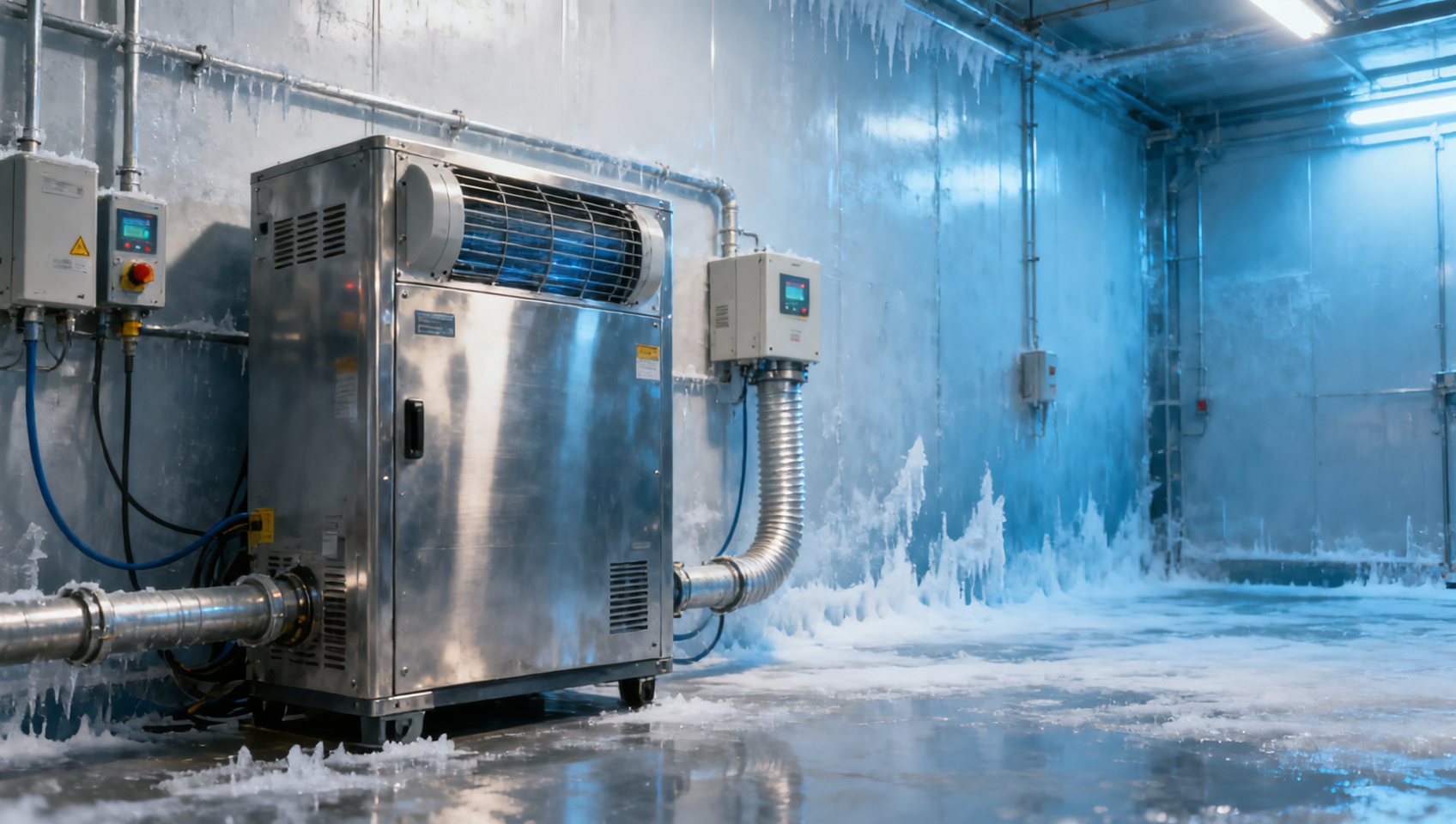
Commercial dehumidifiers used in cold rooms face conditions that standard moisture-control systems often cannot handle. For facility managers, operators, and procurement teams evaluating air-quality and process equipment—from ahu handling units and activated carbon air filter systems to industrial humidifiers wholesale options—a closer look at low-temperature performance, defrost design, energy efficiency, and compliance is essential before making a reliable industrial investment.
In food processing, pharmaceutical storage, logistics hubs, battery material handling, and precision manufacturing, cold-room humidity is not a secondary issue. Excess moisture can trigger frost buildup on evaporators, unstable indoor conditions, packaging damage, microbial risk, and more frequent shutdowns. Once ambient temperature drops into the 0°C to 10°C range, many conventional refrigerant-based dehumidifiers lose capacity, frost too quickly, or cycle inefficiently.
That is why commercial dehumidifiers that work in cold rooms deserve a more disciplined evaluation. Buyers need to look beyond nominal liters-per-day ratings and compare actual low-temperature moisture removal, defrost logic, airflow integration, drainage design, control precision, and maintenance access. For decision-makers balancing capex, uptime, and compliance, the right choice often affects energy use, process stability, and operating risk over 3 to 7 years.
Why Cold Rooms Challenge Standard Dehumidification
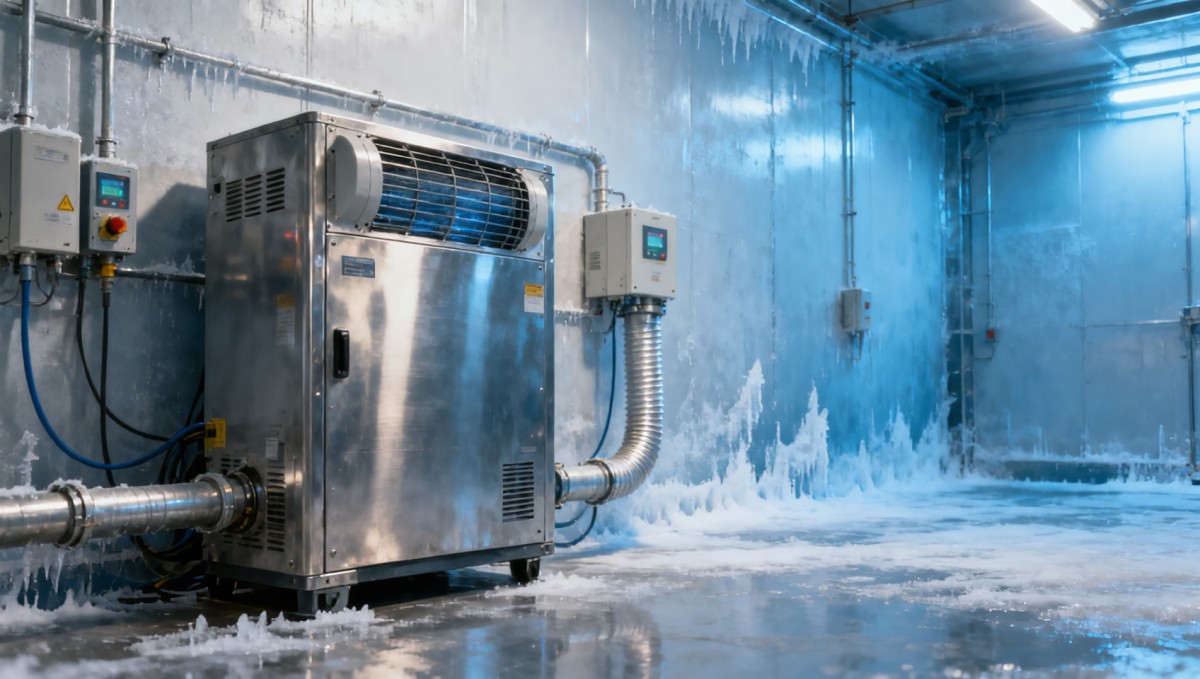
A cold room is a demanding environment because moisture behaves differently as air temperature falls. At 20°C, there is still enough heat in the air for many standard systems to condense moisture efficiently. At 5°C or below, however, coil temperatures can drop to the point where frost forms rapidly, blocking heat exchange and reducing extraction performance. A unit rated at 80 L/day in warm conditions may deliver only a fraction of that capacity in a chilled space.
The problem becomes more complex when doors open frequently. Every opening brings in warmer, moisture-laden air from adjacent production or loading areas. In facilities with 20 to 60 door cycles per shift, humidity spikes can be sharp and repetitive. If the dehumidifier cannot recover quickly, condensation develops on walls, ceilings, products, and floor surfaces, creating safety and product-quality concerns.
Operators also need to consider what the cold room is protecting. Frozen and chilled foods, medical supplies, electronics, and metal components each have different tolerance levels. In some applications, keeping relative humidity between 40% and 55% is sufficient. In others, the target may need to stay within a narrower 35% to 45% band to prevent clumping, corrosion, label failure, or ice formation around doors and conveyor entries.
This is where commercial dehumidifiers designed for cold rooms differ from general-purpose units. They are built with low-temperature controls, more robust defrost strategies, insulated casing or protected internals, and airflow patterns suited to cooler spaces. In many industrial environments, the difference is not simply better comfort; it is whether the room remains operational without repeated intervention.
Typical cold-room humidity pain points
- Frost accumulation on coils, doors, and evaporator surfaces after repeated moisture ingress.
- Condensation on packaging, labels, cable trays, and stainless surfaces during loading windows.
- Slip hazards caused by wet floors near entrances and staging zones.
- Product loss or process interruption when humidity exceeds acceptable thresholds for 2 to 4 hours.
- Higher maintenance frequency due to blocked drains, sensor drift, or short cycling.
Cold-room operating ranges that matter
For practical procurement work, temperature range matters as much as rated capacity. Some systems are suitable only for 10°C to 32°C rooms, while low-temperature commercial dehumidifiers may be built to function from 1°C to 15°C or even lower in specific hybrid configurations. Relative humidity setpoints, drainage requirements, and allowable ambient swings should all be checked before comparing prices.
Technologies That Actually Work in Low-Temperature Environments
Not every dehumidification technology behaves the same way in a cold room. Refrigerant dehumidifiers remain common because they are relatively compact and cost-efficient in mild to moderately cool conditions. However, as temperature declines, moisture condenses less easily and frost management becomes central to performance. In colder or more humidity-sensitive zones, desiccant-based systems often provide more stable removal rates because they do not depend on the same condensation mechanism.
A refrigerated unit can still be the right choice when the room operates around 5°C to 12°C, door openings are moderate, and moisture loads are predictable. But it should include a purposeful defrost cycle, protected controls, anti-corrosion components where relevant, and enough airflow to avoid stagnant wet zones. If the room runs closer to 0°C to 5°C with frequent access, a desiccant or hybrid approach often deserves serious comparison.
The comparison below gives buyers a practical framework rather than a marketing claim. Actual selection still depends on room volume, infiltration load, product sensitivity, and the plant’s available power and maintenance capabilities.
For procurement teams, the key conclusion is simple: low-temperature suitability should be verified in operating conditions close to the actual room environment, not only at standard laboratory points. If a supplier cannot explain moisture removal behavior at the intended room temperature and dew point, the proposal is incomplete.
Why defrost design matters more than brochure capacity
In cold rooms, poor defrost design can erase the value of a high nominal extraction figure. A unit that spends too much time in defrost mode may deliver lower net daily removal than a smaller but better-controlled alternative. Buyers should ask how often defrost triggers, how long a cycle lasts, and whether the control logic is time-based, temperature-based, or adaptive to coil conditions.
Useful technical questions for suppliers
- What is the tested moisture removal range at 5°C, 10°C, and the target relative humidity?
- How many minutes per hour can the unit spend in defrost under high infiltration conditions?
- Does the unit require continuous drainage, pump-assisted drainage, or heated drain protection?
- Can the controller integrate with BMS, AHU handling units, or external humidity sensors?
How to Evaluate Performance, Energy Use, and Integration
Commercial dehumidifiers for cold rooms should be evaluated as part of a wider air-management system. In many industrial sites, the humidity load is affected by door curtains, room pressurization, fan operation, AHU handling units, filtration stages, and adjacent washdown or packaging zones. A unit that performs well as a standalone appliance may underperform if airflow bypasses wet zones or if the room has severe infiltration.
A practical assessment starts with four inputs: room volume, target temperature, expected door-opening frequency, and moisture load from people, product, and process. For example, a 300 m³ cold room with 15 door openings per hour requires a different solution than a 1,200 m³ logistics chamber with pallet traffic every 5 minutes. Capacity selection should include a safety margin, but oversizing can also lead to short cycling and unstable control.
Energy analysis should also focus on net performance, not just motor power. A 2.5 kW unit with stable runtime and efficient controls may outperform a nominally lower-energy unit that defrosts excessively or runs fans continuously without effective moisture removal. When comparing options, ask for estimated power draw at target room conditions and expected operating hours per day, such as 8, 16, or 24 hours.
Integration details often decide the long-term result. Drain lines may need insulation or heat tracing. Air discharge should not blow directly onto sensitive product surfaces. Filters must be accessible for routine service in 15 to 30 minutes, not hidden behind structural obstacles. Sensor placement should avoid door blasts, evaporator discharge, or dead-air corners that distort readings.
Key evaluation criteria before purchase
The table shows why a cold-room dehumidifier should be treated as engineered equipment rather than a commodity appliance. A lower purchase price can become expensive if the unit misses humidity targets, forces frequent manual intervention, or creates avoidable downtime in a critical room.
Related equipment that influences results
- AHU handling units that alter room pressure balance and air distribution.
- Activated carbon air filter stages used where odor or VOC control is also required.
- Industrial humidifiers in adjacent areas that may unintentionally increase infiltration load.
- Rapid-roll doors, air curtains, and dock seals that can reduce moisture ingress by a meaningful margin.
Procurement Risks, Compliance Checks, and Lifecycle Cost
For buyers and technical managers, the main mistake is comparing dehumidifiers by headline extraction and unit price alone. Cold-room performance depends on operating profile, not catalog optimism. A low-cost system that needs drain repairs every 3 months, coil cleaning every 4 weeks, or unscheduled shutdowns during peak production will rarely be the lower-cost choice over a 5-year lifecycle.
Compliance also matters. In industrial procurement, electrical safety, enclosure suitability, materials used in food or clean-adjacent settings, and documentation quality all affect approval. Buyers should confirm applicable CE, UL, ISO-related manufacturing practices, wiring protections, and whether supplied manuals include commissioning parameters, maintenance schedules, and alarm logic. Missing documentation can delay acceptance even when the equipment itself is technically adequate.
Lead time should be discussed early. Standard commercial units may ship in 2 to 6 weeks, but customized low-temperature systems, special voltages, stainless housings, or control integration can extend delivery to 8 to 12 weeks or more. For EPC contractors and large facility upgrades, these time windows affect sequencing of electrical works, drainage, controls commissioning, and cold-room validation.
It is also worth mapping service capability before purchase. Ask who handles startup, whether spare filters and sensors are stocked locally, and what response times apply in the first 12 months. In critical storage or process environments, a service delay of 48 to 72 hours can be far more costly than a moderate difference in upfront equipment price.
Common procurement mistakes
- Selecting by warm-room rated capacity instead of low-temperature delivered performance.
- Ignoring door traffic and infiltration load during sizing calculations.
- Overlooking drain freezing risk in chilled plant rooms and service corridors.
- Failing to verify available power supply, phase requirements, and control interface needs.
- Choosing equipment without confirming maintenance access or spare-part availability.
A practical 5-point decision screen
Before issuing a purchase order, decision-makers should validate five points: room temperature range, target humidity band, infiltration pattern, net energy profile, and service support model. If even one of these remains unclear, the project carries avoidable risk. That is especially true in multi-room facilities where one dehumidifier choice may be replicated across 3, 10, or 20 zones.
Installation, Maintenance, and Frequently Asked Questions
Even a well-selected commercial dehumidifier can disappoint if installation details are neglected. Placement should support complete air circulation across the wettest areas, not just the easiest mounting point. In many cold rooms, the best result comes from aligning intake with higher-moisture return paths and avoiding discharge patterns that create localized freezing or interfere with product handling. Commissioning should include sensor verification, setpoint tuning, and drain testing under real operating conditions.
Routine maintenance is equally important. Filters may need inspection every 2 to 4 weeks in dusty or carton-heavy environments. Coil and rotor condition, depending on technology, should be checked at planned intervals. Drainage performance, door seal integrity, and alarm history should also be reviewed. These tasks are simple compared with the cost of a failed humidity-control strategy during high-throughput operations.
For facilities evaluating broader environmental control packages, dehumidification should be coordinated with ventilation, odor control, and adjacent humidification systems. This is especially relevant where activated carbon air filter assemblies, AHU handling units, or industrial humidifiers are already part of the plant infrastructure. Isolated purchasing can create control conflicts; integrated planning generally reduces this risk.
Recommended maintenance rhythm
- Weekly: inspect alarms, condensate path, and visible frost or condensation patterns.
- Every 2 to 4 weeks: check filters, door seals, and sensor cleanliness.
- Quarterly: review defrost behavior, electrical terminals, and drain protection measures.
- Every 6 to 12 months: perform full performance review against actual humidity targets.
How do I know if a cold room needs a desiccant system instead of a refrigerant unit?
If the room operates close to 0°C to 5°C, requires tight humidity control, or suffers frequent moisture spikes from repeated door openings, a desiccant system should be evaluated. It is also a stronger candidate where frost-related downtime has already been observed with conventional equipment. Refrigerant units remain practical in many rooms above 5°C, but they should be validated carefully.
What humidity level is usually appropriate in a cold room?
There is no universal number. Many operations aim for 40% to 55% relative humidity, but packaging stability, corrosion control, product sensitivity, and ice prevention may push the target lower. The right setpoint should be tied to the process and product, not copied from another facility.
How long does implementation normally take?
For standard commercial equipment, supply and installation may fit within 2 to 6 weeks. Customized low-temperature solutions with controls integration, special materials, or nonstandard electrical requirements often require 8 to 12 weeks. Site readiness, drainage modifications, and commissioning access can extend the schedule if not planned early.
Which specification details should procurement teams request first?
Start with delivered capacity at actual room temperature, defrost method, power supply details, drainage requirements, maintenance access dimensions, control interface options, and recommended service intervals. These details reveal far more than a generic liters-per-day claim and make vendor comparisons more reliable.
Commercial dehumidifiers that work in cold rooms should be selected with the same discipline used for other critical industrial systems. Temperature range, defrost strategy, net moisture removal, integration with AHU handling units and filtration equipment, maintenance access, and compliance readiness all shape the final result. For researchers, operators, buyers, and executive decision-makers, a closer technical review reduces performance surprises and improves lifecycle value.
If your team is comparing cold-room humidity control options, planning a retrofit, or reviewing broader environmental equipment such as activated carbon air filter systems and industrial humidifiers, a structured specification review can save time and cost. Contact us to discuss your operating conditions, request a tailored equipment evaluation, or explore more industrial air-management solutions.
Technical Specifications
- How to choose an organic fertilizer machine for wet raw materialsAuthor :Environmental Engineering Director
- What affects output stability in a hydraulic briquetting pressAuthor :Environmental Engineering Director
- Waste paper baler wholesale prices vary for reasons beyond tonnageAuthor :Environmental Engineering Director
Expert Insights

Chief Security Architect
Dr. Thorne specializes in the intersection of structural engineering and digital resilience. He has advised three G7 governments on industrial infrastructure security.
Related Analysis
- Apr 16, 2026How to choose an organic fertilizer machine for wet raw materialsAuthor :Environmental Engineering Director
- Apr 16, 2026What affects output stability in a hydraulic briquetting pressAuthor :Environmental Engineering Director
- Apr 16, 2026Waste paper baler wholesale prices vary for reasons beyond tonnageAuthor :Environmental Engineering Director
Core Sector // 01
Security & Safety
- Electrostatic precipitator ESP vs baghouse in high temperature dustAuthor :Environmental Engineering Director

- Commercial kitchen exhaust hood sizing mistakes that hurt captureAuthor :Environmental Engineering Director

- HVAC ozone generator use cases where odor control can backfireAuthor :Environmental Engineering Director

- Industrial humidifiers wholesale orders often miss water quality limitsAuthor :Environmental Engineering Director

- Commercial dehumidifiers that work in cold rooms need a closer lookAuthor :Environmental Engineering Director

- AHU handling units: where energy loss often starts in the design stageAuthor :Environmental Engineering Director

- Activated carbon air filter life span depends on more than airflowAuthor :Environmental Engineering Director

- Pocket air filters with low pressure drop are not always the best fitAuthor :Environmental Engineering Director