Cyclone dust collector efficiency drops for particles you may overlook
Author
Date Published
Reading Time
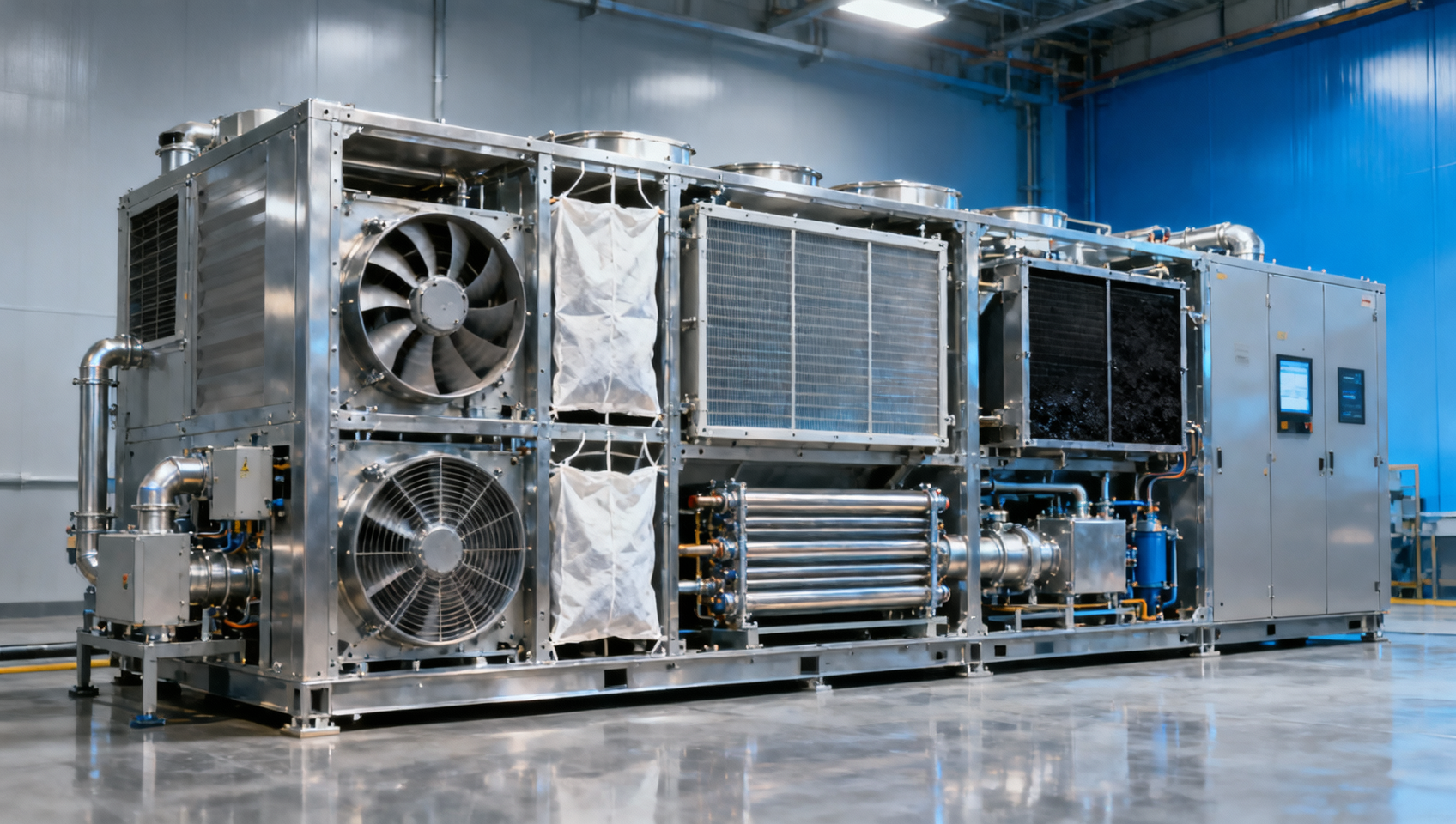
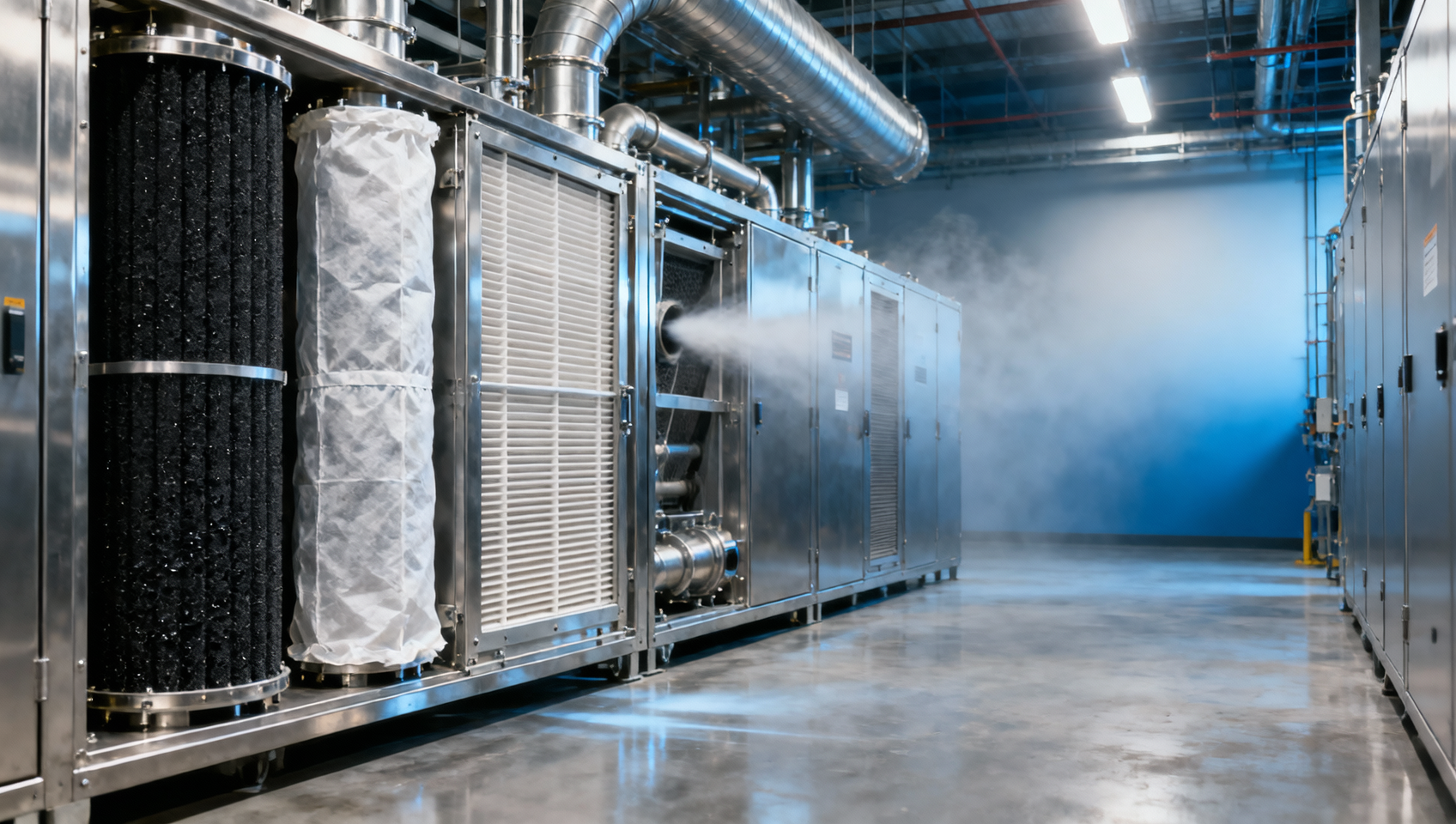
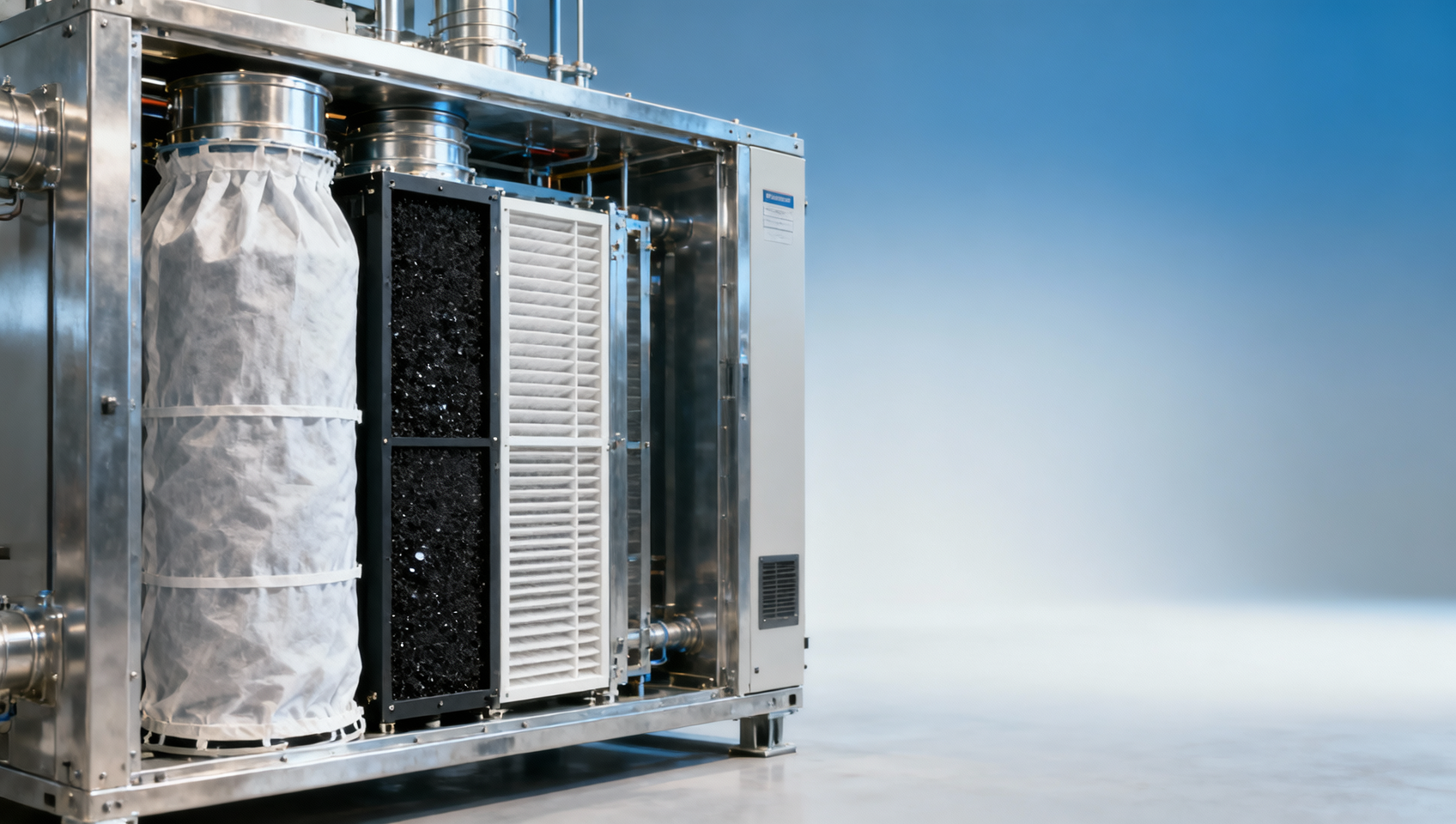
Cyclone dust collector performance often falls short on the finest particles that escape routine evaluation, creating hidden risks for compliance, product quality, and equipment life. For buyers comparing a cyclone dust collector with a cartridge dust collector, pulse jet baghouse, or broader industrial dust collector solutions, understanding these overlooked efficiency losses is essential to making better engineering and procurement decisions.
In heavy industry, dust collection is rarely a standalone utility. It affects worker exposure, fan energy, downstream filter loading, housekeeping frequency, emissions control, and uptime. That is why engineers, operators, procurement teams, and plant leaders should not judge a cyclone only by bulk dust removal or pressure drop. The real decision point often lies in how the system behaves when particle size shifts below the range that routine inspections and coarse sampling methods tend to capture.
A cyclone dust collector remains a proven option for pre-separation, abrasive service, and high-temperature applications. However, its separation efficiency is strongly tied to aerodynamic behavior, particle density, inlet velocity, and cut size. When dust contains a significant fine fraction in the 1–10 micron range, or when process conditions fluctuate by 15%–25%, efficiency can drop in ways that are not obvious from visual checks alone.
This article explains where those hidden losses come from, how they compare with other industrial dust collector technologies, what buyers should check before specifying equipment, and how plants can reduce lifecycle risk through smarter evaluation, maintenance, and system integration.
Why cyclone dust collector efficiency falls on overlooked fine particles
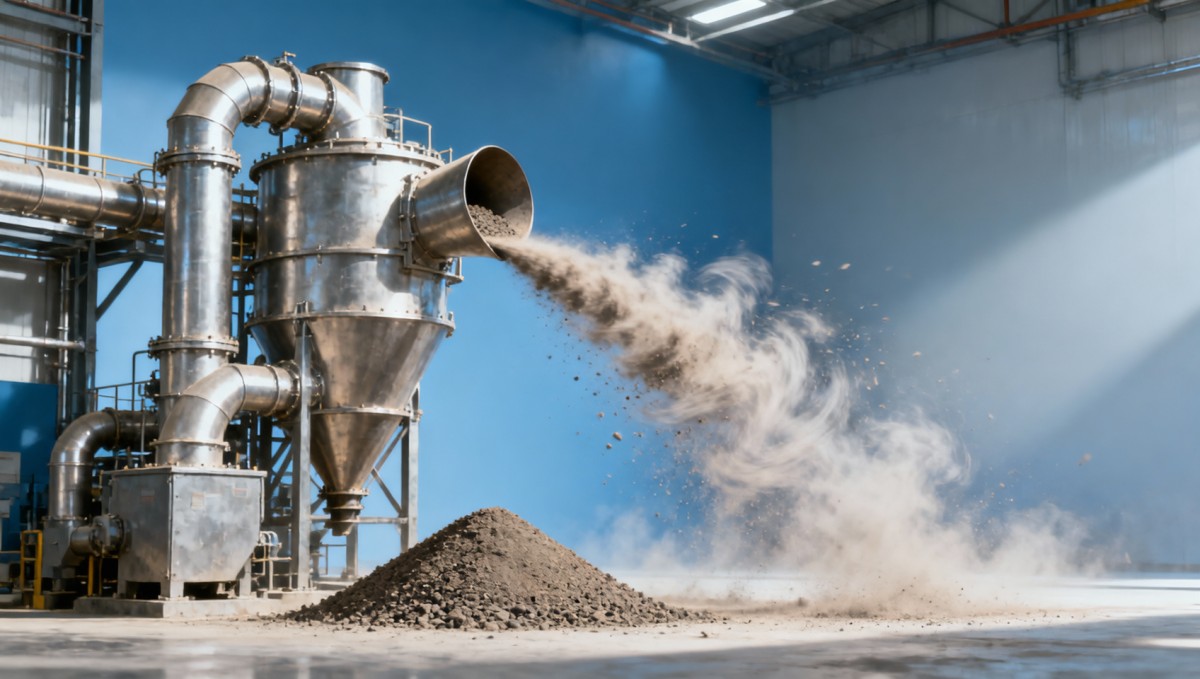
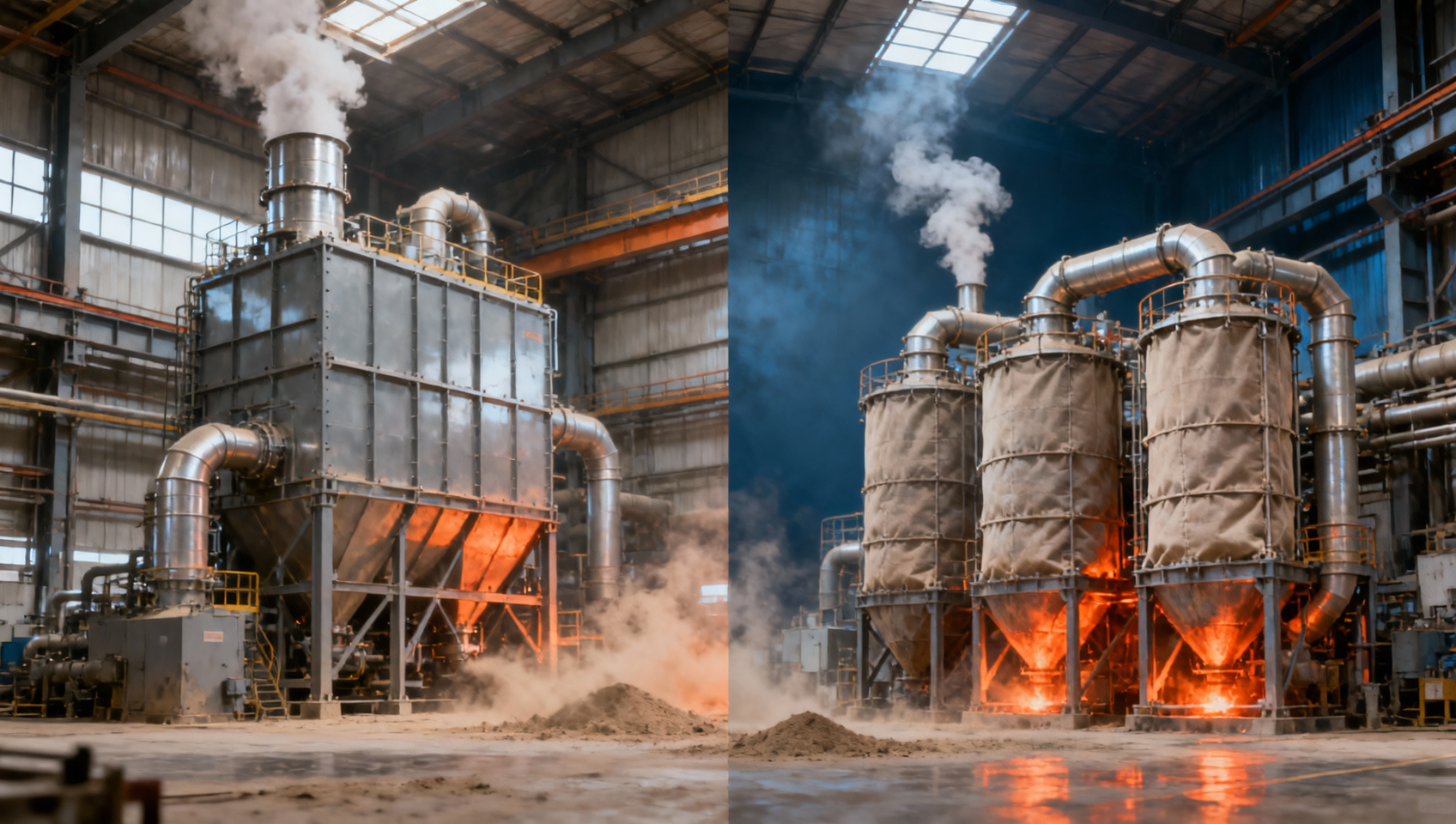
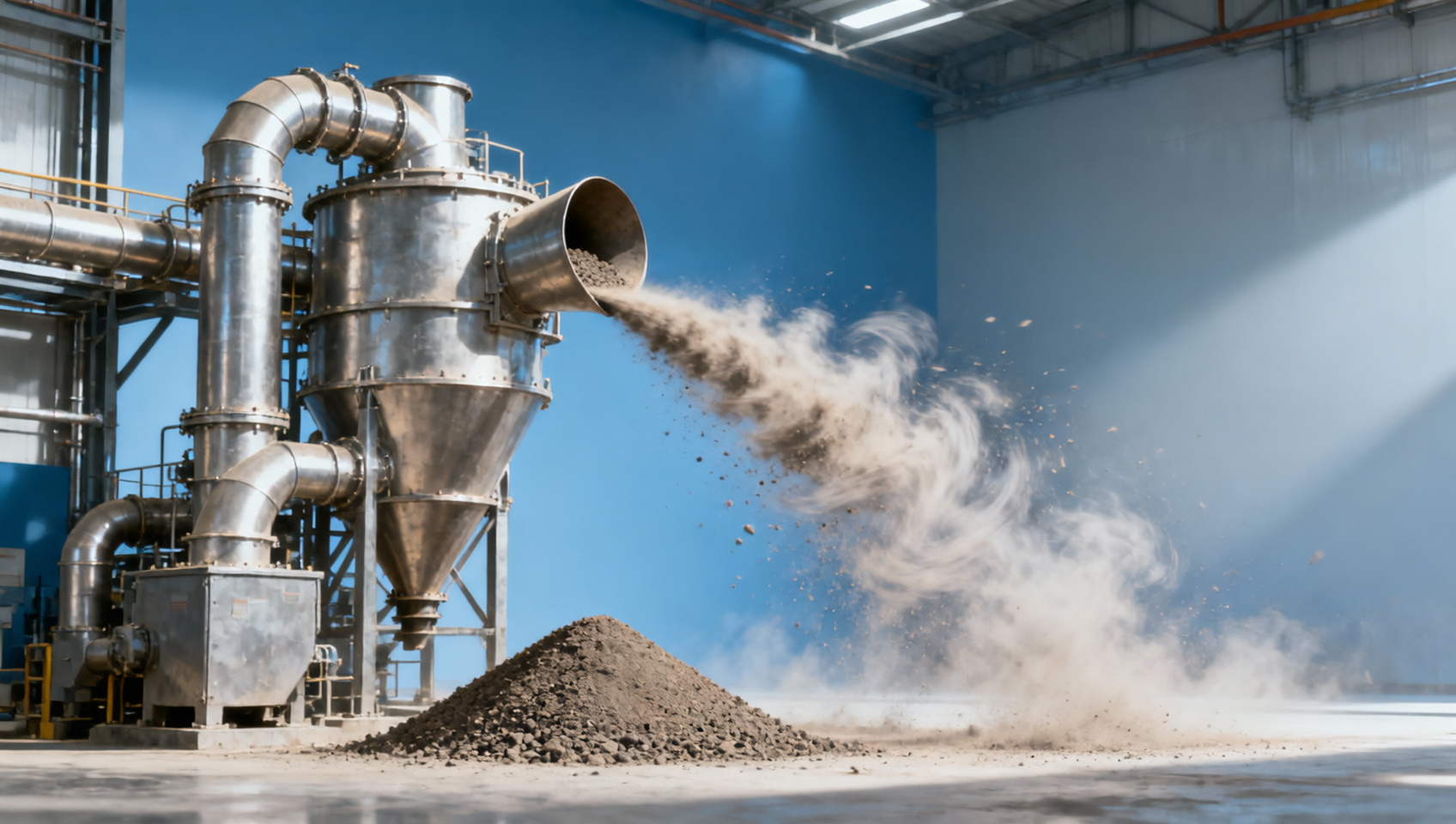
A cyclone dust collector separates particles by centrifugal force. As dust-laden gas enters the body, swirling flow drives heavier particles toward the wall, where they fall into the hopper. This mechanism works well for medium and coarse particulate, especially above 20 microns in many industrial conditions. The challenge begins when the particle distribution includes a higher share of low-mass fines that can stay entrained in the inner vortex and exit with the cleaned gas stream.
In practice, many facilities track visible dust, hopper loading, or general housekeeping, but these indicators do not reliably reveal what happens below the apparent threshold. A cyclone may remove a large percentage of total dust mass while still allowing a disproportionately high count of respirable particles to pass through. That distinction matters because emissions, product contamination, and secondary filter loading are often driven by finer fractions rather than by coarse material alone.
The key technical term is cut size, often expressed as d50. This is the particle size at which the cyclone captures roughly 50% of particles under given operating conditions. For many industrial cyclone designs, d50 may fall somewhere around 5–20 microns, depending on geometry, gas velocity, dust density, and temperature. If your process produces a meaningful fraction below that range, overall collection performance can look acceptable on paper while still underperforming where risk is highest.
Another overlooked factor is particle density. A 10-micron metal dust particle and a 10-micron organic powder do not behave identically in a cyclone. Lower-density particles resist separation more strongly, and moisture can further change agglomeration behavior. As a result, a system that worked well on one campaign may struggle when raw material, humidity, or throughput shifts over a 2–4 week production cycle.
Typical hidden causes of fine-particle escape
- Inlet velocity below design range, reducing centrifugal force and increasing carryover of particles smaller than 10 microns.
- Air leakage at hopper discharge valves, inspection doors, or duct joints, which disturbs internal flow patterns.
- Dust re-entrainment caused by poor hopper sealing or irregular discharge frequency.
- Process temperature swings that change gas density and viscosity, especially in hot gas streams above 120°C.
- Wear on inlet sections and cyclone walls, gradually altering geometry and reducing separation stability over 6–18 months.
The table below highlights where cyclone performance tends to diverge across particle size bands. These are typical engineering ranges rather than guaranteed values, but they help frame realistic expectations during specification and procurement.
For decision-makers, the takeaway is simple: if the dust hazard, process quality requirement, or emissions target is driven by fine particulate, a cyclone dust collector should be evaluated by size-resolved performance, not only by total mass capture or low maintenance reputation.
Comparing cyclone systems with cartridge collectors and pulse jet baghouses
A cyclone dust collector is not automatically the wrong choice. In many industrial plants, it is the right first-stage separator for sparks, abrasive solids, fibrous debris, or high dust loading. The issue is matching the technology to the particle profile and the required control objective. Procurement teams often compare capital cost first, yet lifecycle performance usually depends on how well the system handles sub-10 micron dust, peak flow conditions, and maintenance access.
A cartridge dust collector generally performs better on fine and dry particulate, especially when particle size distribution clusters in the lower micron range. A pulse jet baghouse offers high flexibility across broader industrial applications and can manage large airflow volumes, often from several thousand to more than 100,000 m³/h depending on system design. However, both filtration-based systems introduce media maintenance, pulse cleaning controls, and greater sensitivity to temperature and moisture than a simple cyclone stage.
The best engineering decision is often hybrid rather than binary. For example, a cyclone can remove coarse and erosive material upstream, lowering the loading rate on a cartridge collector or pulse jet baghouse. In some plants, that combination reduces filter wear, extends service intervals by 20%–40%, and improves overall system stability. For facilities dealing with combustible dust or sticky particulate, the design discussion becomes even more application-specific.
The table below compares these options from an industrial procurement and operations perspective. Values are intentionally framed as practical tendencies, because exact performance depends on dust properties, airflow, and system integration.
For many buyers, the decision should be based on four practical questions: What is the dominant particle size band? Is the dust abrasive, sticky, or combustible? What outlet condition is required for compliance or product protection? And what maintenance model can the site realistically support across 12 months of operation?
When a cyclone alone is usually not enough
- When a large fraction of dust is below 5–10 microns and emissions control is stringent.
- When product quality can be affected by fine particulate carryover into packaging or finishing areas.
- When indoor worker exposure limits require stronger control of respirable dust fractions.
- When fan and duct erosion from recirculated fines is already driving repeated maintenance costs.
In these cases, a cyclone dust collector still has value, but more often as a pre-separator within a staged industrial dust collector solution rather than as the final control device.
How to evaluate hidden performance losses before purchase or retrofit
A solid purchase decision starts with measurement discipline. Many plants size a cyclone dust collector from airflow and bulk dust loading alone, but that is not enough if fine particulate affects compliance, worker safety, or product quality. The more reliable approach is to review at least five inputs together: particle size distribution, dust density, moisture tendency, gas temperature, and expected operating turndown. Even a 10%–15% shift in process throughput can change internal velocity enough to move the cyclone away from its most efficient range.
Sampling should also match the real risk. If only hopper discharge mass is measured, fine-particle escape may remain invisible. Instead, engineers should consider inlet and outlet sampling over multiple production states, such as normal load, startup, and peak load. A 3-point or 4-point operating profile often reveals whether the system remains stable or loses efficiency during demand swings, recipe changes, or filter cleaning events elsewhere in the process.
Retrofitting can be as important as buying new equipment. Existing cyclones may underperform because of air leakage, worn vortex finders, hopper discharge faults, or fan selection changes made years after initial commissioning. In some facilities, restoring original geometry and sealing conditions produces measurable improvement without replacing the entire unit. In others, the better investment is adding a secondary filtration stage downstream.
Procurement teams should insist that suppliers define the expected operating window rather than provide a single best-case efficiency statement. Ask for performance assumptions tied to airflow range, dust type, pressure drop, and maintenance conditions. If the application includes critical fine dust, request clarity on the particle range where performance declines, not just where it performs well.
A practical 6-point evaluation checklist
- Confirm particle size distribution, especially the share below 10 microns and below 5 microns.
- Check whether dust density and shape are stable or likely to vary by material batch or season.
- Review design airflow against minimum and maximum operating flow, not only nominal flow.
- Inspect hopper discharge sealing and pressure balance to avoid re-entrainment.
- Verify material selection for erosion zones if dust is abrasive and velocity exceeds typical design norms.
- Determine whether a second-stage cartridge collector or baghouse is needed for final polishing.
Procurement review factors that often change total cost
Initial equipment price is only one part of the equation. A lower-cost cyclone that allows excess fines to pass may increase filter replacement frequency downstream, raise fan wear, and create additional housekeeping labor. Over a 12–24 month period, those secondary costs can exceed the savings from selecting a simpler unit without proper process fit.
Plants with continuous duty, such as cement handling, foundry operations, minerals processing, biomass systems, and metal finishing, should especially evaluate downtime cost. Even one unscheduled stop for duct cleaning, compliance response, or damaged downstream equipment can reshape the procurement decision.
Operational controls, maintenance, and troubleshooting strategies
Once a cyclone dust collector is installed, efficiency loss is often gradual rather than sudden. That is why operators should monitor leading indicators instead of waiting for visible dust problems. Useful indicators include pressure trend shifts, hopper discharge irregularity, fan power changes, localized buildup, and rising differential loading on downstream filters. A monthly review is often sufficient for stable service, but harsher duty may require weekly checks.
Maintenance is not only about replacing damaged parts. It is about preserving flow geometry. Inlet wear, misaligned internals, leaking access doors, or poorly functioning rotary valves can all undermine performance on fine particles. Because these issues do not always produce dramatic symptoms, they can persist for 3–6 months before teams link them to increased emissions or shorter filter life elsewhere in the system.
A disciplined inspection plan should separate structural checks from process checks. Structural checks focus on erosion points, seals, hoppers, and supports. Process checks focus on airflow stability, dust loading changes, temperature variation, and outlet condition. That split helps maintenance and operations teams share responsibility instead of treating dust collection as a single-department issue.
For industrial managers, the most cost-effective strategy is usually to define trigger points. For example, if downstream cartridge replacement intervals shorten by more than 20%, or if pressure behavior changes outside the usual operating band, the cyclone should be inspected before the problem spreads. This converts dust collection from reactive maintenance into managed reliability.
The following table outlines common symptoms, likely causes, and practical responses that can be used in operations reviews or maintenance planning.
These troubleshooting patterns are especially useful for operators who need a practical framework rather than a full redesign study. In many plants, identifying one or two hidden mechanical issues restores a large share of lost performance.
FAQ for researchers, operators, buyers, and decision-makers
The questions below reflect common search and procurement concerns around cyclone dust collector selection and performance. They are particularly relevant for cross-functional teams that need to align technical fit with budget, compliance, and plant reliability.
How do I know whether fine particles are the real problem in my system?
Look beyond visible dust and total hopper mass. If downstream filters blind early, housekeeping frequency increases, product surfaces show contamination, or worker exposure concerns persist despite a functioning cyclone, fine particles may be bypassing collection. A sampling plan across 2–3 operating conditions is usually more revealing than a single reading taken at nominal load.
Is a cyclone dust collector still worth specifying if I also need high fine-particle control?
Yes, often as a first stage. A cyclone is valuable where dust loading is high, particles are abrasive, or gas temperatures exceed what some filter media tolerate comfortably. In those cases, pairing the cyclone with a cartridge dust collector or pulse jet baghouse can improve overall system resilience and reduce wear on the final filtration stage.
What should procurement teams ask suppliers before issuing a final order?
Ask for the expected operating airflow range, pressure drop, maintenance assumptions, and the particle-size range where efficiency begins to decline. Also ask whether the quoted performance assumes a specific dust density, moisture condition, or inlet concentration. These details matter more than a broad efficiency claim with no application context.
How often should a cyclone be inspected?
For stable industrial service, a visual and functional review every 1–3 months is common, with a deeper internal inspection aligned to shutdown schedules. More frequent checks may be necessary in abrasive, high-temperature, or highly variable processes. If performance indicators shift suddenly, inspection should happen immediately rather than waiting for the next routine interval.
Cyclone dust collector efficiency can remain highly effective for coarse and abrasive particulate, but hidden losses on the finest particles can undermine compliance, quality, and equipment reliability if they are not actively evaluated. The strongest decisions come from matching particle profile, process variability, and maintenance capability to the right collection architecture, whether that means a standalone cyclone, a cartridge collector, a pulse jet baghouse, or a staged industrial dust collector system.
For EPC teams, plant operators, sourcing managers, and industrial decision-makers, the priority is not choosing the simplest label. It is choosing the configuration that performs under real operating conditions over the full asset lifecycle. To review your dust profile, compare collection strategies, or discuss a practical selection framework, contact us to get a tailored solution and explore more industrial dust control options.
Technical Specifications
- How to choose an organic fertilizer machine for wet raw materialsAuthor :Environmental Engineering Director
- What affects output stability in a hydraulic briquetting pressAuthor :Environmental Engineering Director
- Waste paper baler wholesale prices vary for reasons beyond tonnageAuthor :Environmental Engineering Director
Expert Insights

Chief Security Architect
Dr. Thorne specializes in the intersection of structural engineering and digital resilience. He has advised three G7 governments on industrial infrastructure security.
Related Analysis
- Apr 16, 2026How to choose an organic fertilizer machine for wet raw materialsAuthor :Environmental Engineering Director
- Apr 16, 2026What affects output stability in a hydraulic briquetting pressAuthor :Environmental Engineering Director
- Apr 16, 2026Waste paper baler wholesale prices vary for reasons beyond tonnageAuthor :Environmental Engineering Director
Core Sector // 01
Security & Safety
- Electrostatic precipitator ESP vs baghouse in high temperature dustAuthor :Environmental Engineering Director

- Commercial kitchen exhaust hood sizing mistakes that hurt captureAuthor :Environmental Engineering Director

- HVAC ozone generator use cases where odor control can backfireAuthor :Environmental Engineering Director

- Industrial humidifiers wholesale orders often miss water quality limitsAuthor :Environmental Engineering Director

- Commercial dehumidifiers that work in cold rooms need a closer lookAuthor :Environmental Engineering Director

- AHU handling units: where energy loss often starts in the design stageAuthor :Environmental Engineering Director

- Activated carbon air filter life span depends on more than airflowAuthor :Environmental Engineering Director

- Pocket air filters with low pressure drop are not always the best fitAuthor :Environmental Engineering Director