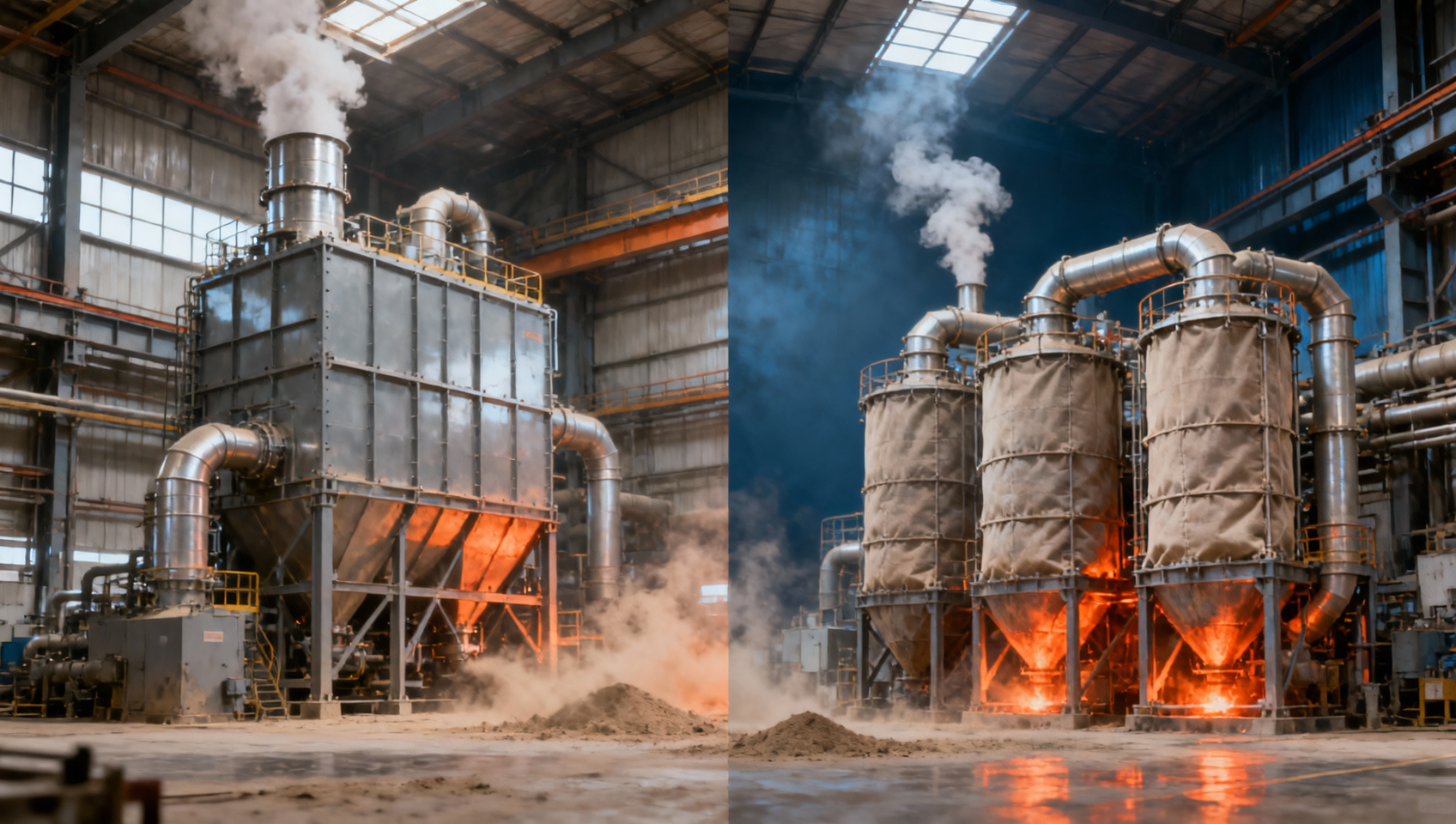
Cartridge dust collector filters clog sooner under fine sticky dust
Author
Date Published
Reading Time
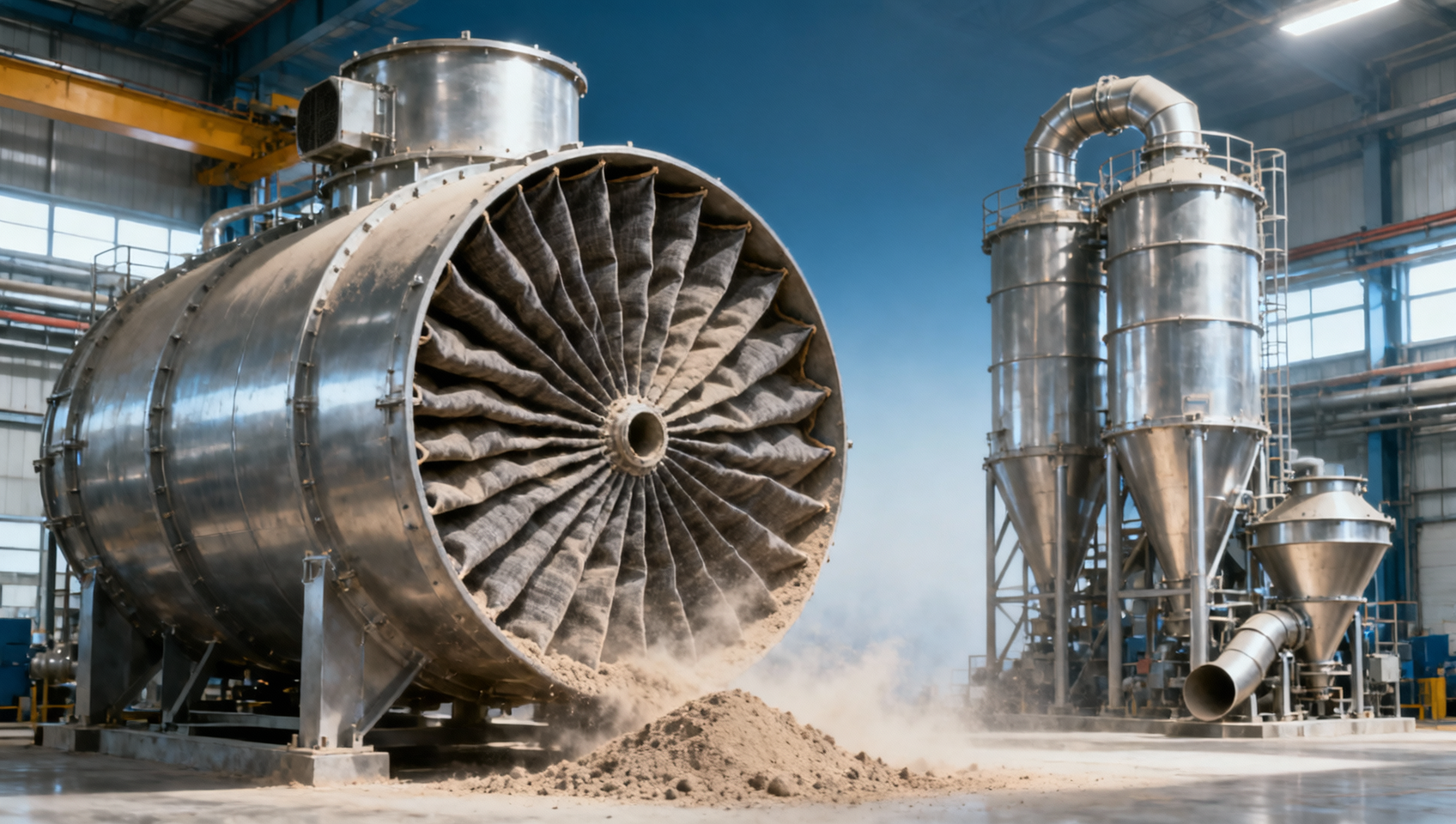
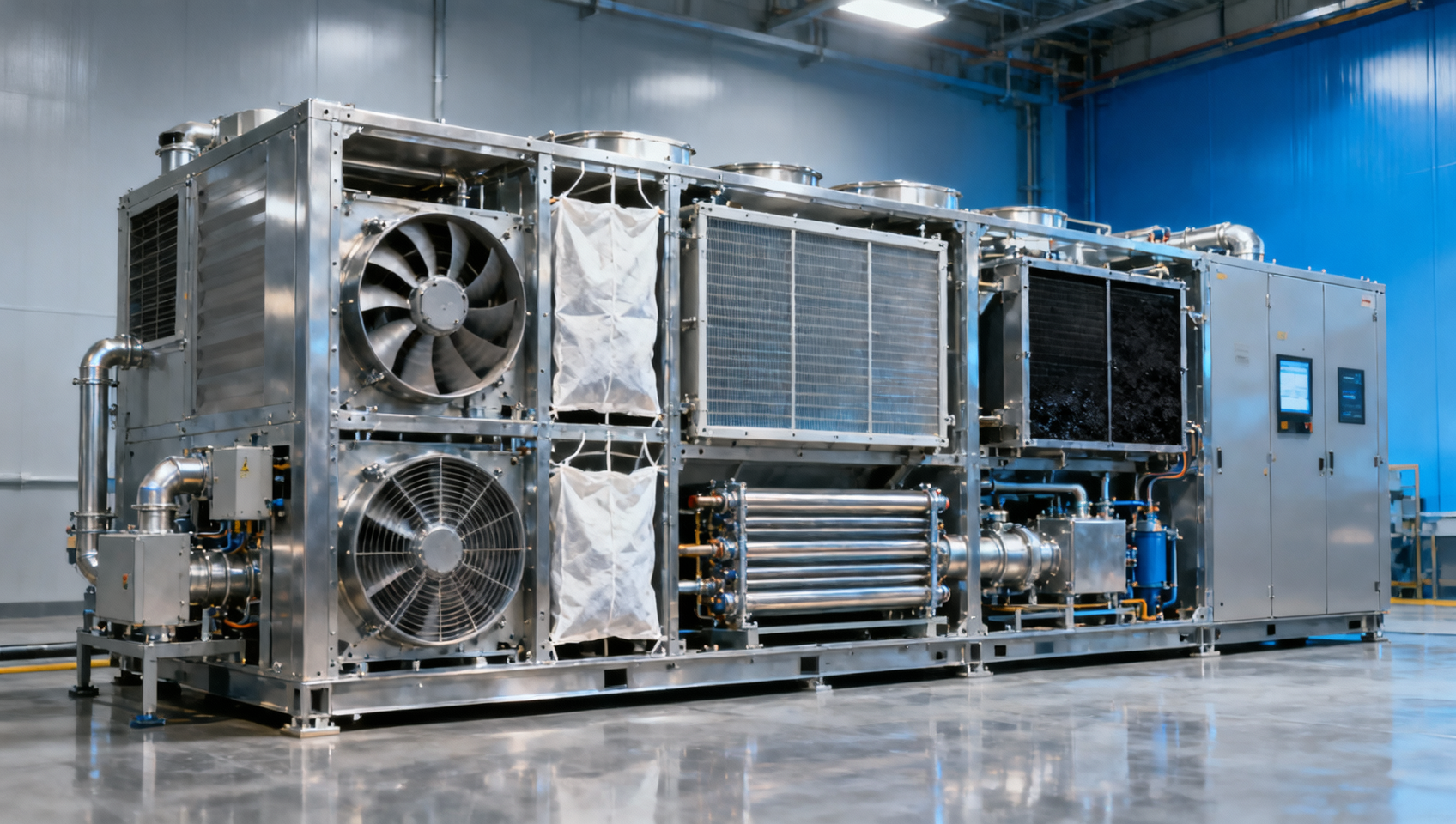
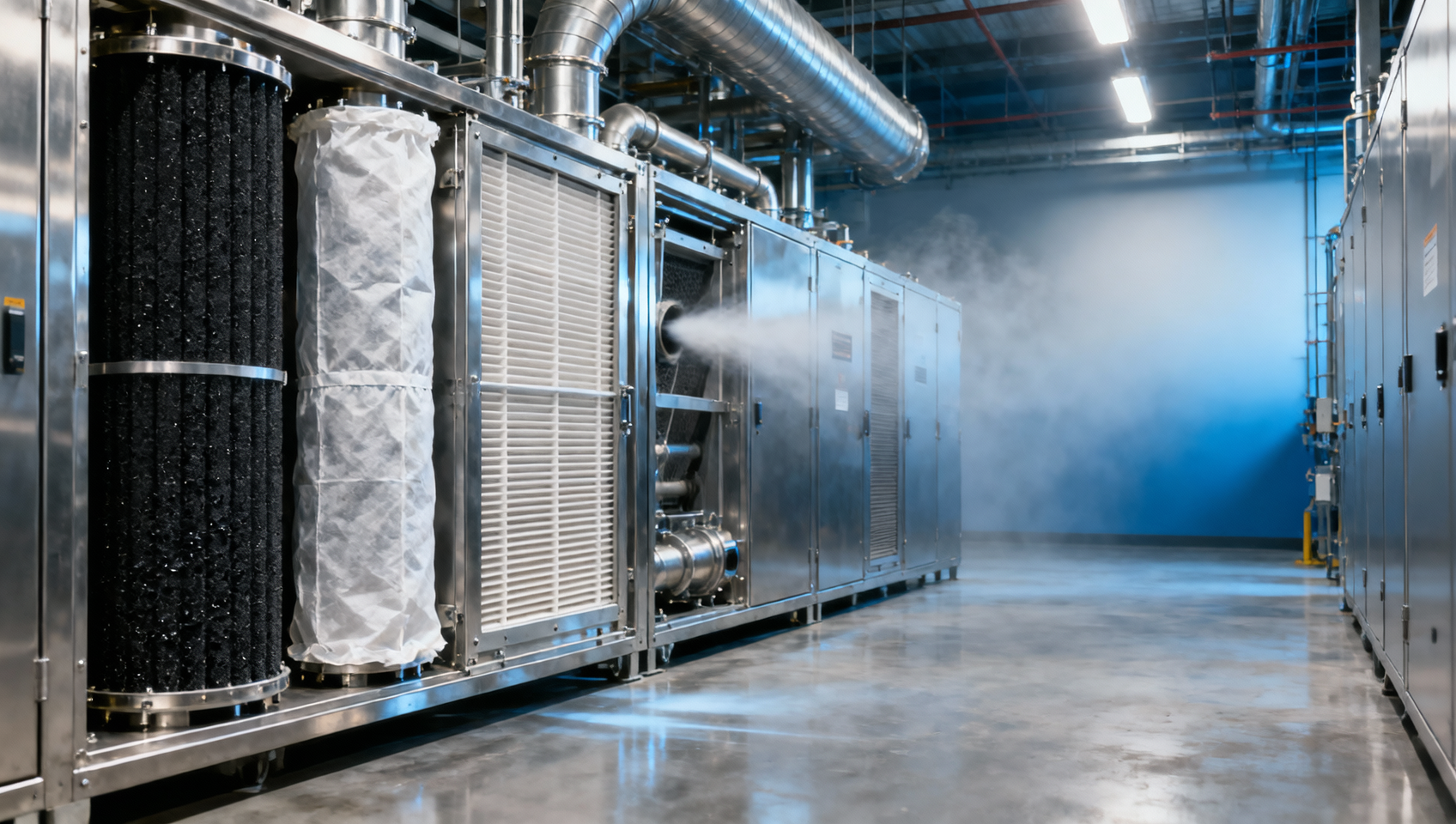
Cartridge dust collector systems often clog faster when exposed to fine, sticky dust, reducing airflow, raising maintenance costs, and risking unstable plant performance. For buyers, operators, and engineering teams comparing an industrial dust collector, pulse jet baghouse, cyclone dust collector, or pleated filter cartridges, understanding why blockage happens early is essential to selecting the right filtration strategy and improving long-term reliability.
In many industrial plants, the problem is not simply dust quantity but dust behavior. Powders below 10 microns, hygroscopic particles, oily fumes, and resin-like solids can bridge pleats, blind media surfaces, and resist pulse cleaning within days or weeks. That shortens filter life, increases differential pressure, and forces unplanned shutdowns that affect production continuity.
For procurement teams, early clogging changes total cost of ownership far more than the purchase price of a replacement cartridge. For operators, it means unstable airflow, more frequent maintenance, and potential housekeeping or exposure issues. For decision-makers, the filtration choice must balance dust characteristics, process conditions, cleaning method, compliance needs, and long-term operating risk.
This article explains why fine sticky dust blocks cartridge filters sooner, how to evaluate alternative dust collection designs, what parameters matter during selection, and which maintenance strategies reduce failure risk in heavy industrial and general process environments.
Why fine sticky dust causes early cartridge filter blockage
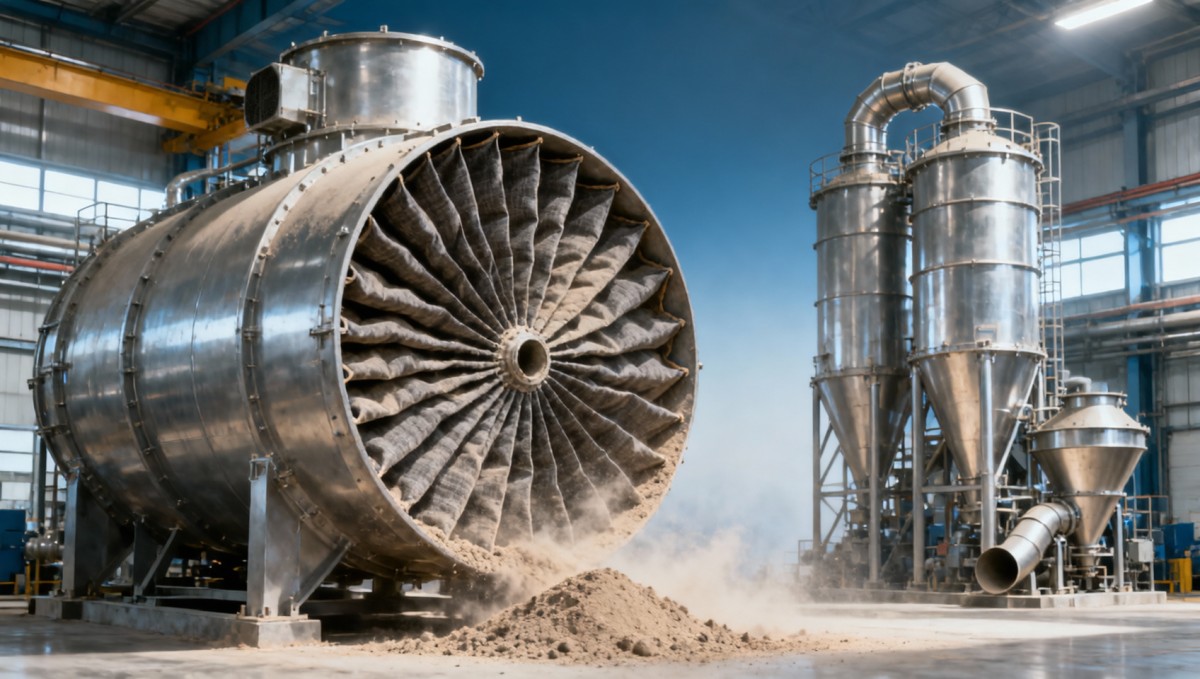
A cartridge dust collector works efficiently when dust forms a controllable surface cake that can be released by pulse cleaning. Fine sticky dust behaves differently. When particles in the 0.5-10 micron range combine with moisture, oil mist, static charge, or process heat, they tend to smear into the media surface and pack tightly inside pleat valleys. Once this happens, cleaning pulses remove only part of the dust load.
In practical terms, the first warning sign is usually rising differential pressure. A clean cartridge may start around 500-1000 Pa depending on design, but under sticky dust conditions it can climb beyond 1500-2000 Pa much faster than expected. As resistance rises, fan energy increases, capture velocity drops, and extraction points farther from the collector often perform worst.
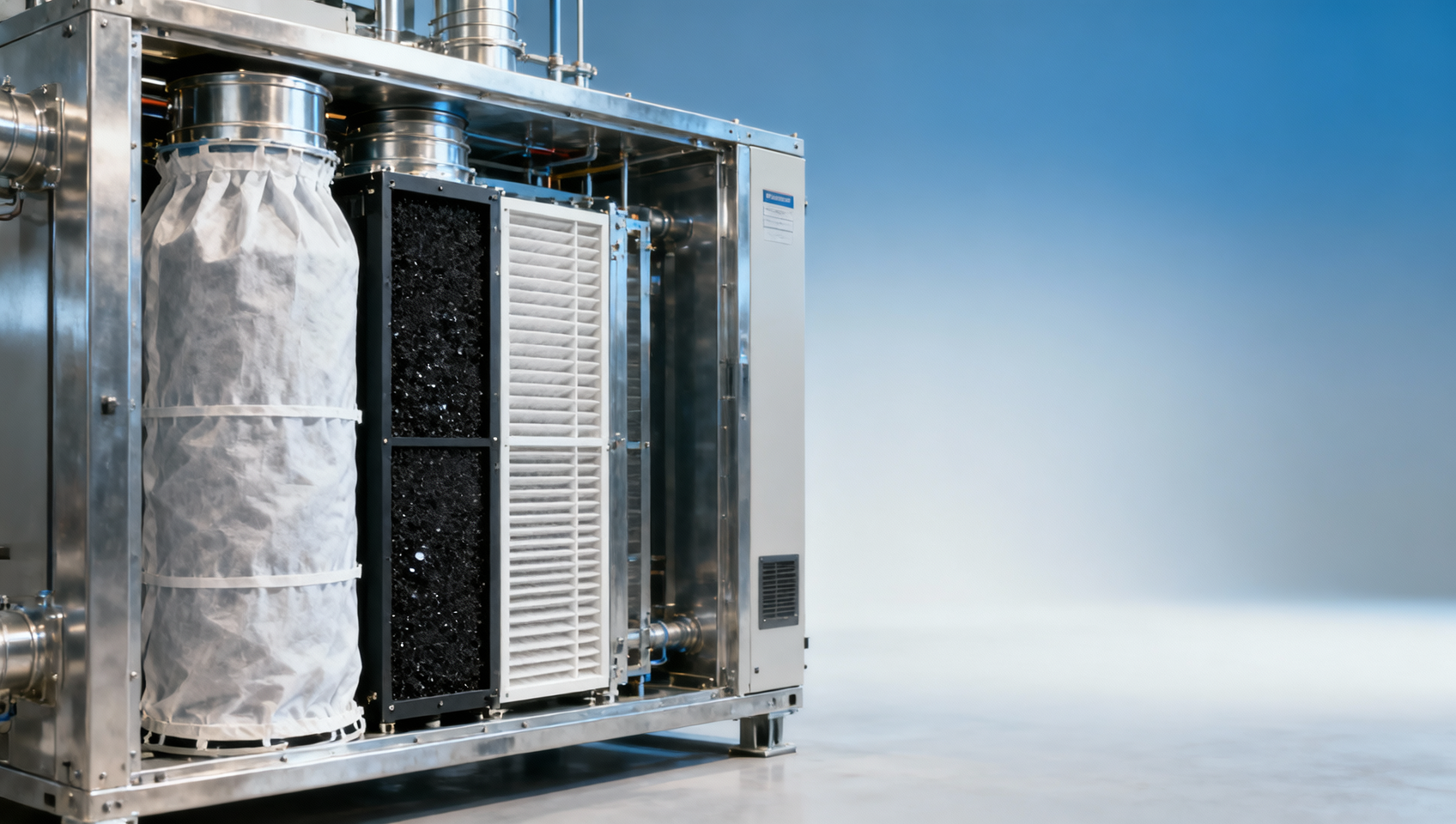
Pleated geometry is one reason cartridge systems can struggle in these conditions. The high filtration area per element is valuable for dry free-flowing dust, but narrow pleat spacing also creates more opportunities for dust bridging. When the dust cake becomes cohesive, the pleats no longer stay open, and effective media area drops even if the cartridge appears mechanically intact.
Another factor is inlet loading. If a plant sends high concentration dust directly into a cartridge chamber without pre-separation, larger agglomerates and damp fines can strike the first filter row with uneven force. That produces localized blinding, especially when air-to-cloth ratio is aggressive, such as above typical moderate ranges used for challenging powders.
Common process conditions that accelerate clogging
Several operating variables combine to shorten cartridge life. The most common are high humidity, inlet temperatures close to dew point, oil-carryover from compressors or machining operations, and intermittent process spikes. In many plants, clogging starts not during steady production but during start-up, shutdown, or seasonal weather changes that create condensation.
- Dust size below 10 microns, especially below 2.5 microns, increases surface adhesion and pore blocking.
- Relative humidity above roughly 60%-70% near the collector can promote clumping in hygroscopic powders.
- Oily or resin-bearing dust from metalworking, food additives, chemicals, or composite processing often resists pulse release.
- Inlet temperatures falling within 10°C-15°C of dew point raise condensation risk on media surfaces and housing walls.
When two or more of these factors occur together, even a well-sized industrial dust collector may experience filter blinding much sooner than its nominal service interval. That is why dust characterization should always come before final equipment selection.
How cartridge collectors compare with baghouses and cyclone pre-separation
Not every dust challenge should be solved with the same collection architecture. Cartridge filters, pulse jet baghouses, and cyclone dust collectors each have clear strengths. The correct solution depends on particle size distribution, stickiness, loading rate, temperature, and cleaning expectations. In some cases, the best answer is a hybrid system rather than a single device.
Cartridge systems are compact and offer high media area in a smaller footprint, which makes them attractive for indoor use and retrofit projects. Pulse jet baghouses often tolerate difficult dust better because their bags have wider spacing and can shed heavier cake loads. Cyclone units do not replace fine filtration, but they are highly effective as pre-separators for coarse fractions, sparks, or bulk loading reduction.
Procurement teams should avoid comparing only initial capital cost. A collector that costs 10%-20% less upfront may produce higher fan energy demand, more labor hours, and more frequent media replacement over 24-36 months. For sticky dust service, serviceability and stable pressure performance matter as much as nominal airflow.
System comparison for sticky and fine dust applications
The table below outlines where each dust collection approach typically fits in industrial decision-making. Actual performance varies by media, air volume, duct design, and process stability, but these ranges are useful during early specification.
For many mixed-duty processes, a cyclone plus final filter stage provides better lifecycle economics than relying on cartridges alone. Reducing incoming bulk dust by even 30%-60% can significantly extend cleaning stability and maintenance intervals in the downstream collector.
When a baghouse is the safer choice
A pulse jet baghouse is often the better option when the process involves high moisture variation, fibrous dust, heavy loading, or materials that compact under pressure. Buyers should particularly consider baghouses for minerals, foundry dust, bulk chemical powders, and process lines with uneven daily duty cycles, such as 2-shift or batch operation rather than steady 24-hour flow.
Key selection criteria for buyers and engineering teams
Selecting an industrial dust collector for fine sticky dust starts with dust testing, not brochure claims. At minimum, the team should define particle size range, bulk density, moisture behavior, explosibility if relevant, temperature profile, and whether the dust contains oil, wax, sugar, resin, or metal fines. These properties influence media type, collector geometry, cleaning frequency, and hopper discharge design.
One of the most overlooked specifications is air-to-media ratio. A system sized too aggressively may look cost-effective on paper, but it creates higher face velocity and faster blinding in real operation. For difficult dust, a conservative design often pays back through longer filter life and fewer emergency interventions over a 12- to 24-month period.
Filter media also deserves closer review. Standard cellulose may be unsuitable for sticky or humid environments. Many applications benefit from spunbond synthetic media, PTFE membrane surfaces, anti-static treatment, or specialty finishes that improve dust release. However, no media alone can compensate for poor duct velocity, condensation, or overloading.
Practical evaluation checklist
- Confirm expected particle size distribution, especially the share below 10 microns and below 2.5 microns.
- Check inlet temperature range and keep normal operation at least 15°C above dew point where condensation is a risk.
- Review differential pressure operating window, for example a normal band such as 800-1500 Pa and alarm thresholds above that range.
- Assess whether a pre-separator, drop-out box, or cyclone should remove coarse or sticky fractions before final filtration.
- Specify cleaning air quality and pressure stability, because poor pulse performance can reduce cleaning efficiency by a wide margin.
The next table summarizes procurement factors that help distinguish a technically suitable collector from one that only looks competitive during quotation review.
For enterprise buyers, these four factors are often more predictive of lifecycle value than nominal airflow alone. Engineering teams should ask suppliers to explain expected pressure behavior, service interval assumptions, and operating limits under sticky dust conditions instead of generic clean-air ratings.
Installation, operation, and maintenance practices that reduce clogging risk
Even a correctly specified collector can fail early if installation and operation are weak. Duct routing should maintain suitable conveying velocity without causing excessive particle attrition or unnecessary pressure loss. Poorly designed bends, long horizontal runs, or dead zones allow dust dropout before the collector, while abrupt inlets can send concentrated slugs directly into selected cartridges.
Compressed air quality is another common weak point. Pulse cleaning depends on dry, stable compressed air at the intended pressure. Water carryover, low pressure events, or leaking valves reduce cleaning energy and worsen cake adhesion. In plants where pressure fluctuates, monitoring pulse performance can reveal why cartridges that should last 9-12 months begin failing in half that time.
Routine maintenance should rely on trend data rather than fixed calendar intervals alone. Differential pressure, fan load, hopper discharge consistency, and visual inspection of spent cartridges help distinguish normal dust cake from destructive blinding. If the pressure baseline after cleaning keeps rising week by week, the collector is losing recoverability and needs corrective action before airflow collapse occurs.
A 5-step control approach for operators
- Record clean-start and stabilized differential pressure after new cartridge installation.
- Track weekly pressure trend, pulse frequency, and fan amperage to detect early restriction growth.
- Inspect for condensation sources, hopper buildup, and uneven dust loading across filter rows.
- Verify compressed air dryness and pulse valve response at least once per maintenance cycle.
- Review process changes such as raw material, throughput, or seasonal humidity whenever clogging accelerates.
For plants handling variable or sticky dust, service planning should include spare filters, gasket kits, and valve maintenance items with a realistic lead time buffer of 2-6 weeks, depending on supplier location and media type. This is particularly important for continuous operations where unplanned stoppage carries high production cost.
Warning signs that indicate design mismatch
Repeated filter replacement does not always mean poor cartridge quality. If new filters blind within a short period, the real cause may be undersized media area, lack of pre-separation, dew-point crossing, or a dust type better suited to a baghouse. Replacing the same cartridge repeatedly without reviewing the system design usually increases cost without restoring stable performance.
Common questions from buyers, operators, and decision-makers
Teams evaluating dust collection for fine sticky dust usually face the same group of questions. The answers below help narrow choices and prevent expensive specification errors during tendering or retrofit planning.
How do I know if a cartridge dust collector is unsuitable for my dust?
If the dust is highly cohesive, moisture-sensitive, oily, or forms a hard layer after pulse cleaning, the cartridge approach may be risky. Early symptoms include rapid pressure rise, dust packed deep in pleats, frequent manual cleaning, and unstable airflow within the first few weeks or months. In these cases, a pulse jet baghouse or staged system deserves serious review.
Can a cyclone dust collector solve fine sticky dust problems by itself?
Usually not. A cyclone is effective for larger and denser particles, but it is not a standalone solution for sub-10 micron fine dust control. Its value is upstream load reduction. When used as a pre-separator, it can cut incoming coarse burden, improve spark management, and reduce wear or overload on the downstream final filter stage.
What should procurement teams request from suppliers?
Ask for the proposed operating pressure range, media specification, assumptions on dust properties, expected service interval, compressed air requirements, and maintenance access method. It is also useful to request clarification on design loading during peak conditions, not just average airflow. If the supplier cannot explain how the system handles sticky dust, the quotation may not be robust enough for industrial duty.
How often should filters be changed?
There is no universal interval. Some applications run 12 months or longer, while difficult sticky dust service can shorten usable life significantly. Change decisions should be based on irreversible pressure rise, airflow loss, physical media damage, and inability to recover after cleaning. A condition-based approach is more reliable than a fixed annual replacement rule alone.
Fine sticky dust is one of the clearest reasons cartridge dust collector filters clog sooner than expected. The root causes are usually a combination of particle size, moisture behavior, media selection, loading rate, and system design rather than a single defective component. Plants that evaluate these factors early can avoid repeated filter changeouts, unstable extraction, and avoidable maintenance cost.
For industrial users comparing pleated filter cartridges, pulse jet baghouse systems, or cyclone-assisted designs, the most effective path is a dust-specific assessment that links process conditions to collector architecture, cleaning performance, and lifecycle service strategy. Global Industrial Core supports buyers, operators, and decision-makers with practical sourcing intelligence for filtration, reliability, and foundational plant systems.
If you are reviewing an industrial dust collector project, planning a retrofit, or trying to reduce early cartridge blockage under fine sticky dust, contact us to discuss your operating conditions, compare suitable configurations, and get a more reliable filtration strategy for long-term plant performance.
Technical Specifications
- How to choose an organic fertilizer machine for wet raw materialsAuthor :Environmental Engineering Director
- What affects output stability in a hydraulic briquetting pressAuthor :Environmental Engineering Director
- Waste paper baler wholesale prices vary for reasons beyond tonnageAuthor :Environmental Engineering Director
Expert Insights

Chief Security Architect
Dr. Thorne specializes in the intersection of structural engineering and digital resilience. He has advised three G7 governments on industrial infrastructure security.
Related Analysis
- Apr 16, 2026How to choose an organic fertilizer machine for wet raw materialsAuthor :Environmental Engineering Director
- Apr 16, 2026What affects output stability in a hydraulic briquetting pressAuthor :Environmental Engineering Director
- Apr 16, 2026Waste paper baler wholesale prices vary for reasons beyond tonnageAuthor :Environmental Engineering Director
Core Sector // 01
Security & Safety
- Electrostatic precipitator ESP vs baghouse in high temperature dustAuthor :Environmental Engineering Director

- Commercial kitchen exhaust hood sizing mistakes that hurt captureAuthor :Environmental Engineering Director

- HVAC ozone generator use cases where odor control can backfireAuthor :Environmental Engineering Director

- Industrial humidifiers wholesale orders often miss water quality limitsAuthor :Environmental Engineering Director

- Commercial dehumidifiers that work in cold rooms need a closer lookAuthor :Environmental Engineering Director

- AHU handling units: where energy loss often starts in the design stageAuthor :Environmental Engineering Director

- Activated carbon air filter life span depends on more than airflowAuthor :Environmental Engineering Director

- Pocket air filters with low pressure drop are not always the best fitAuthor :Environmental Engineering Director