Variable Frequency Drive VFD: How to Choose
Author
Date Published
Reading Time
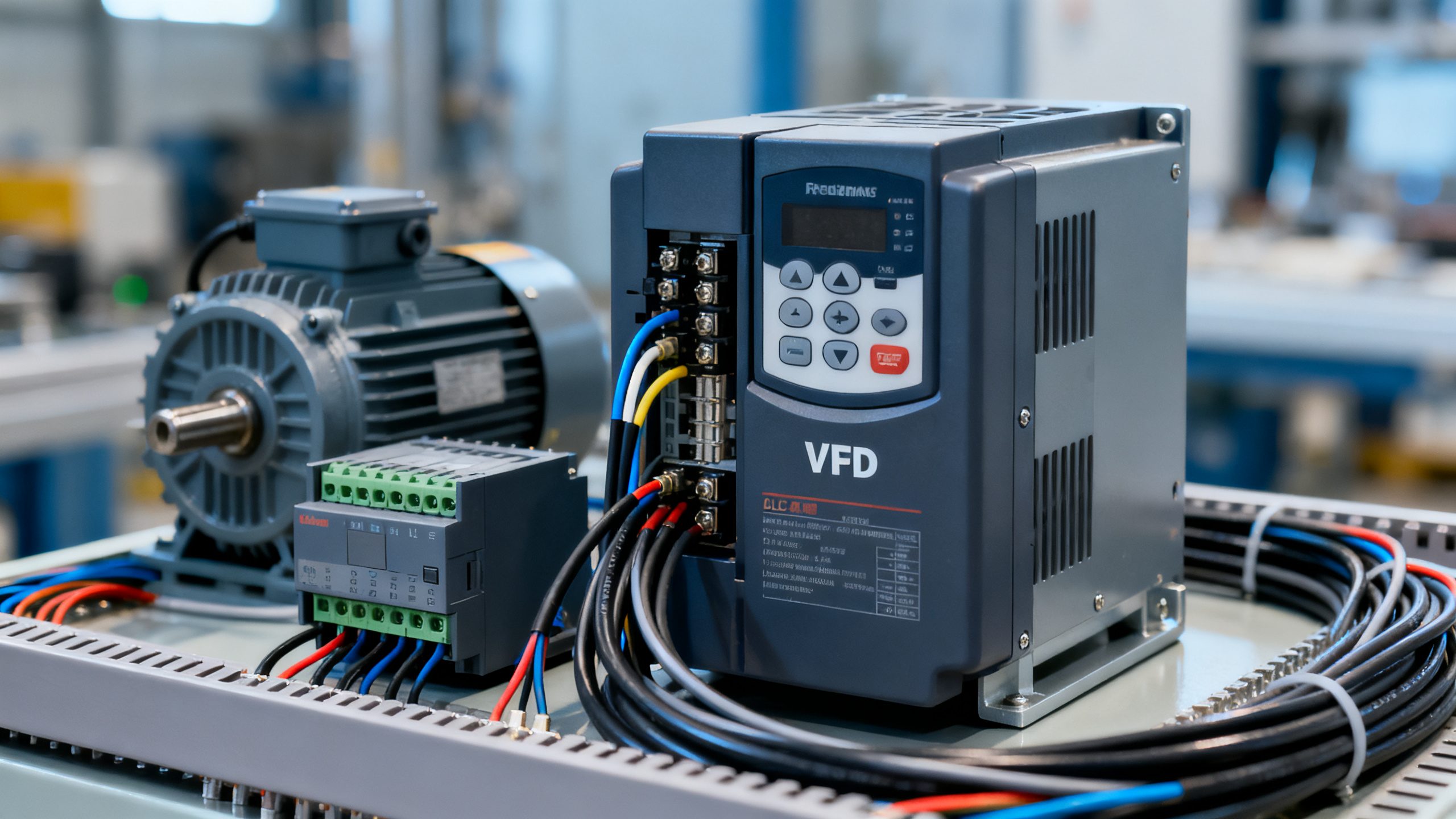
Choosing the right variable frequency drive (VFD) is not just about matching motor horsepower. In real industrial applications, the best VFD choice depends on load type, torque demand, power quality, control integration, installation environment, safety compliance, and long-term operating cost. A drive that looks acceptable on paper can still create nuisance trips, unstable speed control, cable-related issues, or premature motor damage if key details are missed.
For buyers, engineers, operators, and decision-makers, the practical question is simple: which VFD will run reliably, save energy, integrate smoothly with your system, and reduce lifecycle risk? This guide explains how to choose a variable frequency drive VFD with a focus on real selection criteria, common mistakes, and what matters most in procurement and operation.
Choosing the right variable frequency drive VFD is critical for energy efficiency, motor protection, and process stability in modern industry. Whether you are comparing soft starters wholesale, industrial servo motors, programmable logic controller plc integration, or planning upgrades with xlpe power cables and wholesale electrical cables, this guide helps buyers, engineers, and operators evaluate key VFD selection factors with confidence.
Start with the application, not the catalog rating
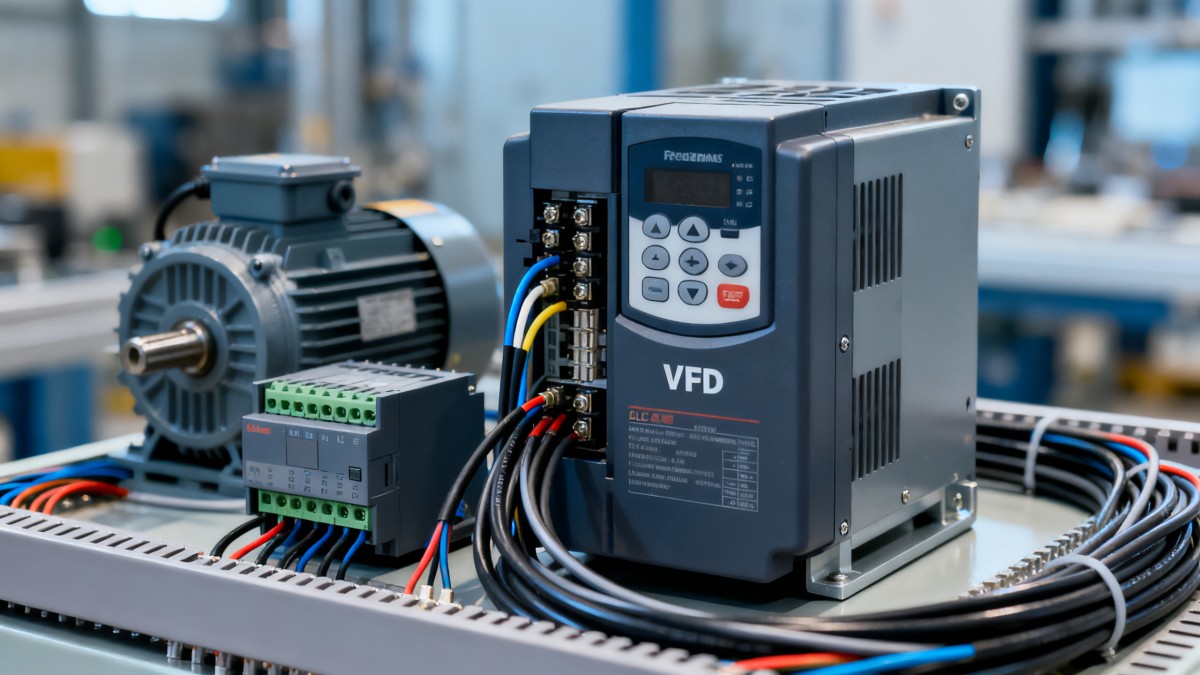
The most common mistake in VFD selection is starting with the drive brochure instead of the actual process. Before comparing brands or prices, define how the motor will operate in the field.
Ask these questions first:
- Is the load variable torque or constant torque?
- Does the motor run continuously or intermittently?
- Is high starting torque required?
- Will the process involve frequent starts, stops, or reversing?
- Does the system need precise speed control or only basic adjustment?
- Will the VFD operate in dust, heat, moisture, or corrosive conditions?
In general:
- Variable torque loads such as fans and centrifugal pumps usually prioritize energy savings and smooth control.
- Constant torque loads such as conveyors, mixers, extruders, and some compressors need stronger low-speed torque performance and more careful drive sizing.
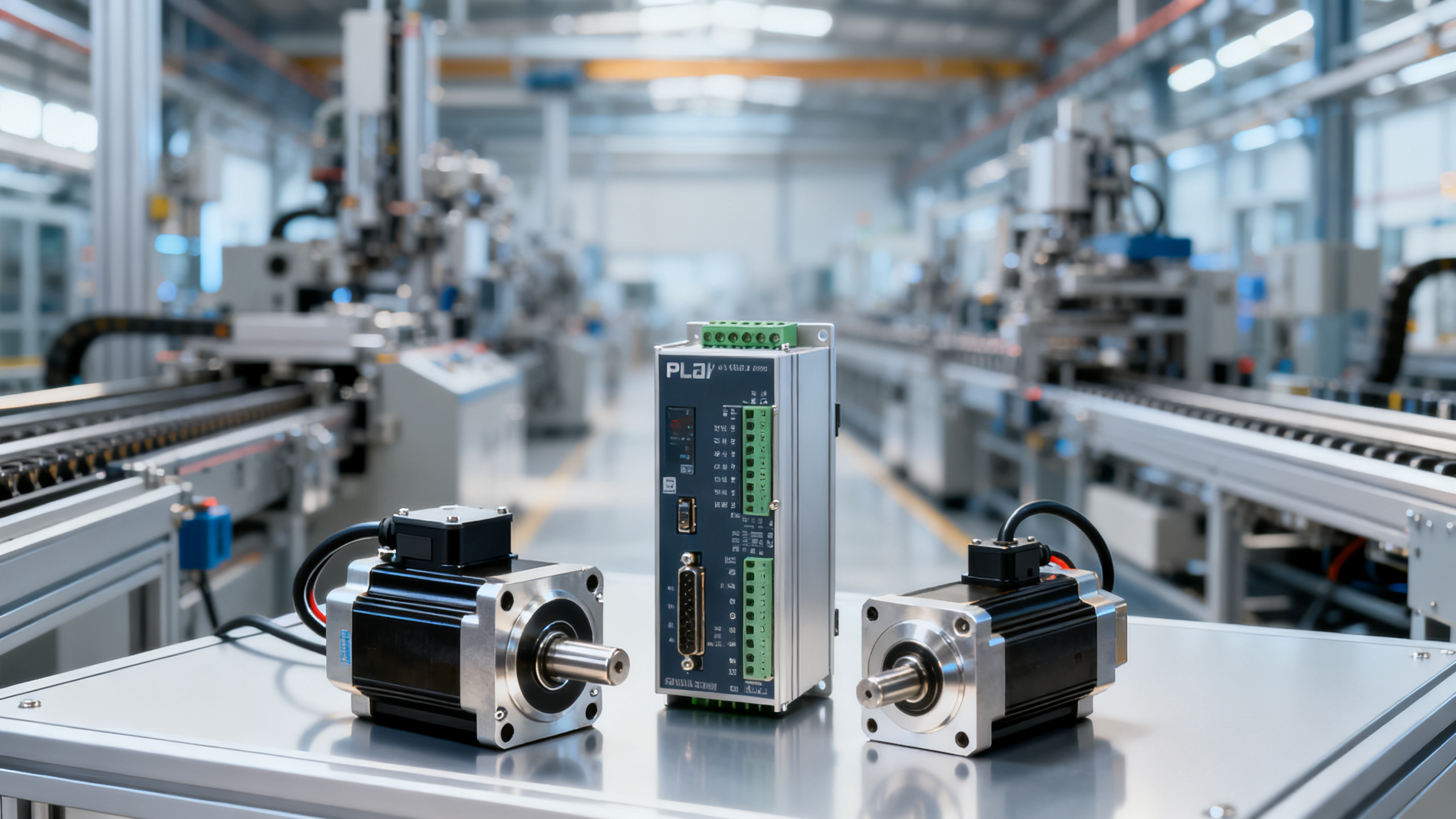
- High dynamic applications may require consideration of industrial servo motors instead of a standard VFD-controlled induction motor.
If the process only needs controlled ramp-up and ramp-down with no speed regulation during operation, a soft starter may be more economical than a VFD. This is why many procurement teams compare variable frequency drive VFD options with soft starters wholesale offers during project planning. The right choice depends on whether the process needs continuous speed variation, energy optimization, or only reduced inrush current during startup.
Match the VFD to the motor and real load profile
A VFD should be selected based on more than motor nameplate power. Motor kW or HP is only the starting point. You also need to verify:
- Motor rated current
- Supply voltage and frequency
- Overload requirement
- Motor insulation suitability for inverter duty
- Required speed range
- Cooling performance at low speed
Current rating matters more than horsepower. If two motors have the same power but different full-load current, the VFD must be selected according to the higher current requirement and overload demand.
Typical overload expectations include:
- Normal duty: often suitable for pumps and fans
- Heavy duty: often required for conveyors, crushers, mixers, and high-inertia loads
If the motor will run at low speed for long periods, check thermal performance carefully. Standard motors may overheat when self-cooling drops at reduced speed. In these cases, buyers should consider:
- Inverter-duty motors
- Forced ventilation
- Motor derating
- Motor protection through sensors or thermal models
This is also where application differences with industrial servo motors become important. If the machine needs precise positioning, rapid acceleration, and closed-loop accuracy, servo technology may be more appropriate than a conventional VFD solution.
Choose the right control method for process performance
Not all VFDs control motors the same way. The control mode affects torque response, low-speed stability, energy performance, and process precision.
Common control approaches include:
- V/f control: simple and economical, suitable for basic fan and pump applications
- Sensorless vector control: better torque and speed regulation for many industrial loads
- Closed-loop vector control: high-performance control using feedback devices for demanding applications
For many industrial users, sensorless vector control provides a good balance between cost and performance. It is often the practical choice where loads vary and low-speed torque matters.
Choose higher-level control when the process requires:
- Stable torque at low speed
- Fast response to load changes
- Tension control
- Precise line synchronization
- High starting torque without mechanical shock
If the plant is integrating automation across multiple assets, also verify how the VFD will interact with the programmable logic controller plc. Good VFD selection today often depends on communication compatibility as much as power rating.
Confirm electrical compatibility before procurement
Electrical mismatch is one of the most expensive VFD selection errors. Before ordering, verify the full power path from incoming supply to motor terminals.
Key checks include:
- Input voltage range
- Single-phase or three-phase supply
- Available short-circuit capacity
- Harmonic impact on the network
- Motor cable length
- Grounding and shielding requirements
Long motor cables can create reflected wave effects and stress motor insulation. This is especially important when upgrading older facilities or using long cable runs between the MCC and field equipment. In such projects, cable quality matters. Teams planning with xlpe power cables or evaluating wholesale electrical cables should confirm:
- Voltage class suitability
- Insulation performance
- EMC behavior
- Temperature rating
- Installation environment compatibility
Depending on the installation, the system may also need:
- Input reactors
- DC chokes
- Output filters
- dV/dt filters
- Sine wave filters
- EMI/RFI filters
- Braking resistors
These accessories should not be treated as optional afterthoughts. In many cases, they are essential to reliability, compliance, and motor life.
Pay close attention to the installation environment
Industrial VFDs are highly sensitive to environmental conditions. A correctly sized drive can still fail early if it is installed in the wrong enclosure or exposed to contamination.
Review these conditions carefully:
- Ambient temperature
- Altitude
- Dust levels
- Humidity and condensation risk
- Oil mist or corrosive gas exposure
- Ventilation and cooling inside the control panel
If the VFD will be mounted in a harsh environment, verify the enclosure rating, coating options, and thermal derating rules. For example:
- High ambient temperature may reduce drive output capacity.
- Dust and fibers can block cooling paths.
- Corrosive atmospheres can damage electronics and terminals.
- Poor panel ventilation can cause nuisance tripping and shorten capacitor life.
For facility managers and operators, this is not a minor detail. Environmental mismatch directly affects downtime, maintenance cost, and asset reliability.
Make sure the VFD integrates with your automation and safety architecture
In modern plants, the VFD is rarely a standalone product. It usually works as part of a wider control and safety system. That means communication, diagnostics, and functional safety must be evaluated during selection.
Important integration questions include:
- Does it support the plant’s PLC and SCADA platform?
- Which communication protocols are available?
- Can the drive provide the diagnostics maintenance teams need?
- Does it support remote monitoring?
- Are safe torque off or other safety functions required?
Typical protocol considerations may include Modbus, Profibus, Profinet, EtherNet/IP, EtherCAT, or BACnet depending on the industry and site architecture. If the plant already uses a programmable logic controller plc platform, selecting a VFD with proven integration can reduce commissioning time and troubleshooting effort.
For decision-makers, this affects more than engineering convenience. Better integration often means:
- Faster startup
- Lower commissioning cost
- Improved visibility into faults and energy use
- Simpler predictive maintenance planning
- Less unplanned downtime
Evaluate energy savings realistically, not generically
Many buyers associate every variable frequency drive VFD with large energy savings. In reality, the savings depend heavily on the load profile.
VFDs usually deliver the greatest energy benefit on variable torque loads such as fans and pumps, especially where throttling or damper control is currently used. In these systems, reducing motor speed can significantly cut power consumption.
However, on constant torque loads, the business case may depend more on process control, reduced mechanical stress, lower maintenance, and improved product quality than on pure energy savings.
When building the ROI case, include:
- Operating hours per year
- Typical load percentage
- Current control method
- Energy price
- Maintenance reduction
- Downtime cost avoidance
- Process quality improvements
This is especially important for enterprise decision-makers. A VFD should be justified by total operational value, not only by headline efficiency claims.
Check compliance, reliability, and support before comparing price
In industrial procurement, low purchase price does not equal low project cost. A cheaper drive can become more expensive if it fails compliance review, lacks local support, or requires frequent replacement.
Before final approval, verify:
- CE, UL, ISO, and relevant local or sector-specific compliance
- Documented testing and certification
- Service network and spare parts availability
- Warranty terms
- Application engineering support
- Lead time consistency
Buyers in EPC, plant upgrade, and infrastructure projects should also ask for:
- Derating curves
- Harmonic data
- EMC guidance
- Thermal loss information
- Recommended protection devices
- Typical wiring diagrams
These details help prevent change orders, startup delays, and field modifications. For procurement leaders, supplier credibility is part of the technical specification.
A practical VFD selection checklist for buyers and engineers
If you need a fast and reliable way to choose a variable frequency drive VFD, use this checklist:
- Define the application: pump, fan, conveyor, mixer, compressor, hoist, or precision motion.
- Confirm whether the load is variable torque, constant torque, or highly dynamic.
- Check motor nameplate data, especially full-load current.
- Determine overload requirement and duty cycle.
- Select the correct control mode.
- Review starting torque and low-speed operating needs.
- Verify supply voltage, network quality, and short-circuit conditions.
- Check motor cable length and filter requirements.
- Confirm cable suitability, including xlpe power cables if applicable.
- Review enclosure rating and ambient conditions.
- Confirm programmable logic controller plc and network integration.
- Check safety features and compliance documentation.
- Compare lifecycle cost, not just purchase price.
- Validate local technical support and spare parts availability.
If any of these points is unclear, pause the purchase decision and request application-level review. That step often prevents the largest field failures.
Conclusion: the best VFD is the one that fits the process, power system, and business goal
How to choose a variable frequency drive VFD comes down to one principle: select for the real application, not just the rated motor power. The right drive must match the load profile, control requirement, electrical infrastructure, environmental conditions, and automation architecture.
For operators, the right choice means smoother control and fewer trips. For engineers, it means stable performance and easier integration. For procurement teams, it means lower lifecycle risk. For business leaders, it means better efficiency, stronger reliability, and a more defensible return on investment.
When evaluating VFDs alongside soft starters wholesale options, industrial servo motors, programmable logic controller plc systems, and cable infrastructure such as xlpe power cables and wholesale electrical cables, the smartest decision is always the one based on total system fit. That is what turns a drive purchase into a long-term operational advantage.
Expert Insights

Chief Security Architect
Dr. Thorne specializes in the intersection of structural engineering and digital resilience. He has advised three G7 governments on industrial infrastructure security.
Related Analysis
Core Sector // 01
Security & Safety
- How to Select Overhead Line FittingsAuthor :Heavy Industry Strategist

- Cross Arms and Hardware: Steel or CompositeAuthor :Heavy Industry Strategist

- Composite Polymer Insulators: Pros and LimitsAuthor :Heavy Industry Strategist

- Porcelain Insulators Wholesale: Avoid These IssuesAuthor :Heavy Industry Strategist

- Power Factor Correction Capacitor: Is It NeededAuthor :Heavy Industry Strategist

- How to Pick an Industrial Battery ChargerAuthor :Heavy Industry Strategist

- UPS Buying Mistakes to Avoid in 2026Author :Heavy Industry Strategist

- Wholesale Stepper Motors: Which Type FitsAuthor :Heavy Industry Strategist