How to Pick an Industrial Battery Charger
Author
Date Published
Reading Time
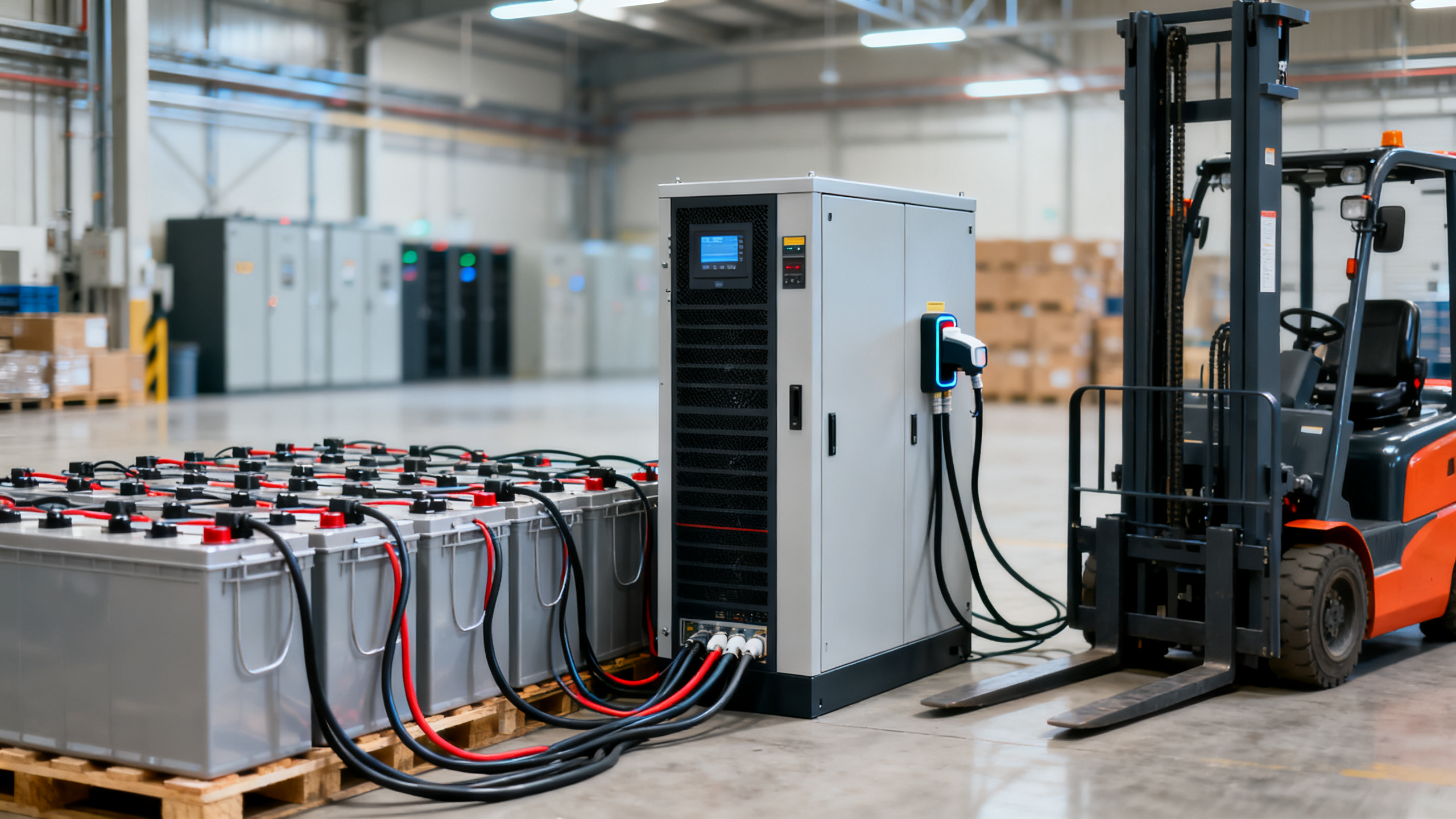
Choosing the right industrial battery charger is critical for uptime, safety, and long-term equipment performance. Whether you manage backup systems, forklifts, or integrated power setups with an uninterruptible power supply ups, the right charger must match battery chemistry, load demands, compliance standards, and harsh operating conditions. This guide helps procurement teams, operators, and decision-makers evaluate key specifications and avoid costly selection mistakes.
In industrial environments, charger selection is rarely a simple wattage decision. A mismatch between charger profile and battery type can reduce service life by 20% to 40%, increase heat generation, and create avoidable downtime during shift changes or emergency backup events. For EPC contractors, plant operators, and sourcing managers, the charger is part of a larger reliability chain that affects maintenance planning, safety compliance, and lifecycle cost.
The most effective evaluation process looks beyond nameplate voltage. It considers charge algorithm, duty cycle, ambient temperature, enclosure protection, communication interface, and service support over a 3-year to 10-year operating horizon. In sectors where forklifts, standby batteries, telecom racks, switchgear, and UPS systems all coexist, standardizing charger selection criteria can also reduce spare parts complexity and training time.
Start with the Application and Operating Environment
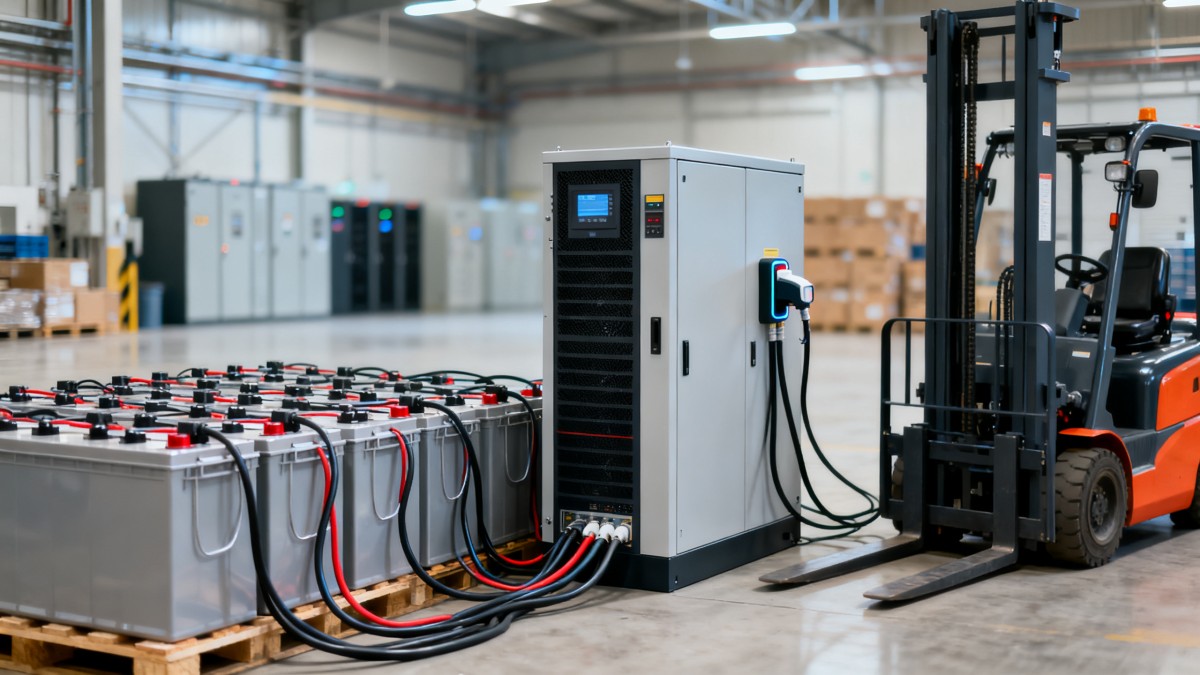
An industrial battery charger should always be selected around the real application, not around a generic catalog description. A charger for a warehouse forklift fleet has different priorities than a charger used for stationary backup batteries in a control room. In one case, fast turnaround between 2 or 3 shifts may matter most. In another, float charging stability over 24/7 service is the core requirement.
Operating conditions also change charger performance. Facilities with ambient temperatures from 0°C to 40°C, heavy dust, washdown risk, or unstable grid input need more robust specifications than climate-controlled indoor installations. Chargers deployed near corrosive environments, vibration sources, or outdoor electrical cabinets may require higher enclosure ratings and stronger thermal management to maintain output consistency.
Users should map the equipment profile before evaluating products. This means identifying battery system voltage, daily depth of discharge, required recovery time, and whether the charger is used intermittently or continuously. A charger sized only for nominal battery capacity may perform poorly when the battery repeatedly cycles at 60% to 80% discharge and must be returned to service within 6 to 8 hours.
For procurement teams, it helps to separate applications into three practical groups: motive power, standby power, and process-integrated systems. Each group has different tolerances for charge time, ripple current, and control features. This simple categorization often prevents expensive mistakes during specification alignment and vendor comparison.
Typical application differences
The table below highlights how charger priorities differ across common industrial use cases. It can be used as a quick reference during pre-qualification or technical review.
The key takeaway is that “industrial” is not a single use case. A charger that performs well in a low-dust electrical room may not be suitable for a 3-shift logistics facility or an outdoor cabinet with temperature swings and moisture exposure.
Basic application checklist
- Confirm whether the charger supports standby, cyclic, or mixed-duty operation.
- Record the real recharge window, such as 4 hours, 8 hours, or overnight charging.
- Verify site conditions including dust level, ventilation, and ambient temperature range.
- Check whether charger failure would stop production, delay dispatch, or only affect backup readiness.
Match the Charger to Battery Chemistry and Electrical Profile
Battery chemistry is one of the most important selection factors. Lead-acid, AGM, gel, nickel-based, and lithium batteries require different charging logic, voltage thresholds, and current control. Using a charger with the wrong profile can cause undercharging, plate sulfation, thermal stress, or battery management system alarms. Even within lead-acid systems, flooded and sealed batteries often need different voltage compensation behavior.
Voltage and current must be evaluated as a system. A 48V battery pack does not automatically mean any 48V charger is suitable. Teams must verify the charger’s output voltage window, maximum current, and charging stages. A practical benchmark is to compare charger current against the battery’s rated amp-hour capacity. In many industrial cases, charging current falls in the range of 10% to 25% of Ah capacity, though actual limits depend on chemistry and manufacturer guidance.
For UPS-linked battery banks, low ripple current and precise float voltage are often more important than fast recovery. For motive power applications, recovery time and equalization options may carry more weight. Lithium systems may require CAN, RS485, or other communication with the battery management system, especially where protection logic controls charging permission and temperature limits.
When uncertainty exists, buyers should ask vendors for a charging curve, compatibility statement, and recommended battery capacity range. This is especially important if one charger model is expected to support multiple battery capacities across a site.
Core technical matching points
The following comparison helps non-specialist buyers and operators focus on the technical items that most directly influence battery life and daily usability.
A charger that matches chemistry, voltage, and current profile will usually outperform a higher-powered but poorly matched option. In many installations, correct charge logic delivers more value than simply reducing charging time by 1 or 2 hours.
Questions to ask the supplier
- What battery chemistries are supported without reprogramming or hardware changes?
- What is the recommended battery capacity range for this output current?
- Does the charger include temperature compensation or battery communication?
- Can the charge profile be adjusted for standby versus cyclic duty?
Evaluate Safety, Compliance, and Reliability Features
In industrial procurement, safety and compliance are not secondary features. Chargers interact directly with electrical infrastructure, battery gases, heat, and sometimes mission-critical backup loads. Procurement teams should verify whether the charger aligns with the site’s applicable CE, UL, or ISO-related requirements, local electrical rules, and internal HSE procedures. The exact requirement set depends on region and application, but documentation quality is always a valid screening factor.
Protection functions deserve close review. At a minimum, many industrial buyers look for overvoltage protection, overcurrent protection, short-circuit protection, reverse polarity protection, overtemperature shutdown, and fault indication. In higher-risk settings, alarm relays, event logs, and remote monitoring support may be necessary for maintenance teams managing dozens or hundreds of charging points across one or more sites.
Reliability also depends on power quality and mechanical design. Chargers installed in plants with unstable incoming power may need a wider AC input range or surge tolerance. Fan cooling versus natural convection should be assessed against dust load and maintenance access. A highly efficient charger operating at 90% to 95% efficiency can reduce waste heat, which matters in enclosed rooms and continuous-duty applications.
For enterprise decision-makers, serviceability is part of reliability. Access to manuals, spare components, lead times for replacement boards, and local technical response within 24 to 72 hours may matter as much as the initial purchase price. A cheaper charger with limited support can become the more expensive option after the first operational disruption.
Practical compliance and risk review
- Check whether technical documents clearly state electrical ratings, protection logic, and intended battery types.
- Confirm enclosure suitability, such as IP-rated protection when moisture or dust exposure is expected.
- Review alarm visibility for operators: local LEDs, display codes, dry contacts, or networked notifications.
- Verify maintenance isolation procedures, connector safety, and cable sizing guidance for the installation team.
Common selection mistakes
A frequent mistake is approving a charger based only on nominal compatibility. For example, a unit may be electrically suitable for a 220V DC battery bank but unsuitable for the site because it lacks adequate fault monitoring or cannot tolerate the room’s 45°C peak temperature. Another common issue is overlooking connector and cable requirements, which may create voltage drop, overheating, or non-compliant field modifications.
Another avoidable error is assuming all smart chargers support industrial integration. Some compact models are designed for standalone use and do not provide dry contact alarms, Modbus, or battery room monitoring signals. In plants with centralized maintenance, this limitation can increase inspection labor and slow failure response.
Compare Total Cost of Ownership, Maintenance, and Procurement Fit
The purchase price of an industrial battery charger is only one part of the cost picture. Buyers should evaluate total cost of ownership across energy efficiency, battery life impact, maintenance frequency, downtime risk, spare parts availability, and service support. A charger that costs 10% to 15% more upfront may still be the better business case if it extends battery replacement intervals or reduces unplanned stoppages during a 5-year operating period.
Maintenance requirements vary widely. Some chargers need regular fan cleaning, terminal checks, firmware review, and calibration checks every 6 to 12 months. Others are designed for lower-touch operation. In remote or multi-site operations, reduced maintenance burden can be a major advantage, especially when internal electrical technicians are limited.
Procurement teams should also examine delivery and support factors. Lead times can range from 2 to 4 weeks for common industrial chargers to 8 weeks or more for specialized configurations. If a project has commissioning milestones, the charger should be evaluated alongside cables, connectors, battery racks, and protection devices as part of a coordinated package rather than as a late-stage accessory.
A useful sourcing method is to score suppliers across technical fit, compliance readiness, commercial terms, and service capacity. This avoids over-weighting unit price and helps align the final decision with operational realities on the ground.
Sample procurement decision matrix
The matrix below gives a structured way to compare offers from multiple industrial battery charger suppliers.
This type of scoring framework is particularly useful when several products appear similar on paper. It forces the evaluation team to compare what matters in actual plant operation, not just brochure claims.
Procurement checklist for industrial buyers
- Request charger datasheets, protection details, and battery compatibility notes.
- Confirm delivery schedule against project milestones and installation sequence.
- Check warranty terms, spare part lead time, and local or regional technical support.
- Compare estimated maintenance effort over 12 months and 36 months.
Implementation, Testing, and Common Questions Before Final Approval
Even a well-selected industrial battery charger can underperform if commissioning is rushed. Installation teams should verify cable sizing, ventilation clearance, grounding, AC input quality, and battery connection polarity before energizing the unit. A structured startup process usually includes visual inspection, parameter confirmation, no-load checks, controlled charging observation, and alarm verification. In many facilities, this can be completed in 5 steps over 1 working day for standard systems.
Post-installation testing should confirm that actual output matches expected behavior under the connected battery condition. For standby systems, teams should review float voltage stability and alarm behavior. For motive power systems, they should confirm recovery time after a known discharge profile. Operators should also receive simple instructions on fault codes, normal charge stages, and when to escalate service requests.
Where multiple chargers are deployed, standardizing settings and labels can reduce operator error. It is also good practice to log commissioning values, battery type, installation date, and maintenance interval. These records become useful when troubleshooting performance changes after 6 months or 12 months of service.
Below are common buyer and operator questions that often influence final selection decisions, especially in mixed industrial environments.
How do I know if a charger is too small or too large?
If the charger current is too low, recharge time may exceed the available production window and the battery may remain partially charged, which shortens life in many chemistries. If it is too high, the battery may run hotter and age faster unless the chemistry is designed for higher-rate charging. As a starting point, compare charger current to battery Ah rating and the required recharge period, then validate against manufacturer recommendations.
Can one charger support different battery types?
Sometimes, but only if the charger is explicitly designed with selectable or programmable charge profiles. Shared use becomes risky when operators may connect incompatible batteries without changing settings. In industrial sites with mixed chemistries, dedicated chargers or locked profile control is usually safer than relying on manual switching.
What should be included in acceptance testing?
- Verification of input and output ratings against purchase specifications.
- Confirmation of alarms, indicators, and protective shutdown functions.
- Observation of at least one controlled charge cycle or simulated operating condition.
- Documentation of final settings, wiring checks, and operator handover notes.
Choosing the best industrial battery charger means aligning application needs, battery chemistry, safety requirements, and long-term operating cost. The right decision improves uptime, protects battery investment, and supports safer daily operation across forklifts, backup systems, and UPS-integrated infrastructure. If you are comparing charger options for a new project or replacing aging equipment, Global Industrial Core can help you review specifications, evaluate sourcing risks, and identify the most practical solution path. Contact us today to discuss your operating conditions, request a tailored recommendation, or explore more industrial power and charging solutions.
Expert Insights

Chief Security Architect
Dr. Thorne specializes in the intersection of structural engineering and digital resilience. He has advised three G7 governments on industrial infrastructure security.
Related Analysis
Core Sector // 01
Security & Safety
- How to Select Overhead Line FittingsAuthor :Heavy Industry Strategist

- Cross Arms and Hardware: Steel or CompositeAuthor :Heavy Industry Strategist

- Composite Polymer Insulators: Pros and LimitsAuthor :Heavy Industry Strategist

- Porcelain Insulators Wholesale: Avoid These IssuesAuthor :Heavy Industry Strategist

- Power Factor Correction Capacitor: Is It NeededAuthor :Heavy Industry Strategist

- How to Pick an Industrial Battery ChargerAuthor :Heavy Industry Strategist

- UPS Buying Mistakes to Avoid in 2026Author :Heavy Industry Strategist

- Wholesale Stepper Motors: Which Type FitsAuthor :Heavy Industry Strategist