UPS Buying Mistakes to Avoid in 2026
Author
Date Published
Reading Time
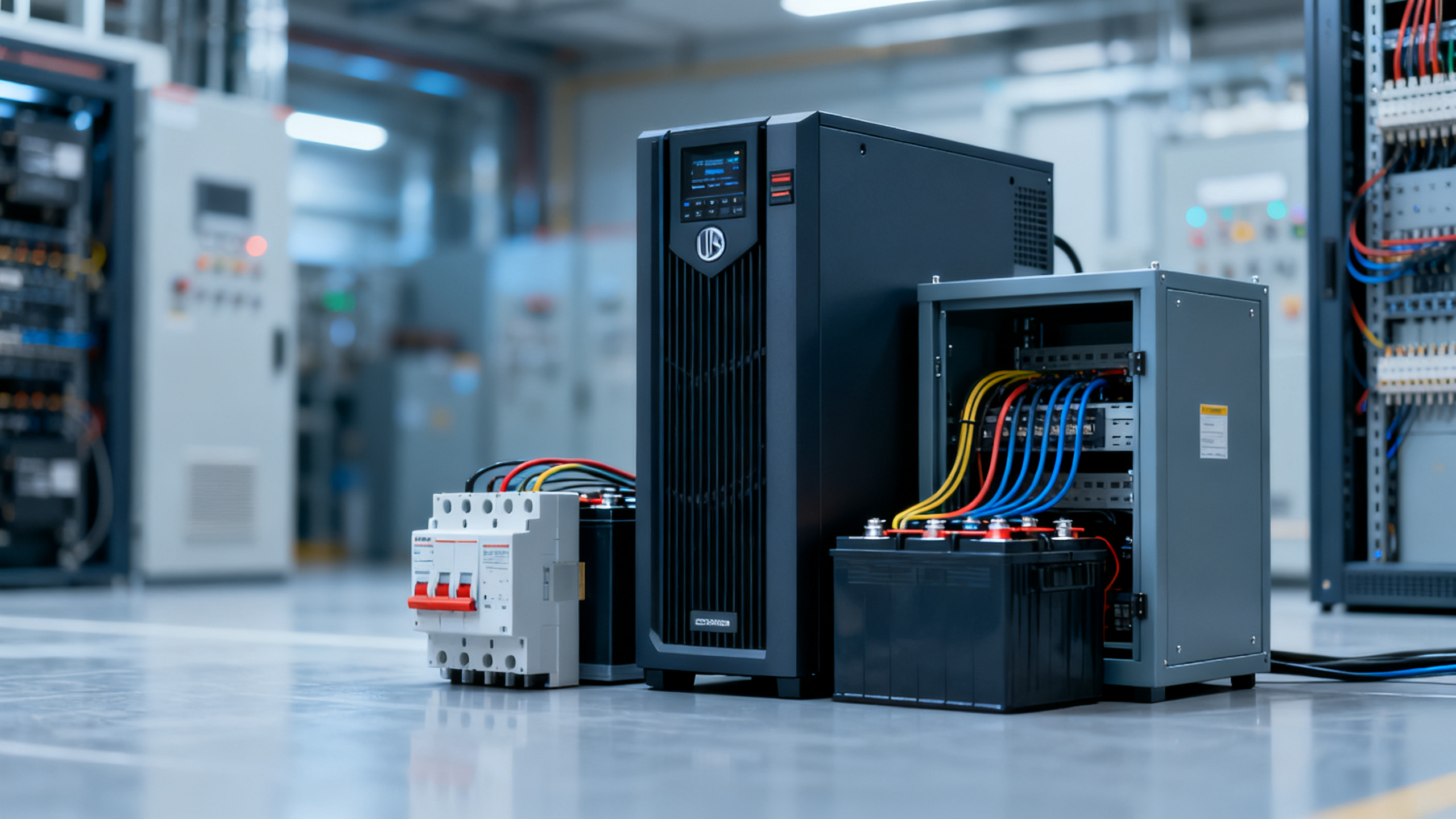
Choosing the right uninterruptible power supply in 2026 is no longer just about backup time or price. For industrial buyers comparing industrial battery charger options, surge protective device compatibility, and broader electrical infrastructure integration, small purchasing mistakes can create expensive downtime, compliance gaps, and weak resilience. The biggest risk is not buying a “bad” UPS—it is buying a UPS that looks adequate on paper but fails your actual load profile, environment, maintenance model, or expansion plan. This guide explains the most common UPS buying mistakes to avoid so procurement teams, operators, and business decision-makers can make a safer, more cost-effective choice.
1. Buying a UPS Based on Price First Instead of Critical Load Risk
One of the most common UPS buying mistakes is treating the purchase like a commodity decision. In industrial and commercial settings, the true cost of a UPS is rarely the purchase price alone. The real financial exposure comes from unplanned shutdowns, damaged equipment, production delays, data loss, safety incidents, and emergency replacement.
For procurement teams, the better question is not “What is the cheapest UPS?” but “What is the cost of failure if this UPS underperforms?” A lower-cost unit may appear attractive during budget review, but if it lacks the right topology, battery runtime, overload capability, or environmental tolerance, it can create far greater downstream costs.
What to do instead:
- Classify loads by criticality: life safety, control systems, servers, PLCs, telecom, process instrumentation, or general office backup.
- Estimate downtime cost per hour.
- Compare total cost of ownership, including maintenance, battery replacement, efficiency, and service availability.
- Use risk-adjusted procurement criteria, not just unit price.
2. Choosing the Wrong UPS Topology for the Application
Many buyers still select a UPS without fully understanding whether they need offline, line-interactive, or online double-conversion architecture. This is a serious mistake because UPS topology determines how the system handles power disturbances, voltage instability, harmonics, and transfer time.
In 2026, facilities are operating with more sensitive electronics, distributed automation, edge computing, and variable power quality. For industrial environments, online double-conversion UPS systems are often preferred because they provide continuous conditioned power and stronger protection against voltage sags, surges, frequency variation, and electrical noise.
Typical mismatch examples include:
- Using a basic office-grade UPS for industrial control cabinets.
- Selecting line-interactive models for sites with unstable utility input.
- Assuming all “pure sine wave” systems deliver the same level of protection.
How to evaluate topology correctly:
- Review site power quality history.
- Identify whether zero transfer time is required.
- Check sensitivity of connected loads.
- Match the UPS design to process continuity requirements, not marketing labels.
3. Underestimating Future Load Growth
A UPS may be correctly sized for today and still become the wrong purchase within 12 to 24 months. This happens when buyers size only for existing connected load and ignore future expansions such as added racks, new instrumentation, expanded automation, extra cooling controls, or production line upgrades.
Undersizing leads to overloaded systems, reduced battery runtime, shortened component life, and rushed retrofits. Oversizing too aggressively can also be inefficient and unnecessarily expensive. The goal is practical headroom with a realistic growth path.
Smart planning should include:
- Current load in kW and kVA.
- Power factor of connected equipment.
- 12–36 month expansion forecast.
- Redundancy strategy such as N+1 requirements.
- Modular scalability if phased growth is likely.
For many facilities, a modular UPS design offers a strong balance between present cost control and future flexibility.
4. Focusing on VA Rating While Ignoring Real Load Behavior
Many buyers still compare UPS units using only VA capacity. That is not enough. Real-world UPS sizing must account for watts, power factor, inrush current, harmonic distortion, crest factor, and the behavior of connected loads during startup and normal operation.
This is especially important in industrial environments where motors, drives, control systems, measurement devices, and communication hardware may create non-linear load patterns. If the UPS is not evaluated against actual load characteristics, it may trip unexpectedly or fail to provide the expected runtime.
Common errors include:
- Assuming nameplate values equal operating load.
- Ignoring startup surge or peak demand.
- Not validating generator and UPS interaction.
- Neglecting harmonic effects from modern electronic equipment.
Best practice: ask for a load assessment before final selection, especially for mixed-use or industrial applications.
5. Ignoring Battery Chemistry, Runtime Reality, and Replacement Strategy
Battery selection is one of the most overlooked areas in UPS procurement. Buyers often focus on quoted runtime without understanding what that runtime is based on, how temperature affects it, or what replacement costs will look like over the system lifecycle.
In 2026, buyers are increasingly comparing VRLA, lithium-ion, and other battery configurations. Each has different trade-offs in footprint, temperature tolerance, maintenance profile, lifecycle cost, recharge speed, and monitoring capability. Battery performance also depends on charger quality, charging logic, and compatibility with the broader power protection setup.
Questions that should be asked upfront:
- What runtime is required at actual load, not partial load assumptions?
- How many discharge cycles is the battery expected to handle?
- What is the replacement interval under site temperature conditions?
- Is the industrial battery charger design appropriate for the battery chemistry?
- What are the disposal, safety, and compliance implications?
A cheap battery strategy often becomes an expensive operating strategy.
6. Overlooking Surge Protection and Upstream/Downstream Coordination
A UPS is not a complete power protection strategy by itself. One of the biggest buying mistakes is assuming the UPS alone can handle all surge and transient risks. In reality, surge protective device selection and coordination remain critical, especially in facilities exposed to utility switching events, lightning-related transients, or heavy equipment operation.
Poor coordination between the UPS, surge protective device (SPD), panels, grounding system, and distribution architecture can lead to nuisance trips, component stress, or incomplete protection.
What buyers should verify:
- Whether a surge protective device SPD is already installed and properly rated.
- Compatibility between UPS input characteristics and upstream protective devices.
- Grounding and bonding quality.
- Protection strategy for both incoming supply and sensitive downstream loads.
- Whether the installation includes telecom/data line protection where needed.
This is particularly important when the UPS is part of a larger upgrade involving switchgear, power distribution, and wholesale electrical cables infrastructure.
7. Forgetting Environmental Conditions at the Installation Site
UPS failures are often linked less to design defects than to poor installation environments. Heat, dust, humidity, vibration, corrosive air, and inadequate ventilation all reduce performance and shorten service life.
Industrial and utility sites rarely offer ideal indoor office conditions. If the UPS will be installed in a plant room, production area, electrical enclosure zone, or remote field structure, buyers must evaluate environmental suitability early.
Check these factors before purchase:
- Ambient temperature range.
- Ingress protection needs.
- Ventilation and cooling requirements.
- Dust and particulate exposure.
- Altitude derating.
- Available maintenance access clearance.
A technically correct UPS can still be the wrong product if it is not built for the environment where it will operate.
8. Not Verifying Compliance, Certifications, and Local Requirements
For enterprise buyers and industrial decision-makers, compliance is not optional. A UPS that does not align with required certifications, safety expectations, or local electrical standards can create procurement delays, inspection issues, insurance complications, or legal risk.
Depending on market and application, buyers may need to verify CE, UL, IEC, ISO-related quality controls, battery transport compliance, EMC performance, and sector-specific requirements.
Do not assume certifications are universal. Ask suppliers for current documentation, test reports, and product-specific declarations. This matters even more in cross-border sourcing where model variations may exist between regions.
Minimum verification checklist:
- Electrical safety certification.
- EMC compliance.
- Battery safety and transport documentation.
- Installation code compatibility.
- Warranty terms by country or region.
9. Choosing a UPS Without Service, Monitoring, and Spare Parts Planning
A UPS purchase is not complete on delivery day. It is an operational asset that needs monitoring, maintenance, testing, firmware support, and eventual battery or component replacement. A major buying mistake is selecting hardware without confirming the service ecosystem behind it.
Operators and facility managers care about response time, remote visibility, alarm handling, and service continuity. Procurement teams should care about parts lead times, service contract clarity, and long-term platform support.
Important service questions include:
- Is local technical support available?
- What is the preventive maintenance schedule?
- Are remote monitoring and SNMP/network management included?
- What spare parts are stocked regionally?
- How long will the model remain supported?
For critical facilities, service quality can be as important as the UPS itself.
10. Failing to Assess Integration with the Wider Electrical System
A UPS does not operate in isolation. It must fit into the broader electrical design, including generators, transfer switches, panelboards, grounding, cable sizing, and downstream load segmentation. Buyers who skip system-level review often face installation changes, commissioning delays, or performance issues after startup.
Integration mistakes commonly include:
- Improper cable sizing or routing.
- Inadequate breaker coordination.
- Generator incompatibility.
- Poor selectivity planning.
- No clear bypass strategy for maintenance.
This is why projects involving UPS procurement should often be reviewed alongside electrical engineers, EPC teams, and operations personnel rather than handled as a stand-alone product purchase.
11. Relying on Generic Vendor Claims Instead of Scenario-Based Evaluation
Many UPS products are marketed with broad claims such as “high efficiency,” “industrial grade,” or “advanced protection.” These descriptions are not enough for serious buyers. What matters is how the unit performs under your load, at your temperature, with your maintenance approach, and within your compliance framework.
Useful evaluation methods include:
- Application-specific requirement matrix.
- Factory acceptance or demonstration data.
- Runtime validation under realistic load assumptions.
- Failure mode review.
- Reference checks from similar industries or operating environments.
The more critical the application, the less you should rely on brochure-level comparisons.
12. A Practical UPS Buying Checklist for 2026
Before issuing a purchase order, buyers should be able to answer the following clearly:
- What loads must stay online, and for how long?
- What is the real business cost of downtime?
- Which UPS topology best suits site power conditions?
- Is the UPS sized for actual load and expected growth?
- Are battery chemistry, charger design, and runtime aligned?
- Is surge protection coordinated with the UPS and site electrical system?
- Will the product operate reliably in the installation environment?
- Does it meet all required certifications and local compliance needs?
- Is service support available where the unit will be deployed?
- Has system-level integration been reviewed?
If several of these questions remain unanswered, the safest decision is usually to pause procurement and complete a more disciplined evaluation.
Conclusion: The Best UPS Purchase Is the One That Matches Operational Reality
The most expensive UPS buying mistakes in 2026 will not come from obvious product defects. They will come from mismatches: wrong topology, weak battery planning, poor surge coordination, limited scalability, inadequate compliance review, and failure to consider the wider electrical system. For information researchers, operators, purchasing teams, and business decision-makers, the smartest approach is to evaluate UPS selection through risk, lifecycle value, maintainability, and integration—not just price or spec-sheet headlines.
A well-chosen UPS protects more than equipment. It protects uptime, safety, compliance, and business continuity. That is the standard modern buyers should use before committing budget.
Expert Insights

Chief Security Architect
Dr. Thorne specializes in the intersection of structural engineering and digital resilience. He has advised three G7 governments on industrial infrastructure security.
Related Analysis
Core Sector // 01
Security & Safety
- How to Select Overhead Line FittingsAuthor :Heavy Industry Strategist

- Cross Arms and Hardware: Steel or CompositeAuthor :Heavy Industry Strategist

- Composite Polymer Insulators: Pros and LimitsAuthor :Heavy Industry Strategist

- Porcelain Insulators Wholesale: Avoid These IssuesAuthor :Heavy Industry Strategist

- Power Factor Correction Capacitor: Is It NeededAuthor :Heavy Industry Strategist

- How to Pick an Industrial Battery ChargerAuthor :Heavy Industry Strategist

- UPS Buying Mistakes to Avoid in 2026Author :Heavy Industry Strategist

- Wholesale Stepper Motors: Which Type FitsAuthor :Heavy Industry Strategist